
There are some meals that just feel like a hug. For me, growing up, that was always my mom’s Sunday pot roast. The whole house would fill with the smell of slow-cooked beef and vegetables. It was the definition of comfort food. When I started my fitness journey and began the process of losing 65 pounds, I thought meals like that were off the table forever. It felt like I had to choose between food I loved and the body I wanted.
That conflict is something a lot of us with ADHD face. We want the dopamine hit from delicious, satisfying food, but we also get overwhelmed by complicated diet rules. The idea of giving up comfort was a huge barrier for me. I’d stick to a boring diet for a while, get fed up, and spiral back into old habits. It was a frustrating cycle that kept me stuck for years.
This high-protein pot roast recipe is my answer to that problem. I spent a long time figuring out how to re-engineer my favorite comfort foods to fit my fat loss goals. This version keeps all the soul-warming flavor of a traditional roast but completely changes the nutritional profile. It’s built around lean protein and packed with vegetables, designed to keep you full and satisfied, not heavy and sluggish. It’s proof that you don’t have to give up the foods you love to build a lifestyle you can sustain.
Skip to My Flexibe Diet Recipe!
Why Pot Roast Is Great For Fat Loss
When you hear “pot roast,” you probably don’t think “fat loss food.” Most traditional recipes use fatty cuts of meat and are often served with heavy, starchy sides. But this recipe is different by design. We’ve made specific choices to turn this comfort classic into a powerhouse for a fit lifestyle, especially for those of us working with an ADHD brain.
The foundation of this recipe is lean protein. We’re using beef bottom round or eye of round, which are significantly leaner than the typical chuck roast. Protein is the most important macronutrient for fat loss. It keeps you feeling full for hours, which is our number one weapon against cravings and mindless snacking. A high-protein diet also helps preserve muscle mass while you’re losing fat, which keeps your metabolism running strong.
Next, we load it with vegetables. Onions, carrots, celery, and a full pound of mushrooms add tons of volume, fiber, and nutrients for very few calories. This means you can eat a large, satisfying portion that fills your plate and your stomach, signaling to your brain that you’re full. This combination of high protein and high volume is the secret to managing hunger without feeling deprived.
Finally, it’s a one-pot meal that makes a huge batch. For ADHD folks, this is a massive win. It simplifies cooking and decision-making. You cook once and have delicious, goal-supportive meals ready for days. This reduces the chances of ordering takeout on a low-motivation day. It’s a practical system that works with your brain, not against it.
Ingredients You’ll Need for Pot Roast
The magic of this recipe is in its simplicity and the deliberate choice of ingredients. We’re not using anything fancy or hard to find. It’s all about using basic, whole foods to create incredible flavor while supporting our fitness goals. Every ingredient has a purpose, from building a savory foundation to packing in nutrients.
The most critical ingredient, and the one that makes this a true fat loss recipe, is the cut of beef. We are specifically using beef bottom round or eye of round roast. Unlike a traditional chuck roast, which is marbled with a lot of fat, these cuts are exceptionally lean. This dramatically increases the protein content while slashing the calories and saturated fat. Choosing the right cut is the single biggest factor in making this pot roast healthy.
We also use low-sodium beef broth to control the salt content, which helps prevent water retention and keeps the dish heart-healthy. Don’t skip the tomato paste and Worcestershire sauce; they add a deep, savory umami flavor that you can’t get from salt alone. They make the broth rich and complex without adding any fat. Here is everything you will need to get started:
-
3-4 lb beef bottom round or eye of round roast, visible fat trimmed
-
1 tbsp olive oil
-
2 medium yellow onions, coarsely chopped
-
4 large carrots, peeled and cut into 2-inch chunks
-
3 celery stalks, cut into 2-inch chunks
-
6 cloves garlic, minced
-
2 tbsp tomato paste
-
4 cups low-sodium beef broth
-
1 tbsp Worcestershire sauce
-
1 tsp dried thyme
-
1 tsp dried rosemary
-
2 bay leaves
-
1 lb cremini mushrooms, halved or quartered if large
-
2 tbsp fresh parsley, chopped
-
Salt and freshly ground black pepper to taste
A final note on the vegetables: feel free to use what you have, but the combination of onions, carrots, and celery (called a mirepoix) is a classic flavor base for a reason. And the mushrooms are a fantastic addition, as they soak up all the delicious broth and add a meaty texture that makes the whole dish feel even more substantial.
How To Make Pot Roast (Step-By-Step)
Making this pot roast is straightforward, but a few key techniques are what make it truly delicious. The process is mostly hands-off, letting the oven do the heavy lifting. This is perfect for days when you have low executive function but still want a great meal. The most important tool for this recipe is a heavy-bottomed pot or Dutch oven. It holds and distributes heat evenly, which is crucial for both searing the meat and the long, slow braise.
Step 1: Prepare and Sear The Roast
First, preheat your oven to 300°F (150°C). The low temperature is key for breaking down the tough connective tissues in the lean beef. While it heats, pat your roast completely dry with paper towels. This is a non-negotiable step! A dry surface is what allows you to get a deep, brown crust when you sear it. Season it generously on all sides with salt and pepper. Heat the olive oil in your Dutch oven over medium-high heat. Carefully place the roast in the hot pot and sear it for 4-5 minutes per side, until it’s deeply browned all over. Don’t rush this step; this crust is where a huge amount of the flavor comes from. Once seared, move the roast to a plate.
Step 2: Build The Flavor Base
Reduce the heat to medium and add your chopped onions, carrots, and celery to the pot. Let them cook for 5-7 minutes, stirring occasionally, until they soften up and get a little bit of color. This process, called sweating, releases their natural sugars and builds the first layer of flavor. Next, add the minced garlic and tomato paste. Stir constantly for about one minute. You need to cook the tomato paste a bit to deepen its flavor and get rid of any raw taste. It should turn a slightly darker, brick-red color.
Step 3: Deglaze and Simmer
Now for the best part. Pour in about half a cup of the beef broth. Use a wooden spoon to scrape up all those browned bits stuck to the bottom of the pot. This is called deglazing, and it’s a flavor goldmine. Once the bottom is clean, add the seared roast back to the pot. Pour in the rest of the beef broth, the Worcestershire sauce, thyme, rosemary, and bay leaves. Bring the whole thing to a gentle simmer on the stovetop.
Step 4: The Low and Slow Braise
Once it’s simmering, put the lid on the pot and transfer it to your preheated oven. Let it cook for 3-4 hours. After that time, the meat should be starting to get tender. Pull the pot out and stir in the mushrooms, making sure they’re mostly submerged in the liquid. Put the lid back on and return it to the oven for another 1 to 1.5 hours. You’ll know it’s done when the beef is incredibly tender and shreds easily with a fork. There’s no prize for finishing early; this cut of meat needs the full time to become tender. When it’s ready, remove the pot, discard the bay leaves, and get ready to serve.
How To Serve Pot Roast (ADHD-Friendly)
One of the best things about this pot roast is that it’s a complete, balanced meal right out of the pot. You have your protein, your vegetables, and your flavor all in one place. This drastically reduces what I call “mealtime friction,” which is a huge benefit for the ADHD brain. Fewer decisions, fewer pans to wash, and less mental energy spent figuring out what to eat.
When the roast is done, I recommend immediately portioning it out. Don’t just leave the whole pot in the fridge. Forgetting about leftovers is a classic ADHD struggle. “Out of sight, out of mind” is a real thing. By portioning it into individual glass containers, you create a visual cue. When you open the fridge, you see ready-to-go, healthy meals staring back at you. This makes the healthy choice the easiest choice, which is the entire philosophy of ADHD FIT.
There are several great ways to serve this to fit your specific macro needs and preferences. Here are a few of my go-to methods:
-
The Simple Classic: Serve a portion of the shredded beef and vegetables in a bowl with a ladle of the cooking jus. It’s simple, satisfying, and perfectly balanced on its own. This is my default for a quick lunch or dinner.
-
Low-Carb Comfort: For a lower-carb option, serve the pot roast over a bed of creamy mashed cauliflower. It gives you the same comforting vibe as mashed potatoes without the heavy carb load, making it great for a fat-loss phase.
-
For Post-Workout Fuel: If you’re eating this after a tough workout, your body can use some good carbohydrates to replenish energy. Serve it with a measured portion of roasted potatoes, sweet potatoes, or a scoop of brown rice to make it a perfect recovery meal.
The key is flexibility. This recipe provides the high-protein base, and you can adjust the accompaniments based on your goals for the day. This approach avoids the rigid, all-or-nothing thinking that can so often derail our progress. It’s about making smart, simple choices that you can stick with consistently.
How To Store, Reheat, and Reuse Pot Roast
Batch cooking is an ADHD superpower, and this pot roast recipe is perfect for it. Cooking once and eating for days saves an incredible amount of time and mental energy. Proper storage is key to making sure your efforts pay off with delicious meals all week long. As I mentioned before, my number one tip is to portion everything out into individual meal prep containers as soon as it’s cool enough to handle.
This simple act of pre-portioning solves multiple problems. It prevents you from accidentally eating too large of a serving, it makes grab-and-go lunches effortless, and it fights the “leftover blindness” that can lead to food waste. An ADHD-friendly pro tip: use masking tape and a marker to label each container with “Pot Roast” and the date. It takes 10 seconds and eliminates any guesswork later in the week.
Here’s how to handle storing, reheating, and getting creative with your leftovers:
-
Storing: Once portioned, the pot roast will keep beautifully in an airtight container in the refrigerator for up to 4 days. You can also freeze it for longer-term storage. It freezes exceptionally well for up to 3 months. Just make sure to leave a little headspace in the container for expansion.
-
Reheating: You can easily reheat a single portion in the microwave for 2-3 minutes. If you have a bit more time, reheating it in a small saucepan on the stove with a splash of water or broth will give you the best results, preventing the meat from drying out.
-
Reusing: Don’t just eat it the same way every day! Fighting food boredom is crucial for long-term consistency. Shred the leftover beef and use it for protein-packed tacos on low-carb tortillas, mix it into a hearty egg scramble for breakfast, or make an open-faced sandwich on a slice of high-protein bread with a little melted provolone cheese.
Thinking of your leftovers as ingredients for new meals is a game-changer. It makes your initial cooking effort even more valuable and keeps your diet interesting and enjoyable. This is how we build a sustainable system that doesn’t feel like a restrictive diet.
Easy Swaps & Variations for Pot Roast
One of the core principles we live by at ADHD FIT is flexibility. A rigid plan is a brittle plan, destined to break the first time life gets messy. This pot roast recipe is built to be adaptable. Whether you need to adjust for ingredients you have on hand, tweak it for a different cooking method, or fit a specific dietary need, there are plenty of ways to make it your own without compromising the results.
Don’t be afraid to experiment. The core of the recipe—lean protein, lots of vegetables, slow-cooked in a savory broth—is the part that matters for your goals. The smaller details can be changed to suit your tastes and what’s available at your local grocery store. Using what you have is always better than putting off cooking because you’re missing one specific herb.
Here are a few simple swaps and variations you can try:
-
Different Cuts of Beef: If you can’t find bottom round or eye of round, a well-trimmed chuck roast will work. Just be aware that it has more fat. You’ll need to be extra diligent about trimming all visible fat before cooking and skimming the fat from the top of the liquid before serving.
-
Vegetable Variations: Feel free to swap in other root vegetables. Parsnips, turnips, or rutabaga are all fantastic additions. You could even add some sweet potatoes, but remember to account for the extra carbohydrates if you’re tracking your macros.
-
Slow Cooker Method: This recipe is perfect for the slow cooker. Simply follow the searing and deglazing steps on the stovetop, then transfer everything to your slow cooker. Cook on low for 8-10 hours or on high for 4-5 hours for the same fork-tender result.
-
Herb Adjustments: If you have fresh herbs, by all means, use them! A few sprigs of fresh thyme and rosemary can be used in place of the dried herbs. Just add them with the broth and remove the stems before serving.
The goal is to have a reliable, delicious recipe in your toolkit that you can turn to on busy weeks. Use this framework and adjust it to make it work for you. Consistency will always beat perfection.
High-Protein Pot Roast For Fat Loss
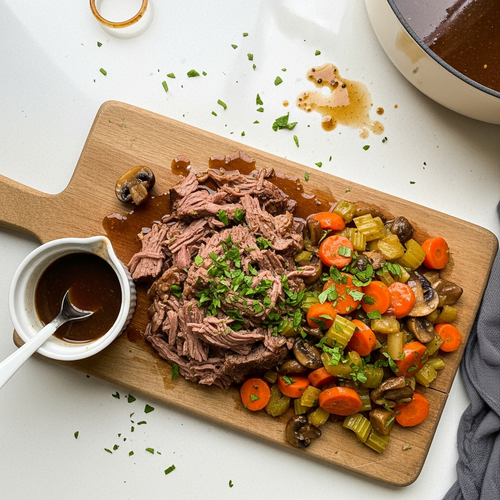
Description: A soul-warming, macro-friendly pot roast designed for fat loss. This recipe uses lean beef and is packed with vegetables to create a high-protein, high-volume meal that keeps you full for hours and makes meal prep a breeze.
Prep Time: 15 minutes | Cook Time: 4.5 hours
Servings: 8
Macros per Serving | Calories: 345 | Protein: 42g | Fat: 11g | Carbohydrates: 15g
Ingredients
- 3-4 lb beef bottom round or eye of round roast, visible fat trimmed
- 1 tbsp olive oil
- 2 medium yellow onions, coarsely chopped
- 4 large carrots, peeled and cut into 2-inch chunks
- 3 celery stalks, cut into 2-inch chunks
- 6 cloves garlic, minced
- 2 tbsp tomato paste
- 4 cups low-sodium beef broth
- 1 tbsp Worcestershire sauce
- 1 tsp dried thyme
- 1 tsp dried rosemary
- 2 bay leaves
- 1 lb cremini mushrooms, halved or quartered
- 2 tbsp fresh parsley, chopped
- Salt and freshly ground black pepper to taste
Instructions
- Preheat oven to 300°F (150°C). Pat roast dry and season with salt and pepper.
- Heat olive oil in a Dutch oven over medium-high heat. Sear roast on all sides until deeply browned. Remove roast to a plate.
- Reduce heat to medium, add onions, carrots, and celery. Sauté for 5-7 minutes until softened.
- Stir in garlic and tomato paste and cook for 1 minute.
- Deglaze the pot with 1/2 cup of beef broth, scraping up any browned bits.
- Return roast to the pot. Add remaining broth, Worcestershire sauce, and dried herbs. Bring to a simmer.
- Cover and transfer to the oven. Cook for 3-4 hours.
- Add mushrooms to the pot, cover, and cook for another 1-1.5 hours, until beef is fork-tender.
- Remove from oven, discard bay leaves, and shred or slice the beef. Serve with vegetables and jus.
Notes
The final macros are an estimate and can vary based on the exact size and leanness of your roast. Be sure to trim all visible fat for the best results.
FAQs About Pot Roast For Weight Loss
Here are some straightforward answers to the most common questions I receive about this pot roast recipe.
Can you make this pot roast in a slow cooker?
Absolutely. This recipe is incredibly well-suited for a slow cooker, which is a fantastic tool for anyone with a busy schedule. The “set it and forget it” nature of a slow cooker is perfect for low-energy days. The conversion is simple, but you do not want to skip the initial stovetop steps, as they are essential for developing the deep, rich flavor that makes this roast so satisfying.
To adapt the recipe, you’ll still want to pat the roast dry, season it, and sear it in a hot pan on the stovetop. This browning step, the Maillard reaction, creates complex flavors that you just can’t get from the slow cooker alone. After searing, set the roast aside. Then, use the same pan to sauté the onions, carrots, and celery, followed by the garlic and tomato paste. Deglaze the pan with the beef broth to lift all those flavorful bits. Once that’s done, you can transfer the seared roast, the cooked vegetables, and all the liquids and seasonings into your slow cooker. Cook on the low setting for 8-10 hours or on the high setting for 4-5 hours. Add the mushrooms during the last hour of cooking to prevent them from becoming too soft.
Why is my pot roast tough?
A tough pot roast is almost always caused by one of two things: it was cooked for too short a time, or it was cooked at too high a temperature. With lean cuts of beef like eye of round or bottom round, there is very little fat to keep the meat moist. The tenderness comes from the slow, gentle breakdown of collagen, which is a tough connective tissue, into gelatin. This process requires a low temperature and a long cooking time.
If you try to rush a pot roast by cranking up the oven temperature, the muscle fibers will seize up and squeeze out all their moisture, resulting in dry, tough meat. The sweet spot for this recipe is 300°F (150°C) for several hours. It might seem counterintuitive that more cooking makes it more tender, but that’s exactly how it works for these cuts. If your roast has cooked for the specified time and still seems tough, the most likely solution is that it simply needs more time. Cover it back up and let it cook for another 30-60 minutes before checking again. Patience is truly the most important ingredient here.
Is pot roast actually healthy for weight loss?
Whether a pot roast is healthy for weight loss depends entirely on how it’s made. A traditional pot roast made with a fatty cut of chuck, swimming in a gravy thickened with flour and butter, and served with a giant pile of potatoes is not a great choice for fat loss. It’s high in calories, high in saturated fat, and can be easy to overeat. However, this recipe has been specifically engineered to be a powerful tool for weight loss.
Our version is built on a foundation of lean protein, which is crucial for satiety and muscle retention. We intentionally choose the leanest cuts of beef available. We also pack the recipe with a large volume of low-calorie vegetables like carrots, celery, and mushrooms. This adds fiber and nutrients, helping you feel physically full on fewer calories. Finally, we create a light, flavorful jus from the natural cooking liquids instead of a heavy, high-calorie gravy. When you combine these elements, you get a meal that is high in protein, moderate in carbs and fat, and incredibly satisfying. It’s a perfect example of how you can eat filling, delicious comfort food while still making progress toward your goals.
What’s the best lean cut of beef for pot roast?
For a macro-friendly pot roast, the best cuts of beef are eye of round and bottom round. These come from the “round” primal cut of the cow, which is a heavily used muscle group, making it very lean but also tough if not cooked properly. Eye of round is arguably the leanest cut you can get, making it a fantastic choice for maximizing protein while minimizing fat. Bottom round is also very lean and is often a bit more affordable and easier to find than eye of round.
It’s important to understand that these cuts behave differently than a fatty chuck roast. A chuck roast has a lot of intramuscular fat (marbling), which bastes the meat as it cooks and makes it very forgiving. Lean cuts don’t have this fat, so their tenderness relies solely on the low-and-slow cooking process to break down connective tissue. If you undercook a bottom round roast, it will be tough. When cooked correctly, however, it becomes wonderfully tender and flavorful. Always remember to slice or shred it against the grain to ensure the best texture.
How can I make a thicker gravy for this pot roast without adding a lot of calories?
I personally love the thin, savory jus that this recipe naturally creates, as it has a ton of flavor without any extra calories. However, if you prefer a thicker, more traditional gravy, there’s a very simple way to achieve that without using a high-fat, flour-based roux. The secret is a cornstarch slurry. Cornstarch is a pure starch that works as a powerful thickening agent and has very few calories per serving.
After you’ve removed the cooked roast and vegetables from the pot, skim any visible fat from the surface of the cooking liquid. Bring the liquid to a simmer on the stovetop. In a separate small bowl, mix one tablespoon of cornstarch with two tablespoons of cold water until it forms a smooth paste with no lumps. It’s critical to use cold water to prevent clumping. While whisking the simmering liquid, slowly pour in the cornstarch slurry. Continue to simmer and whisk for 1-2 minutes until the gravy thickens to your desired consistency. This method will give you a rich, satisfying gravy with a negligible impact on the overall calorie and macro count of the dish.
Try These High-Protein Recipes Next
If you enjoyed this simple and satisfying pot roast, here are a few more high-protein comfort food recipes designed to support your fitness goals.
-
High-Protein Beef Stew: A rich and hearty stew that uses similar principles to this roast, focusing on lean beef and loaded with vegetables for a perfectly balanced one-pot meal.
-
Healthy Beef Stroganoff: My take on a classic Russian dish, made creamy and delicious with Greek yogurt instead of sour cream for a massive protein boost and a fraction of the fat.
-
Easy Slow Cooker Chuck Roast with Carrots: Another fantastic slow cooker roast recipe that offers a slightly different flavor profile and is perfect for a truly hands-off cooking day.
Each of these recipes follows the same philosophy of being brutally practical, delicious, and perfect for a busy lifestyle.