
For most of my life, takeout stir fry was a comfort food. It was easy, fast, and hit that perfect spot of salty, sweet, and savory. When I started my fitness journey and set out to lose 65 pounds, I thought I had to give it up. The versions from restaurants were often loaded with sugar, sodium, and oil, which didn’t fit my new goals.
But I hate restrictive diets. They trigger my ADHD’s all-or-nothing thinking, and I knew a plan that banned my favorite foods would fail. So, I decided to build my own version. I needed a stir fry that was packed with protein, loaded with vegetables, and easy enough to make on a day when my executive function was completely tapped out.
This recipe is the result of that process. It became a staple during my biggest period of fat loss, and it’s still in my rotation today, even with the adjustments I made after starting medication. It’s brutally practical, endlessly flexible, and delivers incredible flavor without derailing your progress. It’s proof that you can achieve your fitness goals without giving up the foods you love.
This is my go-to high-protein stir fry. I hope it helps you as much as it has helped me.
Skip to My Flexibe Diet Recipe!
Why Stir Fry Is Great For Fat Loss
Let’s be direct. When it comes to fat loss, food is about 75 percent of the battle. Workouts are important, but you can’t out-train a diet that works against you. That’s why this stir fry recipe is such a powerful tool in the ADHD FIT system. It’s designed specifically to support your goals by focusing on our core principles.
First up is protein. This recipe is built around a full pound of boneless, skinless chicken breast. Protein is the king of macros for fat loss because it’s highly satiating. It keeps you feeling full and satisfied for longer, which crushes cravings before they even start. A high-protein meal prevents the energy crashes and mindless snacking that often happen when our ADHD brains are seeking stimulation.
Next is hunger management through volume. We pack this stir fry with six cups of vegetables. All that fiber and water content fills up your stomach, sending signals to your brain that you’re full. This means you can eat a huge, satisfying plate of food for a surprisingly low number of calories. It feels like you’re eating a lot, which helps combat the feelings of restriction that can lead to bingeing.
Finally, it’s all about convenience and flexibility. The entire meal comes together in one pan in under 20 minutes. For an ADHD brain, reducing steps and cleanup is critical for consistency. You can use frozen veggies, pre-cut chicken, and jarred garlic and ginger. There are no rigid rules. This flexibility ensures you can make it happen even on low-motivation days, and consistency is what drives real, sustainable results.
Ingredients You’ll Need for Stir Fry
Building a great stir fry is all about layering simple, high-quality ingredients. We focus on lean protein, tons of colorful veggies, and a simple sauce that delivers huge flavor without a ton of sugar or oil. Remember, our goal is a sustainable lifestyle, which means using ingredients that are easy to find and work with.
The beauty of this recipe is its structure. We have our protein base, a mountain of vegetables, and a simple three-part sauce system: the main flavor, the aromatics, and the thickener. This makes it easy to remember and adapt. Don’t let a missing ingredient stop you; this is a template, not a strict command.
Here’s exactly what you’ll need to make this high-protein stir fry:
- Protein: 1 lb boneless, skinless chicken breast, cut into 1-inch pieces
- Vegetables: 2 cups broccoli florets, 1 red bell pepper (thinly sliced), 1 yellow bell pepper (thinly sliced), 1 cup snap peas, 1 cup shredded carrots
- Aromatics: 4 cloves garlic, minced, and 1 tbsp fresh ginger, grated
- Sauce Base: 2 tbsp low-sodium soy sauce or coconut aminos, 1 tbsp rice vinegar, 1 tsp sesame oil
- Optional Sweetness: 1 tsp honey or maple syrup
- Thickener (Slurry): 1 tbsp cornstarch or tapioca flour mixed with 2 tbsp water or low-sodium chicken broth
- Cooking Fat: 1 tsp olive oil or avocado oil
- Garnish: Green onions and sesame seeds (optional)
A quick note on ingredients. Using low-sodium soy sauce is a non-negotiable for me. Regular soy sauce can turn a healthy meal into a sodium bomb, leaving you feeling bloated and thirsty. Also, while jarred garlic and ginger are fantastic ADHD-friendly shortcuts, using fresh will give you a much brighter, more powerful flavor if you have the energy for it. Don’t sweat it if you don’t. Done is better than perfect.
How To Make Stir Fry (Step-By-Step)
The key to a great stir fry is having everything ready before you start cooking. This process is called “mise en place,” and it’s a game-changer for the ADHD brain. It prevents that mid-cooking panic when you realize you forgot to chop something. Take 5-10 minutes to prep everything first. Chop your veggies, cut your chicken, and mix your sauces in small bowls. Trust me, it makes the whole process smoother.
Step 1: Prepare Your Sauces
Get two small bowls. In the first one, whisk together the low-sodium soy sauce, rice vinegar, sesame oil, and the optional honey. This is your main flavor sauce. In the second bowl, mix the cornstarch with the water or chicken broth until it’s completely smooth. This is your slurry, and it’s what will thicken the sauce at the end. Setting these aside now prevents you from scrambling later.
Step 2: Cook the Chicken
Heat your teaspoon of oil in a large skillet or a wok over medium-high heat. A wok is great, but any large skillet works perfectly fine. Once the oil is shimmering, add your chicken pieces in a single layer. Let them cook for a few minutes without moving to get a nice golden-brown sear. Continue cooking, stirring occasionally, for about 5-7 minutes until the chicken is cooked through. Then, remove it from the pan and set it aside on a plate.
Step 3: Stir-Fry The Vegetables
Add the heartier vegetables to the now-empty skillet: the broccoli and carrots. Stir-fry them for 2-3 minutes. They need a little more time to soften up. If the pan looks dry, add a tablespoon of water or broth to create some steam and prevent sticking. Next, add the bell peppers and snap peas and cook for another 3-4 minutes. We want them crisp-tender, not mushy.
Step 4: Add Aromatics and Return Chicken
Push the vegetables to the side of the pan to create a small open space. Add your minced garlic and grated ginger to that spot and cook for about 60 seconds until you can smell them. This is called “blooming” the aromatics and it unlocks their flavor. Then, stir everything together. Add the cooked chicken back into the skillet with the vegetables.
Step 5: Sauce and Thicken
Pour the soy sauce mixture over everything and stir well to coat all the chicken and vegetables. Now, grab your cornstarch slurry. Give it a quick re-stir, as the cornstarch settles, and pour it into the pan. Keep stirring constantly. Within 1-2 minutes, you’ll see the sauce bubble and thicken, clinging to every ingredient beautifully. Once it’s glossy and thick, your stir fry is done.
How To Serve Stir Fry (ADHD-Friendly)
Serving your stir fry shouldn’t be complicated. The goal is to create a balanced, satisfying meal that supports fat loss without adding a bunch of extra steps or stress. We want to keep the momentum going from the easy cooking process right onto the plate.
For me, the easiest and most effective way to serve this stir fry is on its own in a big bowl. The recipe is already balanced with a huge portion of protein and fibrous vegetables. This combination is incredibly filling and keeps the meal lower in total carbohydrates and calories, which is fantastic for fat loss. Eating from a bowl also just feels more satisfying sometimes.
However, if you need more carbs to fuel your workouts or simply want a more traditional meal, here are a few ADHD-friendly ways to serve it:
- Microwaveable Rice Packets: These are a lifesaver. Grab a packet of pre-cooked brown rice or quinoa. Pop it in the microwave for 90 seconds while your stir fry finishes. No pots, no measuring, no waiting for water to boil. It’s the ultimate convenience hack.
- Cauliflower Rice: If you want the feeling of rice without the carbs, frozen cauliflower rice is your best friend. You can find it in the freezer aisle and steam it right in the bag in the microwave. It bulks up the meal with minimal calories.
- High-Protein Pasta: For a different texture, try serving your stir fry over a bed of chickpea or lentil pasta. It adds even more protein and fiber to the meal, making it an absolute powerhouse for satiety.
The key is to have these convenient options on hand. Task initiation is often the hardest part with ADHD. By removing the barrier of having to cook a separate side dish from scratch, you’re much more likely to stick with your plan and eat the healthy meal you prepared.
How To Store, Reheat, and Reuse Stir Fry
One of the best things about this stir fry recipe is that it makes fantastic leftovers. For those of us with ADHD, having a healthy, pre-made meal waiting in the fridge is like a superpower. It eliminates decision fatigue and provides a crucial buffer against the temptation to order takeout on a busy day.
Proper storage is simple. Once the stir fry has cooled down slightly, portion it out into airtight containers. I recommend portioning it into individual meal-sized containers right away. This “pre-decision” makes grabbing a healthy lunch for work or a quick dinner incredibly easy. No thinking required. The stir fry will last in the refrigerator for up to 4 days.
When it comes to reheating, you have a couple of good options:
- The Skillet (Best Method): To best preserve the texture of the vegetables, reheat the stir fry in a non-stick skillet over medium heat. Add a splash of water or chicken broth to the pan to create some steam. This helps gently warm everything through without making the veggies mushy. It only takes a few minutes.
- The Microwave (Fastest Method): If you’re short on time, the microwave is perfectly fine. Place the stir fry in a microwave-safe bowl and cover it with a damp paper towel. Heat it in 60-second intervals, stirring in between, until it’s warmed through. The paper towel helps trap steam and prevents the chicken from drying out.
Don’t be afraid to reuse the leftovers in new ways to combat food boredom. You can stuff the stir fry into a low-carb tortilla for a quick wrap, serve it cold over a bed of mixed greens for a hearty salad, or mix it with some scrambled eggs for a high-protein breakfast. This variety keeps things interesting and ensures no food goes to waste.
Easy Swaps & Variations for Stir Fry
The foundation of this stir fry recipe is solid, but its real strength is its flexibility. Life is unpredictable, and your diet should be able to adapt. Whether you’re dealing with a half-empty fridge, a tight budget, or just a craving for something different, this recipe can be easily modified. Think of these as simple upgrades or swaps, not a whole new recipe to learn.
This approach works perfectly for the ADHD brain because it relies on a core system you already know. You’re just changing out one or two of the components. This prevents overwhelm and makes healthy eating feel more like a creative process and less like a rigid chore. It’s about working with what you have, not striving for an unattainable ideal.
Here are some of my favorite easy swaps and variations for this stir fry:
- Protein Swaps: Not in the mood for chicken? No problem. Swap it for a pound of lean steak strips, shrimp, or firm tofu. For steak, cook it quickly over high heat. For shrimp, add it in the last few minutes of cooking the veggies, as it cooks in just 2-3 minutes. For tofu, press it first to remove excess water, then cube and pan-fry it until golden before you start the veggies.
- “Clean Out The Fridge” Veggies: This is my favorite way to prevent food waste. Almost any vegetable can work in a stir fry. Mushrooms, onions, zucchini, bok choy, edamame, or even leftover roasted vegetables can be thrown in. Just be mindful of cooking times, adding harder veggies like carrots first and softer ones like zucchini later.
- Spice It Up: If you like some heat, add a teaspoon of sriracha or a pinch of red pepper flakes to your sauce mixture. A little bit goes a long way and can completely change the flavor profile of the dish.
- Go Gluten-Free or Soy-Free: The recipe is already nearly gluten-free. To make it 100% gluten-free, simply ensure your soy sauce is a gluten-free tamari or use coconut aminos. Coconut aminos are also a fantastic soy-free alternative that provides a similar salty and savory flavor.
The goal is to empower you to make this recipe your own. Use these suggestions as a starting point. The more you experiment, the more you’ll realize that healthy eating can be delicious, easy, and perfectly suited to your life.
Easy High-Protein Chicken Stir Fry
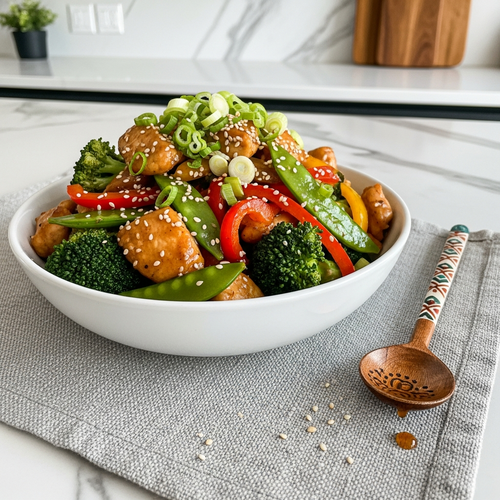
Description: A quick, delicious, and flexible stir fry packed with protein and veggies, designed to support fat loss without sacrificing flavor. Perfect for busy weeknights and ADHD brains.
Prep Time: 10 minutes | Cook Time: 15 minutes
Servings: 4
Macros per Serving | Calories: 304 | Protein: 29g | Fat: 9g | Carbohydrates: 24g
Ingredients
- 1 lb boneless, skinless chicken breast, cut into 1-inch pieces
- 2 cups broccoli florets
- 1 red bell pepper, thinly sliced
- 1 yellow bell pepper, thinly sliced
- 1 cup snap peas
- 1 cup shredded carrots
- 4 cloves garlic, minced
- 1 tbsp fresh ginger, grated
- 2 tbsp low-sodium soy sauce or coconut aminos
- 1 tbsp rice vinegar
- 1 tsp sesame oil
- 1 tsp honey or maple syrup (optional)
- 1 tbsp cornstarch or tapioca flour
- 2 tbsp water or low-sodium chicken broth
- 1 tsp olive oil or avocado oil
- Green onions and sesame seeds for garnish (optional)
Instructions
- In a small bowl, whisk together soy sauce, rice vinegar, sesame oil, and optional honey. In a separate bowl, mix cornstarch with water to create a slurry. Set both aside.
- Heat olive oil in a large skillet over medium-high heat. Add chicken and cook until golden and cooked through (5-7 mins). Remove from skillet.
- To the same skillet, add broccoli and carrots. Stir-fry for 2-3 minutes.
- Add bell peppers and snap peas and stir-fry for another 3-4 minutes until crisp-tender.
- Stir in garlic and ginger and cook for 1 minute until fragrant.
- Return chicken to the skillet. Pour the soy sauce mixture over everything and stir to combine.
- Stir the cornstarch slurry again, then pour into the skillet. Cook and stir for 1-2 minutes until the sauce thickens.
- Remove from heat and garnish with green onions and sesame seeds, if desired.
Notes
For an ADHD-friendly shortcut, use frozen stir-fry vegetable mix instead of fresh. You can also use pre-minced garlic and ginger from a jar to save time on prep.
FAQs About Stir Fry For Weight Loss
Here are some straightforward answers to the most common questions I receive about this stir fry recipe.
Is stir fry actually healthy for weight loss?
This is a fantastic question because the answer is, “it depends entirely on how you make it.” The stir fry you get from many takeout restaurants is often not a great choice for weight loss. It’s typically made with large amounts of oil, sugary sauces full of corn syrup, and excessive sodium. The portion sizes are also usually very large, with a small amount of protein and a huge bed of refined white rice.
However, a homemade stir fry, like the recipe here, is one of the best tools you can have for weight loss. By controlling the ingredients, you transform it into a high-protein, low-calorie, nutrient-dense meal. We use only a tiny amount of heart-healthy oil, load it with fiber-rich vegetables to keep you full, and build a sauce from simple ingredients like low-sodium soy sauce and vinegar. This puts you in the driver’s seat and ensures your meal aligns perfectly with your fat loss goals.
What are the best vegetables to use in a weight loss stir fry?
When your goal is fat loss, the best vegetables are those that provide high volume for low calories. This is the principle of volume eating. You want vegetables that are packed with water and fiber, as they physically fill up your stomach and help you feel satiated without adding a lot of calories to your daily total.
My favorites for this recipe are broccoli, bell peppers, snap peas, and carrots because they offer a great crunch and lots of color. Other excellent choices include mushrooms, onions, bok choy, zucchini, water chestnuts, and edamame. The key is variety. Don’t feel locked into the exact vegetables in this recipe. Use what you enjoy and what you have on hand. A bag of frozen stir fry vegetable mix is an amazing, budget-friendly, and convenient option that takes all the chopping out of the equation.
How can I make my stir fry sauce low-calorie but still taste good?
A flavorful sauce is what makes a stir fry so satisfying, but it’s also where hidden calories and sugar can sneak in. The secret to a great low-calorie sauce is to build layers of flavor from potent ingredients rather than relying on sugar and fat. Our sauce base uses low-sodium soy sauce for a savory, umami flavor, rice vinegar for a bright acidity, and a small amount of sesame oil for its powerful, nutty aroma.
Fresh garlic and ginger are non-negotiable for incredible flavor without calories. They provide a pungent, aromatic kick that forms the backbone of the sauce. The optional teaspoon of honey or maple syrup is just enough to balance the flavors without turning it into a sugar bomb. Finally, thickening the sauce with a cornstarch slurry makes it cling to the ingredients, ensuring every bite is flavorful. This is much better than using a pre-made bottle of sauce, which can have over 15-20 grams of sugar per serving.
Can I make this stir fry recipe ahead of time for meal prep?
Absolutely. This stir fry is perfect for meal prep, especially for those of us with ADHD who benefit from having ready-to-eat meals. The best way to do it is to fully cook the recipe as directed and then portion it out into individual airtight containers. It will stay fresh and delicious in the fridge for up to four days.
One pro tip for meal prep is to slightly undercook the vegetables. Cook them so they are still very crisp-tender. This way, when you reheat the meal later in the week, the vegetables will finish cooking and have the perfect texture instead of becoming soft and mushy. If you plan to serve it with rice or quinoa, you can portion that into the containers as well for a complete, grab-and-go meal.
What’s the best protein for a fat loss stir fry?
For fat loss, the best protein sources are lean, meaning they are high in protein and relatively low in fat. Boneless, skinless chicken breast, which we use in this recipe, is an excellent choice. It’s affordable, versatile, and packs about 25 grams of protein per 4-ounce serving for very few calories.
Other fantastic lean options include shrimp, which cooks very quickly, and lean cuts of steak like sirloin or flank steak. Just be sure to trim any visible fat from the steak before cooking. If you’re looking for a plant-based option, extra-firm tofu or tempeh are both wonderful. They soak up the flavor of the sauce beautifully and provide a solid amount of protein. The most important factor is choosing a protein source you enjoy and will eat consistently.
Try These High-Protein Recipes Next
If you loved how simple and effective this high-protein stir fry is, here are a few other recipes from my rotation that you should try next.
- High Protein Fried Rice: Another takeout classic made healthy. This recipe shows you how to pack fried rice with protein and veggies for a satisfying, macro-friendly meal.
- One-Pan Lemon Herb Chicken and Veggies: The ultimate low-effort meal. Everything cooks together on a single sheet pan, making cleanup incredibly simple.
- Stir Fry Vegetable Lo Mein: For when you’re craving noodles, this recipe from This Gal Cooks is a great template for a healthier lo mein that you can easily boost with your favorite protein.
Remember, consistency is the key to results, and having a list of go-to, easy recipes makes that consistency possible.