
Chicken piccata always felt like one of those “restaurant only” meals to me. It sounded fancy, complicated, and like something you’d order on a special occasion, not something a busy single dad with ADHD could whip up on a Tuesday night.
During my 70-pound weight loss journey, I initially cut out all the foods I loved, thinking that was the only way. That led to cravings, burnout, and feeling like I was missing out. It was a miserable, unsustainable cycle. I learned the hard way that you can’t fight your brain. You have to work with it.
That’s what motivated me to create this version of chicken piccata. I wanted that bright, savory, comforting flavor without the massive amounts of butter and oil that would derail my progress. I needed a recipe that was quick, used simple ingredients, and didn’t require a ton of focus to get right.
This recipe is the result. It’s high in protein, low in fat, and packed with flavor. It proves that you don’t have to eat boring, bland food to lose weight and feel good. You can have meals that feel a little bit fancy and still hit your macros. It’s a perfect example of the ADHD FIT philosophy: flexible, practical, and delicious.
Skip to My Flexibe Diet Recipe!
Why Chicken Piccata Is Great For Fat Loss
When you’re focused on fat loss, the name of the game is managing hunger and staying in a calorie deficit without feeling deprived. This chicken piccata recipe is engineered to do exactly that, hitting all the core principles we follow at ADHD FIT.
First and foremost, protein is the hero here. A six-ounce serving of chicken breast delivers a huge dose of protein, which is critical for building and maintaining muscle while you’re losing fat. More importantly, protein is incredibly satiating. It keeps you feeling full and satisfied for longer, which crushes cravings before they even start.
Food is 75 percent of your results, and managing hunger is a huge part of that. If you’re constantly hungry, you’re going to have a hard time sticking to your plan.
We also made smart swaps to slash the calories and fat found in traditional recipes. Restaurant versions can be loaded with multiple tablespoons of butter and oil. We use just a teaspoon of each, which is all you need to get that golden-brown crust on the chicken and sauté the aromatics. The flavor comes from the lemon, wine, capers, and broth, not from pools of fat.
My secret weapon is a tablespoon of non-fat Greek yogurt stirred in at the end. It adds a wonderful, creamy texture to the sauce that feels indulgent but adds a negligible amount of calories and another little protein boost. It’s a perfect example of a flexible eating hack. You get the creamy mouthfeel you crave without the heavy cream.
This meal is designed for consistency. It comes together in under 20 minutes, making it a realistic option even on low-motivation days. When a healthy meal is this fast and tastes this good, you’re more likely to cook at home instead of reaching for takeout. That consistency is what drives real, sustainable fat loss.
Ingredients You’ll Need for Chicken Piccata
One of the best parts about this recipe is its simple, accessible ingredient list. You don’t need to hunt down specialty items. Most of these are probably in your kitchen already, and if not, they’re easy to find at any grocery store.
We build our meals around a protein-first approach, and here it’s all about the chicken. Using boneless, skinless chicken breast keeps things lean and high in protein. Pounding it thin is a key step. It not only helps it cook faster and more evenly but also creates more surface area for that delicious sauce to cling to.
Here’s the full list of what you’ll need:
- 6 ounces boneless, skinless chicken breast, pounded to ½-inch thickness
- 2 tablespoons all-purpose flour
- ⅛ teaspoon salt
- ⅛ teaspoon black pepper
- 1 teaspoon olive oil
- 1 teaspoon unsalted butter (or a light butter substitute)
- 1 small shallot, minced
- 2 cloves garlic, minced
- ¼ cup dry white wine (such as Sauvignon Blanc)
- ½ cup low-sodium chicken broth
- 3 tablespoons fresh lemon juice
- 2 tablespoons capers, drained
- 1 tablespoon plain non-fat Greek yogurt (optional, for a creamier sauce)
- 1 tablespoon fresh parsley, chopped
- Lemon slices for garnish
The key ingredient that gives this recipe its healthy, creamy twist is the plain non-fat Greek yogurt. It’s an optional addition, but I highly recommend it. It provides that rich, satisfying texture to the sauce that you typically only get from heavy cream or a ton of butter, but for a fraction of the calories and fat.
A few notes on quality. For the best flavor, use fresh lemon juice, not the bottled kind. The brightness it adds is unmatched. Also, opt for low-sodium chicken broth. This allows you to control the saltiness of the final dish, as capers are already quite briny. If you don’t drink alcohol, you can skip the white wine and just use more chicken broth with a tiny splash of white wine vinegar to mimic the acidity.
How To Make Chicken Piccata (Step-By-Step)
This recipe comes together fast, which is perfect for an ADHD brain that can lose steam during long, complicated cooking sessions. We’re talking one pan and about 15 minutes from start to finish. Let’s break it down into simple, scannable steps.
Step 1: Prepare and Dredge the Chicken
First, get your dredging station ready. In a shallow dish or on a plate, mix your two tablespoons of flour with the salt and pepper. Take your pounded chicken breast and lightly press it into the flour mixture on both sides. You want a very thin, even coating. Shake off any excess flour. This isn’t about creating a thick breading; it’s about giving the chicken a light crust that will help it brown beautifully and give the pan sauce something to cling to.
Step 2: Sear the Chicken
Grab a large non-stick skillet. This is important. A good non-stick pan means you can use minimal oil and butter without the chicken sticking. Heat one teaspoon of olive oil and one teaspoon of butter over medium-high heat. Once the butter is melted and sizzling, carefully place the floured chicken in the pan. Let it cook for 3-4 minutes per side. Don’t move it around too much. Let it develop a nice golden-brown crust. Once it’s cooked through, remove it from the skillet and set it on a plate.
Step 3: Build the Sauce Base
Reduce the heat under the skillet to medium. Add your minced shallot and cook for about a minute, just until it softens up. Then, toss in the minced garlic and cook for another 30 seconds. Be careful not to burn the garlic, or it will turn bitter. You just want it to become fragrant.
Step 4: Deglaze and Simmer
Now for the fun part. Pour in the quarter cup of white wine to deglaze the pan. Use a wooden spoon or spatula to scrape up all those tasty browned bits stuck to the bottom of the skillet. That’s where a ton of flavor is hiding. Let the wine bubble and reduce by about half, then stir in the chicken broth, fresh lemon juice, and drained capers. Bring it all to a simmer and let it cook for 3-5 minutes. The sauce will reduce and thicken slightly.
Step 5: Finish and Serve
Return the cooked chicken breast to the skillet. Spoon some of that amazing sauce over the top and let it simmer for another minute to heat the chicken through. If you’re using the Greek yogurt for extra creaminess, now is the time. Remove the skillet from the heat completely—this prevents the yogurt from curdling—and stir in the tablespoon of yogurt until it’s smooth. Plate your chicken, pour the rest of that glorious sauce over it, and garnish with fresh parsley and a few lemon slices.
How To Serve Chicken Piccata (ADHD-Friendly)
Once you’ve made your delicious, high-protein chicken piccata, the next question is what to serve with it. For those of us with ADHD, the key is to keep it simple, nutritious, and require as little extra effort as possible. We want to avoid decision fatigue and a pile of extra dishes.
The beautiful pan sauce is the star, so you’ll want something to soak it up. Instead of traditional pasta, which can be heavy and easy to overeat, I have a few go-to options that align with a fat-loss lifestyle. My goal is to add volume with vegetables and fiber, which helps with fullness, without adding a ton of extra calories.
Here are some brutally practical, ADHD-friendly serving suggestions:
- Zucchini Noodles (Zoodles): You can buy these pre-spiralized at most grocery stores, which is a massive time-saver. Just toss them in a pan for a few minutes to warm them up, or even microwave them. They are low-carb, low-calorie, and perfect for twirling in that lemon-caper sauce.
- Steamed Green Beans or Broccoli: The freezer is your best friend. I always have bags of frozen green beans and broccoli florets on hand. You can steam them in the microwave in minutes. A simple side of greens adds nutrients and fills up your plate without any real cooking.
- Cauliflower Rice: Another fantastic freezer shortcut. It’s a great low-carb alternative to rice that soaks up the sauce beautifully. A quick sauté or a few minutes in the microwave is all it takes.
- A Simple Side Salad: Don’t overthink it. A bag of pre-washed spring mix or spinach, a light vinaigrette, and you’re done. No chopping required. The goal is to get greens in with minimal friction.
An ADHD tip for meal planning is to create a “template.” For dinner, my template is always Protein + Veggie + (Optional) Smart Carb. This chicken piccata is your protein. Just pick one of the easy veggie options above, and you have a complete, balanced meal. This removes the nightly “what’s for dinner?” paralysis and makes sticking to your plan almost automatic.
How To Store, Reheat, and Reuse Chicken Piccata
Let’s be real, life with ADHD means we don’t always finish what we make. And sometimes, we intentionally make extra to save our future selves from having to cook. That’s why knowing how to properly store and reheat leftovers is a critical skill for sustainable, healthy eating. The last thing you want is for your delicious meal to turn into a rubbery, sad microwave experiment.
The good news is that this chicken piccata holds up remarkably well. The key is to store the chicken and the sauce together. This keeps the chicken from drying out and allows the flavors to meld even more overnight.
Here’s the best way to handle leftovers:
- Storage: Let the chicken cool down slightly, then transfer it and all the sauce to an airtight container. I prefer glass containers because they don’t stain or hold onto odors, and you can often reheat directly in them. It will keep well in the refrigerator for up to 3-4 days.
- Reheating on the Stovetop (Recommended): The best way to preserve the texture of the chicken is to reheat it gently in a skillet over medium-low heat. Add the chicken and sauce to the pan and cover it. Let it warm up for 5-7 minutes, or until heated through. You can add a splash of chicken broth or water if the sauce has thickened too much.
- Reheating in the Microwave (In a Pinch): If you’re short on time, the microwave works. Place the chicken and sauce in a microwave-safe dish and cover it with a damp paper towel. Reheat at 50% power in 60-second intervals until it’s hot. The lower power helps prevent the chicken from becoming tough and rubbery.
Don’t forget about reusing it in a different way. This prevents meal boredom. My favorite way to reuse this chicken is to chop it up cold and toss it over a big salad for lunch the next day. The leftover sauce makes an incredible, flavorful dressing. It’s a zero-effort, high-protein lunch that feels completely different from the dinner you had the night before. This “cook once, eat twice” strategy is a cornerstone of managing nutrition with a busy, distractible brain.
Easy Swaps & Variations for Chicken Piccata
Flexible eating is a core principle at ADHD FIT. A recipe isn’t useful if it breaks the second you’re missing one ingredient. The system has to be adaptable to real life, whether that means accommodating a dietary need, using what you have on hand, or adjusting for your budget. This chicken piccata recipe is incredibly forgiving and easy to modify.
Remember, consistency beats perfection every time. It’s better to make a slightly modified version of a healthy meal than to get overwhelmed and order a pizza. Don’t let a missing ingredient cause a spiral. Just pivot and make a smart swap.
Here are some simple and effective swaps you can make:
- For the Protein: If you don’t have chicken breast, this recipe works beautifully with thinly pounded pork loin chops or veal cutlets. For a pescatarian option, you could even use a firm white fish like cod or halibut, though you’ll need to adjust the cooking time to be much shorter.
- To Make It Gluten-Free: The only gluten here is in the all-purpose flour used for dredging. You can easily swap this for a 1-to-1 gluten-free flour blend, cornstarch, or even almond flour for a low-carb version.
- No White Wine: If you don’t cook with alcohol, no problem. Simply replace the ¼ cup of white wine with an additional ¼ cup of low-sodium chicken broth. To replicate the acidity, add an extra teaspoon of fresh lemon juice or a tiny splash of white wine vinegar.
- No Shallot: If you don’t have a shallot, you can use about two tablespoons of finely minced yellow onion or even a bit of green onion instead.
- Dairy-Free Option: The only dairy is the butter and the optional Greek yogurt. You can use a dairy-free butter substitute or just use a bit more olive oil. Simply omit the Greek yogurt at the end for a sauce that is still delicious, just not as creamy.
Feel free to experiment with the flavors as well. If you love garlic, add an extra clove. If you want a little heat, a pinch of red pepper flakes in the sauce is a great addition. Make the recipe work for you, your pantry, and your preferences. That’s the key to building a sustainable lifestyle.
High-Protein Chicken Piccata
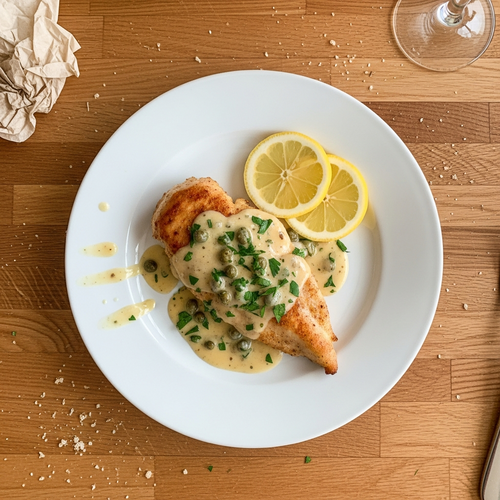
Description: A quick, easy, and healthy take on the classic Chicken Piccata. This version is packed with protein and flavor but low in fat and calories, making it perfect for a fat-loss-focused lifestyle. Ready in under 20 minutes!
Prep Time: 5 minutes | Cook Time: 15 minutes
Servings: 1
Macros per Serving | Calories: 385 | Protein: 45g | Fat: 12g | Carbohydrates: 15g
Ingredients
- 6 ounces boneless, skinless chicken breast, pounded to ½-inch thickness
- 2 tablespoons all-purpose flour
- ⅛ teaspoon salt
- ⅛ teaspoon black pepper
- 1 teaspoon olive oil
- 1 teaspoon unsalted butter (or a light butter substitute)
- 1 small shallot, minced
- 2 cloves garlic, minced
- ¼ cup dry white wine (such as Sauvignon Blanc)
- ½ cup low-sodium chicken broth
- 3 tablespoons fresh lemon juice
- 2 tablespoons capers, drained
- 1 tablespoon plain non-fat Greek yogurt (optional, for a creamier sauce)
- 1 tablespoon fresh parsley, chopped
- Lemon slices for garnish
Instructions
- In a shallow dish, combine flour, salt, and pepper. Lightly dredge the chicken breast in the mixture.
- In a non-stick skillet over medium-high heat, heat olive oil and butter. Cook chicken for 3-4 minutes per side until golden brown. Remove from skillet.
- Reduce heat to medium, add shallot and cook for 1 minute. Add garlic and cook for 30 seconds more.
- Pour in white wine to deglaze the pan, scraping up any browned bits.
- Stir in chicken broth, lemon juice, and capers. Simmer for 3-5 minutes to reduce slightly.
- Return chicken to the skillet, spooning sauce over it. Simmer for 1-2 minutes.
- Remove from heat and stir in Greek yogurt, if using. Garnish with parsley and lemon slices.
Notes
For best results, use a non-stick skillet to minimize the need for extra oil. Pounding the chicken thin is crucial for quick and even cooking.
FAQs About Chicken Piccata For Weight Loss
Here are some straightforward answers to the most common questions I receive about this chicken piccata recipe.
Can I make this healthy chicken piccata without wine?
Absolutely. The white wine in a classic piccata is used to deglaze the pan and add a layer of acidic complexity to the sauce. While it does add a specific flavor, it’s not essential, and you can make a delicious sauce without it. This is a perfect example of the flexible eating we preach. Don’t let one missing ingredient stop you from making a healthy meal.
To substitute, simply replace the quarter cup of dry white wine with an equal amount of low-sodium chicken broth. To make up for the loss of acidity, I recommend adding an extra squeeze of fresh lemon juice or a small splash (about a teaspoon) of white wine vinegar along with the broth. This will give you that bright, sharp flavor that cuts through the richness of the sauce and keeps it from feeling flat.
Is chicken piccata good for meal prep?
Yes, this recipe is surprisingly good for meal prep, especially with a few small tweaks for the ADHD brain. The “cook once, eat twice” method is a lifesaver. You can double or triple the recipe easily. Cook the chicken and the sauce, then portion them out into individual airtight containers. They will last for up to four days in the fridge.
For the best results when meal prepping, I recommend slightly undercooking your side vegetables (like green beans or broccoli). This way, when you reheat the entire meal, the vegetables will finish cooking and be perfectly crisp-tender instead of turning to mush. Also, if you plan to reheat in a microwave, store the fresh parsley separately and add it after reheating to preserve its fresh flavor and color. Having these grab-and-go meals ready is a powerful tool to prevent decision fatigue and avoid less healthy choices on busy days.
Why is my chicken piccata sauce not thickening?
This is a common issue, and it usually has a simple fix. In this lighter version of chicken piccata, we aren’t using a ton of flour or butter, which are the traditional thickening agents. The slight thickening in this recipe comes from two places: the small amount of flour that comes off the chicken into the pan and the reduction of the liquid as it simmers.
If your sauce is too thin, the most likely culprit is that it hasn’t simmered long enough to reduce. Just let it bubble gently for a few more minutes, and it should thicken up as some of the water from the broth and wine evaporates. If you’re in a hurry, you can create a “slurry” by mixing a teaspoon of cornstarch with a tablespoon of cold water until smooth, then whisking it into the simmering sauce. It will thicken almost instantly.
What’s the best way to pound chicken for chicken piccata without a mallet?
This is a fantastic, practical question because most of us don’t have a full set of professional kitchen tools. A meat mallet is great, but you can get the exact same result with common household items. The goal is just to create an even, thin cutlet that cooks quickly. My go-to method is to place the chicken breast inside a durable zip-top bag (I recommend doubling it up to prevent tears) or between two pieces of plastic wrap or parchment paper.
Once the chicken is covered, you can use a heavy-bottomed skillet, a rolling pin, or even a sturdy wine bottle to gently and evenly pound the chicken, starting from the center and working your way out. The key is to use firm but gentle pressure. You’re not trying to pulverize it, just flatten it to about a half-inch thickness. This is a perfect ADHD kitchen hack; it’s about using what you have to get the job done without needing a special trip to the store.
How can I fit this chicken piccata recipe into my weekly calorie goals?
This recipe was designed specifically to fit easily into a fat-loss plan. At around 385 calories and a massive 45 grams of protein, it’s a very macro-friendly entrée. The high protein content will keep you full and satisfied, which is crucial for sticking to a calorie deficit. To integrate it into your week, think of it as a “protein anchor.”
Pair it with low-calorie, high-volume sides. Serving it over a big bed of zucchini noodles or with a side of steamed broccoli adds a ton of food volume and nutrients for very few additional calories. This makes the entire meal feel large and satisfying. You can easily plan your other meals for the day around this one. For example, have a protein shake for breakfast and a big salad for lunch, and this chicken piccata fits perfectly as a delicious and filling dinner without pushing you over your calorie target.
Try These High-Protein Recipes Next
If you loved how simple and satisfying this Chicken Piccata was, here are a few other recipes designed for fat loss and the ADHD brain.
- The Best Healthy Chicken Parmesan Recipe: Get that crispy, cheesy, saucy satisfaction you crave without the guilt. This version is baked, not fried, and packed with protein.
- The Best Healthy Marry Me Chicken Recipe: A creamy, sun-dried tomato and basil sauce that feels incredibly indulgent but is made with smart swaps to fit your macros perfectly.
- 10 Elegant Chicken Entrees: For when you want more ideas for “fancy-feeling” meals, this roundup has some great inspiration that can be adapted to a healthy lifestyle.
Give these a try the next time you need a delicious meal that works with you, not against you.