
Beef stroganoff used to be one of those “danger” foods for me. You know the kind. The ones you love so much that one bite turns into the whole pan, followed by a week of feeling like you’ve completely failed your fitness goals. It was pure comfort, but it was also a one-way ticket to a calorie surplus and a motivation spiral.
When I was on my journey to lose 65-70 pounds, I knew I had to find a way to keep my favorite foods in my life. The all-or-nothing approach never worked for my ADHD brain. Telling myself I could “never” eat something just made me want it more. It was a setup for failure.
So, I set out to build a better beef stroganoff. One that delivered all the rich, creamy, savory flavor I craved, but was packed with protein and built on smart ingredients that supported my fat loss goals. I needed a version that would leave me feeling full and satisfied, not bloated and defeated.
This is the recipe that came out of that process. It’s a cornerstone of my flexible eating plan. It’s proof that you don’t have to give up comfort food to get fit. You just have to rebuild it to work for you, not against you.
Skip to My Flexibe Diet Recipe!
Why Beef Stroganoff Is Great For Fat Loss
When you see a creamy pasta dish, “fat loss” is probably not the first thing that comes to mind. Traditional beef stroganoff recipes are loaded with butter, full-fat sour cream, and fatty cuts of beef. They taste incredible, but they can easily pack over 800 calories per serving with very little protein to show for it. That kind of meal can spike your blood sugar and leave you hungry again in an hour, which is a recipe for cravings.
Our version completely flips the script. We build this recipe around our core principles. Protein first, hunger management second. We start by using lean sirloin steak, a fantastic source of high-quality protein that helps build muscle and keeps you feeling full for hours. By trimming all visible fat, we get the flavor and satisfaction of red meat without the excess saturated fat and calories. This is key for managing your overall energy intake without feeling deprived.
The magic happens in the sauce. Instead of heavy cream or sour cream, we create that signature tangy creaminess with nonfat Greek yogurt and a touch of light cream cheese. This simple swap dramatically cuts the fat content while massively boosting the protein. A cup of nonfat Greek yogurt can add over 20 grams of protein to the entire dish. This protein-first approach is the single most effective tool for managing hunger and crushing cravings, which is 75 percent of the battle in any fat loss journey.
Finally, we pair it with whole wheat egg noodles. The fiber in whole grains slows down digestion, providing more stable, lasting energy and preventing the energy crash that often follows a meal high in refined carbs. It’s a complete, balanced meal that tastes like a decadent treat but works with your body to keep you on track. This is what flexible eating looks like. It’s not about restriction. It’s about smart reconstruction.
Ingredients You’ll Need for Beef Stroganoff
The beauty of this recipe is its reliance on smart, accessible ingredients that work harder for you. We’re not using weird diet products. We’re just making strategic swaps that boost protein and cut down on fat without sacrificing that classic stroganoff flavor. Every ingredient has a purpose.
The key to the creamy, high-protein sauce is our dairy combination: plain nonfat Greek yogurt and light cream cheese. This is the heart of the recipe’s transformation. The Greek yogurt provides a tangy flavor similar to sour cream but packs a huge protein punch with virtually no fat. The softened light cream cheese melts beautifully, giving the sauce a rich, velvety texture that you simply can’t achieve with yogurt alone. This duo is a game-changer for creating healthy comfort food.
Here’s the full list of what you’ll need:
- 1.5 lbs lean sirloin steak, trimmed of all visible fat and thinly sliced against the grain
- 1 tbsp olive oil
- 1 large yellow onion, thinly sliced
- 16 oz cremini mushrooms, sliced
- 2 cloves garlic, minced
- 1/2 cup dry white wine or dry sherry (optional, for deglazing)
- 4 cups low-sodium beef bone broth
- 2 tbsp Worcestershire sauce
- 1 tbsp Dijon mustard
- 1 tsp dried thyme
- Salt and freshly ground black pepper to taste
- 2 tbsp cornstarch mixed with 3 tbsp cold water
- 1 cup plain nonfat Greek yogurt
- 2 oz light cream cheese, softened
- 12 oz whole wheat egg noodles, cooked according to package directions
- Fresh parsley, chopped, for garnish
A quick note on a few ingredients. Using a quality low-sodium beef bone broth instead of regular beef broth adds a bit more protein and a much deeper, richer flavor to the sauce. For the steak, sirloin is a great lean option, but flat iron or even flank steak also work well. Just make sure it’s trimmed well and sliced thinly against the grain for maximum tenderness.
How To Make Beef Stroganoff (Step-By-Step)
Making this beef stroganoff is a straightforward process, but a few key techniques will guarantee a perfect result every time. We’ll focus on building layers of flavor from the ground up, ensuring the beef is tender and the sauce is rich and creamy, never grainy or broken. A large, heavy-bottomed skillet or a Dutch oven is your best friend here. It holds heat evenly, which is crucial for getting a great sear on the beef.
ADHD Tip: Before you turn on the stove, practice “mise en place.” It’s a French term for having all your ingredients prepped and ready to go. Slice your onions, mushrooms, and beef. Mince the garlic. Measure out your liquids. This prevents that frantic, overwhelming feeling of searching for an ingredient while something is burning on the stove. It turns chaos into a calm, step-by-step process.
Step 1: Sear The Beef
After seasoning your sliced sirloin with salt and pepper, heat the olive oil in your skillet over medium-high heat until it shimmers. The key here is to sear the beef in batches. Do not overcrowd the pan. If you dump all the meat in at once, it will steam instead of sear, and you’ll miss out on the beautiful brown crust that creates immense flavor. Cook each batch for just 1-2 minutes per side until nicely browned, then remove it from the skillet and set it aside. Those browned bits left in the pan are pure gold.
Step 2: Build The Flavor Base
Reduce the heat to medium and add the sliced onions. Cook them for 5-7 minutes, stirring occasionally, until they soften and start to caramelize. This develops their natural sweetness. Next, add the mushrooms with a pinch of salt. The salt helps them release their moisture. Continue cooking until that liquid has evaporated and the mushrooms begin to brown. This can take a good 8-10 minutes, but patience pays off in flavor. Finally, stir in the minced garlic and thyme and cook for just one more minute until fragrant.
Step 3: Create The Sauce
If you’re using wine or sherry, pour it in now to deglaze the pan. Use a wooden spoon to scrape up all those flavorful browned bits from the bottom. Let the wine bubble and reduce by about half. Next, stir in the beef bone broth, Worcestershire sauce, and Dijon mustard, and bring it all to a simmer. To thicken the sauce, whisk in your cornstarch slurry (cornstarch mixed with cold water). Let it simmer for 2-3 minutes, and you’ll see it transform into a glossy, thickened sauce.
Step 4: Finish With Creaminess
This is the most important step. Reduce the heat to low. Let the sauce stop simmering. If you add the dairy when the sauce is too hot, it will curdle and become grainy. Once the heat is low, stir in the Greek yogurt and softened light cream cheese until the sauce is completely smooth and creamy. Now you can return the seared beef and any juices back to the skillet. Stir everything together and let it gently heat through for a couple of minutes. Season with salt and pepper to taste, and you’re ready to serve.
How To Serve Beef Stroganoff (ADHD-Friendly)
Serving this beef stroganoff is about making it fit seamlessly into your life and your goals. The classic way, of course, is over a bed of hot whole wheat egg noodles, garnished with a sprinkle of fresh parsley for a bit of freshness and color. This creates a perfectly balanced meal with protein, complex carbs, and veggies all in one bowl. It’s satisfying, delicious, and requires minimal thought on a busy weeknight.
But flexibility is our mantra. For those with ADHD, having pre-planned, low-effort options is critical for staying consistent. You don’t have to eat it the same way every time. Here are a few serving variations that work great for different macro goals or just for shaking things up:
- Lower-Carb Option: Serve the stroganoff over a bed of steamed cauliflower rice or zucchini noodles (zoodles). This is a fantastic way to increase your vegetable intake and lower the overall carbohydrate count of the meal, making it a great choice for a fat-loss phase.
- Extra Veggie Power: Mix in a cup of steamed green peas or sautéed spinach right at the end for an extra boost of micronutrients and fiber.
- Comfort Classic: For a more indulgent feel that still fits your macros, serve it over a portion of creamy mashed potatoes or mashed cauliflower.
Here’s my best ADHD-friendly meal prep tip for this recipe. When you’re putting away the leftovers, portion them out immediately into single-serving, microwave-safe containers. Put the noodles or cauliflower rice in first, then top with the stroganoff. This eliminates the friction of having to assemble a meal later. When you’re hungry and low on executive function, you can just grab one container, reheat it, and have a perfectly portioned, goal-aligned meal ready in minutes. This tiny bit of planning prevents the “what’s for lunch” spiral that can so often lead to ordering takeout.
How To Store, Reheat, and Reuse Beef Stroganoff
One of the best things about this beef stroganoff recipe is that it’s fantastic for meal prep. Cooking once and eating multiple times is a core strategy for staying on track, especially on days when your ADHD leaves you with zero energy to cook from scratch. Proper storage is key to making sure your leftovers are just as good as the first day.
Once the stroganoff has cooled down, you can store it in an airtight container in the refrigerator. Here are the best practices for storage and reheating to maintain the best quality:
- In the Refrigerator: The stroganoff will keep well for up to 4 days. If possible, store the stroganoff sauce and the noodles separately. This prevents the noodles from getting mushy. When you’re ready to eat, you can combine them and reheat.
- Reheating on the Stovetop: The best way to reheat stroganoff is gently in a saucepan over medium-low heat. Add a splash of beef broth or water to help loosen the sauce as it warms up. Stir frequently until it’s heated through. This method prevents the dairy-based sauce from breaking or separating.
- Reheating in the Microwave: If you’re in a hurry, the microwave works fine. Reheat in 60-second intervals at 50% power, stirring between each interval. The lower power and frequent stirring help prevent the sauce from getting too hot and curdling.
I don’t generally recommend freezing this recipe because dairy-based sauces like this one can separate and become grainy when thawed. It’s still perfectly safe to eat, but the texture might be slightly different. If you do want to freeze it, thaw it overnight in the refrigerator and reheat it very gently on the stovetop, stirring constantly to help the sauce come back together as much as possible. With leftovers this delicious, though, they probably won’t last long enough to need freezing.
Easy Swaps & Variations for Beef Stroganoff
The best recipes are the ones you can adapt to what you have on hand or what fits your personal preferences. This beef stroganoff recipe is incredibly flexible. Don’t be afraid to make it your own. Whether you need to adjust for dietary restrictions, use up what’s in your fridge, or simply try a new flavor combination, there are plenty of easy swaps you can make without compromising the meal’s health benefits.
Remember, consistency beats perfection. If making a swap means you’ll actually cook the meal instead of ordering a pizza, that’s a huge win. Here are some of the most common and effective variations:
- Protein Swaps: If you don’t have sirloin, lean ground beef (93/7 or leaner) is a fantastic and often more budget-friendly option. Just brown it and drain any excess fat before proceeding with the onions. Boneless, skinless chicken thighs or even turkey tenderloin, sliced thin, also work beautifully.
- Make It Gluten-Free: This is an easy switch. Use a gluten-free Worcestershire sauce (many brands are naturally GF, but check the label) or substitute it with tamari. Serve the stroganoff over your favorite gluten-free pasta, rice, or quinoa.
- Vary Your Veggies: Mushrooms are classic, but feel free to add other vegetables. Sliced bell peppers, sweet peas (stirred in at the end), or even some chopped carrots can add extra nutrients and flavor.
- Dairy Adjustments: If you’re not a fan of Greek yogurt’s tang, you can use all light cream cheese or a light sour cream. Just be mindful of the macro changes, as this will likely increase the fat and decrease the protein content slightly.
These are just starting points. The goal is to create a system that works for you. If you know you can reliably make a delicious, healthy meal with a few different protein or veggie options, you’re less likely to get bored and fall off track. It’s about building a flexible framework, not a rigid set of rules. That’s how we create a sustainable lifestyle.
High-Protein Beef Stroganoff
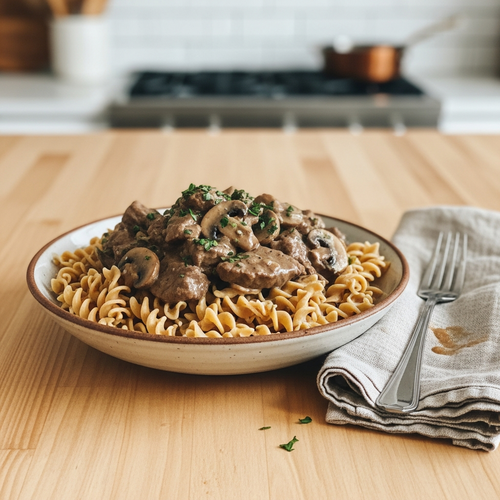
Description: A rich, creamy, and satisfying beef stroganoff redesigned for a fat loss lifestyle. This recipe uses lean sirloin, Greek yogurt, and light cream cheese to deliver all the classic comfort food flavor with a huge boost of protein to keep you full and on track with your goals.
Prep Time: 15 minutes | Cook Time: 35 minutes
Servings: 6
Macros per Serving | Calories: 485 | Protein: 45g | Fat: 12g | Carbohydrates: 48g
Ingredients
- 1.5 lbs lean sirloin steak, trimmed and thinly sliced
- 1 tbsp olive oil
- 1 large yellow onion, thinly sliced
- 16 oz cremini mushrooms, sliced
- 2 cloves garlic, minced
- 1/2 cup dry white wine or sherry (optional)
- 4 cups low-sodium beef bone broth
- 2 tbsp Worcestershire sauce
- 1 tbsp Dijon mustard
- 1 tsp dried thyme
- Salt and black pepper to taste
- 2 tbsp cornstarch mixed with 3 tbsp cold water
- 1 cup plain nonfat Greek yogurt
- 2 oz light cream cheese, softened
- 12 oz whole wheat egg noodles, cooked
- Fresh parsley, chopped, for garnish
Instructions
- Season beef with salt and pepper. Heat oil in a large skillet over medium-high heat. Sear beef in batches for 1-2 minutes per side. Remove and set aside.
- Reduce heat to medium. Add onions and cook for 5-7 minutes until soft. Add mushrooms and cook for 8-10 minutes until browned. Stir in garlic and thyme for 1 minute.
- Deglaze pan with wine, scraping up browned bits. Stir in broth, Worcestershire, and Dijon. Bring to a simmer.
- Whisk in cornstarch slurry and simmer for 2-3 minutes until thickened.
- Reduce heat to low. Stir in Greek yogurt and cream cheese until smooth. Do not boil.
- Return beef to the skillet. Heat through, season to taste, and serve over noodles with parsley.
Notes
For the creamiest sauce, ensure the light cream cheese is fully softened to room temperature and the heat is on low before stirring in the dairy.
FAQs About Beef Stroganoff For Weight Loss
Here are some straightforward answers to the most common questions I receive about this beef stroganoff recipe.
What is the best cut of beef for this healthy beef stroganoff?
For a healthy beef stroganoff focused on fat loss, the best cut of beef is one that is lean but still has enough flavor and tenderness to work well with quick cooking. My top recommendation is sirloin steak. It hits the sweet spot perfectly. It’s relatively affordable, widely available, and has a great beefy flavor. When you trim any visible fat and slice it thinly against the grain, it becomes incredibly tender after a quick sear.
Other excellent lean options include flank steak or flat iron steak. Both are very flavorful and tender when sliced against the grain. You could also use beef tenderloin, but it’s significantly more expensive and almost unnecessarily tender for a dish like this where the beef is sliced thin. A cut I would generally avoid is chuck roast, which is classic for stews but needs a long, slow cooking time to become tender. Since we’re searing quickly, it would end up being tough and chewy.
The most important part of the preparation, regardless of the cut you choose, is the slicing. Slicing the meat thinly and always against the grain shortens the muscle fibers, which is the key to ensuring a tender bite every time.
Can I make this beef stroganoff in a slow cooker?
Yes, you can absolutely adapt this beef stroganoff recipe for a slow cooker, which is a fantastic option for an ADHD-friendly, set-it-and-forget-it meal. The process will be slightly different. You’ll want to use a cut of beef that does well with slow cooking, like a chuck roast, cut into 1-inch cubes instead of thin slices. First, sear the beef cubes in a skillet to develop that deep flavor, then transfer them to the slow cooker.
In the same skillet, sauté your onions and mushrooms, then deglaze the pan and add the garlic, thyme, broth, Worcestershire, and mustard. Pour this entire mixture over the beef in the slow cooker. Cook on low for 6-8 hours or on high for 3-4 hours, until the beef is fall-apart tender. About 30 minutes before serving, whisk your cornstarch slurry into the slow cooker to thicken the sauce. Finally, right before serving, turn the slow cooker off or to the “warm” setting and stir in the Greek yogurt and cream cheese. Just like the stovetop version, you want to avoid high heat when adding the dairy.
How can I make my beef stroganoff sauce thicker without cornstarch?
If you need to avoid cornstarch, there are a few other ways to get a thick, luscious sauce for your beef stroganoff. One of the easiest alternatives is using arrowroot starch. You can use it in the exact same way as cornstarch, making a slurry with cold water and whisking it into the simmering sauce. It creates a beautiful, glossy finish and is a great gluten-free option.
Another classic method is to create a roux at the beginning of the cooking process. After you sauté the onions and mushrooms, you would add a tablespoon or two of all-purpose flour (or a gluten-free flour blend) to the skillet and cook it for a minute to get rid of the raw flour taste. Then, you would slowly whisk in the beef broth. As the sauce simmers, the flour will thicken it naturally. This method provides a slightly different, more traditional richness to the sauce. You can also simply let the sauce reduce for a longer period of time, which will concentrate the flavors and thicken it naturally, though it may not get as thick as it would with a starch.
Is this beef stroganoff recipe gluten-free?
As written, this beef stroganoff recipe is not gluten-free, but it is incredibly easy to adapt. There are only two ingredients you need to be concerned with: the Worcestershire sauce and the whole wheat egg noodles. Many brands of Worcestershire sauce contain malt vinegar, which is derived from barley and is not gluten-free. To make the dish safe, you need to purchase a brand that is explicitly labeled “gluten-free.” Many popular brands offer a GF version, or you can substitute it with gluten-free tamari for a similar umami flavor.
The second and more obvious swap is the pasta. Simply serve the finished beef stroganoff over your favorite gluten-free pasta, cooked according to the package directions. Brown rice pasta or a corn-rice blend would work wonderfully here. You could also serve it over quinoa, white or brown rice, or mashed potatoes, all of which are naturally gluten-free options. With these two simple substitutions, you can easily enjoy a delicious and completely gluten-free beef stroganoff.
Why did my beef stroganoff sauce curdle?
This is the most common issue people face with creamy sauces, and the answer is almost always the same: the heat was too high when the dairy was added. Greek yogurt, sour cream, and even cream cheese are sensitive to heat. When they are added to a boiling or rapidly simmering liquid, the proteins in them tighten up and separate from the liquid, causing that dreaded grainy, curdled texture. The sauce breaks, and while it’s still edible, it’s not pleasant.
To prevent this, you must follow the final step of the recipe carefully. After your sauce has thickened with the cornstarch, reduce the heat to the lowest possible setting. Let the bubbles completely subside. It’s even better if you can pull the pan off the heat for a minute before adding the dairy. Then, gently stir in your softened cream cheese and Greek yogurt until they are fully incorporated and the sauce is smooth. You can then let the stroganoff heat through gently over low heat, but do not let it come back to a simmer or boil. This one simple technique will guarantee a perfectly smooth and creamy sauce every single time.
Try These High-Protein Recipes Next
If you enjoyed this simple and satisfying beef stroganoff, here are a few other high-protein comfort food recipes designed to fit your fitness goals.
- Hearty and Healthy Beef Stew: Another classic comfort dish rebuilt with lean protein and tons of veggies to keep you full for hours.
- High-Protein Meatloaf: My take on a family favorite that uses lean ground beef and a secret ingredient to keep it moist and delicious without the extra fat.
- Easy Beef Stroganoff from This Gal Cooks: A great alternative stroganoff recipe that offers a different, more traditional take on the classic dish.
Building a list of go-to, goal-friendly recipes is the best way to ensure you always have a plan for a healthy and delicious meal.