
I used to think that a dish like Chicken Marsala was strictly “restaurant food.” It sounded fancy and complicated. It also sounded like something that would be loaded with butter, cream, and calories. It was the type of meal I’d order on a special occasion, then feel guilty about later when I was trying to lose weight.
During my journey of losing 65-70 pounds, I had to completely rebuild my relationship with food. I learned that deprivation doesn’t work. Telling myself I could *never* have my favorite foods again was a guaranteed recipe for failure. The real secret was learning how to adapt those foods to fit my goals.
That’s exactly what this healthy chicken marsala recipe is all about. It’s my way of proving that you can eat incredibly delicious, satisfying meals while still making progress. We’re not sacrificing flavor here. We’re just being smart about it. This version is packed with protein, lower in fat, and designed to keep you full and happy.
It’s the perfect example of flexible eating. It feels indulgent, but it’s built to support your fat loss, not sabotage it.
Skip to My Flexibe Diet Recipe!
Why Chicken Marsala Is Great For Fat Loss
When you look at a traditional Chicken Marsala recipe, you’ll often see heaps of butter and heavy cream. It tastes amazing, but it can easily pack a huge calorie punch that makes fitting it into a fat loss plan feel impossible. This recipe takes a different approach, keeping all the rich flavor while aligning with our core principles.
First, we put protein first. Lean chicken breast is the star here, providing a massive dose of high-quality protein. Each serving is designed to maximize satiety, which is just a technical way of saying it keeps you feeling full and satisfied for longer. When you’re full, you’re far less likely to get hit with random cravings or overeat later.
Next, we made smart, simple swaps to cut down on unnecessary fats and calories. Instead of a ton of butter, we use a combination of just one tablespoon of olive oil and one tablespoon of light butter. This gives us that classic flavor and helps brown the chicken beautifully without going overboard. The biggest change is swapping heavy cream for a creamy sauce made from skim milk and a bit of cornstarch. This simple trick creates a velvety, rich-tasting sauce with a fraction of the fat and calories.
This approach makes this Chicken Marsala recipe a perfect tool for sustainable fat loss. It doesn’t taste like “diet food.” It’s a genuinely delicious meal that feels like a treat. For the ADHD brain, this is critical. It helps us avoid the all-or-nothing thinking that can lead to a spiral. You’re not depriving yourself. You’re just eating smarter.
Ingredients You’ll Need for Chicken Marsala
One of the best things about this recipe is that it uses straightforward, easy-to-find ingredients. There’s nothing here that requires a special trip to a gourmet store. We are focused on simplicity and accessibility, because a complicated shopping list is often the first barrier to getting a healthy meal on the table.
Here’s exactly what you’ll need to make this high-protein Chicken Marsala.
- 1.5 lbs boneless, skinless chicken breasts, pounded to 1/4-inch thickness
- 2 tablespoons all-purpose flour
- 1/2 teaspoon salt
- 1/4 teaspoon black pepper
- 1 tablespoon olive oil
- 1 tablespoon light butter
- 16 oz cremini mushrooms, sliced
- 2 shallots, finely chopped
- 2 cloves garlic, minced
- 3/4 cup dry Marsala wine
- 1 cup low-sodium chicken broth
- 1/2 cup skim milk
- 2 teaspoons cornstarch
- 2 tablespoons fresh parsley, chopped
- 1 teaspoon fresh thyme leaves
The key ingredient that truly defines this dish is, of course, the dry Marsala wine. It’s a fortified wine from Sicily that has a unique nutty and slightly sweet flavor profile that is absolutely essential for an authentic sauce. When you’re buying it, make sure you grab “dry” Marsala, not “sweet” Marsala, which is typically used for desserts. The dry version provides the savory depth we need.
A few other notes on ingredients. Using fresh thyme and parsley makes a huge difference in the final flavor. Dried herbs will work in a pinch, but fresh herbs add a brightness that really elevates the dish. For the mushrooms, I strongly recommend cremini (sometimes called baby bellas) over standard white button mushrooms. They have a deeper, earthier flavor that stands up beautifully to the rich sauce.
How To Make Chicken Marsala (Step-By-Step)
This recipe comes together in one skillet, which is a huge win for anyone who dreads a mountain of dishes. The process is straightforward, but a few key techniques are what make the final result taste like it came from a high-end restaurant. We’ll walk through it step-by-step.
1. Prepare and Dredge the Chicken
First, combine your flour, salt, and pepper in a shallow dish or on a plate. Lightly coat each piece of pounded chicken in the mixture. The key word here is “lightly.” You want just a thin dusting, not a thick, heavy coat. Shake off any excess flour. This thin layer helps create a beautiful golden-brown crust and also acts as a subtle thickener for the sauce later on.
ADHD Tip: To minimize mess, you can put the flour mixture in a large zip-top bag, add the chicken, seal it, and shake to coat. It keeps the flour contained and makes cleanup a breeze.
2. Cook the Chicken
Heat your olive oil and light butter in a large skillet over medium-high heat. A good quality non-stick or stainless steel skillet is your best friend here. Once the butter is melted and sizzling, carefully place the chicken in the pan in a single layer. Don’t overcrowd the skillet. If needed, cook the chicken in two batches. Cook for about 3-4 minutes per side, until it’s golden brown and cooked through. Remove it from the pan and set it aside on a plate.
3. Brown the Mushrooms
In that same skillet, add your sliced mushrooms. It might seem like a lot of mushrooms, but they will cook down significantly. Spread them out and let them cook without stirring too much for the first few minutes. This allows them to release their water and get nicely browned, which develops a ton of deep, savory flavor. This browning process is a critical flavor-building step.
4. Sauté the Aromatics
Once the mushrooms are browned, add the chopped shallots and cook for another couple of minutes until they soften and become translucent. Then, stir in the minced garlic and cook for just about 30 seconds more. You’ll know it’s ready when you can smell that amazing garlic aroma. Be careful not to let it burn, as burnt garlic turns bitter.
5. Deglaze with Marsala Wine
Now for the most important step. Pour in the dry Marsala wine. Use a wooden spoon or spatula to scrape up all those delicious browned bits stuck to the bottom of the pan. This is called “deglazing,” and it’s where the magic happens. All that concentrated flavor from the chicken and mushrooms gets lifted into the wine, forming the base of your incredible sauce. Let the wine simmer and bubble away until it has reduced by about half.
6. Prepare the Thickener
While the wine reduces, grab a small bowl. Whisk together the skim milk and the cornstarch until the mixture is completely smooth with no lumps. This mixture is called a slurry, and it’s what will give our sauce that creamy, velvety texture without using heavy cream.
7. Build the Sauce
Add the low-sodium chicken broth and the fresh thyme leaves to the skillet with the reduced wine and mushrooms. Bring everything to a gentle simmer.
8. Thicken the Sauce
Slowly pour the milk and cornstarch slurry into the skillet while whisking continuously. This is important to prevent any lumps from forming. Continue to simmer the sauce, stirring occasionally, for about 5 minutes. You’ll see it start to thicken up into a beautiful, glossy sauce.
9. Return the Chicken
Nestle the cooked chicken breasts back into the skillet with the sauce. Spoon some of the sauce and mushrooms over the top of the chicken. Let it all simmer together for another 2-3 minutes, just to heat the chicken through and allow it to soak up all that flavor.
10. Finish and Serve
Turn off the heat and stir in the fresh, chopped parsley. The fresh parsley at the end adds a final touch of bright, clean flavor and color. Serve your delicious, healthy Chicken Marsala immediately.
How To Serve Chicken Marsala (ADHD-Friendly)
The beauty of this Chicken Marsala is that it feels like a complete, elegant meal on its own. The chicken is the protein, the mushrooms serve as a hearty vegetable, and the sauce brings it all together. To make it a balanced meal that supports your fat loss goals, the key is to pair it with smart, simple sides that don’t require a lot of extra effort or executive function.
When you have ADHD, the idea of making a main dish *and* two complicated sides can feel overwhelming and lead to just ordering takeout instead. The trick is to rely on “one-step” sides. These are things you can prepare with minimal effort while the chicken is cooking. This prevents you from getting bogged down in too many simultaneous tasks.
Here are a few of my go-to, ADHD-friendly serving suggestions:
- Steamed Green Beans or Asparagus: A bag of frozen, steam-in-the-bag green beans is a lifesaver. It takes 5 minutes in the microwave and requires zero prep or cleanup. A perfect, fibrous vegetable to round out the meal.
- Microwaveable Brown Rice or Quinoa: Many stores sell pouches of pre-cooked brown rice or quinoa that heat up in 90 seconds. They provide a great source of complex carbs to soak up that amazing Marsala sauce.
- Zucchini Noodles (Zoodles): For a low-carb option, sautéing some pre-packaged zucchini noodles for a few minutes is incredibly fast and easy. They create a pasta-like base for the chicken and sauce.
- Simple Side Salad: Don’t overthink it. A bag of mixed greens with a light vinaigrette is all you need. Assemble it while the chicken is browning.
By keeping the side dishes brutally simple, you ensure you can get a complete, nutritious, and delicious meal on the table even on a low-motivation day. This consistency is far more important than creating a perfect, gourmet spread every single night.
How To Store, Reheat, and Reuse Chicken Marsala
This recipe is fantastic for meal prep. In fact, I think the flavors get even better the next day as they have more time to meld together. Having delicious, high-protein leftovers ready to go is one of the best strategies for staying on track, especially for those of us with ADHD. It completely removes the decision fatigue around “what’s for lunch?”
The key is to store and reheat it properly to maintain the best taste and texture. Nothing is worse than a leftover meal that turns into a rubbery, sad version of its former self. A little care goes a long way in making your prepped meals something you actually look forward to eating.
Here’s the best way to handle your leftovers:
- Storing: Allow the Chicken Marsala to cool down slightly before transferring it to an airtight container. Store it in the refrigerator, where it will stay fresh and delicious for up to 4 days. An ADHD tip is to use clear containers and place them at eye-level in the fridge. If it’s visible, you’re more likely to remember it’s there and eat it.
- Reheating: The best way to reheat this dish is gently on the stovetop. Place the chicken and sauce in a small skillet over medium-low heat. Add a splash of chicken broth or water to thin out the sauce as it heats up. Cover and warm for 5-7 minutes, or until heated through. This method prevents the chicken from overcooking and becoming tough. While you can use a microwave, use it at 50% power in 1-minute intervals to avoid a rubbery texture.
- Reusing: Don’t just think of it as the same meal. Get creative! You can shred the leftover chicken, mix it with the sauce, and serve it over whole wheat pasta or zucchini noodles for a completely new dish. It’s also fantastic chopped up and served in a low-carb wrap with some fresh spinach.
By planning for leftovers, you’re not just cooking one meal. You’re setting your future self up for success. This is a core principle of working with your brain, not against it.
Easy Swaps & Variations for Chicken Marsala
One of my core beliefs is that recipes should be flexible. Life is unpredictable, and you might not always have the exact ingredients on hand. Or maybe you have specific dietary needs or preferences. For those of us with ADHD, being able to adapt on the fly without having to make an extra trip to the store is a game-changer. This Chicken Marsala recipe is very forgiving and easy to modify.
The goal is to feel empowered in the kitchen, not trapped by a rigid set of rules. Use this recipe as a template and feel free to make it your own with these simple swaps and variations.
Here are some easy ways to customize this dish:
- Make it Gluten-Free: This is a simple swap. Instead of all-purpose flour for dredging the chicken, use a 1-to-1 gluten-free flour blend or even just cornstarch. The rest of the recipe is naturally gluten-free.
- Go Dairy-Free: Substitute the light butter with a dairy-free butter alternative or use a bit more olive oil. For the sauce, use an unsweetened, plain dairy-free milk like almond milk or cashew milk in place of the skim milk.
- No Alcohol Version: If you prefer to cook without wine, you can substitute the Marsala. Use an equal amount of extra low-sodium chicken broth and add 1 tablespoon of balsamic vinegar. This will mimic the acidity and some of the depth that the wine provides. The flavor will be different, but still very tasty.
- Change the Protein: This sauce is amazing with other proteins too. Thinly pounded pork cutlets are a classic alternative. You could also use chicken thighs if you prefer dark meat, just be mindful they have a higher fat content.
- Boost the Veggies: Want to add more greens? Stir in a few large handfuls of fresh spinach at the very end of cooking. It will wilt down into the sauce in just a minute or two, adding extra nutrients and fiber.
Remember, consistency beats perfection every time. Making a slightly modified version of a healthy recipe is always better than giving up and ordering a pizza because you were missing one ingredient.
High-Protein Chicken Marsala
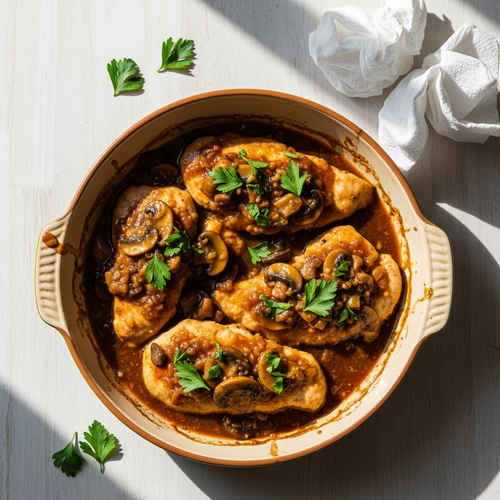
Description: A rich and savory Chicken Marsala made lighter and healthier for a fat loss lifestyle. This recipe is packed with protein and flavor, using smart swaps to create a creamy, indulgent-tasting sauce without all the extra calories. It’s the perfect one-pan meal for a satisfying weeknight dinner.
Prep Time: 15 minutes | Cook Time: 25 minutes
Servings: 4
Macros per Serving | Calories: 352 | Protein: 46g | Fat: 12g | Carbohydrates: 14g
Ingredients
- 1.5 lbs boneless, skinless chicken breasts, pounded to 1/4-inch thickness
- 2 tablespoons all-purpose flour
- 1/2 teaspoon salt
- 1/4 teaspoon black pepper
- 1 tablespoon olive oil
- 1 tablespoon light butter
- 16 oz cremini mushrooms, sliced
- 2 shallots, finely chopped
- 2 cloves garlic, minced
- 3/4 cup dry Marsala wine
- 1 cup low-sodium chicken broth
- 1/2 cup skim milk
- 2 teaspoons cornstarch
- 2 tablespoons fresh parsley, chopped
- 1 teaspoon fresh thyme leaves
Instructions
- Combine flour, salt, and pepper. Lightly dredge chicken in the mixture.
- Heat oil and butter in a large skillet over medium-high heat. Cook chicken for 3-4 minutes per side until golden. Remove and set aside.
- Add mushrooms to the same skillet and cook until browned, about 5-7 minutes.
- Stir in shallots and cook for 2 minutes, then add garlic and cook for 30 seconds.
- Pour in Marsala wine, scraping up browned bits from the pan. Simmer until reduced by half.
- In a small bowl, whisk together skim milk and cornstarch until smooth.
- Add chicken broth and thyme to the skillet. Bring to a simmer.
- Slowly whisk in the milk mixture. Simmer for 5 minutes until the sauce thickens.
- Return chicken to the skillet, spooning sauce over it. Simmer for 2-3 minutes.
- Stir in fresh parsley and serve immediately.
Notes
Ensure you are using DRY Marsala wine, not sweet. The type of wine makes a significant difference in the final flavor of this savory dish.
FAQs About Chicken Marsala For Weight Loss
Here are some straightforward answers to the most common questions I receive about this Chicken Marsala recipe.
What makes this Chicken Marsala recipe healthy for weight loss?
This recipe is specifically designed for weight loss by focusing on two core principles: maximizing protein and minimizing empty calories. First, it’s built around 1.5 pounds of lean chicken breast, which provides a very high dose of protein per serving. Protein is crucial for fat loss because it’s highly satiating, meaning it helps you feel full and satisfied, which reduces cravings and overall calorie intake. It also helps preserve lean muscle mass while you’re in a calorie deficit.
Second, we made strategic swaps to slash the fat and calorie content found in traditional recipes. Instead of using large amounts of butter and heavy cream, we use a small amount of light butter and olive oil for flavor and browning, and we create a creamy sauce using skim milk thickened with cornstarch. This provides a rich, velvety texture without the heavy fat load. By combining high protein with smart, lower-calorie ingredients, you get a meal that feels indulgent but fits perfectly within a calorie-controlled eating plan.
Can I make this Chicken Marsala without the wine?
Yes, you absolutely can make this recipe without wine. While the Marsala wine provides the signature, authentic flavor of the dish, I understand that many people prefer to cook without alcohol for various reasons. The most important function of the wine in this recipe is to deglaze the pan and provide a complex, acidic base for the sauce. You can achieve a similar effect with a non-alcoholic substitution.
To make it without wine, simply replace the 3/4 cup of dry Marsala wine with an equal amount of low-sodium chicken broth. To replicate the acidity and depth, add one tablespoon of balsamic vinegar or a good squeeze of fresh lemon juice to the broth. The final flavor will be different from the classic version—it will be more of a savory chicken and mushroom gravy—but it will still be incredibly delicious and work beautifully with the other ingredients.
Is Chicken Marsala a good choice for meal prep?
This Chicken Marsala recipe is an excellent choice for meal prep. In my experience, dishes with a sauce like this often taste even better the next day because the flavors have more time to meld and deepen. Prepping this meal ahead of time is a fantastic strategy for anyone with a busy schedule or for those of us with ADHD who benefit from reducing in-the-moment decisions about food.
When you’re prepping, you can cook the entire recipe as directed and then portion it out into individual airtight containers. It will last in the fridge for up to 4 days. Having these high-protein, satisfying meals ready to grab for lunch or a quick dinner makes it so much easier to stay on track with your nutrition goals. It eliminates the risk of reaching for less healthy convenience foods when hunger and decision fatigue strike. Just follow the reheating instructions provided earlier for the best results.
What’s the best type of Marsala wine to use for Chicken Marsala?
This is a critical question, as using the right type of Marsala wine is essential for the success of the dish. You must use dry Marsala wine for this recipe. Marsala wine comes in two main varieties: dry and sweet. Sweet Marsala is typically used in desserts, like Zabaglione, and has a much higher sugar content. If you use it in this recipe, your sauce will be overly sweet and have a very unbalanced flavor.
When you’re at the store, look carefully at the label. It should clearly say “Dry Marsala.” You can usually find it in the wine section, often grouped with other fortified wines like sherry and port, or sometimes in the cooking wine aisle. Investing in a decent quality bottle makes a difference, as the flavor of the wine is the foundation of the sauce. You don’t need to break the bank, but try to avoid the super cheap cooking wines that are loaded with salt and preservatives.
How can I prevent my Chicken Marsala sauce from being too thin?
A thin, watery sauce can be disappointing, but it’s usually an easy fix. There are three common reasons why the sauce might not thicken properly. The first is not reducing the Marsala wine enough. After you deglaze the pan, it’s important to let the wine simmer until it has visually reduced by about half. This step concentrates the flavor and cooks off some of the liquid, which is the first step in building a thick sauce.
The second reason is an issue with the cornstarch slurry. You must ensure the cornstarch is fully dissolved in the *cold* skim milk before adding it to the hot pan. If you add cornstarch directly to hot liquid, it will clump up immediately and won’t be able to do its job. Finally, the sauce needs to come to a proper simmer after you add the slurry. The heat is what activates the cornstarch’s thickening power. If it doesn’t get hot enough, it won’t thicken. If you’ve done all these things and your sauce is still thinner than you’d like, you can make another small slurry (1 teaspoon cornstarch mixed with 1 tablespoon cold water) and slowly whisk it in until you reach your desired consistency.
Try These High-Protein Recipes Next
If you enjoyed this simple and delicious high-protein Chicken Marsala, here are a few other recipes you should try next.
- High-Protein Chicken Piccata Recipe: Another restaurant classic made healthy, with a bright and tangy lemon-caper sauce that’s incredibly satisfying.
- Healthy Chicken Parmesan Recipe: My take on a comfort food favorite, with crispy baked chicken and a rich tomato sauce, all designed to fit your macros.
- 10 Elegant Chicken Entrees: A great collection of sophisticated yet simple chicken recipes for when you want to impress or just treat yourself to something special.
Each of these recipes follows the same principles of being high in protein, easy to make, and packed with flavor to support your fitness journey.