
Let’s be honest, egg salad doesn’t exactly scream “fat loss food.” For most of my life, it was a gloopy, mayonnaise-heavy side dish at a potluck. It was something I ate, but never something I thought about as a tool for getting fit. That all changed when I was deep in my journey of losing 65 pounds. I needed lunches that were fast, cheap, and packed with protein to keep me full. My old friend egg salad needed a serious makeover.
I was tired of boring chicken and rice, and I needed something I could make in a big batch to get me through a few days of chaotic single-dad life. The problem was the mayo. It added a ton of fat and calories without much nutritional benefit. So, I started experimenting. I wanted the creaminess and the classic flavor, but I needed it to fit my macros and support my goals.
This high-protein egg salad recipe is the result of that experimentation. It’s the version that helped me stay consistent, manage my cravings, and actually enjoy my meals. It’s built for the ADHD brain: brutally simple, flexible, and something you can throw together even when your executive function has left the building for the day. It proves that you don’t need to eat boring food to get lean and build a body you feel great in.
Skip to My Flexibe Diet Recipe!
Why Egg Salad Is Great For Fat Loss
When you’re trying to lose fat, the name of the game is managing hunger. If you feel full and satisfied, you’re far less likely to get derailed by cravings. This is where this specific egg salad recipe really shines. It’s designed from the ground up to be a fat loss powerhouse, focusing on the principle of “protein first.”
Each serving is absolutely loaded with high-quality protein. We get this from three sources: the eggs themselves, the non-fat Greek yogurt, and the low-fat cottage cheese. Protein is the most satiating macronutrient, meaning it keeps you feeling full for longer than fats or carbs. For those of us with ADHD, this is a game-changer. Stable blood sugar and less hunger mean better focus and less impulsivity around food choices.
We also strategically make this recipe lower in calories and fat than traditional versions. The secret is swapping out mayonnaise entirely for our creamy Greek yogurt and cottage cheese base. We also discard half of the egg yolks. While yolks have nutrients, they are also where all the fat is stored. By using all the whites but only half the yolks, we keep the protein high while significantly cutting the overall calories. This lets you eat a generous, satisfying portion without derailing your daily goals. It’s a perfect example of working smarter, not harder, which is what sustainable fitness is all about.
Ingredients You’ll Need for Egg Salad
The beauty of this recipe is its simplicity. We’re using common, easy-to-find ingredients to create something that’s both delicious and perfectly aligned with our fitness goals. No need to hunt down specialty items. Here’s exactly what you’ll need.
- 8 large hard-boiled eggs
- 1/2 cup plain non-fat Greek yogurt
- 1/4 cup low-fat cottage cheese
- 2 teaspoons Dijon mustard
- 1 tablespoon fresh dill, chopped
- 2 tablespoons chopped chives or green onion
- 1/4 cup finely diced celery
- 1/4 teaspoon paprika
- Salt and freshly ground black pepper to taste
The key ingredients that transform this from a standard salad into a high-protein machine are the Greek yogurt and cottage cheese. These two replace mayonnaise entirely. Using a plain, non-fat Greek yogurt like Fage or Chobani will give you the best thick, creamy texture. For the cottage cheese, I recommend a small curd, low-fat version. If you don’t like the texture of the curds, you can blend the yogurt and cottage cheese together first for a perfectly smooth base.
Don’t skip the fresh herbs. Fresh dill and chives make a world of difference compared to the dried versions. They provide a bright, vibrant flavor that cuts through the richness of the eggs. If you absolutely have to use dried, use about one-third of the amount called for. Lastly, the Dijon mustard adds a tangy depth that you just can’t get from regular yellow mustard. It’s a small detail that elevates the whole dish.
How To Make Egg Salad (Step-By-Step)
I build my recipes to be doable even on low-motivation days. This one is no exception. We’ll break it down into a few simple stages. My ADHD tip here is to practice “mise en place,” a fancy term for getting all your ingredients prepped and measured before you start combining. It prevents that mid-recipe scramble where you realize you’re out of celery.
Step 1: Prep The Eggs
First, peel your eight hard-boiled eggs. If peeling is the bane of your existence, try cracking them gently all over and peeling them under cool running water. Once peeled, slice them in half lengthwise. Gently pop out the yolks into a small bowl. We’re only using four yolks, so you can discard the other four. Place all eight egg whites and the four reserved yolks into a medium-sized bowl.
Step 2: Chop The Eggs
Now, chop the egg whites and yolks. You can use a knife for a cleaner, more uniform chop, or you can go the rustic route and use a fork or a pastry blender to mash them up. I personally like a bit of texture, so I go for a chunkier chop. The goal is to get everything into bite-sized pieces. Don’t pulverize them into mush.
Step 3: Make The Creamy Dressing
In a separate small bowl, combine the half-cup of plain non-fat Greek yogurt, quarter-cup of low-fat cottage cheese, and two teaspoons of Dijon mustard. Whisk these together until the mixture is as smooth as possible. If you really want a silky dressing, you can give it a quick blitz with an immersion blender. This step creates our high-protein “mayo” that forms the base of the salad.
Step 4: Combine Everything
Pour the yogurt and cottage cheese mixture over your chopped eggs. Add the chopped fresh dill, chives, and finely diced celery. Now, gently fold all the ingredients together with a spatula until they’re just combined. The key word here is “gently.” If you overmix, the eggs can become watery and the texture can get gummy.
Step 5: Season and Chill
Finally, season your egg salad with paprika, salt, and freshly ground black pepper. Start with a little, taste, and adjust as needed. For the absolute best flavor, cover the bowl and let the egg salad chill in the refrigerator for at least 30 minutes. This gives the flavors time to meld together. It’s good right away, but it’s great after it rests.
How To Serve Egg Salad (ADHD-Friendly)
Once you’ve made your delicious, high-protein egg salad, the next step is figuring out how to eat it. The goal is to keep things simple, aligned with our fat loss goals, and easy to execute without much thought. Decision fatigue is real, especially for ADHD brains, so having a few go-to serving options is a lifesaver for staying on track during a busy week.
My favorite approach is to eliminate bread and wraps as the default option. While they can fit into a plan, they add carbs and calories that aren’t always necessary. Instead, I focus on using vegetables as the vehicle for my egg salad. This adds volume, fiber, and micronutrients to the meal, making it even more filling and satisfying. Remember, food is 75 percent of our results, and making smart choices here pays off big time.
Here are some of my favorite brutally practical ways to serve it:
- Lettuce Cups: Sturdy lettuce leaves like iceberg, romaine, or butter lettuce make perfect, crunchy boats for your egg salad. It’s a zero-carb option that’s refreshing and quick.
- Veggie Sticks: Slice up some cucumbers, bell peppers, or celery sticks for dipping. It’s like a healthy “chips and dip” situation that satisfies the need for crunch.
- On High-Fiber Crackers: If you do want something more substantial, look for crackers that are high in fiber and protein. Brands like Wasa or Ryvita are great choices. Just be mindful of the serving size.
- Stuffed in a Bell Pepper or Tomato: For a more complete meal, hollow out a bell pepper or a large tomato and stuff it with the egg salad. It’s visually appealing and incredibly filling.
The ADHD-friendly move is to prep your serving vehicle when you make the salad. Wash the lettuce, chop the veggies, and portion out the crackers. That way, when hunger strikes, you can assemble your meal in under 60 seconds, preventing the “what do I eat” spiral that can lead to grabbing something less healthy.
How To Store, Reheat, and Reuse Egg Salad
Proper storage is key to making this recipe a meal prep champion. The last thing you want is for your hard work to go to waste. Luckily, this high-protein egg salad is incredibly easy to store and use throughout the week, making it a perfect fit for a busy lifestyle where you need grab-and-go options.
First things first: do not reheat egg salad. This is a dish best served cold. Attempting to microwave it will result in a rubbery, separated, and generally unpleasant experience. The beauty of this recipe is its convenience. It’s ready to eat straight from the fridge, which is exactly what we want for quick lunches or snacks.
Here’s how to handle storage and reuse to keep it fresh and delicious:
- Storage: Transfer the finished egg salad into an airtight container. Glass containers with locking lids are ideal, but any well-sealed container will do. Store it in the coldest part of your refrigerator, which is usually the back of a lower shelf.
- Shelf Life: When stored properly, this egg salad will stay fresh and safe to eat for up to 4 days. This makes it perfect for a Sunday meal prep session to cover lunches until Thursday.
- ADHD Pro-Tip: To combat “object permanence” issues where food gets lost in the fridge, use a bright piece of painter’s tape or a sticky note on your container. Write “Egg Salad – Eat by [Date]” on it. Place it at eye level so you see it every time you open the fridge door.
By making a big batch, you’re setting yourself up for success. You’ve removed the daily decision of what to make for lunch. It’s already done. You just have to grab it, pair it with your pre-chopped veggies or crackers, and you have a high-protein, goal-supporting meal in seconds. This is how we build systems that work with our brains, not against them.
Easy Swaps & Variations for Egg Salad
One of my core principles is that flexible eating always wins. A recipe is a template, not a rigid set of rules. You should feel empowered to adapt it based on your preferences, what you have in your kitchen, or your specific macro needs. This ADHD-friendly egg salad recipe is incredibly forgiving and easy to customize.
Don’t let a missing ingredient stop you from making a healthy meal. That’s a perfect recipe for ordering takeout. Instead, embrace the “good enough” mindset and work with what you’ve got. The goal is consistency, not perfection. A slightly different version of a healthy meal is infinitely better than a “perfectly” planned meal that never gets made.
Here are some simple swaps and additions you can try:
- For More Creaminess: If you aren’t as concerned about calories, you can use full-fat Greek yogurt or cottage cheese. You could also mash in a quarter of an avocado for healthy fats and an ultra-creamy texture.
- For More Crunch: In addition to celery, try adding finely diced red onion, water chestnuts, or sweet bell peppers for extra texture and flavor. A tablespoon of pickle relish can also add a great tangy crunch.
- For a Different Flavor Profile: The dill and chives are classic, but you can swap them out. Try fresh parsley and a little tarragon for a French-inspired twist, or add a teaspoon of curry powder for a completely different vibe.
- For Extra Spice: A few dashes of your favorite hot sauce, a pinch of cayenne pepper, or some finely diced jalapeño can add a nice kick of heat to wake up your taste buds.
The main structure of the recipe—the eggs and the yogurt/cottage cheese base—should stay the same to keep it high in protein. But the small details are where you can get creative. Experiment and find the combination that you love and will happily eat on repeat. That’s the secret to long-term success.
High-Protein Egg Salad (ADHD-Friendly)
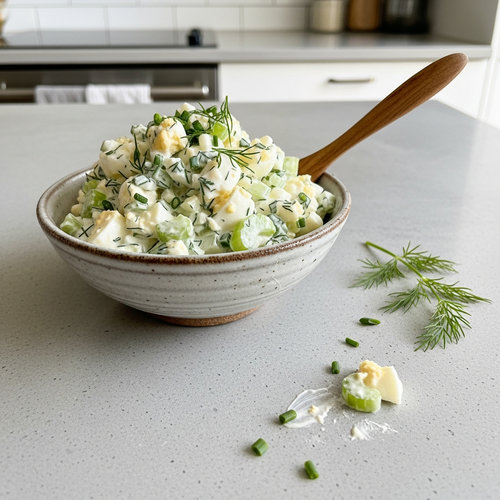 Description: A light, creamy, and satisfying egg salad made without mayonnaise. This recipe uses Greek yogurt and cottage cheese for a massive protein boost, making it the perfect meal for fat loss, muscle maintenance, and hunger control. It’s quick, easy, and designed to be ADHD-friendly for simple meal prep.Prep Time: 5 minutes | Cook Time: 10 minutesServings: 4Macros per Serving | Calories: 185 | Protein: 22g | Fat: 8g | Carbohydrates: 4g
Ingredients
- 8 large hard-boiled eggs
- 1/2 cup plain non-fat Greek yogurt
- 1/4 cup low-fat cottage cheese
- 2 teaspoons Dijon mustard
- 1 tablespoon fresh dill, chopped
- 2 tablespoons chopped chives or green onion
- 1/4 cup finely diced celery
- 1/4 teaspoon paprika
- Salt and freshly ground black pepper to taste
Instructions
- Peel the hard-boiled eggs. Separate the yolks from the whites. Discard four of the yolks.
- Finely chop the remaining four egg yolks and all eight egg whites. Place them in a medium-sized bowl.
- In a separate small bowl, whisk together the Greek yogurt, cottage cheese, and Dijon mustard until smooth.
- Pour the creamy dressing over the chopped eggs. Add the dill, chives, and celery.
- Gently fold all the ingredients together until just combined. Do not overmix.
- Season with paprika, salt, and pepper to taste.
- For best results, cover and refrigerate for at least 30 minutes before serving.
Notes
For an even smoother dressing, blend the Greek yogurt and cottage cheese with an immersion blender before mixing. Serve in lettuce cups, with veggie sticks, or on high-fiber crackers to support fat loss goals.
FAQs About Egg Salad For Weight Loss
Here are some straightforward answers to the most common questions I receive about this egg salad recipe.
Is egg salad actually good for weight loss?
Traditional egg salad, which is loaded with full-fat mayonnaise, is generally not a great choice for weight loss. A single tablespoon of mayonnaise can pack around 100 calories and 10 grams of fat. A typical recipe can easily turn into a calorie bomb that doesn’t offer much in terms of satisfying protein. However, that’s why we built this version differently.
This high-protein egg salad is absolutely fantastic for weight loss. By removing the mayo and replacing it with non-fat Greek yogurt and low-fat cottage cheese, we slash the fat and calories while dramatically increasing the protein content. Protein is critical for fat loss because it boosts your metabolism and keeps you feeling full, which helps you maintain a calorie deficit without feeling deprived. So yes, this specific egg salad is an excellent tool in your weight loss arsenal.
How can I make my egg salad less watery?
Watery egg salad is a common problem, but it’s easy to avoid. The primary culprit is often the ingredients you add to the eggs. Celery, for example, has a high water content. To combat this, make sure your celery is diced very finely and pat it dry with a paper towel before adding it to the mix. The same goes for any other watery vegetables like pickles or onions.
Another factor can be the type of Greek yogurt or cottage cheese you use. Some brands are thinner than others. I recommend using a thick, strained Greek yogurt. If your yogurt seems a bit thin, you can strain it further by placing it in a cheesecloth-lined sieve over a bowl for an hour in the fridge. Finally, be careful not to overmix the salad. The more you stir, the more you break down the egg yolks, which can release moisture and contribute to a runny texture.
Can I make this egg salad without Greek yogurt?
Yes, you absolutely can. If you’re not a fan of Greek yogurt or don’t have any on hand, you have a few options. The easiest substitution is to simply increase the amount of low-fat cottage cheese. You may want to blend the cottage cheese first to get a smoother, more dressing-like consistency. This will keep the protein content high and the calories low.
Another option is to use mashed avocado. It provides a wonderful creaminess and healthy fats, but be aware that this will increase the overall calorie and fat content of the recipe. If you go this route, you might want to use fewer egg yolks to balance the macros. As a last resort, you could use a light mayonnaise made with olive or avocado oil, but this will move the recipe away from its high-protein, low-fat design. My recommendation is to stick with a cottage cheese base if you’re avoiding yogurt.
Why did my egg salad turn out bland?
If your egg salad tastes bland, it almost always comes down to under-seasoning. Salt is a flavor enhancer, and it’s absolutely crucial in a simple recipe like this. Be sure to add enough salt and freshly ground black pepper. Taste as you go. The amount needed can vary based on the saltiness of your cottage cheese and mustard.
The other key elements of flavor are the fresh herbs and the Dijon mustard. Don’t be shy with the fresh dill and chives; they provide a bright freshness that lifts the entire dish. Using dried herbs will result in a much duller flavor. The Dijon mustard provides a tangy, acidic kick that cuts through the richness of the eggs. If it still tastes like it’s missing something, a tiny squeeze of fresh lemon juice can often be the secret ingredient that makes all the other flavors pop.
What’s the best way to hard-boil eggs for this egg salad recipe?
Perfectly hard-boiled eggs are the foundation of great egg salad. The goal is a firm white and a fully cooked, bright yellow yolk with no greyish-green ring. My foolproof method is simple. Place your eggs in a single layer at the bottom of a saucepan and cover them with cold water by about an inch.
Place the pan on the stove over high heat and bring the water to a full, rolling boil. As soon as it boils, turn off the heat completely, cover the pan with a tight-fitting lid, and let the eggs sit in the hot water for 10 to 12 minutes. While they sit, prepare an ice bath by filling a large bowl with ice and water. Once the time is up, use a slotted spoon to immediately transfer the eggs to the ice bath. Let them cool for at least 5 minutes. This process stops the cooking instantly, prevents the grey ring from forming, and makes the eggs much easier to peel.
Try These High-Protein Recipes Next
If you enjoyed this simple and effective recipe, here are a few others from my site and around the web that follow the same principles of being high-protein, delicious, and easy to make.
- High-Protein Deviled Eggs: Another fantastic, protein-packed way to use eggs, perfect for a snack or appetizer.
- Healthy Greek Yogurt Chicken Salad: If you liked this recipe, you’ll love my take on chicken salad, which uses a similar high-protein base.
- Easy Egg Salad by This Gal Cooks: A great, classic take on egg salad that provides a more traditional flavor profile if you’re looking for variety.
Building a library of go-to healthy recipes is one of the best ways to ensure you stay consistent on your fitness journey.