
Let’s be honest. For years, I thought enchiladas were off-limits if I wanted to lose fat. They were the ultimate comfort food, a “cheat meal” reserved for special occasions, usually followed by a day of guilt and getting “back on track.” That all-or-nothing thinking is a classic ADHD trap, and it kept me stuck for a long time. It was a cycle of restriction and bingeing that felt impossible to break.
During my 70-pound weight loss journey, I realized that for any plan to be sustainable, it had to include the foods I actually loved. The solution wasn’t to eliminate enchiladas. The solution was to build a better enchilada. One that was packed with protein, loaded with veggies, and didn’t leave me feeling sluggish and overstuffed.
This recipe is the result of that mission. It’s the enchilada I can eat for dinner on a Tuesday and still wake up feeling lean and energized. It’s designed to crush cravings, keep you full for hours, and fit seamlessly into a busy life. We’re working with our brains, not against them, to build a body and a lifestyle we can be proud of. This is comfort food that moves you toward your goals, not away from them.
No more cheat meals. Just smart, delicious food that works for you.
Skip to My Flexibe Diet Recipe!
Why Enchiladas Are Great For Fat Loss
When you hear “enchiladas,” you probably think of a heavy, cheese-laden dish that’s a one-way ticket to a food coma. That’s the restaurant version. This high-protein enchilada recipe is engineered differently. It’s built from the ground up to support your fat loss goals, making it a powerful tool in your weekly meal rotation, not a deviation from it.
First and foremost, we follow the ADHD FIT principle: protein first. Each serving is packed with lean protein from shredded chicken and a secret-weapon ingredient, Greek yogurt. Protein is the cornerstone of sustainable fat loss because it’s incredibly satiating. It keeps you feeling full and satisfied for much longer than fats or carbs, which is your best defense against mindless snacking and cravings later in the day.
Next, we manage hunger with fiber. We’re loading this enchilada recipe with vegetables like bell peppers and zucchini, and black beans. This adds volume and nutrients to the meal without adding a ton of calories. We also use high-fiber, low-carbohydrate tortillas. This combination of protein and fiber slows down digestion, stabilizing your blood sugar and preventing the energy crashes that can trigger cravings for sugary junk food. It’s about steady energy, not a rollercoaster.
Finally, it’s about flavor and satisfaction. A boring diet is a temporary diet. By creating a delicious, comforting meal like this enchilada bake, you eliminate the feeling of deprivation. You’re not “on a diet”; you’re just eating well. This psychological shift is critical for long-term consistency, which is the only thing that produces real, lasting results.
Ingredients You’ll Need for Enchiladas
The magic of this recipe is in the smart ingredient choices. We’re keeping all the rich, savory flavor you expect from a great enchilada while optimizing the macros for fat loss. Here’s exactly what you’ll need to make it happen. Each component is chosen to maximize protein and fiber while keeping fats and unnecessary carbs in check.
The real star of this recipe is the plain non-fat Greek yogurt in the filling. This is our replacement for the sour cream or heavy cream found in traditional recipes. It provides that creamy, tangy texture we love but with a massive protein boost and almost zero fat. It binds the filling together perfectly and adds a layer of richness you won’t want to skip. This single swap dramatically changes the nutritional profile of the entire dish.
For the tortillas, sourcing the right kind is key. Look for high-fiber, low-carbohydrate tortillas. Brands like Mission Carb Balance or La Banderita Carb Counter are excellent choices. They are lower in calories and net carbs but high in fiber, which adds to the meal’s staying power and helps you feel full without needing a massive portion. Regular flour tortillas will work, but they will significantly increase the carb count.
Here is the full breakdown of ingredients:
- For the Enchilada Sauce:
- 1 (15-ounce) can tomato sauce
- 1 cup low-sodium chicken broth
- 2 tablespoons chili powder
- 1 teaspoon ground cumin
- 1 teaspoon garlic powder
- 1/2 teaspoon onion powder
- 1/2 teaspoon dried oregano
- For the Filling:
- 1 tablespoon olive oil
- 1 medium onion, chopped
- 1 red bell pepper, chopped
- 1 medium zucchini, chopped
- 3 cups cooked and shredded chicken breast
- 1 (15-ounce) can black beans, rinsed and drained
- 1 cup plain non-fat Greek yogurt
- 1 teaspoon chili powder
- 1/2 teaspoon ground cumin
- Salt and black pepper to taste
- For Assembly:
- 8 high-fiber, low-carbohydrate tortillas
- 1 cup shredded reduced-fat Mexican cheese blend
- Optional for serving: fresh cilantro, chopped green onions, sliced avocado
How To Make Enchiladas (Step-By-Step)
Building these enchiladas is straightforward, even on a low-energy day. We break it down into manageable chunks to prevent feeling overwhelmed. The key is to see it as three simple phases: making the sauce, creating the filling, and assembling the dish. Let’s walk through it.
ADHD Tip: Before you start, pull out all your ingredients and place them on the counter. This is called “mise en place.” It prevents that mid-recipe panic when you realize you can’t find the cumin. It turns chaos into a calm, step-by-step process.
Step 1: Preheat the Oven and Make the Sauce
First, get your oven preheating to 375°F (190°C). While it warms up, lightly grease a 9×13-inch baking dish. Now for the sauce. In a medium saucepan, just whisk together the tomato sauce, chicken broth, and all the sauce spices. Bring it to a simmer over medium heat and then turn it down to low. Let it gently bubble for about 5 to 7 minutes. This quick simmer is crucial; it wakes up the spices and deepens the flavor from a simple tomato sauce into a real enchilada sauce.
Step 2: Cook the Vegetables and Prepare the Filling
While the sauce simmers, get started on the filling. Heat the olive oil in a large skillet over medium-high heat. Add your chopped onion, bell pepper, and zucchini. Cook them until they just start to soften, which usually takes about 5 to 7 minutes. You don’t want them mushy. Now, in a large bowl, combine your cooked and shredded chicken, the cooked vegetables, the rinsed black beans, and the Greek yogurt. Add the final teaspoon of chili powder and half-teaspoon of cumin, then season with salt and pepper. Mix it all until it’s well combined.
ADHD Shortcut: Use a store-bought rotisserie chicken. It saves you the entire step of cooking and shredding chicken, which is often the biggest barrier to starting a recipe like this.
Step 3: Assemble and Bake the Enchiladas
This is the fun part. Pour a thin layer of your prepared sauce into the bottom of the baking dish, just enough to coat it. Warm your tortillas in the microwave for about 30 seconds to make them soft and easy to roll. Fill each tortilla with the chicken mixture, roll it up snugly, and place it seam-side down in the dish. Once they’re all lined up, pour the rest of the sauce evenly over the top, and finish by sprinkling the shredded cheese over everything. Bake for 20 to 25 minutes, until the sauce is bubbly and the cheese is melted and golden. Let it rest for a few minutes before serving. This helps the enchiladas set so they don’t fall apart when you serve them.
How To Serve Enchiladas (ADHD-Friendly)
Once your beautiful pan of enchiladas comes out of the oven, the final step is serving. How you serve it can make a big difference in keeping your meal balanced and preventing decision fatigue. We want to keep it simple, delicious, and aligned with our fitness goals. The goal is to create a complete, satisfying plate without adding a ton of extra work or calories.
For me, an enchilada serving is two rolls. This is a substantial portion that, thanks to all the protein and fiber, is incredibly filling. To round out the meal, I focus on adding freshness and a bit more volume from vegetables. A simple side salad with a light vinaigrette is perfect. You can use a bagged salad mix to make this a zero-effort addition. Another great option is a side of steamed green beans or broccoli, which you can easily make in the microwave while the enchiladas are baking.
Here are some simple, ADHD-friendly serving ideas:
- Minimalist Toppings: Stick to just one or two fresh toppings. A sprinkle of fresh cilantro or chopped green onions adds a burst of flavor without any real prep. If you have a ripe avocado, a few slices on top add healthy fats and creaminess. Don’t feel like you need to create a whole topping bar.
- A Dollop of Yogurt: Instead of sour cream, add a small dollop of the same plain non-fat Greek yogurt you used in the filling. It provides the same cooling, tangy contrast with an extra bit of protein.
- Pre-Portion for the Week: If you’re eating this for meal prep, portion out two enchiladas into individual containers. Add your side of veggies or salad directly into the container so you have a complete, ready-to-go meal. This removes all thinking and decision-making when hunger strikes.
By planning your plate ahead of time, you avoid the trap of adding high-calorie sides like refried beans or traditional Spanish rice out of habit. A simple, fresh side complements the rich enchilada perfectly and keeps your meal on track for your fat loss goals. It’s about making the smart choice the easy choice.
How To Store, Reheat, and Reuse Enchiladas
This enchilada recipe is fantastic for meal prep. In fact, I think it tastes even better the next day as the flavors have more time to meld together. Properly storing and reheating your leftovers is key to ensuring you have delicious, convenient meals ready to go, which is a massive win for staying consistent on low-motivation days.
Having a healthy, high-protein meal waiting in the fridge is one of the best strategies for avoiding impulse food choices. When you know you have something this good ready in two minutes, the drive-thru becomes a lot less appealing. This is how you build a system that supports you even when your willpower is low.
Here’s how to handle your leftovers for best results:
- Storing: Once the enchiladas have cooled down a bit, you can either cover the entire baking dish tightly with aluminum foil or plastic wrap and store it in the refrigerator. Or, for even easier access, portion individual servings into airtight containers. They will stay fresh and delicious in the fridge for up to 4 days.
- Reheating in the Microwave: For a quick lunch or dinner, the microwave is your best friend. Place a serving on a microwave-safe plate and heat for 90 seconds to 2 minutes, or until heated through. If it seems a little dry, you can sprinkle a tiny bit of water on top before heating to help steam it.
- Reheating in the Oven or Air Fryer: If you have a few extra minutes, reheating in the oven or an air fryer yields the best results. This helps re-melt the cheese nicely and keeps the edges from getting soggy. For the oven, place the enchiladas in an oven-safe dish and heat at 350°F (175°C) for 10-15 minutes. In an air fryer, 5-7 minutes at 350°F should do the trick.
You can even freeze these enchiladas. Assemble the entire dish but don’t bake it. Cover it tightly with a layer of plastic wrap and then a layer of foil. It will keep in the freezer for up to 3 months. When you’re ready to eat, let it thaw in the refrigerator overnight and then bake as directed, adding about 10-15 extra minutes to the baking time.
Easy Swaps & Variations for Enchiladas
One of the best things about a recipe like this enchilada bake is its flexibility. Life is unpredictable, and your diet should be able to adapt. Maybe you don’t have chicken on hand, or you want to use up some vegetables before they go bad. This recipe is a fantastic template that you can easily modify based on your preferences, dietary needs, or what’s in your fridge.
Remember, the goal is consistency, not perfection. Making a small swap is always better than abandoning your plan because you’re missing one ingredient. This is how you build a resilient, sustainable eating style that works for the long haul. Don’t be afraid to experiment and make this enchilada recipe your own.
Here are some simple swaps and variations to try:
- Protein Swaps: No shredded chicken? No problem. You can easily substitute it with 1 pound of lean ground turkey or ground beef. Just brown it in the skillet with the vegetables before mixing it into the filling. For a vegetarian option, you can double the black beans and add a can of pinto beans or some crumbled firm tofu.
- Vegetable Variations: This recipe is perfect for clearing out your vegetable drawer. Feel free to add chopped mushrooms, corn, spinach, or jalapeños to the filling. Sauté them along with the onion and peppers until tender.
- Make It Spicy: If you like a little more heat, add a pinch of cayenne pepper to the sauce or include a finely chopped jalapeño or serrano pepper with the vegetables. You can also use a hot chili powder for an extra kick.
- Dairy-Free Option: To make this enchilada recipe dairy-free, simply use your favorite dairy-free shredded cheese blend and substitute the Greek yogurt with a dairy-free plain yogurt or a dairy-free sour cream alternative.
These small changes allow you to enjoy the same core meal with different flavors and textures, preventing boredom and making it easier to stick with your healthy eating habits week after week.
High-Protein Chicken Enchiladas
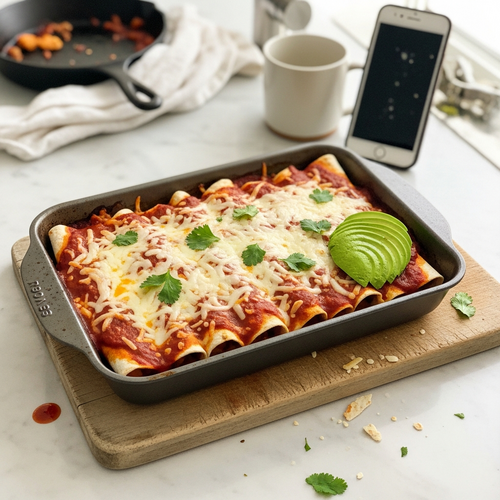
Description: A delicious, macro-friendly enchilada recipe designed for fat loss. Packed with protein and fiber, this easy-to-make dish will crush cravings and keep you full for hours, proving that comfort food can and should be part of a healthy, sustainable lifestyle.
Prep Time: 15 minutes | Cook Time: 25 minutes
Servings: 4 (2 enchiladas per serving)
Macros per Serving | Calories: 485 | Protein: 52g | Fat: 15g | Carbohydrates: 35g
Ingredients
- For the Enchilada Sauce:
- 1 (15-ounce) can tomato sauce
- 1 cup low-sodium chicken broth
- 2 tablespoons chili powder
- 1 teaspoon ground cumin, 1 tsp garlic powder, 1/2 tsp onion powder, 1/2 tsp dried oregano
- For the Filling:
- 1 tbsp olive oil
- 1 medium onion, 1 red bell pepper, 1 medium zucchini (all chopped)
- 3 cups cooked and shredded chicken breast
- 1 (15-ounce) can black beans, rinsed
- 1 cup plain non-fat Greek yogurt
- 1 tsp chili powder, 1/2 tsp ground cumin
- Salt and black pepper to taste
- For Assembly:
- 8 high-fiber, low-carbohydrate tortillas
- 1 cup shredded reduced-fat Mexican cheese blend
Instructions
- Preheat oven to 375°F (190°C) and grease a 9×13-inch baking dish.
- In a saucepan, whisk sauce ingredients, bring to a simmer, then cook on low for 5-7 minutes.
- In a skillet, heat olive oil and cook chopped onion, bell pepper, and zucchini until soft (5-7 minutes).
- In a large bowl, mix shredded chicken, cooked veggies, black beans, Greek yogurt, and filling spices. Season with salt and pepper.
- Spread a thin layer of sauce in the baking dish. Warm tortillas in the microwave for 30 seconds.
- Fill each tortilla with the chicken mixture, roll, and place seam-side down in the dish.
- Pour remaining sauce over the top and sprinkle with cheese.
- Bake for 20-25 minutes until bubbly and golden. Let rest before serving.
Notes
For an ADHD-friendly shortcut, use a store-bought rotisserie chicken to save time on cooking and shredding. This recipe is excellent for meal prep and leftovers can be stored in the fridge for up to 4 days.
FAQs About Enchiladas For Weight Loss
Here are some straightforward answers to the most common questions I receive about this enchilada recipe.
Are these enchiladas healthy for weight loss?
Absolutely. The term “healthy” can be confusing, but when it comes to fat loss, this enchilada recipe is specifically designed to help you succeed. It prioritizes the two most important factors for sustainable weight loss: high protein and high fiber. The massive dose of protein from the chicken and Greek yogurt helps build and maintain muscle mass while you’re in a calorie deficit, which is crucial for keeping your metabolism running efficiently.
More importantly, the combination of protein and fiber from the beans, vegetables, and low-carb tortillas makes this meal incredibly satiating. It keeps you feeling full and satisfied for a long time, which is your best weapon against the cravings and hunger pangs that derail most diets. Unlike traditional enchiladas that can be high in refined carbs and fats, this version provides steady energy without the blood sugar crash, helping you stay in control of your appetite and on track with your goals.
Can I make this enchilada recipe ahead of time?
Yes, this enchilada recipe is perfect for making ahead of time, which is a key strategy for anyone, especially those of us with ADHD. Planning ahead removes the guesswork and stress from mealtime. You have two great options for prepping this dish. First, you can fully bake the entire pan of enchiladas, let them cool, and then store them in the fridge for up to four days. This is my preferred method for meal prep, as I can just reheat individual portions throughout the week.
Alternatively, you can assemble the entire pan of enchiladas without baking them. Cover the dish tightly with plastic wrap and foil and store it in the refrigerator for up to 24 hours before you plan to bake it. When you’re ready for dinner, just pop it in the oven. You may need to add about 10 minutes to the baking time since it will be starting from cold. This is a fantastic option for busy weeknights or when you’re having guests.
What are the best tortillas for a low-carb enchilada?
The choice of tortilla makes a significant impact on the final nutritional profile of your enchilada. For a low-carb, high-fiber version that supports fat loss, you want to look for tortillas specifically marketed as “carb conscious,” “low-carb,” or “high-fiber.” Brands like Mission Carb Balance, La Banderita Carb Counter, or even some store brands now offer excellent options. These tortillas typically have a much lower net carb count because they are made with added fiber.
This added fiber not only reduces the impact on your blood sugar but also makes the meal more filling, helping you stick to your portion sizes. Regular corn or flour tortillas will work in a pinch, but they will add a significant amount of carbohydrates and calories without the benefit of extra fiber. Reading the nutrition label is your best tool here; look for a tortilla with at least 5-7 grams of fiber per serving.
How can I add even more protein to this enchilada recipe?
If you want to boost the protein content even further, there are a few easy ways to do it. The simplest method is to slightly increase the amount of shredded chicken in the filling. Adding an extra cup of chicken can add over 40 grams of protein to the entire dish. You could also increase the amount of non-fat Greek yogurt from one cup to one and a half cups for another small protein boost and an even creamier filling.
Another great strategy is to add a scoop of unflavored collagen or protein powder to the enchilada sauce while it’s simmering. It will dissolve completely and won’t affect the taste, but it can add an extra 10-20 grams of protein to the recipe. Finally, when serving, you could opt for a higher-protein cheese, like a skim-milk mozzarella, or simply add an extra ounce or two of the reduced-fat Mexican cheese blend on top.
Can I make this enchilada recipe vegetarian?
Yes, you can easily adapt this enchilada recipe to be fully vegetarian. The simplest swap is to replace the shredded chicken with more beans and vegetables. You can use two cans of black beans instead of one, and also consider adding a can of pinto beans or kidney beans for more texture and variety. Make sure to rinse them well before adding them to the filling.
To make the filling more substantial, you could also add a cup of cooked quinoa or brown rice. For another high-protein vegetarian option, consider crumbling a block of firm or extra-firm tofu and sautéing it with the vegetables until it’s lightly browned before mixing it into the filling. You will also need to swap the chicken broth in the sauce for vegetable broth. With these simple changes, you can create a delicious and satisfying vegetarian enchilada bake that is still packed with protein and fiber.
Try These High-Protein Recipes Next
If you enjoyed this flexible and macro-friendly approach to comfort food, here are a few other recipes you should try.
-
Easy Chicken Enchilada Skillet: This is a deconstructed version of the classic, perfect for a super fast weeknight meal when you don’t have time to roll individual enchiladas.
-
Healthy Mexican Rice Recipe: A high-protein, veggie-packed take on Spanish rice that pairs perfectly with these enchiladas without derailing your macros.
-
Ground Beef Enchiladas: For another delicious variation, this recipe from This Gal Cooks offers a fantastic take on enchiladas using savory ground beef.
Building a collection of go-to healthy recipes is the secret to making your fitness journey enjoyable and sustainable.