
I have a complicated history with bread. For years, I saw it as the enemy of fat loss. A slice of fluffy, olive oil-soaked focaccia felt like a forbidden luxury, something that would instantly derail my progress. During the first phase of my journey, where I lost 65 pounds without medication, I mostly avoided it. I told myself it was off-limits, a “cheat” I couldn’t afford.
But that black-and-white thinking is a classic ADHD trap. It sets you up for failure because it’s not sustainable. When I finally started working with my brain instead of against it, I realized that deprivation leads to bingeing. The real key to a fit lifestyle is finding ways to include the foods you love, not cutting them out entirely.
That’s what motivated me to create this high-protein, low-calorie focaccia. I wanted that same satisfying, savory flavor and pillowy texture without the massive calorie and fat load of the traditional version. This recipe is the result. It’s bread you can eat every single day as part of a balanced diet, a tool that helps you stay on track by satisfying cravings and keeping you full for hours. It’s proof that you don’t have to give up bread to get fit.
Skip to My Flexibe Diet Recipe!
Why Focaccia Is Great For Fat Loss
Let’s be brutally practical. The phrase “fat-loss focaccia” sounds like a contradiction. Traditional focaccia is essentially a sponge for olive oil, made with refined flour that can spike your blood sugar and leave you hungry an hour later. It’s delicious, but it’s not a friend to your physique goals. This recipe, however, is engineered differently from the ground up to support your body, not work against it.
The magic is in the macros. We slash the fat and dramatically increase the protein. By swapping out some of the flour for unflavored protein powder and using non-fat Greek yogurt, we create a loaf that is incredibly satisfying. Protein is the most thermogenic macronutrient, meaning your body burns more calories digesting it. More importantly, it’s a powerhouse for satiety. A slice of this focaccia will keep you feeling full and curb cravings far longer than its traditional counterpart.
For the ADHD brain, this is a game-changer. Hunger and cravings are major triggers for impulsive, off-plan eating. When your next meal is hours away and that dopamine-seeking part of your brain starts screaming for a quick fix, having a satisfying, high-protein option ready to go is your best defense. This focaccia provides that slow-release energy and fullness that prevents the “I need to eat everything right now” spiral. It turns a former “forbidden food” into a strategic tool for consistency.
This fits perfectly into our core principle: flexible eating wins. Instead of a restrictive diet that ends in a massive cheat meal, we build satisfying, delicious foods into our daily plan. This focaccia isn’t a cheat. It’s a smart, tasty way to hit your protein goals, manage hunger, and enjoy your food while consistently losing fat. It’s about building a lifestyle you can actually stick with for the long haul.
Ingredients You’ll Need for Focaccia
One of the first steps to making any recipe ADHD-friendly is getting all your tools and ingredients out on the counter before you start. This is called “mise en place,” and it prevents that mid-recipe panic when you realize you’re missing something. It turns a potentially chaotic process into a simple, step-by-step assembly line.
Here’s everything you’ll need for this high-protein focaccia:
- 1 ½ cups high-protein bread flour
- ½ cup unflavored whey or soy protein isolate powder
- 1 cup plain non-fat Greek yogurt
- ½ cup warm water (around 110°F or 43°C)
- 1 packet (2 ¼ teaspoons) instant yeast
- 1 teaspoon coconut sugar or maple syrup
- 1 ½ teaspoons fine sea salt, divided
- 1 tablespoon extra virgin olive oil
- Olive oil spray
- 1 tablespoon fresh rosemary, chopped
- 1 clove garlic, minced
- ½ cup cherry tomatoes, halved
- Coarse sea salt for sprinkling
The key players here are the unflavored protein isolate and non-fat Greek yogurt. These two ingredients are our secret weapons. The protein powder massively boosts the protein content without adding a weird flavor, and the Greek yogurt adds even more protein while keeping the bread incredibly moist and tender. Make sure you use an “isolate” powder, as it has a finer texture and less fat and carbs than concentrate, which makes it much better for baking.
For the flour, high-protein bread flour will give you the best chewy texture, but regular bread flour works too. When it comes to the olive oil, we only use a small amount for flavor, so using a good quality extra virgin olive oil really makes a difference. And don’t skip the coarse sea salt on top. That little crunch and burst of flavor is essential to the focaccia experience.
How To Make Focaccia (Step-By-Step)
This recipe is designed to be as straightforward as possible. We break it down into simple, manageable chunks. Don’t worry about perfection. Just follow along, and you’ll end up with amazing, fluffy focaccia. Remember, consistency beats intensity, even in the kitchen.
Step 1: Activate the Yeast
In a small bowl, mix your warm water, instant yeast, and the coconut sugar or maple syrup. The sugar is food for the yeast. Let it sit for about 5 to 10 minutes. An ADHD tip: set a timer on your phone immediately so you don’t forget it. You’ll know it’s ready when it gets foamy and bubbly on top. If it doesn’t, your yeast might be old or the water was too hot or cold, and you’ll need to start over.
Step 2: Combine Dry Ingredients
While the yeast is doing its thing, grab a large mixing bowl. Add the high-protein bread flour, unflavored protein powder, and 1 teaspoon of the fine sea salt. Whisk them all together. This simple step ensures the salt and protein powder are evenly distributed, which is key for a consistent texture.
Step 3: Mix the Dough
Pour the frothy yeast mixture and the Greek yogurt into your bowl of dry ingredients. Use a spatula or wooden spoon to mix everything until it just comes together into a shaggy, sticky ball. It won’t look pretty at this stage, and that’s completely normal.
Step 4: Knead the Dough
Lightly flour your counter and turn the dough out. Now it’s time to knead. Knead for 5 to 7 minutes until the dough becomes smooth and elastic. If it’s too sticky, just add a tiny bit more flour. This step develops the gluten, which gives the focaccia its signature chewy structure. If kneading by hand feels like too much, a stand mixer with a dough hook works great here.
Step 5: Let the Dough Rise
Lightly coat a clean bowl with olive oil spray and place the dough inside, turning it once to coat. Cover the bowl with a damp towel or plastic wrap. Let it rise in a warm, draft-free spot for 1 to 2 hours, or until it has doubled in size. An oven with just the light on is a perfect spot for this.
Step 6: Preheat Oven and Prep Pan
Once your dough has risen, it’s time to get ready for baking. Preheat your oven to 400°F (200°C). Then, grab a 9×13 inch baking pan and give it a light coating of olive oil spray. This will prevent the focaccia from sticking.
Step 7: Shape the Focaccia
Gently punch down the risen dough to release the air, then transfer it to your prepared pan. Use your fingers to gently stretch and press the dough until it fills the bottom of the pan. Be gentle here; you don’t want to undo all that rising.
Step 8: Dimple the Dough
Drizzle the tablespoon of extra virgin olive oil over the surface of the dough. Now for the fun part: use your fingertips to press down and create dimples all over the dough. These little pockets are classic to focaccia and will trap the oil and toppings for maximum flavor.
Step 9: Add Toppings
Sprinkle the minced garlic and chopped fresh rosemary evenly over the dough. Then, arrange the halved cherry tomatoes on top, pressing them slightly into the dough so they stay put while baking. Feel free to get creative here with other toppings if you like.
Step 10: Final Seasoning
Give the top of the dough one last light spritz with olive oil spray. Then, sprinkle it with the remaining ½ teaspoon of fine sea salt and a generous pinch of coarse sea salt. This final layer of salt adds a fantastic texture and flavor pop.
Step 11: Bake to Golden Perfection
Place the pan in your preheated oven and bake for 20-25 minutes. You’re looking for a beautiful golden-brown top. The exact time can vary by oven, so keep an eye on it during the last few minutes.
Step 12: Cool and Slice
Once it’s done, take the focaccia out of the oven and let it cool in the pan for a few minutes. This makes it easier to handle. Then, transfer it to a wire rack to finish cooling. Waiting for it to cool before slicing is important for the final texture, so be patient!
How To Serve Focaccia (ADHD-Friendly)
Okay, you’ve baked this amazing high-protein focaccia. Now what? The best way to incorporate this into your fat-loss plan is to treat it as a primary carb source in a balanced meal. The goal is to pair it with more protein and fiber to create a meal that crushes hunger and keeps you energized for hours, preventing the decision fatigue that often leads to poor food choices later.
An ADHD-friendly pro tip: as soon as the focaccia is cool, slice the entire loaf into serving-sized pieces. This is a form of meal prep. By removing the future step of having to slice it, you make it incredibly easy to grab a healthy portion when you’re hungry and short on time or executive function. Store the slices in an airtight container so they are ready to go.
Here are a few brutally practical ways to serve it:
- As a Sandwich Base: Use two slices to build a high-protein sandwich. Load it up with sliced turkey or grilled chicken, a slice of provolone, lots of spinach, and maybe some light mayo or mustard. It’s a massive upgrade from regular bread.
- With a Big Salad: A warm slice of this focaccia is the perfect side for a huge salad loaded with greens, veggies, and a lean protein like chicken breast, tuna, or chickpeas. It makes the salad feel like a much more substantial and satisfying meal.
- For Dipping in Soup: Pair it with a bowl of high-protein soup, like a lentil soup or a chicken vegetable soup. It’s perfect for dipping and soaking up every last drop.
- As a Mini Pizza: This is a great one for a quick, fun meal. Top a slice with a tablespoon of marinara sauce, some shredded low-fat mozzarella, and a few slices of turkey pepperoni. Pop it in the air fryer or oven for a few minutes until the cheese is bubbly.
By planning how you’ll use the focaccia, you turn it from a simple baked good into a strategic component of your weekly meal plan. It provides the comfort and satisfaction of bread while actively helping you hit your macros and stay on track with your goals.
How To Store, Reheat, and Reuse Focaccia
With ADHD, “out of sight, out of mind” can lead to a lot of food waste. We bake something amazing, enjoy it once, and then it gets lost in the back of the fridge. Let’s build a simple system to prevent that. Proper storage not only keeps your high-protein focaccia fresh but also keeps it visible and easy to use for quick meals throughout the week.
For short-term storage, you can keep the focaccia in a bread box or a sealed paper bag on the counter for up to two days. This helps maintain its crust. For anything longer, the fridge is your best bet. Store pre-cut slices in an airtight container or a zip-top bag for up to 5 days. Separating the slices makes it easy to grab just what you need.
When you’re ready to eat it, here are the best ways to bring it back to life:
- Oven or Toaster Oven: This is the best method for reviving that fresh-baked texture. A few minutes at 350°F (175°C) will warm it through and crisp up the outside perfectly.
- Air Fryer: If you’re in a hurry, the air fryer is your best friend. It takes just 2-3 minutes at around 375°F (190°C) to get a slice warm and toasty.
- Microwave: This is the fastest option, but be warned: it will make the focaccia soft and steamy, not crispy. Wrap it in a damp paper towel and heat it in 20-second bursts until warm.
If you have a few slices that are starting to get a bit stale, don’t throw them out! Cut them into cubes, toss with a tiny bit of olive oil spray and some Italian seasoning, and air fry or bake them until golden. You’ll have amazing high-protein croutons for your next salad. It’s a simple way to reduce waste and add a satisfying crunch to another healthy meal.
Easy Swaps & Variations for Focaccia
Our philosophy at ADHD FIT is all about flexible systems, not rigid rules. This focaccia recipe is a fantastic template, but you should feel free to adapt it based on what you have on hand, your personal tastes, or even just your motivation level that day. Perfection is not the goal; a delicious, high-protein meal is.
Don’t be afraid to experiment. Using what you already have in your pantry is an ADHD-friendly strategy that reduces waste and eliminates an extra trip to the store, which can often be a barrier to starting a recipe in the first place.
Here are some simple and effective swaps you can make:
- For the Protein Powder: While unflavored whey or soy isolate works best, you can use another plant-based isolate like pea protein. I would avoid casein protein, as it absorbs much more liquid and will make the dough very dry. And definitely steer clear of flavored powders unless you want vanilla-rosemary bread.
- For the Flour: You can substitute up to half of the bread flour with whole wheat flour to add extra fiber and nutrients. Just know that this will result in a slightly denser, heartier loaf.
- For the Herbs: Fresh rosemary is classic, but don’t have any? No problem. Use 1 teaspoon of dried rosemary instead. Dried thyme, oregano, or an Italian seasoning blend would also be delicious. This is where store-bought shortcuts are your friend.
- For the Toppings: This is the easiest place to get creative. Swap the cherry tomatoes for sliced black olives, sun-dried tomatoes (the kind not packed in oil), sliced red onion, or even some roasted red peppers from a jar. For an extra flavor boost, you could sprinkle on a tablespoon or two of grated Parmesan or crumbled feta cheese before baking.
Remember, the core of the recipe—the protein powder, Greek yogurt, and flour ratio—is what makes it work. The toppings are where you can let your creativity and personal preference shine through. Make it your own.
High-Protein Low-Calorie Focaccia
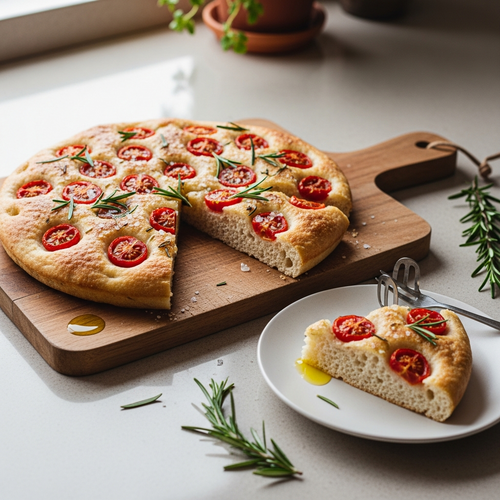
Description: A light, fluffy, and savory focaccia bread that’s packed with protein to support fat loss goals. Perfect for sandwiches, sides, or a satisfying snack that crushes cravings.
Prep Time: 15 minutes + rising | Cook Time: 25 minutes
Servings: 12 slices
Macros per Serving | Calories: 125 | Protein: 10g | Fat: 2g | Carbohydrates: 16g
Ingredients
- 1 ½ cups high-protein bread flour
- ½ cup unflavored whey or soy protein isolate powder
- 1 cup plain non-fat Greek yogurt
- ½ cup warm water (around 110°F or 43°C)
- 1 packet (2 ¼ teaspoons) instant yeast
- 1 teaspoon coconut sugar or maple syrup
- 1 ½ teaspoons fine sea salt, divided
- 1 tablespoon extra virgin olive oil
- Olive oil spray
- 1 tablespoon fresh rosemary, chopped
- 1 clove garlic, minced
- ½ cup cherry tomatoes, halved
- Coarse sea salt for sprinkling
Instructions
- Activate yeast by combining warm water, yeast, and sugar in a small bowl. Let sit for 5-10 minutes until frothy.
- In a large bowl, whisk together flour, protein powder, and 1 tsp of salt.
- Add yeast mixture and Greek yogurt to dry ingredients. Mix until a shaggy dough forms.
- Knead on a floured surface for 5-7 minutes until smooth.
- Place dough in a lightly oiled bowl, cover, and let rise in a warm place for 1-2 hours until doubled.
- Preheat oven to 400°F (200°C). Press dough into a greased 9×13 inch pan.
- Drizzle with olive oil and use fingertips to create dimples all over the surface.
- Top with garlic, rosemary, and cherry tomatoes.
- Spray lightly with oil and sprinkle with remaining fine salt and coarse sea salt.
- Bake for 20-25 minutes until golden brown. Cool before slicing.
Notes
For best results, use unflavored whey or soy isolate. Other protein powders may alter the texture. Feel free to experiment with different toppings like olives or sliced onions.
FAQs About Focaccia For Weight Loss
Here are some straightforward answers to the most common questions I receive about this focaccia recipe.
Can I really eat this focaccia and still lose weight?
Absolutely, yes. Fat loss comes down to being in a consistent calorie deficit, meaning you consume fewer calories than your body burns. This focaccia is specifically designed to make staying in that deficit easier. Each slice is low in calories but very high in protein, which is the key to managing hunger.
Unlike traditional bread that can leave you feeling hungry shortly after eating, the high protein content in this recipe promotes satiety, helping you feel full and satisfied for much longer. This drastically reduces the likelihood of snacking on high-calorie foods between meals. By incorporating foods that you genuinely enjoy and that also support your goals, you’re building a sustainable lifestyle, not just following a temporary diet. This is how you achieve long-term results without feeling deprived.
What’s the best protein powder to use for this focaccia recipe?
The best choices are unflavored whey protein isolate or unflavored soy protein isolate. The word “isolate” is important here. Isolates are more refined than protein concentrates, meaning they have a higher protein content and less fat, carbs, and lactose. This results in a finer texture and a more neutral flavor, which is exactly what you want when baking something savory like focaccia.
I strongly advise against using flavored protein powders, as they will clash with the savory rosemary and garlic flavors. Also, try to avoid casein protein for this recipe. Casein absorbs a lot more liquid than whey or soy, which can result in a very dry and dense final product. Sticking with an unflavored whey or soy isolate will give you the light, fluffy texture we’re aiming for.
My focaccia dough didn’t rise. What did I do wrong?
This is a common bread-making issue, and it usually comes down to one of three things. First, your yeast might be old or inactive. Yeast is a living organism, and it has an expiration date. Always check the date on the packet. Second, the water temperature could be off. If the water is too cold, the yeast won’t activate properly. If it’s too hot (above 120°F or 49°C), it will kill the yeast. It should feel like warm bathwater.
Finally, the rising environment might be too cold. Yeast loves warmth. If your kitchen is chilly, your dough will take much longer to rise. A great ADHD-friendly trick is to place the covered bowl in your oven with only the oven light turned on. This creates a perfect, slightly warm, draft-free environment for the yeast to do its job. If you check these three things, you’ll almost always solve the problem.
Can I make this focaccia recipe gluten-free?
This is a tricky one. The gluten in bread flour is what creates the elastic, chewy structure that is characteristic of focaccia. Replicating that without gluten is challenging. While I haven’t personally perfected a gluten-free version of this specific high-protein recipe, you could try substituting the bread flour with a high-quality “1-to-1” or “measure-for-measure” gluten-free baking flour blend.
Make sure the blend you choose contains xanthan gum, as this is essential for providing some of the structure that gluten normally would. You will need to manage your expectations, as the final texture will likely be different. It will probably be denser and more cake-like than chewy. If you try it, I’d love to hear how it turns out!
How can I fit this high-protein focaccia into my meal prep?
This focaccia is perfect for meal prep. The best strategy is to bake the entire loaf on a Sunday or whenever you have some extra time. Once it has cooled completely, slice it into 12 equal portions. This “pre-decision” removes a barrier for future you. You’ve already done the work of portioning it out.
For the next 3-4 days, keep half the slices in an airtight container in the fridge. For the other half, prepare them for the freezer. Wrap each slice individually in plastic wrap and then place them all together in a freezer-safe bag. This prevents them from sticking together and allows you to pull out a single slice whenever you need one. It will stay good in the freezer for up to three months. This way, you always have a quick, healthy, and satisfying carb source ready to go for any meal.
Try These High-Protein Recipes Next
If you loved making this high-protein focaccia, here are a few other bread recipes designed for a fit lifestyle that you should try next.
- High-Protein Sourdough Bread – For those who want to dive into the rewarding world of sourdough, this recipe gives you that classic tangy flavor with a serious protein punch.
- High-Protein Cottage Cheese Bread – This is one of the easiest bread recipes you’ll ever make. It requires no yeast and no rising time, and it’s absolutely packed with protein thanks to cottage cheese.
- Easy Focaccia Recipe from This Gal Cooks – If you want to try a more traditional (but still simple) focaccia recipe for a special occasion, this is a fantastic and straightforward guide.
Building a collection of reliable, macro-friendly recipes is one of the best ways to ensure you stay consistent on your fitness journey.