
I used to have a complicated relationship with fudge. It was a holiday-only treat, something that signaled a complete break from any kind of healthy eating. In my early days of trying to lose weight, I saw foods like this as the enemy. It was either 100% clean eating or a full-blown binge on everything I craved.
That all-or-nothing mindset is a classic ADHD trap. It never worked. I’d restrict myself until my willpower snapped, and then I’d find myself elbow-deep in a plate of brownies or fudge, feeling guilty and defeated. The cycle was exhausting.
When I finally lost the 65 pounds, it was because I abandoned that perfectionist approach. I learned that consistency beats intensity every single time. A huge part of that was figuring out how to include the flavors I loved in a way that supported my goals. This high-protein fudge recipe is the result of that journey. It’s rich, satisfying, and packed with protein to kill cravings, not cause them. It’s proof that you don’t have to give up dessert to get fit.
This is the kind of recipe that helps us work with our ADHD brains, not against them. It’s simple to make and keeps in the fridge for when you need a quick, smart treat.
Skip to My Flexibe Diet Recipe!
Why Fudge Is Great For Fat Loss
When you hear the word “fudge,” you probably don’t think about fat loss. Most recipes are loaded with sugar, butter, and condensed milk. They send your blood sugar on a rollercoaster, leading to a crash that leaves you hungry and craving more junk. That’s the exact cycle we want to break.
This fudge recipe is engineered completely differently. We’re flipping the script by putting protein first. The combination of Greek yogurt, cottage cheese, and whey or casein protein powder creates a powerhouse of high-quality protein. One small square can pack more protein than an egg.
Why does that matter? Protein is the king of macros for fat loss. It’s incredibly satiating, meaning it keeps you feeling full and satisfied for hours. When you feel full, you’re far less likely to mindlessly snack or overeat at your next meal. This helps you stay in a calorie deficit without feeling constantly deprived.
This fudge also directly tackles cravings. For many of us with ADHD, cravings for sugar and rich foods can be intense, especially in the evenings or when we’re feeling under-stimulated. This recipe delivers that rich, chocolatey flavor and creamy texture you want from a dessert. But unlike traditional fudge, it stabilizes your energy levels instead of spiking them. It’s a planned, strategic way to satisfy your sweet tooth, which prevents the “I blew my diet, so I might as well eat everything” spiral.
It’s a perfect example of flexible eating. You’re not white-knuckling your way through a restrictive diet. You’re building a sustainable lifestyle where a delicious treat is part of the plan, helping you stay consistent long-term. And remember, consistency is what drives 75 percent of your results.
Ingredients You’ll Need for Fudge
The magic of this recipe is in its simple, high-impact ingredients. We’re swapping out the traditional sugar and fat for protein-rich powerhouses that work for your body, not against it. Here is exactly what you will need.
- 1 cup non-fat plain Greek yogurt
- 1/2 cup low-fat cottage cheese
- 2 scoops chocolate whey or casein protein powder
- 1/2 cup unsweetened cocoa powder
- 1/4 cup powdered erythritol or monk fruit sweetener
- 2 tablespoons natural almond butter
- 1 teaspoon vanilla extract
- Pinch of sea salt
- 2-4 tablespoons unsweetened almond milk (as needed for consistency)
The key ingredients giving this fudge its incredible texture and protein boost are the Greek yogurt and cottage cheese. This combination is a game-changer. Blended together, they create a smooth, creamy, and tangy base that mimics the richness of traditional fudge without any of the heavy cream or butter. They are the secret weapon here.
A quick note on a few ingredients. The type of protein powder you use matters a lot. A brand you genuinely enjoy the taste of will make a huge difference. Whey protein will give you a slightly softer fudge, while casein will make it thicker and more firm, as casein absorbs more liquid. Both work great.
For the cocoa powder, using a quality unsweetened or Dutch-processed cocoa will provide a deeper, more satisfying chocolate flavor. And don’t skip the pinch of sea salt. It might seem small, but it elevates the chocolate flavor and balances the sweetness perfectly.
Finally, powdered sweetener is important. Granular sweeteners can sometimes leave a gritty texture, so a powdered version like erythritol or monk fruit blends in seamlessly for a perfectly smooth finish.
How To Make Fudge (Step-By-Step)
This process is designed to be as simple as possible. On a low-motivation day, the last thing you need is a complicated recipe with a dozen steps. This is basically a “dump and blend” recipe, which is perfect for the ADHD brain. We focus on the outcome, not a perfect process.
Step 1: Prepare Your Pan
First things first, let’s get your pan ready. This is a classic ADHD tip for task initiation: do the easiest possible thing first. Grab a loaf pan or a small square baking dish (an 8×8 inch pan works well). Line it with parchment paper. Make sure to leave some paper hanging over the sides. This creates little “handles” that will make it incredibly easy to lift the fudge out later. No sticking, no mess, no frustration.
Step 2: Blend the Dairy Base
Now, grab your blender or food processor. A powerful blender is your best friend here for getting that ultra-smooth texture. Add the Greek yogurt and cottage cheese. Blend them together until there are absolutely no lumps left. This is a critical step. If you rush it, you might get a slightly grainy texture. Scrape down the sides once or twice to make sure everything is incorporated.
Step 3: Add the Dry Ingredients and Flavors
Once your dairy base is perfectly smooth, add everything else except the almond milk. That means the protein powder, cocoa powder, powdered sweetener, almond butter, vanilla extract, and the pinch of sea salt go right into the blender. Having all your ingredients measured and ready before you start can prevent that feeling of being overwhelmed mid-recipe.
Step 4: Blend Until Thick and Creamy
Blend the mixture again until it’s completely combined, thick, and looks like a decadent chocolate frosting. This is where you might need the almond milk. If the mixture is too thick for your blender to handle and the blades are struggling, add one tablespoon of almond milk at a time. The goal is a thick, spreadable consistency, not a liquid one. Be careful not to add too much liquid.
Step 5: Pour and Chill
Pour the fudge mixture into the pan you prepared earlier. Use a spatula to spread it out into an even layer. Now for the hardest part: waiting. Pop it into the refrigerator for at least 4 hours. The fudge needs this time to set and become firm. If you’re impatient, the freezer is a great ADHD-friendly shortcut. An hour or two in the freezer will get the job done much faster.
Step 6: Cut and Serve
Once the fudge is firm to the touch, use those parchment paper handles to lift the entire block out of the pan. Place it on a cutting board and slice it into squares. You can make them as big or as small as you like. Now it’s ready to enjoy.
How To Serve Fudge (ADHD-Friendly)
How you serve and store this fudge can make a huge difference in how consistently you incorporate it into your flexible eating plan. For those of us with ADHD, reducing friction and future decision-making is key. The goal is to make healthy choices the easiest choices.
My number one tip is to pre-portion the fudge immediately after you cut it. Don’t just put the whole block back in the fridge in one container. This can lead to “just one more sliver” syndrome, and before you know it, you’ve eaten more than you intended. Instead, decide on a serving size that fits your macros and goals. One or two squares is usually perfect for a satisfying treat.
Here are a few ADHD-friendly ways to serve and enjoy your fudge:
- The Grab-and-Go Treat: Place individual portions into small airtight containers or snack-sized bags. Store them in the fridge at eye level. When a craving hits, you don’t have to think, measure, or decide. You just grab one and you’re done. This removes willpower from the equation.
- The Dessert Enhancer: Crumble a square of fudge over a bowl of Greek yogurt or protein pudding. This adds amazing flavor and texture, turning a simple snack into a decadent dessert. It also adds even more protein, making it extra filling.
- The Post-Workout Reward: The mix of protein and carbs makes this fudge a decent option after a workout to help with muscle recovery. Having it ready in the fridge makes it a quick and easy choice when you’re tired from the gym.
By planning ahead just a little bit, you turn this fudge from a simple recipe into a powerful tool for your fat loss journey. It becomes an automatic, easy-to-grab option that satisfies cravings and keeps you on track without requiring a ton of mental energy each time you want a treat. It’s a system, not just a dessert.
How To Store, Reheat, and Reuse Fudge
Proper storage is crucial for keeping this fudge fresh and delicious. Since its base is made of Greek yogurt and cottage cheese, it needs to be refrigerated. Leaving it out at room temperature for an extended period will cause it to soften and spoil.
The best way to store the fudge is in an airtight container in the refrigerator. This will prevent it from drying out and absorbing any other odors from your fridge. When stored correctly, it will easily last for up to a week. This is perfect for meal prep; you can make a batch on Sunday and have a healthy treat ready to go all week long.
Here are the best ways to store and reuse your protein fudge:
- Refrigerator Storage: As mentioned, an airtight container is your best bet. If you pre-portioned the fudge into smaller bags or containers, they are already set for perfect storage. Keeping them in the main part of the fridge is ideal.
- Freezer Storage: This fudge freezes exceptionally well. For longer-term storage, you can place the squares on a baking sheet lined with parchment paper and freeze them until solid. Then, transfer them to a freezer-safe bag or container. They will last for up to three months in the freezer.
- Serving from Frozen: You can eat the fudge directly from the freezer for a firmer, chewier, ice-cream-like treat. Or, you can let it thaw in the refrigerator for an hour or so to return it to its original soft, fudgy texture. There is no need to reheat this recipe.
One of the great things about this fudge is that there’s no reheating required. It’s meant to be enjoyed cold. As for reusing, if you have some pieces that are getting a bit old or you just want a change, crumbling them over oatmeal, yogurt bowls, or even blending them into a protein shake are fantastic ways to use up any leftovers. This flexibility makes it a truly practical recipe for a busy lifestyle.
Easy Swaps & Variations for Fudge
One of the core principles at ADHD FIT is flexibility. A recipe is only useful if it can adapt to what you have on hand and what you enjoy. This fudge recipe is incredibly forgiving and easy to customize. Don’t be afraid to experiment to find what works best for you.
If you’re dealing with dietary restrictions, have different ingredients in your pantry, or just want to mix up the flavor, here are some simple and effective swaps. These variations can help you stick to your plan even when your kitchen isn’t perfectly stocked.
- Protein Powder Flavors: While chocolate is classic, you can completely change the recipe by using a different protein powder. Vanilla, peanut butter cup, or even salted caramel protein powder would be delicious. Just make sure it’s a flavor you love on its own.
- Nut Butters: Almond butter can easily be swapped for natural peanut butter, cashew butter, or even a seed butter like tahini or sunflower seed butter for a nut-free option. Each one will lend a slightly different flavor profile to the fudge.
- Dairy-Free and Vegan Option: For a dairy-free version, you can experiment with dairy-free Greek-style yogurt (like coconut or almond-based) and a silk-style tofu instead of cottage cheese. You will also need to use a plant-based protein powder. The texture might be slightly different, but it’s a workable alternative.
- Mix-ins and Toppings: Feel free to get creative by adding some texture. After spreading the fudge in the pan, sprinkle on some chopped nuts, sugar-free chocolate chips, shredded coconut, or even a swirl of extra nut butter. This is an easy way to keep the recipe feeling new and exciting.
The key is not to get stuck on perfection. If you don’t have almond milk, a splash of regular milk or even water will work to thin the mixture. If you’re out of vanilla extract, it’s not a dealbreaker. Use what you have and make it work. A “good enough” fudge that you actually make is infinitely better than a “perfect” recipe that feels too overwhelming to start.
High-Protein Chocolate Fudge
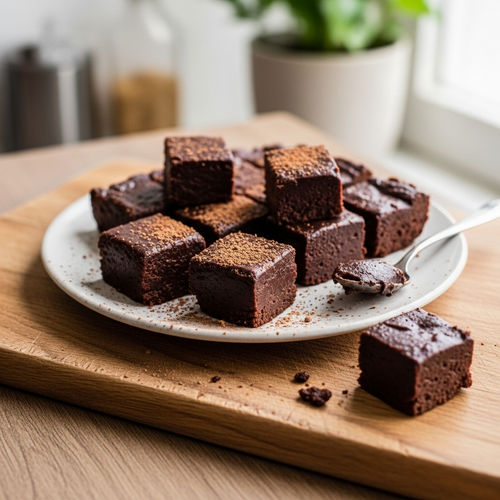
Description: A rich, creamy, and decadent chocolate fudge made with a secret high-protein base of Greek yogurt and cottage cheese. This no-bake recipe is perfect for crushing cravings and supporting fat loss goals.
Prep Time: 10 minutes | Chill Time: 4 hours
Servings: 12 squares
Macros per Serving | Calories: 85 | Protein: 10g | Fat: 3g | Carbohydrates: 5g
Ingredients
- 1 cup non-fat plain Greek yogurt
- 1/2 cup low-fat cottage cheese
- 2 scoops chocolate whey or casein protein powder
- 1/2 cup unsweetened cocoa powder
- 1/4 cup powdered erythritol or monk fruit sweetener
- 2 tablespoons natural almond butter
- 1 teaspoon vanilla extract
- Pinch of sea salt
- 2-4 tablespoons unsweetened almond milk (as needed)
Instructions
- Line a loaf pan with parchment paper, leaving an overhang on the sides.
- Blend Greek yogurt and cottage cheese in a blender until completely smooth.
- Add protein powder, cocoa powder, sweetener, almond butter, vanilla, and salt. Blend until creamy.
- Add almond milk 1 tablespoon at a time if the mixture is too thick to blend.
- Pour the mixture into the prepared pan and spread evenly.
- Refrigerate for at least 4 hours or freeze for 1-2 hours, until firm.
- Lift out of the pan using the parchment paper, cut into 12 squares, and serve.
Notes
Store leftovers in an airtight container in the refrigerator for up to one week. For best texture, ensure the cottage cheese and yogurt are blended until perfectly smooth before adding other ingredients.
FAQs About Fudge For Weight Loss
Here are some straightforward answers to the most common questions I receive about this fudge recipe.
Can I make this high-protein fudge without protein powder?
You can certainly try, but it will fundamentally change the recipe’s structure and nutritional profile. The protein powder does more than just add protein; it also acts as a thickener and binder, helping the fudge to set properly. Without it, the final product will be much softer, more like a thick pudding or mousse than a firm fudge.
If you choose to omit it, you will likely need to add another thickening agent. You could experiment with adding a tablespoon or two of coconut flour or a bit of xanthan gum to help it firm up. You will also need to increase the cocoa powder and sweetener to compensate for the flavor lost from the protein powder. Most importantly, remember that removing the protein powder will significantly lower the protein content, which is the key feature that makes this fudge so great for hunger management and fat loss.
Why is my protein fudge grainy?
A grainy texture is the most common issue people run into, and it almost always comes down to one of two things. The first, and most likely, culprit is not blending the cottage cheese enough. Cottage cheese curds need to be completely pulverized to create a smooth, creamy base. You should blend the cottage cheese and Greek yogurt together until you cannot see a single lump before adding any other ingredients. Using a high-powered blender really helps with this step.
The second potential cause is the type of protein powder or sweetener you’re using. Some protein powders, particularly certain plant-based ones, have a naturally grittier texture that can be hard to blend out completely. Likewise, if you use a granulated sweetener instead of a powdered one, it may not fully dissolve in the cold mixture, leaving behind a sandy or gritty mouthfeel. Stick to powdered sweeteners like erythritol or monk fruit for the smoothest result.
Is this healthy fudge recipe keto-friendly?
This fudge recipe is relatively low in carbohydrates, but whether it fits into a ketogenic diet depends on your specific daily carb allowance. The main sources of carbs in this recipe are the dairy products (Greek yogurt and cottage cheese) and the cocoa powder. A serving of this fudge has approximately 5 grams of net carbohydrates, which can easily fit into most keto diets.
To make it even more keto-friendly, you could make a couple of small adjustments. Opt for full-fat Greek yogurt and full-fat cottage cheese to increase the fat content and reduce the carb count slightly. Also, be sure that your protein powder is a keto-friendly option with minimal added sugars or carbs. As always, track the macros based on the specific brands of ingredients you use to ensure it aligns with your personal keto goals.
How does this fudge help with managing cravings?
This fudge is specifically designed to combat cravings on multiple levels. First, it directly addresses the psychological desire for a sweet, decadent treat. It tastes rich and chocolatey, so you feel like you’re having a genuine dessert. This prevents the sense of deprivation that can lead to bingeing. It’s a planned indulgence, which is a powerful tool for building a sustainable, flexible diet.
Second, and more importantly, it works on a physiological level. The high protein content is incredibly satiating. It digests slowly, helping to keep you feeling full and stabilizing your blood sugar. Unlike a sugary candy bar that causes a rapid spike and crash in energy, this fudge provides a steady stream of nutrients. This prevents the rebound hunger and intense cravings that typically follow a sugar crash. It satisfies your immediate craving while also preventing future ones.
Can I use a different sweetener for this fudge recipe?
Absolutely. The recipe calls for powdered erythritol or monk fruit because they are zero-calorie, blend smoothly, and don’t impact blood sugar. However, you can substitute them based on your preference. Powdered stevia is another great option, but be mindful that it’s much sweeter, so you’ll need to use significantly less. Always start small and add more to taste.
If you prefer to use a liquid sweetener like pure maple syrup or honey, you can, but there are a couple of things to keep in mind. These will add calories and sugar to the recipe. They will also add extra liquid, so you may need to reduce or omit the almond milk to achieve the right thick consistency. Using liquid sweeteners will make the fudge softer and may require a longer chilling time to set properly.
Try These High-Protein Recipes Next
If you loved how simple and satisfying this fudge recipe was, I have a few other high-protein desserts you should try.
- Easy High-Protein Brownies – These brownies are fudgy, delicious, and packed with protein to keep you full and kill your cravings.
- High-Protein Chocolate Cake – A single-serving chocolate cake that you can make in the microwave in minutes. Perfect for a quick dessert fix.
- Keto Butter Pecan Fudge – For another take on healthy fudge, this keto recipe from This Gal Cooks is rich, buttery, and a fantastic low-carb option.
Building a library of simple, go-to healthy recipes is one of the best ways to stay consistent on your fitness journey.