
Potato salad used to be on my “never eat” list. You know the one. It’s the list of foods you tell yourself are off-limits if you ever want to see your abs again. For years, I saw it as a creamy, mayo-drenched calorie bomb that would derail any progress I made. It was the star of every summer BBQ and family gathering, and I’d politely skip it every time.
When I started my journey to lose 65-70 pounds, I knew I had to find a way to enjoy life without feeling deprived. Cutting out entire food groups just isn’t sustainable, especially for an ADHD brain that craves novelty and hates rigid rules. The all-or-nothing thinking is a trap. One “bad” food choice leads to a spiral of “well, I guess the whole day is ruined,” and that’s exactly what I needed to avoid.
That’s what motivated me to create this high-protein potato salad. I wanted the comfort and flavor of the classic dish but rebuilt to support my fat loss goals. I needed something that would keep me full, reduce my cravings, and actually taste amazing. This isn’t a sad, diet version of a beloved classic. It’s a genuinely delicious, satisfying side dish that has become a staple in my meal prep routine, both before and after I started medication.
This recipe is proof that you can hit your fitness goals without eating boring food. It’s built for real life. It’s built for our brains.
Skip to My Flexibe Diet Recipe!
Why This Potato Salad Is Great For Fat Loss
Let’s get one thing straight: carbs are not the enemy. Potatoes, especially, get a bad rap they don’t deserve. The key to fat loss isn’t eliminating foods; it’s about building meals that manage hunger and keep you satisfied. This potato salad is engineered to do exactly that, making it a powerful tool in your fitness journey.
The first and most important principle we follow at ADHD FIT is “protein first.” This recipe is packed with it. We use six whole eggs and a full cup of non-fat Greek yogurt. That yogurt swap is a game-changer. It dramatically slashes the fat and calories found in traditional mayo-based dressings while cranking up the protein content. Protein is crucial for building and maintaining muscle during fat loss, and it’s incredibly satiating, which means it keeps you feeling full for longer.
Hunger management is the second pillar. When you feel full, you’re less likely to give in to cravings or overeat later. The combination of protein from the eggs and yogurt, fiber from the potatoes and veggies, and healthy fats from the light mayo creates a balanced dish that digests slowly. This helps stabilize your blood sugar, preventing the energy crashes that can trigger a hunt for sugary snacks. It’s a meal that provides steady, reliable energy.
Finally, it embraces flexible eating. A sustainable lifestyle includes foods you actually enjoy. Instead of a “cheat meal” that can lead to a shame spiral, we build satisfying, healthier versions of comfort foods into our plan. This potato salad feels like an indulgence, but its macros are completely aligned with a fat loss plan. It allows you to go to a cookout, enjoy a classic dish, and stay on track without feeling restricted. That’s how you win long-term.
Ingredients You’ll Need for Potato Salad
Building a great recipe is about using simple, powerful ingredients that deliver on flavor and nutrition. We don’t need a hundred complicated items. This potato salad recipe focuses on whole foods that work together to create a creamy, tangy, and satisfying dish. Here’s exactly what you’ll need.
- 1 ½ pounds baby red potatoes, quartered
- 6 large hard-boiled eggs, peeled and chopped
- 1 cup plain non-fat Greek yogurt
- 2 tablespoons light mayonnaise
- 2 tablespoons Dijon mustard
- 1 tablespoon apple cider vinegar
- 1 cup chopped celery
- ½ cup chopped red onion
- ½ cup chopped fresh dill
- ¼ cup chopped chives
- 1 teaspoon salt, or to taste
- ½ teaspoon black pepper, or to taste
- Optional: 1 can (15 ounces) cannellini beans, rinsed and drained
The star of the show here is the plain non-fat Greek yogurt. This is our secret weapon. It replaces the bulk of the traditional mayonnaise, which cuts down the fat content significantly while adding a huge boost of protein and a pleasant, tangy flavor. Make sure you get plain, unsweetened yogurt. The flavored ones are loaded with sugar.
For the potatoes, I strongly recommend baby red potatoes. Their waxy texture helps them hold their shape after boiling, so you don’t end up with a mushy salad. You can leave the skins on for extra fiber and nutrients, plus it saves you the tedious step of peeling. That’s a win for our ADHD brains which appreciate any shortcut we can get.
Don’t skip the fresh herbs. The fresh dill and chives are critical for that classic potato salad flavor. Dried herbs just won’t give you the same bright, vibrant taste. If you’re looking for an extra protein and fiber kick, the optional cannellini beans are a fantastic addition. They blend in seamlessly and make the salad even more filling.
How To Make Potato Salad (Step-By-Step)
Making this high-protein potato salad is straightforward. We break it down into simple, manageable steps to prevent overwhelm. The key is to do a little prep while other things are cooking. This is a great way to practice task-switching and make the process feel faster.
Step 1: Cook and Cool the Potatoes
First, place your quartered red potatoes in a large pot. Cover them with cold, salted water. Salting the water is a pro tip; it seasons the potatoes from the inside out. Bring the water to a boil and cook for about 10-15 minutes. The goal is “fork-tender,” meaning a fork can easily pierce a piece of potato without it falling apart. Once they’re done, drain them immediately and set them aside to cool completely. This cooling step is crucial; adding hot potatoes to the dressing will make it watery and can cause the yogurt to separate.
Step 2: Prepare the Dressing
While the potatoes are cooking and cooling, use that time to make your dressing. This is a perfect example of efficient kitchen workflow. In a large bowl—big enough to hold the entire salad later—whisk together the Greek yogurt, light mayonnaise, Dijon mustard, and apple cider vinegar. Keep whisking until it’s perfectly smooth and creamy. This is also the time to chop your celery, red onion, dill, and chives if you haven’t already. ADHD Tip: Use a food chopper for the veggies to save time and executive function.
Step 3: Combine Everything
Once the potatoes are completely cool to the touch, add them to the large bowl with the dressing. Gently fold in your chopped hard-boiled eggs, celery, red onion, fresh dill, and chives. If you’re using the cannellini beans for that extra protein boost, add them now. Use a rubber spatula to gently stir everything together. You want to coat all the ingredients without mashing the potatoes or breaking up the eggs too much.
Step 4: Season and Chill
Finally, season your potato salad with salt and pepper. Taste it and adjust as needed. Some people like it saltier, some like more pepper. You’re in control. For the absolute best flavor, cover the bowl and let it chill in the refrigerator for at least 30 minutes. This gives all the flavors a chance to meld together. It’s good right away, but it’s even better after a short rest.
How To Serve Potato Salad (ADHD-Friendly)
Knowing how to serve this potato salad is just as important as knowing how to make it. We want to build meals that are satisfying, balanced, and require minimal effort on busy days. The goal is to make healthy eating feel easy, not like another chore on your to-do list.
This potato salad is a fantastic side dish, but it can also be part of a complete meal. Because it already contains protein and carbs, you just need to pair it with a lean protein source and maybe some extra greens. This creates a perfectly balanced plate that will keep you full for hours and prevent energy dips. Simplicity is key for the ADHD brain; we don’t want to overcomplicate things.
Here are some brutally practical ways to serve it:
- With Grilled Protein: Serve a scoop alongside grilled chicken breast, steak, salmon, or pork chops. This is a classic BBQ-style plate made healthy. For easy prep, cook your protein in bulk for the week.
- As a Quick Lunch: Spoon the potato salad over a bed of spinach or mixed greens. The dressing on the salad is often enough to dress the greens, too. You get a complete, satisfying salad in seconds.
- In a Wrap: Use a high-fiber tortilla or a large lettuce leaf and make a potato salad wrap. Add some leftover shredded chicken for even more protein. It’s portable and requires no utensils.
The most important ADHD-friendly tip is to plan ahead. When you make a batch of this potato salad, immediately portion it out into individual containers. This completely removes the friction of deciding what to eat and how much to serve. When hunger strikes, you just grab a container and go. This pre-planning short-circuits decision fatigue, which is a major hurdle for those of us with ADHD.
How To Store, Reheat, and Reuse Potato Salad
Proper storage is essential for food safety and for making your life easier throughout the week. One of our core principles is leveraging meal prep to work with our ADHD brains, not against them. Making a big batch of this potato salad means you have a delicious, healthy option ready to go, which helps prevent those moments of “I have nothing to eat, I’ll just order takeout.”
Since this potato salad has a dressing made with Greek yogurt and a little bit of mayonnaise, it must be kept refrigerated. As soon as you’re done serving, put any leftovers into an airtight container and get it into the fridge. It will stay fresh and delicious for up to 4 days. I find the flavor is actually even better on day two, after all the ingredients have had more time to mingle.
Here are some key storage and reuse tips:
- Storage: Use a clear, airtight container. Being able to see the food in your fridge (object permanence!) makes you more likely to remember you have it and eat it before it goes bad. Label it with the date if you’re prone to forgetting when you made something.
- No Reheating: This is a cold salad. Please do not try to microwave it! The dressing will separate and become oily, and the texture will be completely ruined. It’s meant to be enjoyed chilled, straight from the refrigerator.
- Creative Reuse: If you get tired of eating it as a side dish, you can easily repurpose it. Mash it slightly with a fork and use it as a sandwich or wrap filling. You can also serve a small scoop on top of a simple green salad to make it more substantial and flavorful. This prevents food boredom, which is a real struggle for us.
By thinking about leftovers as “ingredients for future meals,” you can avoid waste and keep your meals interesting without extra effort. Having a plan for your leftovers is a simple system that reduces mental load and supports a sustainable, healthy lifestyle.
Easy Swaps & Variations for Potato Salad
Flexibility is the name of the game. A recipe is just a blueprint, not a set of unbreakable laws. This is especially important for those of us with ADHD. If we’re missing one ingredient, our brain can tell us the whole plan is ruined. But with a few simple swaps, you can adapt this recipe to what you have on hand, what you can afford, or your dietary needs.
The goal is to stay consistent, and consistency requires adaptability. Don’t let perfection be the enemy of a good, healthy meal. This potato salad is incredibly forgiving, so feel free to experiment and make it your own. It’s about creating a system that works for you in the real world.
Here are some easy and effective substitutions:
- For the Potatoes: If you don’t have red potatoes, Yukon Golds are a great substitute as they also hold their shape well. You could even use sweet potatoes for a completely different flavor profile with a boost of Vitamin A. Just be sure to peel them first.
- Make it Dairy-Free: To make this recipe dairy-free, simply swap the Greek yogurt for a plain, unsweetened dairy-free yogurt (like coconut or almond-based) and use a vegan mayonnaise. The texture and flavor will be very similar.
- Boost the Veggies: Feel free to add more vegetables for extra fiber and nutrients. Chopped bell peppers, shredded carrots, or even some frozen peas (thawed) work wonderfully. It’s an easy way to increase the nutritional value without much effort.
- Change up the Protein: While the eggs are classic, you could add other protein sources. Some crumbled bacon or turkey bacon adds a smoky, salty flavor. Flaked canned tuna or salmon can also be mixed in to turn this side dish into a complete, high-protein meal.
Remember, the best healthy eating plan is the one you can actually stick with. By allowing for these simple variations, you can keep this recipe from getting boring and ensure you always have a delicious, fat-loss-friendly option available, no matter what your fridge looks like.
High-Protein Potato Salad For Fat Loss
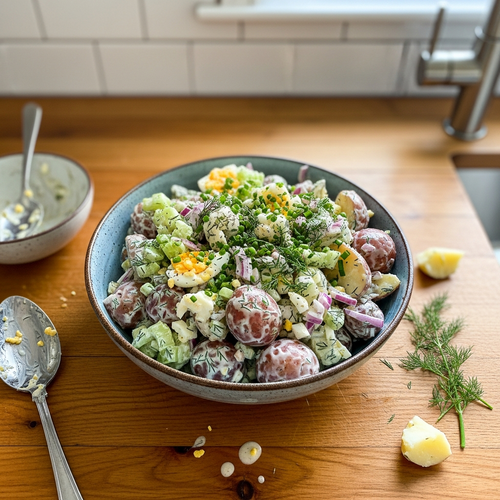
Description: A creamy, tangy, and satisfying potato salad that’s packed with protein to support fat loss goals. This recipe swaps out most of the heavy mayo for Greek yogurt, creating a lighter, healthier version of the classic comfort food that doesn’t sacrifice flavor.
Prep Time: 15 minutes | Cook Time: 15 minutes
Servings: 6
Macros per Serving | Calories: 225 | Protein: 13g | Fat: 6g | Carbohydrates: 29g
Ingredients
- 1 ½ pounds baby red potatoes, quartered
- 6 large hard-boiled eggs, peeled and chopped
- 1 cup plain non-fat Greek yogurt
- 2 tablespoons light mayonnaise
- 2 tablespoons Dijon mustard
- 1 tablespoon apple cider vinegar
- 1 cup chopped celery
- ½ cup chopped red onion
- ½ cup chopped fresh dill
- ¼ cup chopped chives
- 1 teaspoon salt, or to taste
- ½ teaspoon black pepper, or to taste
- Optional: 1 can (15 ounces) cannellini beans, rinsed and drained
Instructions
- Place quartered potatoes in a pot, cover with cold, salted water, and boil for 10-15 minutes until fork-tender. Drain and cool completely.
- While potatoes cool, whisk together Greek yogurt, light mayo, Dijon mustard, and apple cider vinegar in a large bowl.
- Add the cooled potatoes, chopped eggs, celery, red onion, dill, chives, and optional cannellini beans to the dressing.
- Gently stir to combine all ingredients without mashing the potatoes.
- Season with salt and pepper to taste. For best results, chill for at least 30 minutes before serving.
Notes
The flavor of this potato salad improves as it sits. If possible, make it a few hours or even a day ahead of time. Store in an airtight container in the refrigerator for up to 4 days.
FAQs About Potato Salad For Weight Loss
Here are some straightforward answers to the most common questions I receive about this potato salad recipe.
Is homemade potato salad good for weight loss?
Yes, a homemade potato salad can absolutely be good for weight loss, but it all comes down to the ingredients you use. Traditional potato salad, the kind you often find at delis or family picnics, is typically loaded with full-fat mayonnaise. Just one cup of regular mayo can pack over 1,400 calories and 160 grams of fat. When you make it at home, you have complete control over what goes in.
Our recipe is specifically designed for weight loss by making smart swaps. By using protein-rich Greek yogurt as the primary base for the dressing and only a small amount of light mayonnaise for flavor, we drastically cut the calories and fat while significantly increasing the protein. Protein is key for satiety, helping you feel fuller for longer on fewer calories. The potatoes provide complex carbohydrates for sustained energy, and the veggies add fiber. This combination helps manage hunger, which is 75 percent of the battle in fat loss.
Can you eat potatoes and still lose belly fat?
Absolutely. The idea that you have to cut out all carbs, especially potatoes, to lose belly fat is one of the biggest myths in fitness. Your body loses fat systemically; you can’t spot-reduce fat from your stomach by eliminating one specific food. Fat loss occurs when you are in a consistent calorie deficit, meaning you burn more calories than you consume. Potatoes can be a very helpful part of a fat loss diet.
Potatoes are surprisingly nutrient-dense, providing potassium and vitamin C. They are also very filling. When you cool potatoes after cooking, they develop something called resistant starch, which acts similarly to fiber. It resists digestion, helps feed good gut bacteria, and has been shown to improve insulin sensitivity. By pairing potatoes with a high-protein dressing and other veggies, as we do in this recipe, you create a balanced meal that supports your goals, rather than hindering them.
How does Greek yogurt taste in potato salad?
This is a common concern for people who are used to a heavy mayonnaise dressing. The great news is that Greek yogurt works beautifully in potato salad. It provides a creamy texture very similar to mayonnaise, but with a brighter, tangier flavor. Think of it as being closer to a dressing made with sour cream, but with a much better nutritional profile. The tanginess actually helps to cut through the richness and balances the starchy potatoes perfectly.
In this recipe, we don’t eliminate mayonnaise entirely. We use two tablespoons of light mayo to provide that familiar, savory flavor note that people expect from potato salad. The Dijon mustard and apple cider vinegar also add complexity and sharpness. The end result is a dressing that is incredibly creamy, flavorful, and satisfying. Most people who try it can’t even tell that the primary ingredient is Greek yogurt; they just notice that it tastes fresh and delicious.
What are the best potatoes to use for potato salad?
The type of potato you choose can make a big difference in the final texture of your salad. For potato salad, you want to use a “waxy” potato variety. Waxy potatoes are lower in starch and hold their shape well after being boiled. This is critical for avoiding a mushy, grainy potato salad. My top recommendation is red potatoes, which is what this recipe calls for. They have a firm, creamy texture and a thin skin that you don’t need to peel.
Other great waxy options include Yukon Gold potatoes, fingerling potatoes, or any variety labeled as “new potatoes.” The potatoes to avoid are the starchy, “mealy” types like Russets or Idaho potatoes. These are fantastic for mashed potatoes or baked potatoes because they are fluffy and absorbent, but that same quality makes them fall apart when boiled and mixed into a salad. Sticking with a waxy potato is a simple choice that ensures a great result every time.
How can I prevent my potato salad from becoming watery?
Watery potato salad is a common problem, but it’s easy to prevent with a couple of key techniques. The number one cause is adding hot or even warm potatoes to the dressing. The heat from the potatoes will cause the dressing, especially a dairy-based one like ours, to thin out and release liquid. It is absolutely essential that you let the potatoes cool completely to room temperature before you mix them with the dressing.
Another tip is to make sure you drain the potatoes very well after cooking. Let them sit in the colander for a few minutes to allow any excess water to steam off and evaporate. Some people even spread them out on a baking sheet to speed up the cooling and drying process. Finally, be mindful of watery vegetables. If you wash your celery or onions, pat them dry before chopping. Following these simple steps will ensure your potato salad stays creamy and delicious, not soupy.
Try These High-Protein Recipes Next
If you loved this flexible, fat-loss-friendly recipe, here are a few others you should try.
- High-Protein Mashed Potatoes: Another potato classic, rebuilt with Greek yogurt and cottage cheese for a creamy, protein-packed side dish.
- High-Protein Potato Soup: A warm and comforting soup that uses a similar protein-first approach to keep you full and satisfied.
- Tangy Red Potato & Bacon Salad: For a different take on potato salad, this recipe offers a delicious, savory flavor profile with the addition of bacon.
These recipes are all designed with the same principles in mind: simple, delicious, and built to support your goals.