
There are some foods that just feel like a hug in a bowl, and for me, pozole is at the top of that list. For years, I thought of it as a special occasion meal, something you only get at a great Mexican restaurant or a family gathering. It seemed too complex, too indulgent for someone like me who was trying to lose weight and build a sustainable fitness routine.
When I was deep in my 70-pound fat loss journey, I was all about chicken and broccoli. It worked, but it was boring. My ADHD brain craves novelty and flavor, and the bland, repetitive meals were leading me straight toward burnout and binge-eating spirals. I knew I had to find a way to make food I genuinely loved fit my goals.
That’s when I started deconstructing my favorite dishes, including this incredible chicken pozole. I realized the core components were actually perfect for fat loss: lean protein, fiber-rich hominy, and a broth packed with vegetables. It wasn’t about restriction; it was about smart construction. By focusing on a high-protein base and loading it up with fresh garnishes, I created a version that crushed cravings, kept me full for hours, and felt like a treat. This pozole recipe is the result of that process. It’s proof that you don’t have to give up satisfying, soulful food to get the results you want.
It’s become a staple in my rotation, especially for meal prep. It’s simple, incredibly flavorful, and works with my ADHD brain, not against it.
Skip to My Flexibe Diet Recipe!
Why Pozole Is Great For Fat Loss
Let’s get straight to it: this pozole isn’t just delicious, it’s a strategic tool for fat loss. At ADHD FIT, we build our meals around a few core principles, and this recipe hits every single one. It’s all about working smarter, not harder, especially when your brain is already juggling a million other things.
First and foremost, it’s packed with protein. We use a pound and a half of boneless, skinless chicken breast. Protein is the undisputed king of fat loss. It keeps you feeling full and satisfied for hours, which is your number one defense against mindless snacking and cravings. It also helps preserve your muscle mass while you’re in a calorie deficit, ensuring you’re losing fat, not just weight.
Second, this pozole is a hunger-management powerhouse because of its high volume and fiber content. The broth base, combined with the hominy, pinto beans, and all the vegetable toppings, creates a massive, filling bowl for a very reasonable number of calories. Fiber slows down digestion, stabilizing your blood sugar and preventing the energy crashes that often trigger a hunt for sugary snacks. This is a meal that physically takes up space in your stomach and signals to your brain, “Hey, we’re good here.”
Finally, it’s a one-pot meal that delivers incredible flavor and variety. For the ADHD brain, decision fatigue is real. Having a single recipe that provides protein, complex carbs, and veggies all in one go is a massive win. The customizable toppings also feed our need for novelty. You can change up the experience every time you eat it, preventing the taste-bud boredom that can derail any diet. It’s a perfect example of a flexible, sustainable meal that supports your goals without feeling like a punishment.
Ingredients You’ll Need for Pozole
Building a great meal starts with the right components. The beauty of this pozole is its reliance on simple, accessible ingredients that come together to create something truly special. There’s nothing here you can’t find at a standard grocery store, which is a huge win on low-motivation days.
The key ingredient that gives our version a little twist is the addition of pinto beans. While not always found in traditional pozole verde, I include them for a specific reason. They boost the fiber and add another layer of plant-based protein, making the final dish even more satisfying and effective at managing hunger. It’s a small tweak that pays big dividends for fat loss goals.
Here’s exactly what you’ll need to have on hand:
- 1 tbsp olive oil
- 1.5 lbs boneless, skinless chicken breasts
- 1 large white onion, chopped and divided
- 4 cloves garlic, minced
- 1 lb tomatillos, husks removed and rinsed
- 2 poblano peppers, stemmed and seeded
- 1 jalapeño, stemmed and seeded (optional, for heat)
- 6 cups low-sodium chicken broth
- 1 (15-ounce) can pinto beans, rinsed and drained
- 2 (25-ounce) cans white hominy, rinsed and drained
- 1 tsp ground cumin
- 1 tsp dried Mexican oregano
- Salt and black pepper to taste
- 1/2 cup chopped fresh cilantro
For Garnish:
- Thinly shredded green cabbage
- Sliced radishes
- Diced avocado
- Chopped white onion
- Fresh cilantro
- Lime wedges
A quick note on a few items: try to get low-sodium chicken broth. This gives you full control over the salt level, which is important for both health and flavor. When picking tomatillos, look for ones that are firm and have filled out their papery husks. They are the star of the verde sauce, so good quality here makes a difference. And remember, don’t be afraid of store-bought shortcuts. Buying pre-chopped onion or minced garlic in a jar is a perfectly valid way to save time and energy.
How To Make Pozole (Step-By-Step)
This recipe is designed to be straightforward. We break it down into simple, manageable chunks. The goal is to get maximum flavor with minimum stress. Grab a large pot or a Dutch oven; that heavy bottom will help everything cook evenly without scorching.
Step 1: Sear The Chicken
Heat the olive oil in your pot over medium-high heat. While it’s warming up, season your chicken breasts generously with salt and pepper. Don’t be shy. Searing the chicken is a crucial first step for flavor. Place the chicken in the hot pot and let it cook for about 3-4 minutes per side. You’re looking for a deep golden-brown crust. This isn’t about cooking it through; it’s about creating flavor through the Maillard reaction. Once seared, remove the chicken from the pot and set it aside on a plate.
Step 2: Build The Aromatic Base
In the same pot, add half of your chopped white onion. All those browned bits from the chicken are pure flavor, and the moisture from the onion will help scrape them up. Cook the onion for about 5 minutes until it’s soft and translucent. Now, add the minced garlic and cook for just another minute until you can smell it. Be careful not to burn the garlic, or it will turn bitter.
Step 3: Create The Verde Sauce
This is where the magic happens. In a blender, combine the tomatillos, poblano peppers, jalapeño (if you’re using it), the other half of the raw onion, and one cup of the chicken broth. Blend it on high until the mixture is completely smooth. Using some raw onion in the blend gives the final sauce a sharp, fresh bite that balances the cooked flavors.
Step 4: Simmer The Sauce and Broth
Pour that beautiful green sauce directly into your pot. Let it cook for about 5-7 minutes, stirring every so often. You’ll notice the color deepens and the sauce thickens slightly. This step cooks out the raw vegetable taste. Now, return the seared chicken breasts to the pot. Add the remaining 5 cups of chicken broth, the rinsed pinto beans, cumin, and oregano. Stir everything together, bring it to a boil, then immediately reduce the heat to a low simmer.
Step 5: Cook and Shred The Chicken
Cover the pot and let it gently simmer for 25-30 minutes. This gives the chicken time to cook through and become incredibly tender while all the flavors meld together. Once the chicken is cooked, carefully remove it from the pot. Using two forks, shred the meat. An ADHD-friendly hack: you can also put the warm chicken in the bowl of a stand mixer with the paddle attachment and run it on low for 15-20 seconds for perfectly shredded chicken with zero effort.
Step 6: Finish The Pozole
Return all that shredded chicken back to the pot. Add the rinsed hominy and the chopped fresh cilantro. Stir everything to combine and let it cook for another 10 minutes, just to heat the hominy through and let the cilantro release its flavor. This is your last chance to taste it. Does it need more salt? A bit more pepper? Adjust it now until it tastes perfect to you.
How To Serve Pozole (ADHD-Friendly)
Serving this pozole is where you can really lean into the flexibility that makes a diet sustainable for the ADHD brain. We thrive on novelty and customization, and a “toppings bar” approach turns a simple meal into an engaging experience. It prevents the meal from feeling repetitive, even if you eat it several days in a row.
The best way to do this is to prep all your garnishes at once. While the pozole is simmering, take 10 minutes to chop, slice, and shred everything. Store each topping in its own small container in the fridge. This is called “task batching,” and it’s a lifesaver. It reduces the effort needed for future meals, making it much more likely you’ll stick to your plan on a busy day. When it’s time to eat, just pull out the containers and let everyone build their own perfect bowl.
Ladle the hot pozole into bowls and set out your array of toppings. Here’s what makes the dish complete:
- Thinly shredded green cabbage: Adds a fresh, cool crunch that contrasts beautifully with the warm soup.
- Sliced radishes: Gives a sharp, peppery bite and more crunch.
- Diced avocado: Provides creamy texture and healthy fats, which contribute to satiety.
- Chopped white onion & fresh cilantro: These add a layer of bright, pungent flavor that cuts through the richness of the broth.
- Lime wedges: This is non-negotiable! A generous squeeze of fresh lime juice at the end wakes up all the flavors and ties everything together.
By letting yourself customize each bowl, you cater to your brain’s need for stimulation. One day you might load up on cabbage and radish for extra crunch, and the next you might go heavy on the creamy avocado. This small act of choice makes healthy eating feel less restrictive and more enjoyable, which is the key to long-term consistency.
How To Store, Reheat, and Reuse Pozole
One of the best features of this pozole recipe is how well it lends itself to meal prep. Making a big batch on Sunday means you have a delicious, high-protein meal ready to go for several days. This is a critical strategy for anyone, but especially for those of us with ADHD. It eliminates the “what’s for dinner?” decision fatigue that can so often lead to ordering takeout.
Proper storage is simple. Once the pozole has cooled down a bit, you can transfer it to airtight containers. I highly recommend portioning it out into individual serving sizes before you store it. This removes another barrier; you can just grab one container without having to scoop and measure later on. Future You will thank you.
Here’s your game plan for storage and reheating:
- In the Refrigerator: Store the pozole in airtight containers for up to 5 days. Keep the garnishes separate in their own containers or small bags to maintain their freshness and crunch.
- In the Freezer: This pozole freezes beautifully. Portion it into freezer-safe containers or bags, leaving a little room for expansion. It will keep well for up to 3 months. When you’re ready to eat it, you can thaw it in the fridge overnight.
- Reheating: You can reheat individual portions in the microwave in a microwave-safe bowl. Stir every minute or so until it’s heated through. Alternatively, you can reheat it in a small pot on the stovetop over medium heat. The pozole may thicken in the fridge, so feel free to add a splash of chicken broth or water to thin it out to your desired consistency.
Don’t forget about creative reuse! If you get tired of eating it as a soup, you can strain some of the shredded chicken and broth out and use it as a filling for tacos or quesadillas. Or, serve the chicken mixture over a bed of greens for a high-protein salad. Having options keeps things interesting and reduces food waste.
Easy Swaps & Variations for Pozole
A recipe is just a roadmap, not a rigid set of rules. The best system is one you can adapt to your life, your budget, and what you happen to have in the fridge. This pozole is incredibly forgiving and easy to customize. Don’t be afraid to make it your own. The goal is consistency, and if a smart swap helps you make this meal instead of ordering a pizza, that’s a huge win.
Sometimes you’re out of an ingredient, or maybe you want to adjust the macros or flavor profile. That’s perfectly fine. We embrace brutally practical solutions here. Perfection is the enemy of progress, so let’s focus on what works.
Here are a few simple swaps and variations you can try:
- Protein Swap: While chicken breast is lean and high in protein, traditional pozole is often made with pork. A pork shoulder (or pork butt) works beautifully. Just cook it low and slow in the broth until it’s fall-apart tender. You could also use boneless, skinless chicken thighs for a richer flavor.
- Make It Quicker: On a day when you have zero energy, you can use a high-quality store-bought salsa verde instead of blending your own tomatillo sauce. Just add about 2 cups of it to the pot after you’ve sautéed the onions and garlic. You can also use a rotisserie chicken and shred the meat to save on cooking time.
- Adjust the Heat: This recipe is mildly spicy with one jalapeño. To increase the heat, leave the seeds and membranes in the jalapeño, or add a serrano pepper to the blender. If you want it completely mild, omit the jalapeño entirely.
- Bean Variations: If you don’t have pinto beans, black beans or even chickpeas would work well. Or, if you prefer a more traditional pozole, you can leave the beans out altogether.
The important thing is to have a delicious, protein-packed meal that you enjoy. Use these suggestions as a starting point and don’t hesitate to experiment. Finding what you love is what makes healthy eating a sustainable lifestyle.
High-Protein Chicken Pozole Verde
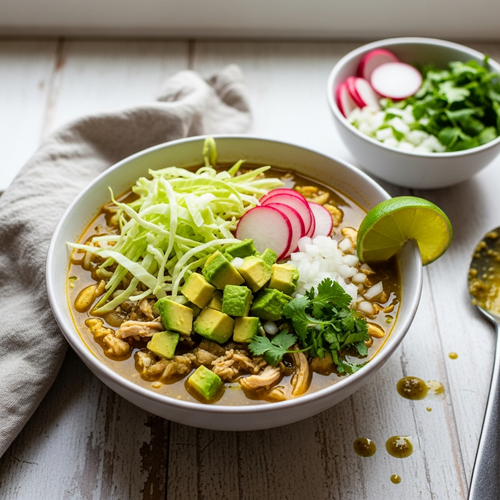
Description: A satisfying and flavorful chicken pozole verde, packed with protein and fiber to support fat loss goals. This one-pot meal is perfect for meal prep and designed to be simple, flexible, and delicious.
Prep Time: 15 minutes | Cook Time: 50 minutes
Servings: 8
Macros per Serving | Calories: 395 | Protein: 38g | Fat: 11g | Carbohydrates: 35g
Ingredients
- 1 tbsp olive oil
- 1.5 lbs boneless, skinless chicken breasts
- 1 large white onion, chopped and divided
- 4 cloves garlic, minced
- 1 lb tomatillos, husks removed and rinsed
- 2 poblano peppers, stemmed and seeded
- 1 jalapeño, stemmed and seeded (optional)
- 6 cups low-sodium chicken broth
- 1 (15-ounce) can pinto beans, rinsed and drained
- 2 (25-ounce) cans white hominy, rinsed and drained
- 1 tsp ground cumin
- 1 tsp dried Mexican oregano
- Salt and black pepper to taste
- 1/2 cup chopped fresh cilantro
- Garnishes: Shredded cabbage, sliced radishes, diced avocado, chopped onion, cilantro, lime wedges
Instructions
- Heat olive oil in a large pot. Season chicken with salt and pepper and sear for 3-4 minutes per side. Remove chicken.
- Add half the chopped onion to the pot and cook for 5 minutes. Add garlic and cook for 1 minute.
- In a blender, combine tomatillos, poblano peppers, jalapeño, remaining raw onion, and 1 cup of broth. Blend until smooth.
- Pour the blended sauce into the pot and cook for 5-7 minutes.
- Return chicken to the pot. Add remaining broth, pinto beans, cumin, and oregano. Simmer, covered, for 25-30 minutes.
- Remove chicken and shred it. Return shredded chicken to the pot along with the hominy and cilantro. Cook for 10 more minutes.
- Season to taste and serve hot with desired garnishes.
Notes
For an easy shortcut, use a store-bought rotisserie chicken (shred about 4 cups of meat) and add it in Step 5. You can also use 2 cups of a quality store-bought salsa verde in place of blending your own sauce.
FAQs About Pozole For Weight Loss
Here are some straightforward answers to the most common questions I receive about this pozole recipe.
Is this pozole recipe healthy for weight loss?
Absolutely. We designed this pozole specifically with fat loss in mind. The primary reason is its high protein content. With nearly 40 grams of protein per serving from the chicken breast, it provides a powerful dose of the most satiating macronutrient. Protein helps you feel fuller for longer, which drastically reduces the likelihood of overeating or reaching for unhealthy snacks between meals. It’s the foundation of hunger management.
Beyond protein, the recipe is rich in fiber from the hominy, pinto beans, and the mountain of fresh vegetable garnishes. Fiber adds bulk to your meal without adding significant calories, and it slows down digestion, leading to more stable blood sugar levels and sustained energy. This combination of high protein and high fiber makes each serving incredibly filling for its calorie count, which is a key principle of eating for sustainable fat loss. It feels like an indulgent, hearty meal, not a “diet” food, which is crucial for long-term adherence.
Can I make this pozole in a slow cooker or Instant Pot?
Yes, this recipe adapts very well to both a slow cooker and an Instant Pot, which can be great for hands-off cooking. For a slow cooker, you would first blend the verde sauce ingredients (tomatillos, peppers, etc.) as instructed. Place the raw chicken breasts at the bottom of the slow cooker, pour the verde sauce over them, then add the remaining broth, onions, garlic, beans, and spices. Cook on low for 6-8 hours or on high for 3-4 hours. About 30 minutes before serving, remove and shred the chicken, then return it to the pot along with the rinsed hominy and cilantro to heat through.
For an Instant Pot, use the “Sauté” function to sear the chicken and cook the onions and garlic directly in the pot. Turn it off, add the blended verde sauce, remaining broth, beans, and spices. Add the chicken back in. Secure the lid, set the valve to “Sealing,” and cook on high pressure for 15 minutes. Let the pressure release naturally for 10 minutes before doing a quick release. Remove and shred the chicken, then stir it back in with the hominy and cilantro. The Instant Pot method is fantastic for developing deep flavor in a fraction of the time.
What is hominy and is it good for you?
Hominy is essentially maize (field corn) that has undergone a process called nixtamalization. The corn kernels are soaked and cooked in an alkaline solution, usually limewater, which loosens the hulls and softens the kernels. This process does something amazing: it unlocks nutrients, particularly niacin (vitamin B3), making it more bioavailable for your body to absorb. It also gives hominy its distinct puffy, chewy texture and slightly earthy, corn-like flavor that is signature to pozole.
Nutritionally, hominy is a great addition to a fat-loss diet. It’s a good source of complex carbohydrates, which provide steady energy without a major blood sugar spike. It’s also naturally low in fat and contains a decent amount of dietary fiber. A cup of hominy has about 4-5 grams of fiber, which contributes to that feeling of fullness and supports digestive health. Think of it as a more nutrient-dense and satisfying carb source than something like white rice or pasta.
How can I make this pozole recipe spicier?
There are several ways to turn up the heat, depending on your preference. The easiest method is to simply not remove the seeds and white membranes from the jalapeño before you blend the sauce; that’s where most of the capsaicin (the compound that makes peppers hot) resides. For a more significant kick, you can add one or two serrano peppers to the blender along with the jalapeño. Serranos are quite a bit hotter and will add a sharp, intense heat.
Another option is to add heat after the fact, which is great if you’re serving people with different spice tolerances. You can serve the pozole with your favorite Mexican hot sauce (like Cholula or Valentina) on the side. You could also add a pinch of cayenne pepper or a small, dried chile de árbol to the broth while it simmers for a deeper, more infused heat. This allows everyone to customize their bowl to their own liking.
My pozole tastes bland, what did I do wrong?
If your pozole tastes flat, it’s almost always due to one of three things: salt, acid, or undeveloped flavor. First, check your seasoning. A large pot of soup needs a surprising amount of salt to make the flavors pop. Since we start with low-sodium broth, you are in control. Taste the broth at the end and add more salt, a little at a time, until the flavors taste vibrant, not just “salty.” This is the most common fix.
Second, do not skip the lime juice at the end. Acidity is crucial for brightening and balancing a rich, savory broth. A generous squeeze of fresh lime juice into your bowl just before eating will wake everything up. It cuts through the richness and makes all the other ingredients taste more like themselves. Third, make sure you didn’t skip the foundational flavor-building steps: searing the chicken until it has a deep brown crust and letting the verde sauce simmer and deepen in color before adding the rest of the broth. These steps create a depth of flavor that you can’t get by just boiling everything together.
Try These High-Protein Recipes Next
If you loved the simple, satisfying, and fat-loss-friendly approach of this pozole, here are a few other recipes you should try.
- Easy High-Protein Taco Soup: All the flavor of a loaded taco in a warm, comforting bowl. It’s incredibly easy to make and perfect for a weeknight meal prep.
- Creamy White Chicken Chili: A rich, creamy chili that uses a clever, healthy trick to get its texture without loading up on fat. It’s another one-pot wonder that’s packed with protein.
- Over 30 Delicious Cinco de Mayo Recipes: For even more inspiration, this roundup from This Gal Cooks offers a huge variety of flavorful dishes that you can adapt to fit your macros.
These meals follow the same principles: protein-first, big on flavor, and simple enough to tackle even on a low-energy day.