
For years, I thought risotto was a “special occasion” food. It was something I’d order at a nice restaurant, a creamy, decadent dish loaded with butter and cheese. It felt like the complete opposite of “fat loss food.” When I started my journey and lost my first 65 pounds, I put things like risotto in a mental box labeled “off-limits.” It seemed too complicated to make and too indulgent to fit my goals.
But as I transitioned from just losing weight to building a sustainable lifestyle, I realized that restricting entire food groups wasn’t the answer. My ADHD brain craves satisfaction and rebels against rigid rules. I missed that comforting, savory bowl of risotto. I knew there had to be a way to re-engineer it to fit my “protein first, hunger management second” philosophy.
The motivation was simple. I wanted that rich, creamy texture without the calorie bomb that would send my energy and progress crashing. I started experimenting, and the big breakthrough was combining a small amount of real Arborio rice with a large amount of riced cauliflower. It was a game-changer. This recipe is the result of that process. It’s a truly satisfying, high-protein risotto that keeps you full for hours, crushes cravings, and proves you can absolutely enjoy your favorite foods while building a body you love.
Skip to My Flexibe Diet Recipe!
Why Risotto Is Great For Fat Loss
When you hear risotto, you probably don’t think “weight loss.” Traditional recipes can be packed with carbs, butter, and cheese, making them very calorie-dense. But this recipe is different by design. We’ve flipped the script to turn this comfort classic into a powerful tool for your fat loss journey, all while working with your ADHD brain.
First and foremost, it’s packed with protein. We use a full pound of boneless, skinless chicken breast. Protein is the undisputed champion of fat loss. It keeps you feeling full and satisfied for longer, which is critical for managing the impulsive snacking that can come with ADHD. It also helps preserve lean muscle while you’re in a calorie deficit, ensuring you’re losing fat, not muscle.
The real secret weapon here is our smart carb and veggie blend. We use just enough starchy Arborio rice to create that signature creamy texture, but the real volume comes from three cups of riced cauliflower. This simple swap dramatically lowers the overall calorie and carbohydrate count while loading the dish with fiber and extra nutrients. You get a huge, satisfying portion that won’t spike your blood sugar and lead to a crash later.
This meal is the definition of flexible eating. It doesn’t feel like a compromise. It’s a delicious, hearty, and comforting dish that you’ll actually look forward to eating. For those of us with ADHD, enjoying our food is non-negotiable for long-term consistency. When your “diet food” is this good, you’re not tempted to order takeout or fall into a shame spiral after a “cheat meal.” This risotto is proof that you can achieve your goals without eating boring, restrictive meals.
Ingredients You’ll Need for Risotto
One of the best things about this risotto recipe is how it uses simple, accessible ingredients to create something that tastes complex and gourmet. You don’t need a bunch of fancy items to make this work. Everything should be easy to find at your local grocery store.
Here’s the full list of what you’ll need:
- 1 tsp olive oil
- 1 lb boneless, skinless chicken breast, cut into 1-inch cubes
- 1 medium onion, finely chopped
- 2 cloves garlic, minced
- 8 oz cremini mushrooms, sliced
- 1/2 cup Arborio rice
- 3 cups cauliflower, riced
- 1/2 cup dry white wine (optional)
- 4 cups low-sodium chicken or vegetable broth, warmed
- 1/2 cup frozen peas
- 1/4 cup grated Parmesan cheese
- 2 tbsp chopped fresh parsley
- Salt and black pepper to taste
The absolute star of the show here is the riced cauliflower. This is our primary tool for making the risotto both voluminous and low-calorie. An ADHD-friendly tip: buy it frozen. It’s already riced for you, so there’s no messy food processor to clean. It’s a perfect shortcut that saves time and precious executive function.
A few notes on other key ingredients. You must use Arborio rice. Its high starch content is what creates the creamy texture risotto is famous for; regular long-grain rice just won’t work. For the Parmesan cheese, I highly recommend buying a block and grating it yourself. The pre-shredded kind often contains additives that can prevent it from melting smoothly. The flavor is also much better, so you need less of it. Finally, using low-sodium broth is important because it allows you to control the final saltiness of the dish, especially since Parmesan adds its own salt.
How To Make Risotto (Step-By-Step)
Making risotto has a reputation for being difficult, but I promise it’s mostly about process, not perfection. It requires a bit of attention, but the steps are simple. The key is preparing your ingredients beforehand, a practice called “mise en place.” Chop your onion, mince your garlic, and have everything ready to go. This prevents frantic searching mid-recipe, which is a classic ADHD pitfall.
We’ll be using a large pot or a Dutch oven. Having enough space for stirring is crucial.
Step 1: Brown The Chicken
Heat your olive oil over medium-high heat and add the cubed chicken. Cook it until it’s browned on all sides. This step isn’t just about cooking the chicken; it’s about building flavor. Those little browned bits left in the pot are gold. Once browned, remove the chicken and set it aside. We’ll add it back in later so it doesn’t get tough and overcooked.
Step 2: Sauté The Aromatics and Veggies
In the same pot, add your chopped onion and cook for about five minutes until it’s soft and translucent. Then, stir in the garlic and sliced mushrooms. Cook until the mushrooms have released their liquid and started to brown. This is your flavor base, and your kitchen should start smelling amazing right about now.
Step 3: Toast The Rice
Add the Arborio rice directly to the pot with the vegetables. Stir it constantly for one to two minutes. This “toasting” step is critical. It helps the grains maintain their structure and absorb the broth more evenly, which is key to that perfect al dente texture. The edges of the rice will look a bit translucent when it’s ready.
Step 4: Deglaze and Add Liquid In Stages
If you’re using white wine, pour it in now and scrape up any browned bits from the bottom of the pot. Cook until the wine has mostly evaporated. Now, add the riced cauliflower and one cup of your warmed broth. Stir until the liquid is mostly absorbed. This is the main event. Continue adding the broth, one cup at a time, letting each addition absorb before adding the next. Stir frequently. This process releases the starches from the rice, creating that beautiful creamy sauce without any cream.
Step 5: Finish And Combine
After about 15-20 minutes, when the Arborio rice is nearly tender, stir in the cooked chicken and frozen peas. Cook for another 5 minutes to heat everything through. Finally, remove the pot from the heat and stir in the Parmesan cheese and fresh parsley. This is important. Adding the cheese off the heat prevents it from becoming stringy. Season with salt and pepper, and you’re ready to serve.
How To Serve Risotto (ADHD-Friendly)
The beauty of this high-protein risotto is that it’s a complete, balanced meal all in one pot. You have your protein, your vegetables, your carbs, and your healthy fats. For the ADHD brain, this is a massive win. It eliminates the decision fatigue of figuring out side dishes and reduces the number of things you have to cook and clean.
This recipe is designed for batch cooking. It makes several generous portions. My biggest ADHD-friendly tip is to portion out your leftovers for the next few days immediately after you finish cooking. Don’t just put the whole pot in the fridge. Use clear, single-serving containers and place them right at the front of the shelf. This way, your healthy lunch for tomorrow is a visible, grab-and-go option, not a forgotten treasure hunt.
While it’s a full meal on its own, here are a few simple ways to serve it if you want to add some variety:
- A Simple Green Salad: A handful of arugula or a bagged salad mix with a light lemon vinaigrette adds a fresh, peppery bite that cuts through the creaminess of the risotto. Zero extra cooking required.
- Extra Toppings: A final sprinkle of grated Parmesan, some fresh black pepper, or a pinch of red pepper flakes can elevate the dish.
- A Squeeze of Lemon: A small wedge of lemon squeezed over the top right before eating can brighten up all the flavors, especially on day two or three.
By making this a “cook once, eat three times” meal, you’re buying back time and mental energy for the rest of your week. You’ve already made a great choice for your body, and the work is done. That’s a sustainable system.
How To Store, Reheat, and Reuse Risotto
Leftover risotto has a bad reputation for becoming clumpy and dry, but because our version incorporates so much cauliflower rice, it actually reheats incredibly well. The key is adding a little bit of moisture back in. This is a perfect meal prep recipe to get you through a busy week.
Here’s how to handle your leftovers for the best results:
- Storing: First, allow the risotto to cool down to room temperature. This is important for food safety. Then, transfer it to airtight containers. As I mentioned before, I highly recommend portioning it into individual servings. It will keep well in the refrigerator for up to four days.
- Reheating on the Stovetop: This is my preferred method. Place a serving of risotto in a small saucepan or skillet over medium-low heat. Add a splash of liquid—chicken broth, water, or even a little milk works well. Stir gently as it heats up until it’s hot and has returned to a creamy consistency.
- Reheating in the Microwave: This is the fastest option. Put your risotto in a microwave-safe bowl and add that same splash of liquid. Cover the bowl with a damp paper towel to help it steam. Heat in 60-second intervals, stirring in between each one until it’s heated through.
Want to get creative and fight off flavor fatigue? My favorite way to reuse leftover risotto is to make crispy risotto cakes, often called arancini. Simply form the cold, firm risotto into small patties with your hands. Pan-fry them in a non-stick skillet with a little olive oil for a few minutes per side until they are golden brown and crispy on the outside. It’s a completely new texture and a fantastic way to make leftovers feel exciting again, which is a must for the novelty-seeking ADHD brain.
Easy Swaps & Variations for Risotto
One of the core principles of ADHD FIT is flexibility. A recipe is just a template, not a rigid set of rules. This risotto is incredibly versatile, so feel free to adapt it based on what you have on hand, your dietary needs, or what’s on sale at the grocery store. Perfection is the enemy of consistency, so make this recipe work for you.
Here are some simple swaps and variations you can try:
- Change The Protein: If you’re not a fan of chicken, this works great with other proteins. Try cooked Italian sausage for a richer flavor, or add shrimp during the last 5-6 minutes of cooking. For a vegetarian option, stir in a can of rinsed cannellini beans or chickpeas at the end for a protein and fiber boost.
- Add More Veggies: This is a perfect vehicle for cleaning out your vegetable drawer. Chopped asparagus can be added with the peas, a few big handfuls of fresh spinach can be wilted in at the very end, or you can stir in some roasted butternut squash for a fall-inspired twist.
- Make It Dairy-Free: To make this risotto dairy-free, simply skip the Parmesan cheese. For that savory, cheesy flavor, you can stir in 2-3 tablespoons of nutritional yeast at the end.
- No White Wine: The wine adds a nice depth of flavor, but it is completely optional. You can just use a bit more chicken broth instead. To replicate the acidity, add a generous squeeze of fresh lemon juice to the finished dish.
- Experiment With Herbs: Fresh parsley is a classic, but you can easily swap it for other herbs. Fresh thyme pairs wonderfully with mushrooms, and a bit of fresh basil at the end would give it a bright, summery flavor.
The goal is to have a reliable, healthy meal in your toolkit. Don’t let a missing ingredient stop you from making it. Adapt, improvise, and enjoy the process.
High-Protein Chicken & Mushroom Risotto
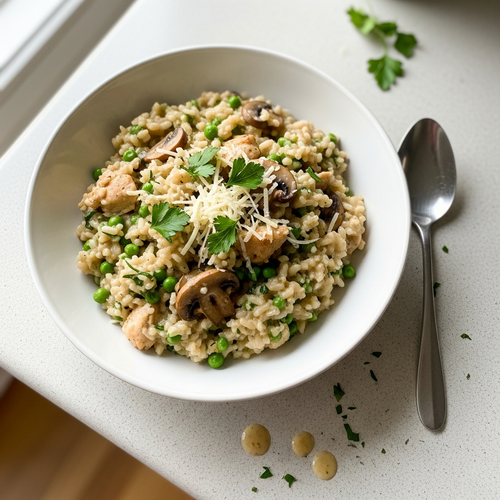
Description: A creamy and satisfying risotto made lighter and higher in protein with a smart blend of Arborio rice and cauliflower rice. This is the perfect one-pot meal for fat loss that doesn’t sacrifice flavor or comfort.
Prep Time: 15 minutes | Cook Time: 30 minutes
Servings: 4
Macros per Serving | Calories: 450 | Protein: 40g | Fat: 15g | Carbohydrates: 35g
Ingredients
- 1 tsp olive oil
- 1 lb boneless, skinless chicken breast, cut into 1-inch cubes
- 1 medium onion, finely chopped
- 2 cloves garlic, minced
- 8 oz cremini mushrooms, sliced
- 1/2 cup Arborio rice
- 3 cups cauliflower, riced (fresh or frozen)
- 1/2 cup dry white wine (optional)
- 4 cups low-sodium chicken broth, warmed
- 1/2 cup frozen peas
- 1/4 cup grated Parmesan cheese
- 2 tbsp chopped fresh parsley
- Salt and black pepper to taste
Instructions
- Heat olive oil in a large pot or Dutch oven over medium-high heat. Add chicken and cook until browned. Remove from pot and set aside.
- Add onion to the pot and cook for 5 minutes until soft. Stir in garlic and mushrooms and cook for 3-4 minutes.
- Add Arborio rice and toast for 1-2 minutes, stirring constantly.
- Pour in white wine (if using) and cook until evaporated. Stir in the riced cauliflower.
- Add warm broth, one cup at a time, stirring frequently and allowing each cup to be absorbed before adding the next.
- When the rice is nearly tender (about 15-20 minutes), stir in the cooked chicken and frozen peas. Cook for 5 more minutes.
- Remove from heat. Stir in Parmesan cheese and fresh parsley. Season with salt and pepper to taste and serve immediately.
Notes
For best results, use freshly grated Parmesan cheese. If reheating leftovers, add a splash of broth or water to restore the creamy texture.
FAQs About Risotto For Weight Loss
Here are some straightforward answers to the most common questions I receive about this risotto recipe.
Can you really eat risotto and lose weight?
Yes, you absolutely can. The key is understanding the difference between a traditional restaurant risotto and this strategically built fat-loss version. A typical risotto you’d order out is often made with huge amounts of rice, butter, heavy cream, and cheese, easily pushing a single serving over 1,000 calories. It’s delicious, but not ideal for consistent fat loss.
This recipe works because it adheres to the principles of a calorie deficit while maximizing satiety. We use a small amount of Arborio rice for texture and a large amount of cauliflower rice for volume. We pack it with a full pound of lean chicken for protein, which keeps you full for hours. The result is a meal with fantastic macros that fills you up on a reasonable number of calories. It’s all about making smart swaps to enjoy the foods you love, not eliminating them entirely.
Is cauliflower rice a good substitute in risotto?
I wouldn’t call it a substitute, but rather a perfect partner. If you were to make risotto with 100% cauliflower rice, you would miss the essential starchy creaminess that defines the dish. It would be more like a cauliflower pilaf. The real magic happens when you combine the two ingredients.
The small amount of Arborio rice does all the heavy lifting in the texture department, releasing its starches to create that classic creamy sauce. The cauliflower rice, meanwhile, seamlessly blends in to bulk up the meal, add tons of fiber and nutrients, and drastically slash the overall calorie and carbohydrate load. You get the authentic mouthfeel of risotto in a portion size that is truly satisfying, which is the best of both worlds for sustainable fat loss.
Do I have to stand and stir this risotto the whole time?
This is one of the biggest myths that makes risotto seem daunting. You do not need to stir constantly for 20 minutes straight. However, you do need to stir it frequently. The friction from stirring is what helps the Arborio rice release its starch, which is what makes the dish so creamy without adding actual cream. Forgetting to stir will cause the rice to stick to the bottom of the pot and cook unevenly.
For the ADHD brain, a task like this can feel like torture. My brutally practical tip is to gamify it with a timer. Set a kitchen timer for every two or three minutes. When it goes off, give the risotto a thorough stir for about 30 seconds, scraping the bottom of the pot. Then reset it. In those two-minute intervals, you can wipe down a counter, load a few dishes, or check your phone. It breaks an overwhelming task into small, manageable chunks and prevents you from getting bored and wandering off.
What makes this a good risotto recipe for ADHD?
I designed this recipe specifically with the ADHD brain in mind. First, it’s a one-pot meal. This dramatically reduces the amount of cleanup required, which is often a major barrier to cooking at home. Fewer dishes mean less overwhelm. Second, it’s built for batch cooking. The “cook once, eat multiple times” strategy is a lifesaver for reducing daily decision fatigue around food. You don’t have to figure out lunch for the next three days because it’s already done.
Furthermore, the recipe allows for shortcuts like frozen cauliflower rice and pre-cut chicken, which helps conserve executive function on low-energy days. The actual cooking process, when managed with a timer, can be a short, focused, and mindful activity. Finally, the meal itself is incredibly satisfying. It delivers a big dopamine hit from its comforting flavor and texture, which helps prevent the kind of intense cravings that can lead to binging on less nutritious, hyper-palatable foods.
Can I make this risotto recipe without the chicken?
Of course. The base of the risotto is very adaptable. However, if your goal is fat loss, it’s important to replace the chicken with another solid protein source to ensure the meal remains filling and macro-friendly. Simply removing the chicken will leave you with a dish that is mostly carbs and fat, which won’t keep you satisfied for nearly as long.
For a vegetarian option, I recommend adding one or two cans of rinsed cannellini beans or chickpeas when you add the peas. They add protein and fiber. Sautéing extra mushrooms also adds a great meaty texture. If you’re not vegetarian, pan-seared shrimp (added in the last few minutes of cooking) or cooked spicy Italian sausage are both fantastic and flavorful alternatives. Just be sure to account for the different nutritional profiles if you are tracking your macros.
Try These High-Protein Recipes Next
If you enjoyed this flexible and satisfying approach to a classic comfort dish, here are a few other recipes you should try.
- High-Protein Fried Rice – Another fantastic recipe that uses cauliflower rice to create a huge, satisfying portion of a takeout favorite.
- Healthy & Easy Jambalaya – A spicy, flavorful one-pot meal that’s packed with protein from chicken and sausage.
- Sweet Potato Shrimp Risotto – A great resource for another creative take on risotto that uses sweet potato and shrimp for a completely different flavor profile.
Building a library of go-to recipes is one of the best ways to stay consistent on your fitness journey.