
My relationship with salmon used to be complicated. For years, I saw it as boring “diet food” that people forced themselves to eat. It felt intimidating to cook, and I was sure I would mess it up. When I started my journey to lose 65 pounds, I knew I needed more protein, but I actively avoided salmon for the first year.
Then one day, I was out of chicken and tired of eggs. A pack of frozen salmon fillets was sitting in my freezer, a relic of a “get healthy” grocery trip. I decided to give it a shot. I threw some simple spices on it, baked it, and was shocked. It was delicious, filling, and incredibly easy.
That was a turning point. Salmon became a cornerstone of my diet. It helped me feel full, killed my afternoon cravings, and gave me the energy I needed for my workouts. It was a game-changer for my fat loss, both before and after I started ADHD medication.
This simple baked salmon recipe is the result of years of refinement. It’s designed for those of us with ADHD who need meals that are brutally practical. It’s fast, requires minimal cleanup, and uses ingredients you can always have on hand. It delivers maximum flavor with minimum effort, which is the only way to stay consistent.
Skip to My Flexibe Diet Recipe!
Why This Salmon Recipe Is Great For Fat Loss
When it comes to fat loss, food is about 75 percent of the battle. This salmon recipe is engineered to handle the heavy lifting for you, working with your body and your brain to make the process feel easier and more sustainable.
The core principle here is protein first. Each 6-ounce salmon fillet packs a huge punch of high-quality protein. This is critical for a few reasons. Protein is the most satiating macronutrient, meaning it keeps you feeling full and satisfied for hours. This directly combats the random, impulsive cravings that can derail our progress, especially when our ADHD brain is seeking a quick dopamine hit from junk food.
Protein also helps build and preserve lean muscle mass, especially when you’re in a calorie deficit for fat loss. More muscle means a higher resting metabolism, so your body burns more calories even when you’re not working out. This recipe makes hitting your protein goals simple and delicious.
Beyond protein, this meal is incredibly well-balanced. The healthy omega-3 fatty acids in the salmon are amazing for brain health and reducing inflammation. We pair it with asparagus, a low-calorie, high-fiber vegetable that adds volume to the meal, further boosting satiety. The quinoa provides a steady release of energy from complex carbs, preventing the blood sugar spikes and crashes that often lead to energy dips and more cravings. It’s a complete, hunger-crushing meal on one plate.
Finally, its simplicity is key. It’s a one-pan meal, which means cleanup is a breeze. For the ADHD brain, reducing friction is everything. The easier a healthy habit is to execute, the more likely we are to do it consistently. And consistency, not intensity, is what drives real, lasting results.
Ingredients You’ll Need for This Salmon Recipe
I designed this recipe around simple, easy-to-find ingredients. There’s nothing fancy here, because complicated ingredient lists are a huge barrier to getting started on a low-motivation day. Everything serves a purpose: to deliver incredible flavor while supporting your fitness goals.
Here’s exactly what you’ll need:
- 4 (6-ounce) skinless salmon fillets
- 1 tablespoon olive oil
- 2 cloves garlic, minced
- 1 teaspoon dried oregano
- 1/2 teaspoon black pepper, freshly ground
- 1/4 teaspoon salt
- 1 lemon, half sliced, half juiced
- 1 bunch asparagus, trimmed
- 1 cup cooked quinoa, for serving
- 2 tablespoons fresh parsley, chopped, for garnish
The star of the show is, of course, the salmon. Don’t feel pressured to buy the most expensive fresh salmon from the fish counter. I almost always use frozen fillets. They are just as nutritious, more affordable, and perfect for the ADHD brain. Having a bag in the freezer means a high-protein dinner is always available, preventing last-minute takeout orders. Just remember to thaw it in the fridge overnight.
The lemon is what really elevates this dish from basic to brilliant. Using both the juice and the slices gives you two layers of flavor. The juice in the marinade infuses the fish with a bright, tangy flavor, while the slices on top protect the salmon from drying out in the oven and release their aromatic oils as they cook.
For the garlic, fresh minced is great, but don’t be afraid to use the pre-minced stuff in a jar. It’s a fantastic shortcut that saves time and reduces the mess. Remember, we’re aiming for brutally practical, not perfect.
How To Make This Salmon Recipe (Step-By-Step)
This process is about as straightforward as it gets. We’re focusing on simple actions and minimal cleanup so you can get a healthy, delicious meal on the table even when your executive function is running on empty.
Step 1: Preheat Your Oven and Prep Your Pan
First things first, get your oven preheating to 400°F (200°C). Here’s an ADHD tip: do this before you touch a single ingredient. It creates a “point of no return” and gives you a clear starting signal, which can be a huge help with task initiation. While it heats, line a baking sheet with parchment paper. This is non-negotiable for me. It means cleanup is as simple as throwing the paper away.
Step 2: Get the Salmon Ready
Take your salmon fillets and pat them completely dry with a paper towel. This is a small step that makes a big difference. A dry surface helps the olive oil mixture stick to the fish and allows the top to get a slightly roasted texture instead of just steaming. Place the dry fillets on your prepared baking sheet.
Step 3: Mix Your Flavor
In a small bowl, whisk together the olive oil, minced garlic, dried oregano, black pepper, salt, and the juice from half a lemon. Use a bowl that feels a little too big. This prevents splashing and reduces the chances of a frustrating mess.
Step 4: Season the Salmon
Brush this olive oil mixture evenly over the tops and sides of each salmon fillet. You can use a pastry brush if you have one, but honestly, pouring it on and spreading it with the back of a spoon works just as well. Make sure each fillet is nicely coated.
Step 5: Top with Lemon Slices
Arrange the thin slices from the other half of your lemon on top of the salmon. This not only looks great but also helps keep the fish moist as it bakes.
Step 6: Add the Asparagus
Spread the trimmed asparagus in a single layer on the baking sheet around the salmon. If your pan is crowded, don’t be afraid to use a second one. Vegetables need space to roast properly; otherwise, they just steam and get soggy.
Step 7: Bake to Perfection
Place the baking sheet in the preheated oven and bake for 12-15 minutes. The exact time will depend on the thickness of your fillets. You’ll know the salmon is done when it’s opaque and flakes easily with a fork. For a nicer finish, you can switch the oven to broil for the last 1-2 minutes to get a little color on top, but keep a close eye on it!
Step 8: Serve It Up
Serve the baked salmon and roasted asparagus immediately over a bed of warm quinoa. Garnish with a sprinkle of fresh parsley if you’re feeling fancy. It adds a nice, fresh pop of color and flavor.
How To Serve This Salmon Recipe (ADHD-Friendly)
The beauty of this meal is that it’s a complete, balanced plate right out of the oven. You have your protein, your fibrous vegetable, and your complex carb. For those days when decision fatigue is real, you don’t have to think about anything else. Just plate it up and you’re done.
But flexibility is key for making a healthy lifestyle stick. Here are a few other ways to serve this salmon that work great for the ADHD brain:
- The Big Salad Bowl: Skip the quinoa and serve the warm salmon and asparagus over a big bed of mixed greens. The warmth from the fish will slightly wilt the greens. Add a simple lemon vinaigrette, and you have a high-protein, low-carb meal.
- The Lunch Wrap: Flake the cooked salmon (it’s great cold!) and mix it with a dollop of Greek yogurt or avocado. Spread it inside a whole-wheat tortilla with a handful of spinach for a super-fast, protein-packed lunch.
- The Power Bowl: Stick with the quinoa base, but add more toppings. A scoop of black beans, some cherry tomatoes, or a sprinkle of feta cheese can add variety without much extra effort.
Here’s my best ADHD-friendly serving tip: practice “cook once, eat twice.” When you serve your dinner, immediately portion out one or two servings of the leftovers into glass meal prep containers. Put them at the front of your fridge. This is called habit stacking. You’re tacking the task of “packing lunch” onto the existing habit of “serving dinner.”
This simple action removes a major decision point for the next day. You won’t have to wonder what’s for lunch or be tempted by less healthy options. Your brain will thank you for making its job easier. It’s a small system that pays off big in consistency.
How To Store, Reheat, and Reuse This Salmon Recipe
Leftovers are your secret weapon for staying on track. When you have a delicious, healthy meal ready to go, you’re less likely to grab something less optimal when hunger strikes. But storing and reheating salmon can be tricky, so let’s get it right.
Proper storage is the first step. Once the salmon has cooled, place it in an airtight container in the refrigerator. It will stay good for up to 3 days. If you can, it’s a good idea to store the quinoa separately from the salmon and asparagus to keep everything’s texture at its best. This prevents the quinoa from absorbing moisture and getting soft.
When it comes to reheating, avoid the microwave if you can. It has a tendency to overcook salmon, making it dry and rubbery. The best way is to heat it gently in an oven or toaster oven at around 275°F (135°C) for 10-15 minutes, or until warmed through. You can also flake it into a non-stick skillet over medium-low heat with a splash of water or olive oil.
But honestly, one of the best things about this salmon is that it’s fantastic cold. This opens up a world of no-reheat lunch options, which is perfect for busy days. Here are a few ways to reuse it:
- Quick Salmon Salad: Flake the cold salmon into a bowl, mix with a tablespoon of Greek yogurt, a squeeze of lemon juice, and some chopped celery or red onion. You can eat it with crackers, on a sandwich, or straight from the bowl.
- Upgrade Your Pasta: Toss the flaked salmon with some cooked whole-wheat pasta, a drizzle of olive oil, cherry tomatoes, and a handful of spinach for an instant, balanced meal.
- Simple Snack Plate: Break up the salmon fillet and serve it on a plate with some whole-grain crackers, cucumber slices, and a few olives. It’s like a mini, protein-heavy charcuterie board.
Thinking of leftovers not as a repeat meal but as an ingredient for a *new* meal can be a great mental shift, especially for ADHD brains that crave novelty.
Easy Swaps & Variations for This Salmon Recipe
A recipe is a template, not a rulebook. The most sustainable eating plan is a flexible one. If you don’t have an ingredient or just want to change things up, this recipe is incredibly forgiving. Here are some brutally practical swaps you can make.
We’re all about working with what you have to reduce friction and make healthy eating easier. Here are a few easy ways to adapt this recipe:
- Protein Swaps: If salmon isn’t your thing or you don’t have any, this marinade works beautifully on other types of fish like cod, tilapia, or halibut. You could also use chicken breasts or thighs; just adjust the baking time to ensure they are cooked through to 165°F (74°C).
- Vegetable Swaps: No asparagus? No problem. Broccoli florets, sliced bell peppers and onions, green beans, or zucchini spears are all fantastic substitutes. Just toss them with a little olive oil, salt, and pepper and roast them alongside the fish. Frozen vegetables work too! Just add them directly to the pan from frozen; they may need a few extra minutes.
- Carbohydrate Swaps: If you’re out of quinoa, you can serve this with brown rice, farro, or even roasted sweet potato wedges. For a lower-carb option, skip the grains entirely and double up on the roasted vegetables or serve it over a bed of cauliflower rice.
- Flavor Swaps: The garlic, oregano, and lemon combination is classic, but feel free to experiment. You could swap the oregano for dried thyme or rosemary. A sprinkle of red pepper flakes can add a little heat. Or, for a massive shortcut, use a pre-made lemon pepper or garlic and herb seasoning blend instead of the individual spices.
The goal is to use this recipe as a reliable system. Protein + Veggie + Smart Carb = A fat-loss-friendly meal. Don’t let a missing ingredient make you spiral and order a pizza. Adapt and overcome. That’s how flexible eating works, and it’s the key to long-term success.
Easy One-Pan Lemon Herb Salmon
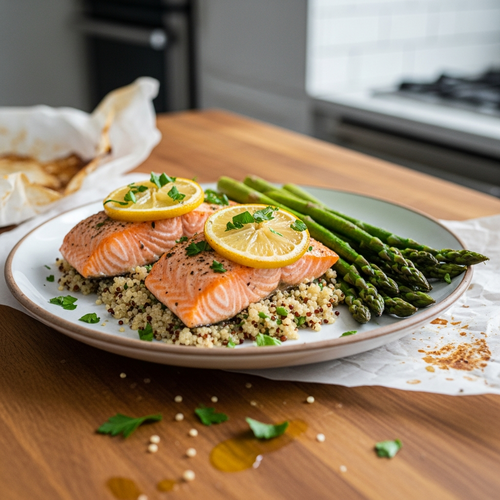
Description: A simple, high-protein one-pan salmon dinner that is packed with flavor and perfect for a busy weeknight. It’s designed to support fat loss goals by managing hunger and providing steady energy, all while being incredibly easy to make and clean up.
Prep Time: 10 minutes | Cook Time: 15 minutes
Servings: 4
Macros per Serving | Calories: 500 | Protein: 40g | Fat: 26g | Carbohydrates: 24g
Ingredients
- 4 (6-ounce) skinless salmon fillets
- 1 tablespoon olive oil
- 2 cloves garlic, minced
- 1 teaspoon dried oregano
- 1/2 teaspoon black pepper, freshly ground
- 1/4 teaspoon salt
- 1 lemon, half sliced, half juiced
- 1 bunch asparagus, trimmed
- 1 cup cooked quinoa, for serving
- 2 tablespoons fresh parsley, chopped, for garnish
Instructions
- Preheat oven to 400°F (200°C) and line a baking sheet with parchment paper.
- Pat the salmon fillets dry and place them on the prepared baking sheet.
- In a small bowl, whisk together olive oil, minced garlic, oregano, pepper, salt, and lemon juice.
- Brush the mixture over the salmon fillets and top with lemon slices.
- Arrange asparagus around the salmon on the baking sheet.
- Bake for 12-15 minutes, until salmon flakes easily with a fork.
- Serve immediately over quinoa and garnish with fresh parsley.
Notes
Frozen salmon works perfectly. Thaw overnight in the fridge before using. For extra flavor, let the salmon marinate in the olive oil mixture for 15 minutes before baking. Cooked quinoa can be made ahead of time to save time.
FAQs About This Salmon Recipe For Weight Loss
Here are some straightforward answers to the most common questions I receive about this salmon recipe.
Can I use frozen salmon for this recipe?
Yes, absolutely! In fact, I encourage it. Using frozen salmon is one of the best ADHD-friendly kitchen hacks for ensuring you always have a high-quality protein source ready to go. It eliminates the pressure of having to use fresh fish within a day or two, which can be a real struggle when plans change or motivation wanes.
The best way to prepare frozen salmon is to thaw it safely. Simply move the fillets from the freezer to the refrigerator the night before you plan to cook them. They’ll be perfectly thawed by dinnertime. If you forget (which happens to all of us), you can use the quick-thaw method: place the sealed fillets in a bowl of cold water for about 30-60 minutes. Just be sure not to use hot water, as it can start to cook the outside of the fish unevenly. Once thawed, pat it completely dry as you would with fresh salmon and follow the recipe as written.
Is this baked salmon recipe good for meal prep?
This recipe is fantastic for meal prep. Its simple components and stable flavors make it a reliable choice for lunches throughout the week. The key is to prep it in a way that maximizes freshness and makes reheating easy. I recommend slightly undercooking the salmon by a minute or two if you know you’ll be reheating it. This prevents it from drying out when you warm it up later.
When you store it, portion out individual meals into airtight containers. I like to keep the quinoa separate from the salmon and asparagus to maintain the best texture for each component. This approach makes it a grab-and-go meal that takes the guesswork out of your midday meal. As I mentioned earlier, it’s also delicious cold, flaked over a salad, which requires zero reheating and makes for an even faster lunch.
How do I know when my salmon is cooked perfectly?
This is the number one fear for people who are new to cooking fish: overcooking it. The good news is that there’s a very simple, low-tech way to check for doneness. Take a fork and gently press it into the thickest part of the salmon fillet. If it’s cooked through, the fish will easily flake apart. The color should also be an opaque, light pink all the way through, with no translucent or dark pink raw spots in the center.
If you want to be more precise, you can use an instant-read thermometer. The FDA recommends cooking salmon to an internal temperature of 145°F (63°C). Insert the thermometer into the thickest part of the fillet to get an accurate reading. Personally, I find the fork test to be more than reliable for everyday cooking. After you make this recipe once or twice, you’ll get a feel for it and be able to tell just by looking.
What makes this salmon recipe ADHD-friendly?
I designed this recipe specifically to work *with* an ADHD brain, not against it. It addresses several common executive function challenges. First, it’s a one-pan meal, which drastically reduces cleanup. A mountain of dishes can be a huge barrier to cooking, so minimizing that friction is crucial. Second, it has a short ingredient list with simple, common items, which reduces overwhelm during the planning and shopping phase.
The steps are minimal and straightforward, making it easy to follow even on a low-focus day. The total time from prep to plate is under 30 minutes, which is great for our need for quick results. Finally, it’s incredibly flexible. The easy swaps and variations mean you don’t have to spiral if you’re missing one ingredient. This recipe provides a simple, repeatable system that helps build confidence in the kitchen and makes healthy eating feel achievable, not like another chore on an endless to-do list.
Can I make this salmon recipe without quinoa to make it low-carb?
Of course. One of the core principles at ADHD FIT is flexible eating. This recipe is a template, and you should always adjust it to fit your personal preferences and nutritional goals. Making this meal low-carb is incredibly easy. Simply omit the quinoa and you’re most of the way there.
To make it just as filling, you can increase the amount of non-starchy vegetables. Add a larger portion of the roasted asparagus to your plate, or roast a second vegetable like broccoli or zucchini on the pan alongside it. Another popular low-carb option is to serve the salmon and asparagus over a bed of cauliflower rice. You can buy this pre-riced (fresh or frozen) to save a ton of time and mess. Serving it over a large salad is another excellent way to create a satisfying, high-volume, low-carb meal.
Try These High-Protein Recipes Next
If you loved how simple and delicious this salmon recipe was, here are a few other high-protein meals you should try.
- ADHD-Friendly Shrimp Scampi: A lightning-fast, buttery, garlicky pasta dish that feels indulgent but is packed with protein and ready in 15 minutes.
- The Best Healthy Chicken Salad: Perfect for meal prep, this recipe uses Greek yogurt for a creamy, high-protein lunch you can make in minutes.
- Easy Pan-Seared Salmon: If you’re looking for another quick way to cook salmon, this recipe gives you that crispy-skin restaurant experience right at home.
Each of these recipes follows the same principles: easy, delicious, and designed to help you reach your goals without the stress.