
I’ll be honest, my first experience with ratatouille wasn’t from some fancy French restaurant. It was from the Disney movie. For years, that’s all it was to me: a cartoon dish that looked pretty. It seemed complicated and fussy, the exact opposite of what I needed in my life, especially after becoming a single dad navigating ADHD and a 70-pound weight loss journey.
Everything changed when I was deep into my fitness journey, trying to find meals that were packed with vegetables but didn’t taste like rabbit food. I stumbled upon a basic ratatouille recipe and saw the potential. It was a giant pot of low-calorie, high-fiber vegetables. It was a blank canvas. The classic version was good, but it wouldn’t keep me full or help me hit my protein goals.
That’s what motivated me to develop this high-protein, low-calorie ratatouille. I needed something that could work for me on my lowest-motivation days. A meal that felt comforting and hearty, managed my hunger for hours, and didn’t require the precision of a French chef. This is that recipe. It’s brutally practical, packed with flavor, and built to support your fat loss goals without making you feel like you’re on a diet. It’s proof that you can eat incredibly well and still see the results you want.
This is food that works with your ADHD brain, not against it.
Skip to My Flexibe Diet Recipe!
Why Ratatouille Is Great For Fat Loss
When people think about fat loss food, they usually picture dry chicken breast and broccoli. This ratatouille recipe is the complete opposite of that stereotype. It’s vibrant, delicious, and incredibly effective for shedding fat because of how it’s designed. At ADHD FIT, our first principle is “protein first,” and while a vegetable stew isn’t typically high in protein, we’ve changed the formula.
By adding canned lentils and cooked quinoa directly into the stew, we accomplish two critical things. First, we significantly boost the protein and fiber content. This combination is a powerhouse for hunger management. Protein is the most satiating macronutrient, meaning it keeps you feeling full and satisfied for longer. This is a game-changer for anyone with ADHD who struggles with impulse eating or afternoon cravings.
Second, we are leaning into the concept of volume eating. This recipe makes a huge batch of food that is surprisingly low in calories. A massive, comforting bowl of this ratatouille is loaded with nutrient-dense vegetables like eggplant, zucchini, and bell peppers. You can eat a truly satisfying portion without derailing your calorie goals for the day. This mental trick is huge; it helps you feel abundant and nourished, not restricted.
This isn’t just about macros. It’s about building a sustainable lifestyle. A recipe like this ratatouille is flexible. It tastes even better the next day, making it perfect for meal prep. You cook once and have a healthy, delicious meal ready to go for days. This removes the decision fatigue that so often leads to grabbing takeout. It’s a simple system that sets you up for consistent success, which is always more important than short-term intensity.
Ingredients You’ll Need for Ratatouille
One of the best parts about this ratatouille recipe is its reliance on simple, accessible ingredients. There’s nothing here you can’t find at a standard grocery store. This is crucial for staying consistent, especially on days when executive dysfunction makes a complicated shopping trip feel impossible.
The key to transforming this from a simple vegetable side into a fat-loss meal is the addition of canned lentils and cooked quinoa. These are our protein and fiber boosters. Using canned lentils is a fantastic ADHD-friendly shortcut. No soaking or long cooking times required. Just rinse, drain, and dump them in. The same goes for quinoa; using pre-cooked or leftover quinoa makes this recipe come together even faster.
Here’s the full list of what you’ll need:
- 1 tablespoon olive oil
- 1 large onion, chopped
- 2 cloves garlic, minced
- 1 red bell pepper, seeded and chopped
- 1 yellow bell pepper, seeded and chopped
- 1 medium eggplant (about 1 pound), cut into 1-inch cubes
- 2 medium zucchini, cut into 1-inch cubes
- 1 (28-ounce) can crushed tomatoes
- 1 (15-ounce) can lentils, rinsed and drained
- 1/2 cup cooked quinoa
- 2 teaspoons dried herbs de Provence
- 1 teaspoon dried oregano
- Salt and freshly ground black pepper to taste
- 1/4 cup fresh basil, chopped
- 1/4 cup fresh parsley, chopped
A quick note on the tomatoes. The quality of your canned crushed tomatoes can make a big difference. Look for brands that have a rich, deep red color and don’t contain a lot of added sugar or sodium. San Marzano tomatoes are fantastic if you can find them, but any good quality brand will work well. The tomatoes form the backbone of the stew’s flavor, so it’s worth paying a little attention here.
How To Make Ratatouille (Step-By-Step)
We’re building this ratatouille in one pot, which is perfect for minimizing cleanup. I recommend using a large Dutch oven or a heavy-bottomed pot if you have one. It distributes heat evenly and prevents the vegetables from scorching on the bottom, allowing the flavors to meld together perfectly.
Step 1: Sauté Your Aromatics
Heat your tablespoon of olive oil in the pot over medium heat. Once it shimmers, add the chopped onion. Cook this for about five minutes, stirring occasionally, until it becomes soft and translucent. This step builds the first layer of flavor. Then, stir in your minced garlic and cook for just another minute until you can smell it. Be careful not to let the garlic burn, or it will turn bitter.
Step 2: Soften the Peppers
Add the chopped red and yellow bell peppers to the pot. Continue to cook and stir for about five to seven minutes. You want them to soften up and release some of their natural sweetness. This is a crucial step for developing a deep, rich flavor base for your ratatouille. Don’t rush this part.
Step 3: Cook the Eggplant and Zucchini
Now, stir in your cubed eggplant and zucchini. This is where the bulk of your stew comes from. Cook for about 10 minutes, stirring every couple of minutes. The vegetables will start to get tender and absorb the flavors from the onion and peppers. They will also release some water, which is perfectly normal.
Step 4: Simmer Everything Together
Pour in the can of crushed tomatoes, the rinsed lentils, and the cooked quinoa. Add your dried herbs de Provence, oregano, salt, and pepper. Stir everything together until it’s well combined. Bring the entire mixture to a gentle simmer. Once it’s bubbling slightly, reduce the heat to low, put the lid on the pot, and let it cook for at least 30 minutes. This is where the magic happens. The longer it simmers, the more the flavors will meld.
Step 5: Finish with Fresh Herbs
After simmering, the vegetables should be completely tender. Give it a final taste and adjust the salt and pepper if needed. Turn off the heat and stir in the fresh chopped basil and parsley. Adding fresh herbs at the end brightens up the entire dish and adds a burst of freshness that complements the rich, slow-cooked flavors.
How To Serve Ratatouille (ADHD-Friendly)
How you serve your ratatouille can make a huge difference in whether it feels like a satisfying, complete meal. Because our goal is fat loss, we want to prioritize protein with every meal. While our version has a good head start with lentils and quinoa, pairing it with an additional protein source will supercharge its effectiveness at keeping you full.
For those of us with ADHD, the key is to make this step as simple as possible. We don’t want to add a whole separate, complicated cooking process. The goal is to have a “plug-and-play” system for adding protein without adding stress or decision fatigue.
Here are some brutally practical ways to serve your ratatouille:
- With Rotisserie Chicken: This is my number one shortcut. Buy a pre-cooked rotisserie chicken from the grocery store. Pull the meat off the bone and store it in the fridge. When you heat up a bowl of ratatouille, just add a big handful of the shredded chicken on top. It’s zero-effort, high-quality protein.
- Over Cottage Cheese: It might sound strange, but don’t knock it until you try it. A scoop of full-fat cottage cheese at the bottom of the bowl adds a creamy texture and a massive protein boost. The warm ratatouille slightly melts the cheese, creating a delicious, savory base.
- Topped with a Fried Egg: A runny fried egg on top of a hot bowl of ratatouille is pure comfort. The yolk creates a rich sauce that mixes beautifully with the tomato base. It only takes two minutes to fry an egg, making it a quick and satisfying option.
- Alongside a Simple White Fish: Keep a bag of frozen cod or tilapia fillets in your freezer. You can season one and bake or pan-sear it in under 15 minutes while your ratatouille is reheating. It’s a clean, lean protein that pairs perfectly.
By having these simple protein additions ready to go, you turn this delicious vegetable stew into a perfectly balanced fat-loss meal. You eliminate the guesswork and make it easy to stay on track, even on your most chaotic days.
How To Store, Reheat, and Reuse Ratatouille
One of the best features of this ratatouille recipe is that it’s fantastic for meal prep. In fact, the flavors get even better on the second and third day as they have more time to sit and meld together. Properly storing and reheating it is key to making your life easier and ensuring you always have a healthy meal ready.
Storing this dish correctly prevents it from going bad and makes it easy to grab a portion when you need it. We want to remove as many barriers as possible between you and a healthy choice. That means thinking ahead just a little bit.
Here’s how to handle your leftovers for maximum convenience:
- Refrigerating: Once the ratatouille has cooled down, transfer it to airtight containers. I recommend portioning it out into single-serving containers right away. This is a crucial ADHD hack. It removes the friction of having to scoop out a portion later, making you much more likely to eat it. It will last in the fridge for up to 4-5 days.
- Freezing: This ratatouille freezes beautifully. Let it cool completely, then transfer it to freezer-safe bags or containers. Again, I highly recommend freezing it in individual portions. It will keep well in the freezer for up to 3 months. To thaw, just move a container from the freezer to the fridge the night before you want to eat it.
- Reheating: You can easily reheat it in the microwave in a microwave-safe bowl. Cover it to prevent splatters and heat for 2-3 minutes, stirring halfway through. For the best flavor and texture, I prefer reheating it on the stovetop in a small saucepan over medium-low heat until it’s warmed through.
- Reusing: Don’t be afraid to get creative! You can use leftover ratatouille as a sauce for whole-wheat pasta or zucchini noodles, as a topping for a baked potato, or even as a base for a hearty shakshuka by cracking a couple of eggs into it and simmering until they’re cooked. This prevents flavor fatigue and reduces food waste.
Thinking about your future self is a superpower when you have ADHD. Taking five extra minutes to portion out your ratatouille can be the difference between a healthy lunch and a desperate, last-minute decision you’ll regret later.
Easy Swaps & Variations for Ratatouille
A flexible recipe is a sustainable recipe. Life happens. Sometimes you don’t have the exact ingredients, or maybe you just want to change things up to avoid getting bored. This ratatouille recipe is incredibly forgiving and easy to adapt. Don’t ever feel like you have to follow it perfectly to get a great result. Perfectionism is the enemy of progress.
The goal is to have a delicious, healthy meal that fits your needs. Whether you need to swap something for dietary reasons, use what you already have in the fridge, or just experiment with new flavors, this recipe can handle it. Think of this as a template, not a strict set of rules.
Here are some simple and effective swaps and variations:
- Boost the Protein: If you want to make this an all-in-one high-protein meal, brown some lean ground turkey, chicken, or even grass-fed beef with the onions at the beginning of the recipe. It will make the stew even heartier and more filling.
- Change Up the Legumes: If you’re not a fan of lentils or don’t have any, you can easily substitute them. A can of rinsed and drained chickpeas or cannellini beans works wonderfully and provides a similar boost of fiber and plant-based protein.
- Use Different Vegetables: This recipe is a great way to clean out your vegetable drawer. Have some mushrooms, summer squash, or a different color of bell pepper? Throw them in! Just be mindful that different vegetables have different cooking times. Add harder vegetables like carrots earlier and softer ones like spinach toward the end.
- Spice It Up: If you like a little heat, add a pinch of red pepper flakes along with the dried herbs. You could also add a teaspoon of smoked paprika for a deeper, smokier flavor that complements the tomatoes and eggplant beautifully.
Remember, cooking should support your life, not complicate it. Use these variations to make this ratatouille recipe work for you, your tastes, and your goals. The best healthy meal is the one you’ll actually make and enjoy consistently.
High-Protein, Low-Calorie Ratatouille
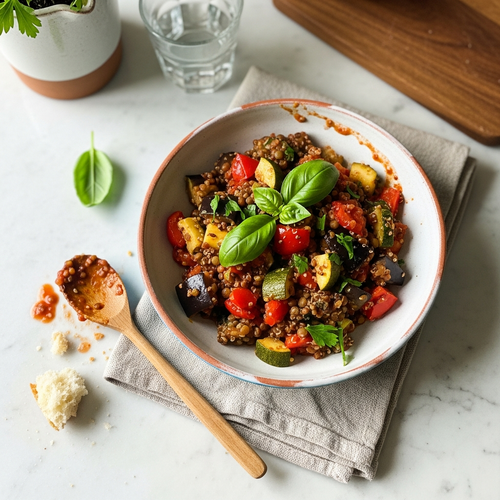
Description: A hearty, vegetable-packed ratatouille fortified with lentils and quinoa to support fat loss and keep you full for hours. This one-pot meal is perfect for meal prep and works with your ADHD brain, not against it.
Prep Time: 15 minutes | Cook Time: 45 minutes
Servings: 3 hearty servings
Macros per Serving | Calories: 300 | Protein: 12g | Fat: 5g | Carbohydrates: 53g
Ingredients
- 1 tablespoon olive oil
- 1 large onion, chopped
- 2 cloves garlic, minced
- 1 red bell pepper, seeded and chopped
- 1 yellow bell pepper, seeded and chopped
- 1 medium eggplant (about 1 pound), cut into 1-inch cubes
- 2 medium zucchini, cut into 1-inch cubes
- 1 (28-ounce) can crushed tomatoes
- 1 (15-ounce) can lentils, rinsed and drained
- 1/2 cup cooked quinoa
- 2 teaspoons dried herbs de Provence
- 1 teaspoon dried oregano
- Salt and freshly ground black pepper to taste
- 1/4 cup fresh basil, chopped
- 1/4 cup fresh parsley, chopped
Instructions
- Heat olive oil in a large Dutch oven over medium heat. Add onion and cook for 5 minutes until soft. Stir in garlic and cook for 1 more minute.
- Add bell peppers and cook for 5-7 minutes until they begin to soften.
- Stir in eggplant and zucchini. Cook for 10 minutes, stirring occasionally, until slightly tender.
- Pour in crushed tomatoes, rinsed lentils, cooked quinoa, and dried herbs. Season with salt and pepper.
- Bring to a simmer, then reduce heat to low, cover, and cook for at least 30 minutes.
- Turn off heat and stir in fresh basil and parsley before serving.
Notes
This dish tastes even better the next day. For a complete meal, serve topped with shredded rotisserie chicken, a fried egg, or a scoop of cottage cheese to significantly increase the protein content.
FAQs About Ratatouille For Weight Loss
Here are some straightforward answers to the most common questions I receive about this ratatouille recipe.
Is ratatouille actually good for weight loss?
Yes, ratatouille can be an excellent tool for weight loss, especially when it’s prepared thoughtfully like in this recipe. Traditional ratatouille is already low in calories and high in fiber because it’s made almost entirely of vegetables. This high volume of food for a low calorie count helps you feel physically full, which is a huge part of managing hunger during a fat loss phase. The fiber from the eggplant, zucchini, and peppers also aids in digestion and promotes satiety.
Where this specific recipe supercharges the weight loss benefits is by adding lentils and quinoa. This addition transforms it from a simple vegetable side dish into a more balanced meal. The plant-based protein and complex carbohydrates help to stabilize blood sugar levels, preventing the energy crashes and intense cravings that can often derail progress. By focusing on hunger management and satiety, this version of ratatouille helps you stick to your calorie goals more consistently, which is the ultimate key to sustainable fat loss.
How can I make my ratatouille higher in protein?
This is a fantastic question because prioritizing protein is the cornerstone of our philosophy. While our version with lentils and quinoa is a great start, there are several easy, ADHD-friendly ways to boost the protein content even further to make it a true muscle-building, fat-torching meal. The easiest method is to add a lean protein source directly on top when you serve it. My go-to is pre-cooked rotisserie chicken because it requires zero effort. Other great options include topping it with a couple of fried eggs, a scoop of cottage cheese, or a fillet of baked fish.
If you prefer an all-in-one-pot meal, you can integrate the protein during the cooking process. Brown a pound of lean ground turkey or chicken with the onions at the very beginning of the recipe. Drain any excess fat before adding the other vegetables. This will infuse the entire stew with protein and a savory flavor. For a plant-based option, you could stir in a block of crumbled firm tofu along with the eggplant and zucchini, or add an extra can of chickpeas or white beans.
Can I make this ratatouille recipe in a slow cooker?
Absolutely. Using a slow cooker is a great way to make this ratatouille recipe with even less hands-on time, which is perfect for busy days or when you’re feeling low on executive function. The process is slightly different but very simple. I would still recommend doing the first step on the stovetop: sautéing the onion, garlic, and bell peppers in a separate pan. This step, called “blooming,” develops a much deeper flavor profile that you would miss by just dumping everything into the slow cooker raw.
After you’ve sautéed the aromatics, you can transfer them to your slow cooker. Then, add all the remaining ingredients except for the fresh basil and parsley. Give everything a good stir, put the lid on, and cook on low for 6-8 hours or on high for 3-4 hours. The vegetables will become incredibly tender and the flavors will be deeply melded. Just before serving, stir in the fresh herbs to brighten it up. It’s a fantastic “set it and forget it” meal.
What’s the difference between this ratatouille and the classic version?
The main difference lies in our focus on macronutrient balance for fat loss. A classic French ratatouille is purely a vegetable stew. While delicious and healthy, it functions primarily as a side dish because it lacks significant protein and is relatively low in calories, meaning it won’t keep you full for very long on its own. It’s simply stewed vegetables in a tomato base, sometimes with a lot more olive oil.
Our ADHD FIT version intentionally modifies the classic recipe to turn it into a more complete and satisfying meal. The strategic additions of lentils and quinoa are not traditional, but they are crucial for our purposes. They add plant-based protein, fiber, and complex carbohydrates, making the dish far more satiating and effective for managing hunger. We also control the amount of oil used to keep the calories in check while still providing plenty of flavor. Essentially, we’ve taken the delicious, vegetable-rich core of classic ratatouille and optimized it to be a standalone powerhouse for a sustainable fitness lifestyle.
Can I freeze this ratatouille for meal prep?
Yes, this ratatouille is an absolute champion for freezer meal prep. It’s one of those dishes that freezes and reheats almost perfectly, making it an incredible asset to have on hand for busy weeks. When you have a few portions of this stashed in your freezer, you are never more than a few minutes away from a healthy, filling meal. This is a powerful strategy for preventing last-minute takeout orders when you’re tired and overwhelmed.
For the best results, allow the ratatouille to cool completely before you freeze it. I highly recommend freezing it in individual portions using freezer-safe containers or resealable bags. This makes it incredibly convenient to just grab one serving at a time. To thaw, you can either move it to the refrigerator overnight or use the defrost setting on your microwave if you’re in a pinch. It reheats beautifully on the stovetop or in the microwave and the texture of the vegetables holds up very well.
Try These High-Protein Recipes Next
If you enjoyed this simple and effective approach to fat-loss meals, I know you’ll love these other recipes.
- High-Protein Stuffed Peppers: An easy, perfectly-portioned meal that uses a simple filling of ground turkey, rice, and cheese to create a satisfying dinner.
- Creamy High-Protein Tomato Soup: This isn’t your average canned soup. We use a secret ingredient to make it creamy and protein-packed without all the extra fat.
- 30 Delicious Zucchini Recipes: If you’ve got extra zucchini after making ratatouille, this roundup has tons of creative and healthy ideas to use it up.
Building a collection of go-to recipes is the key to long-term consistency and success.