
The humble baked potato. For years, I put it on the “bad foods” list. It was a carb-heavy side dish, usually loaded with butter, sour cream, and cheese. It was something I ate at steakhouses on special occasions, not something that could be part of a fat loss plan. At least, that’s what I thought during the first phase of my journey, when I lost 65 pounds without medication.
I was wrong. Completely wrong. The potato itself was never the enemy. It was how I was preparing it. When I started to understand that food is 75 percent of the results, I realized I needed meals that were filling, satisfying, and easy. Especially on days when my ADHD brain had zero motivation to cook a complex meal.
That’s when I revisited the baked potato. I saw it not as a side dish, but as a vessel. A perfect, fluffy vehicle for protein. This recipe is the result of that shift. It turns a classic comfort food into a muscle-building, fat-fighting, craving-crushing meal that works with your brain, not against it. It’s brutally practical and has become a staple in my rotation, both before and after I started medication.
It’s proof that you don’t have to give up the foods you love to get the body you want.
Skip to My Flexibe Diet Recipe!
Why Baked Potato Is Great For Fat Loss
Let’s get one thing straight: carbohydrates are not your enemy in fat loss. In fact, the right carbs are your best friend. Potatoes are incredibly satiating, meaning they keep you feeling full for a very long time. There are actual scientific studies on a “satiety index” of foods, and boiled or baked potatoes rank at the very top. This is a game-changer for managing hunger.
When you’re full and satisfied, you’re far less likely to get hit with the intense cravings that can derail your progress. For those of us with ADHD, this is critical. Our brains are constantly seeking dopamine, and when hunger and low blood sugar strike, we’re wired to reach for the nearest, fastest source of energy, which is usually high-fat, high-sugar junk food.
This recipe transforms the baked potato from a simple carb source into a complete, balanced meal. The core principle here is “protein first.” We’re packing it with non-fat Greek yogurt, low-fat cottage cheese, and shredded chicken. This trio provides a massive protein punch that further increases satiety, helps maintain muscle mass while you lose fat, and keeps your energy levels stable.
By building your meal this way, you’re creating a fortress against cravings. The potato provides long-lasting energy, and the protein keeps you full for hours. It’s a simple, effective system that doesn’t require willpower. It’s just smart eating. This isn’t about restriction; it’s about adding the right things to a food you already enjoy to make it work for your goals.
Ingredients You’ll Need for Baked Potato
One of the best things about this recipe is its simplicity. These are all common ingredients you can find at any grocery store. There’s no need to hunt for specialty items, which is a huge win on low-energy days when just getting to the store feels like a challenge.
The real magic of this high-protein baked potato comes from the topping. The combination of non-fat Greek yogurt and low-fat cottage cheese is the key. It creates a creamy, tangy mixture that perfectly mimics traditional sour cream but with a fraction of the fat and a massive amount of protein. This swap alone is a fat-loss powerhouse.
- 1 large Russet potato
- 1 teaspoon olive oil
- Kosher salt and freshly ground black pepper to taste
- 1/2 cup non-fat plain Greek yogurt
- 1/2 cup low-fat cottage cheese
- 1/4 cup cooked, shredded chicken breast
- 2 tablespoons chopped fresh chives
- 1 tablespoon cooked and crumbled bacon or turkey bacon (optional)
A few notes on these ingredients can make a big difference. For the Russet potato, choose one that’s firm with smooth skin. Russets are high in starch, which is what makes them so light and fluffy when baked. For the cottage cheese, I prefer a small curd variety as it blends more smoothly with the yogurt. Good Culture is a great brand if you can find it, as it’s extra thick and high in protein.
And here’s a massive ADHD-friendly shortcut: use a store-bought rotisserie chicken for the shredded chicken breast. It saves you an entire cooking step, reduces cleanup, and gives you delicious, perfectly cooked chicken every time. It’s a perfect example of working with your brain and prioritizing convenience.
How To Make Baked Potato (Step-By-Step)
We’re keeping this process brutally simple. The goal is a delicious, high-protein meal with minimal steps and cleanup. Remember, consistency beats intensity. Making a good-enough meal consistently is better than making the “perfect” meal once and then getting overwhelmed.
Step 1: Preheat Your Oven
First things first, get that oven going to 400°F (200°C). An ADHD tip for task initiation: do this the moment you decide to make the recipe. Before you even pull the potato out. It’s a small, easy win that gets the process started and commits you to the task.
Step 2: Scrub and Dry the Potato
Give your potato a good scrub under running water. You want to get any dirt off, especially since the skin is one of the best parts. After washing, pat it completely dry with a paper towel or clean dishcloth. This step is non-negotiable for crispy skin. If the skin is wet, it will steam instead of roast.
Step 3: Pierce the Potato
Use a fork to poke holes all over the potato, maybe 8 to 10 times. This allows steam to escape while it bakes. It prevents the potato from potentially exploding in your oven, which is a cleanup nightmare none of us needs.
Step 4: Oil and Season
Drizzle the teaspoon of olive oil over the potato and use your hands to rub it evenly over the entire surface. This helps the skin get golden and crispy. Then, season it generously with kosher salt and black pepper. The salt not only flavors the skin but also helps draw out moisture, making it even crispier.
Step 5: Bake to Perfection
Place the potato directly on the middle rack of your preheated oven. Don’t put it on a baking sheet. Direct heat exposure on all sides is another secret to that perfect, crispy restaurant-style skin. Bake for 45 to 60 minutes. The time will vary depending on the size of your potato. You’ll know it’s done when the skin is dry and crisp, and a fork pierces the inside with no resistance.
Step 6: Mix Your High-Protein Topping
While the potato is baking, you can be efficient and prepare the topping. This is a great way to “stack” tasks. In a small bowl, combine the Greek yogurt, cottage cheese, shredded chicken, and chopped chives. Mix it all together and season with a little salt and pepper. Done. Set it aside until the potato is ready.
Step 7: Finish and Serve
Once the potato is cooked, carefully remove it from the oven. Let it cool for just a minute so you can handle it. Cut a slit lengthwise down the center, but not all the way through. Use a fork to fluff up the inside. This creates a perfect bed for the topping. Spoon the creamy chicken mixture into the potato, sprinkle with crumbled bacon if you’re using it, and serve immediately.
How To Serve Baked Potato (ADHD-Friendly)
This high-protein baked potato is designed to be a complete meal in one. This is a huge win for the ADHD brain because it minimizes decision-making, preparation, and cleanup. There’s no need to worry about what sides to make. The potato is your carb, the topping is your protein and fat, and the chives add a touch of green. It’s a balanced meal that lives in a single bowl.
To make life even easier, embrace meal prep. Don’t just bake one potato. Bake three or four at the same time. Once they’re cool, you can store them in the fridge for up to four days. You can also pre-mix a big batch of the protein topping and keep it in a separate container. This way, a healthy, filling meal is literally 90 seconds away in the microwave. This removes nearly all friction between you and a good food choice on a busy or low-motivation day.
If you do want to add some extra volume or veggies, keep it simple. Here are some brain-friendly ideas:
- Bagged Salad: Serve the baked potato alongside a simple green salad. Use a pre-washed, bagged salad mix and your favorite light dressing. Zero chopping required.
- Frozen Veggies: A side of steamed, frozen broccoli or green beans is another fantastic, low-effort option. Just pop them in the microwave for a few minutes while you’re reheating your potato.
- Build-Your-Own Bar: If you’re feeding others or just get bored easily, set up a topping bar. Lay out the protein mix, some shredded cheese, salsa, steamed veggies, and let everyone customize their own. This introduces novelty and choice, which can be very engaging for the ADHD mind.
The goal is to create a system that makes eating well the easiest option available. This recipe is a perfect foundation for that system. It’s flexible, forgiving, and requires very little executive function to assemble once the components are ready.
How To Store, Reheat, and Reuse Baked Potato
Leftovers are your superpower for staying on track, especially when ADHD drains your energy for cooking. Storing this meal correctly ensures it’s just as good the next day. The most important rule is to store the components separately. This prevents the potato from getting soggy and sad.
Once your baked potatoes have cooled completely, wrap them individually in foil or place them in an airtight container in the refrigerator. They’ll last for about 3-4 days. Store the protein topping mixture in a separate airtight container in the fridge as well. It will also stay good for 3-4 days, making it perfect for a few days of easy lunches or dinners.
When it comes to reheating, you have a few options depending on your priorities: speed or quality.
- For the Best Quality (Oven or Air Fryer): To bring back that glorious crispy skin, the oven or an air fryer is your best bet. Reheat the potato at 350°F (175°C) for 15-20 minutes, or until it’s heated through. An air fryer will do the job even faster, usually in about 5-8 minutes. Add the cold topping after the potato is hot.
- For Maximum Speed (Microwave): On days when you have zero patience, the microwave is your friend. Cut the potato in half to help it heat more evenly. Microwave for 1-2 minutes, then top with the cold protein mixture. The skin won’t be crispy, but it will still be a delicious and satisfying meal in under three minutes. Perfection is the enemy of good.
Don’t be afraid to reuse the leftovers in new ways to fight food boredom. You can scoop out the inside of the potato, mix it with the protein topping and a little cheese, stuff it back into the skin, and bake for a “twice-baked” version. Or, chop up the cold potato and pan-fry it with some onions and peppers for a quick breakfast hash. This flexibility makes your initial effort go even further.
Easy Swaps & Variations for Baked Potato
The beauty of a recipe like this is that it’s a flexible template, not a rigid rule. Your nutrition plan needs to work for you, your tastes, and what you have in the kitchen. If you’re missing an ingredient or just want to change things up, there are plenty of easy swaps that keep the meal high in protein and fat-loss friendly.
Don’t let a missing ingredient spiral you into ordering takeout. Adapt and overcome. This approach is fundamental to building a sustainable lifestyle, especially with an ADHD brain that can get stuck when a plan isn’t perfect. Here are some simple, effective variations to try:
- Protein Power-Ups: The shredded chicken is great, but you can easily swap it. Try lean ground turkey or beef (cooked with some taco seasoning for a flavor twist), canned tuna or salmon mixed into the yogurt base, or even a scoop of your favorite chili. For a vegetarian option, use a cup of black beans or chickpeas.
- Change Your Base: A large sweet potato works just as well as a Russet. It will have a slightly different flavor profile and a bit more fiber. The baking time might be similar, but keep an eye on it. This simple swap can make the meal feel entirely new.
- Flavor Fun: Get creative with seasonings. Mix a packet of ranch seasoning into the Greek yogurt for a classic flavor combination. Add a splash of buffalo hot sauce to the chicken for a spicy kick. Or, go for a Mediterranean vibe with some chopped olives, sun-dried tomatoes, and a sprinkle of feta cheese.
- Veggie Boost: Finely chopped raw broccoli or cauliflower can be mixed directly into the protein topping for an invisible crunch and extra nutrients. Steamed veggies also work great as an additional topping.
The core formula remains the same: a starchy, satisfying base + a high-protein, creamy topping. As long as you stick to that structure, you can experiment with endless combinations to keep your taste buds happy and your diet on track without getting bored.
High-Protein Loaded Baked Potato
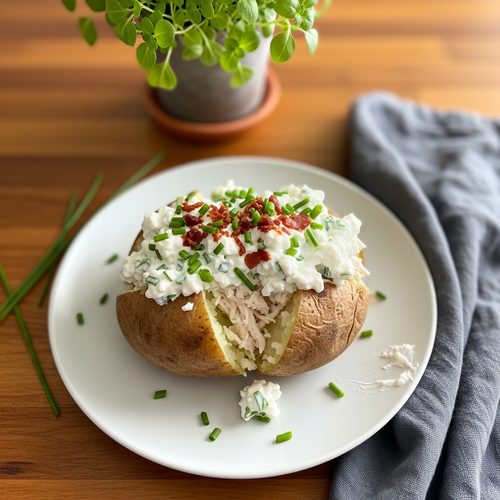
Description: A simple, satisfying, and macro-friendly baked potato recipe designed for fat loss. This recipe turns a classic comfort food into a high-protein powerhouse that keeps you full for hours and crushes cravings, perfect for an ADHD-friendly lifestyle.
Prep Time: 10 minutes | Cook Time: 50 minutes
Servings: 1
Macros per Serving | Calories: 495 | Protein: 48g | Fat: 11g | Carbohydrates: 52g
Ingredients
- 1 large Russet potato (about 300g)
- 1 teaspoon olive oil
- Kosher salt and freshly ground black pepper to taste
- 1/2 cup (113g) non-fat plain Greek yogurt
- 1/2 cup (113g) low-fat cottage cheese
- 1/4 cup (40g) cooked, shredded chicken breast
- 2 tablespoons chopped fresh chives
- 1 tablespoon cooked and crumbled bacon or turkey bacon (optional)
Instructions
- Preheat your oven to 400°F (200°C).
- Scrub the potato clean, pat it completely dry, and pierce it all over with a fork.
- Rub the potato with olive oil, salt, and pepper. Place it directly on the middle oven rack.
- Bake for 45-60 minutes, until the skin is crispy and the inside is tender.
- While the potato bakes, mix the Greek yogurt, cottage cheese, shredded chicken, and chives in a bowl. Season with salt and pepper.
- Slice the baked potato open, fluff the inside with a fork, and top with the protein mixture.
- Garnish with crumbled bacon, if desired, and serve immediately.
Notes
To save time, use a store-bought rotisserie chicken. You can also bake multiple potatoes at once for easy meal prep throughout the week. Store cooked potatoes and the topping separately in the fridge.
FAQs About Baked Potato For Weight Loss
Here are some straightforward answers to the most common questions I receive about this baked potato recipe.
Are baked potatoes actually good for weight loss?
Yes, absolutely. Baked potatoes get a bad reputation because of how they are traditionally served: as a vehicle for butter, full-fat sour cream, and mounds of cheese. The potato itself is not the problem. A medium-sized baked potato is relatively low in calories, contains almost no fat, and is packed with nutrients like potassium and vitamin C. Most importantly, it’s incredibly satiating. It fills you up and keeps you full, which is one of the most important factors in successful and sustainable weight loss.
The key is to reframe the baked potato as the base of your meal, not just a side dish. By loading it with high-protein, low-fat toppings like we do in this recipe, you create a balanced meal that controls hunger for hours. It provides the complex carbohydrates your body needs for energy while the protein supports muscle and satiety. So, instead of fearing the potato, you can embrace it as a powerful tool in your fat loss arsenal.
How can I make my baked potato skin extra crispy?
Getting that perfect, crispy, salty skin is what elevates a baked potato from good to great. There are three critical steps that you cannot skip. First, you must wash and then thoroughly dry the potato. Any moisture left on the skin will turn to steam in the oven, which softens the skin instead of crisping it. Use a paper towel or a clean kitchen towel and make sure it’s bone dry.
Second, coat it in a thin layer of fat. Olive oil is great, but avocado oil or even bacon grease works too. The fat helps to conduct heat and essentially “fries” the skin as it bakes. Third, season generously with kosher salt before it goes in the oven. The coarse salt crystals not only add flavor but also help to draw out that last bit of moisture from the skin. Finally, always bake the potato directly on the oven rack, not on a baking sheet. This allows the hot air to circulate around the entire potato, ensuring every inch of the skin gets crispy.
Can I make this baked potato recipe in the microwave or air fryer?
Yes, you can use both, and they are great options when you’re short on time or energy. The microwave is the fastest method. Pierce the potato just like you would for the oven, and cook on high for about 5 minutes. Flip it over and cook for another 3-5 minutes, until it’s soft. The downside is that you will not get a crispy skin; it will be soft and steamed. However, a “good enough” potato in 10 minutes is better than no potato at all.
The air fryer is a fantastic middle ground. It’s much faster than the oven but can still produce a wonderfully crispy skin. Rub the potato with oil and salt, then place it in the air fryer basket at 400°F (200°C) for about 30-40 minutes, flipping it halfway through. It gives you about 90% of the quality of an oven-baked potato in about 60% of the time, which is an excellent trade-off.
What makes this baked potato recipe ADHD-friendly?
This recipe was designed from the ground up to work with an ADHD brain. First, it uses minimal, common ingredients, which reduces the mental load of grocery shopping. Second, it embraces shortcuts, like using a rotisserie chicken, which removes a major cooking step and the associated cleanup. Third, it’s a “one-bowl” meal, minimizing dishes, a common pain point for many of us.
The biggest factor is its compatibility with meal prep. The “cook once, eat twice (or three times)” philosophy is a lifesaver. Baking several potatoes and mixing a large batch of the topping at once removes future decision-making. When you’re hungry and your executive function is low, having a delicious, healthy meal ready in two minutes is the ultimate strategy for preventing a “doom spiral” into ordering expensive, unhealthy takeout. It’s a simple, repeatable system that provides the structure our brains crave.
How much protein is in this baked potato recipe and why is it important?
This specific recipe packs approximately 48 grams of protein into a single serving. That is a significant amount, equivalent to what you’d find in a large 6-7 ounce chicken breast. The protein comes from a combination of the Greek yogurt (about 12g), the cottage cheese (about 13g), the shredded chicken (about 20g), and even a small amount from the bacon and the potato itself. This is what transforms the meal from a carb-heavy side into a fat-loss powerhouse.
Protein is the most important macronutrient for fat loss for several reasons. It is the most satiating macro, meaning it keeps you feeling fuller for longer, which directly combats cravings. Your body also burns more calories digesting protein than it does fat or carbs (this is called the Thermic Effect of Food). Finally, eating adequate protein while in a calorie deficit helps your body preserve lean muscle mass, ensuring that the weight you lose is primarily fat, not muscle. This keeps your metabolism running strong and helps you achieve a fit, toned look.
Try These High-Protein Recipes Next
If you loved this simple and effective approach to making a comfort food fit your goals, you’ll love these other potato recipes.
- High-Protein Scalloped Potatoes: A creamy, cheesy, and macro-friendly version of the classic casserole that’s perfect for a family dinner or meal prep.
- Garlic & Chive Mashed Potatoes: My go-to recipe for fluffy, flavorful mashed potatoes that won’t wreck your diet, thanks to a few smart ingredient swaps.
- The Ultimate Loaded Twice Baked Potatoes: This recipe shows you another fantastic way to load up your potatoes with delicious, satisfying toppings for a complete meal.
Each one follows the same principles of being practical, delicious, and built to support your fitness journey.