
If there was one dish that defined my “before” life, it was takeout pad thai. As a single dad with ADHD, juggling work and parenting often left me with zero energy for cooking. On those low-motivation days, the siren song of a greasy, noodle-packed container from my local Thai place was impossible to resist. It was my comfort food, my reward, and my downfall all rolled into one.
When I started my fitness journey, I knew I had to find a way to break up with that version of pad thai. But I also knew that completely banning my favorite foods was a recipe for failure. That’s the ADHD brain for you. Tell it “no,” and it will hyperfocus on that thing until you give in. So, restriction wasn’t the answer. Reinvention was.
This high-protein pad thai is the result of that mission. It took a lot of experimenting to get it right. I wanted all the savory, sweet, and tangy flavors I loved, but without the carb crash and calorie bomb that left me feeling sluggish and derailed my progress. I needed a version that would fill me up, crush my cravings, and actually help me hit my fat loss goals. This is that recipe. It’s a staple in my house because it proves you can build a fit lifestyle without giving up the foods you genuinely enjoy.
It’s brutally practical, packed with flavor, and designed for those days when you need a win in the kitchen.
Skip to My Flexibe Diet Recipe!
Why Pad Thai Is Great For Fat Loss
Let’s be direct. Traditional pad thai from a restaurant is a calorie disaster for fat loss. It’s loaded with sugar, oil, and rice noodles that can send your blood sugar on a roller coaster, leading to more cravings later. My version flips the script entirely, turning a diet-wrecker into a powerful tool for your fitness goals. Food is 75 percent of your results, and this recipe is designed to make that 75 percent work for you.
The first principle here is protein first. We load this dish with both chicken and shrimp, plus eggs. This massive protein punch is critical for satiety. It keeps you feeling full and satisfied for hours, which is your number one defense against mindless snacking. For the ADHD brain, stable energy and reduced hunger are game-changers for maintaining focus and avoiding impulsive food choices.
Next, we tackle the carbs. Instead of rice noodles, we use spiralized zucchini and carrots. This swap dramatically cuts the calorie and carbohydrate count while adding a ton of fiber and micronutrients. The fiber further boosts satiety and supports healthy digestion. You get the satisfying experience of twirling “noodles” without the energy crash. It’s a volume-eating masterpiece. You get a huge, filling bowl of food for a fraction of the calories.
Finally, the sauce. The secret weapon is powdered peanut butter. It delivers all that nutty flavor you crave with about 85% less fat and calories than regular peanut butter. We also use a monk fruit sweetener instead of palm sugar, eliminating empty calories. This entire approach embodies our core principle: consistency beats intensity. You can consistently eat delicious, satisfying meals like this pad thai, stay in a calorie deficit without feeling deprived, and achieve sustainable, long-term fat loss.
Ingredients You’ll Need for Pad Thai
Great recipes are built on smart ingredient choices. For this high-protein pad thai, we’re focusing on nutrient-dense foods that deliver maximum flavor and satiety. We work with the ADHD brain, not against it, so many of these ingredients have convenient, store-bought shortcut options available.
The real game-changer here is swapping traditional rice noodles for spiralized vegetables. Using spiralized zucchini and carrots as the base is the key to making this dish low-carb and low-calorie. It allows you to eat a massive, satisfying portion that’s packed with fiber and vitamins. If spiralizing sounds like a task you’ll put off forever, buy it pre-spiralized from the produce section. No shame in that game. Convenience is king.
Another key ingredient is the powdered peanut butter for the sauce. This stuff is magic. It provides that rich, nutty flavor essential to any good pad thai sauce but with a tiny fraction of the fat and calories of traditional peanut butter. This single swap saves you hundreds of calories without sacrificing taste.
Here’s the full list of what you’ll need to make this pad thai:
- For the High-Protein Pad Thai:
- 1 tablespoon avocado oil or coconut oil, divided
- 8 ounces boneless, skinless chicken breast, thinly sliced
- 4 ounces shrimp, peeled and deveined (go for frozen to save money and time)
- 4 cups spiralized zucchini (about 2 medium zucchini)
- 1 cup spiralized carrots (about 2 medium carrots)
- 1 red bell pepper, thinly sliced
- 1 cup bean sprouts
- 3 large eggs, lightly beaten
- 2 cloves garlic, minced (buy the pre-minced jar to save a step)
- 1/4 cup chopped fresh cilantro
- 1/4 cup chopped peanuts or almonds
- 2 green onions, sliced
- Lime wedges for serving
- For the Low-Calorie, High-Protein Sauce:
- 1/4 cup powdered peanut butter
- 3 tablespoons water
- 3 tablespoons fish sauce (this adds essential umami, don’t skip it)
- 2 tablespoons coconut aminos or low-sodium soy sauce
- 2 tablespoons lime juice (fresh is best, but bottled works in a pinch)
- 1 tablespoon rice vinegar
- 1 tablespoon sriracha or to taste
- 1 tablespoon monk fruit sweetener or other sugar substitute
How To Make Pad Thai (Step-By-Step)
One of the biggest hurdles for anyone, especially with ADHD, is a complicated recipe. Too many steps, and we’re ordering pizza before we even start. This process is streamlined to be as simple as possible. My ADHD tip: Read all the steps first and get all your ingredients prepped and ready to go. This is called “mise en place,” and it prevents the classic mid-cooking panic of realizing you forgot to chop something.
A large wok or a deep, non-stick skillet is your best friend here. It gives you enough room to toss everything together without sending your delicious pad thai flying across the kitchen.
Step 1: Mix The Sauce
In a small bowl, combine all your sauce ingredients: the powdered peanut butter, water, fish sauce, coconut aminos, lime juice, rice vinegar, sriracha, and monk fruit sweetener. Whisk it all together until it’s completely smooth. Doing this first means you’re not scrambling to measure things while your food is cooking. Set it aside within easy reach of your stove.
Step 2: Cook The Proteins
Heat half a tablespoon of your oil in the wok over medium-high heat. Once it’s shimmering, add the thinly sliced chicken. Cook, stirring occasionally, until it’s golden brown and cooked through. Don’t overcook it. Use a slotted spoon to remove the chicken and set it on a plate. Now add the shrimp to the hot pan. Shrimp cook fast, about 1-2 minutes per side is all you need. Once they’re pink, pull them out and add them to the plate with the chicken. Cooking them separately ensures nothing gets rubbery.
Step 3: Stir-Fry The Veggies and Scramble The Eggs
Add the remaining half-tablespoon of oil to the pan. Toss in the minced garlic and cook for about 30 seconds until you can smell it. Be careful not to burn it. Add your “harder” veggies: the spiralized carrots and sliced bell pepper. Stir-fry for 3-4 minutes until they just start to soften. Now, push the veggies to one side of the pan. Pour your beaten eggs into the empty space and scramble them up. This is a classic stir-fry trick that saves you from washing another pan.
Step 4: Combine Everything
Once the eggs are cooked, add the spiralized zucchini and bean sprouts to the pan. Cook for just 2-3 minutes. You want the zucchini to be tender but still have a slight bite. Mushy zucchini is the enemy. Now, add the cooked chicken and shrimp back into the pan. Pour that glorious sauce you made earlier over everything. Toss it all together gently until every single noodle and piece of protein is coated and everything is heated through. Finally, stir in the fresh cilantro and chopped peanuts. Your amazing, high-protein pad thai is ready.
How To Serve Pad Thai (ADHD-Friendly)
Serving this healthy pad thai is where you can really lean into flexibility and make it work for you. For the ADHD brain, novelty and customization can provide a nice dopamine boost, making mealtime more engaging and satisfying. Instead of just plopping it in a bowl, think about creating a small “toppings bar.”
This is one of my favorite tricks as a dad. I’ll put the garnishes in separate small bowls: the sliced green onions, extra chopped peanuts, fresh cilantro, and plenty of lime wedges. This lets everyone customize their own bowl. It turns dinner from a static meal into an interactive experience. It also helps prevent the texture-related boredom that can sometimes creep in when you eat the same meal multiple times.
For a truly sustainable lifestyle, we need systems that reduce friction on busy days. Here’s how you can serve this pad thai in a way that supports your goals:
- Meal Prep Portions: If you’re making this for future you, portion it out immediately into single-serving containers. This completely removes the guesswork and decision fatigue when you’re hungry. You just grab a container, reheat, and eat. No macros to calculate, no portioning to worry about.
- Pair with a Plan: Know when you’re going to eat it. Is this for dinner tonight and lunch tomorrow? Deciding ahead of time prevents the “what should I eat” spiral. Having a delicious, pre-made meal waiting for you makes it infinitely easier to stick to your plan than trying to make a good choice when you’re already starving.
- Flavor Boosters: Besides the standard garnishes, keep other low-calorie flavor enhancers on hand. A dash of extra sriracha for more heat, a sprinkle of red pepper flakes, or a little extra squeeze of lime can make the same meal feel new and exciting again.
The goal is to make healthy eating feel like a choice you *want* to make, not a chore you *have* to do. By making it visually appealing, customizable, and incredibly easy to access, you’re setting yourself up for a consistent win.
How To Store, Reheat, and Reuse Pad Thai
Meal prep is a cornerstone of my approach to nutrition. It’s a system that helps bypass the executive function challenges of daily cooking. However, some foods hold up better than others, and a pad thai made with zucchini noodles requires a slightly different strategy to keep it tasting great.
The main thing to know is that zucchini holds a lot of water. As it sits, it will release some of that moisture, which can make your sauce a bit thinner. This is totally normal and not a big deal, but it’s something to be aware of. The flavor will still be fantastic, and the texture is great as long as you didn’t overcook the zoodles to begin with.
Here is my brutally practical guide to storing and reheating your high-protein pad thai:
- Storing: Let the pad thai cool down for a bit before packing it up. Store it in airtight containers in the refrigerator. To combat the water release, you can try storing the sauce separately from the noodles and protein, but honestly, I rarely have the energy for that. I find it’s perfectly fine all mixed together for up to 3-4 days.
- Reheating in the Microwave: This is the quickest method. Put a serving in a microwave-safe bowl. I recommend heating it in 60-second intervals, stirring in between. This helps it heat more evenly and prevents the shrimp from becoming rubbery. It will likely only need 1-2 minutes total.
- Reheating on the Stovetop: This is my preferred method as it helps evaporate some of the extra moisture. Simply add the leftovers to a non-stick skillet over medium heat. Stir frequently until everything is warmed through, usually about 3-5 minutes. You can even add a fresh squeeze of lime juice at the end to brighten it back up.
Don’t be afraid to reuse the leftovers in a new way. You could wrap them up in rice paper to make fresh spring rolls or serve a scoop over a bed of mixed greens for a hearty salad. Flexible eating is about making your food work for your life, and that includes leftovers.
Easy Swaps & Variations for Pad Thai
One of my core principles is that flexible eating always wins. A recipe isn’t useful unless it can adapt to what you have in your fridge, your dietary needs, and your budget. This high-protein pad thai recipe is a fantastic template that you can easily modify. Don’t be afraid to experiment and find the combinations you love most.
Think of these swaps as a way to prevent flavor fatigue and keep things interesting. It’s also a great way to use up vegetables that are about to go bad or to make the dish fit different dietary protocols. The key is to keep the core components: a solid protein source, lots of veggies, and the incredible low-calorie peanut sauce.
Here are some simple and effective swaps you can make:
- Protein Power-Up: The chicken and shrimp combo is fantastic, but feel free to switch it up. Thinly sliced pork tenderloin, lean ground turkey, or even firm tofu (press it first!) are all excellent high-protein options. If you use tofu, I recommend cubing it and pan-frying it until golden before adding it to the dish.
- Noodle Alternatives: If you’re not a fan of zucchini noodles or just want to try something different, shirataki noodles are a zero-calorie, high-fiber option. You can also use spaghetti squash, broccoli slaw, or even finely shredded cabbage. If your macros allow for more carbs, whole wheat spaghetti or brown rice noodles can also work.
- Vegetable Variety: This recipe is a great way to clean out your crisper drawer. Feel free to add or substitute other stir-fry friendly vegetables. Sliced mushrooms, edamame, snow peas, or chopped broccoli would all be delicious additions. Using a bag of frozen stir-fry vegetable mix is a perfect shortcut for low-energy days.
- Nut-Free Sauce: If you have a peanut allergy, you can substitute the powdered peanut butter with powdered almond butter or sunflower seed butter powder (like SunButter). The flavor will be slightly different but still delicious.
Remember, the goal is a system that works for you long-term. Perfection is the enemy of progress. Use what you have, make it your own, and enjoy the process.
High-Protein, Low-Carb Pad Thai
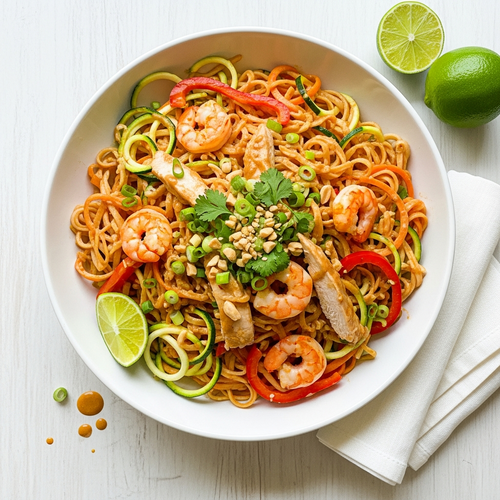
Description: A guilt-free pad thai that’s packed with protein and flavor, not carbs and calories. This recipe uses spiralized zucchini noodles and a skinny peanut sauce to crush your takeout cravings and help you hit your fat loss goals.
Prep Time: 15 minutes | Cook Time: 15 minutes
Servings: 2
Macros per Serving | Calories: 495 | Protein: 55g | Fat: 20g | Carbohydrates: 24g
Ingredients
- 1 tbsp avocado oil, divided
- 8 oz chicken breast, thinly sliced
- 4 oz shrimp, peeled and deveined
- 4 cups spiralized zucchini
- 1 cup spiralized carrots
- 1 red bell pepper, thinly sliced
- 1 cup bean sprouts
- 3 large eggs, beaten
- 2 cloves garlic, minced
- 1/4 cup chopped cilantro
- 1/4 cup chopped peanuts
- 2 green onions, sliced
- Lime wedges
- Sauce: 1/4 cup powdered peanut butter, 3 tbsp water, 3 tbsp fish sauce, 2 tbsp coconut aminos, 2 tbsp lime juice, 1 tbsp rice vinegar, 1 tbsp sriracha, 1 tbsp monk fruit sweetener
Instructions
- In a small bowl, whisk together all sauce ingredients until smooth. Set aside.
- Heat 1/2 tbsp oil in a large wok over medium-high heat. Cook chicken until golden, remove and set aside. Cook shrimp until pink, remove and set aside.
- Add remaining 1/2 tbsp oil. Cook garlic for 30 seconds. Add carrots and bell pepper, stir-fry for 3-4 minutes.
- Push vegetables to one side, scramble eggs on the other side of the wok.
- Add zucchini and bean sprouts, cook for 2-3 minutes until tender-crisp.
- Return chicken and shrimp to the wok. Pour sauce over everything and toss to combine.
- Stir in cilantro and peanuts. Serve immediately, garnished with green onions and lime wedges.
Notes
Do not overcook the zucchini noodles or they will become watery. For best results, have all ingredients chopped and ready before you begin cooking.
FAQs About Pad Thai For Weight Loss
Here are some straightforward answers to the most common questions I receive about this pad thai recipe.
Can pad thai really be healthy and good for weight loss?
Yes, absolutely, but it requires a strategic reinvention of the classic recipe. Traditional restaurant pad thai is often very high in calories, refined carbohydrates, sugar, and fat, which makes it a poor choice for consistent fat loss. The combination of rice noodles, sugary tamarind-based sauces, and large amounts of oil can easily push a single serving over 1,000 calories.
My recipe transforms pad thai into a powerhouse for weight loss by tackling these problem areas directly. We replace the high-carb rice noodles with high-fiber, low-calorie zucchini and carrot noodles. This single change drastically reduces the calorie count while increasing the dish’s volume and nutrient density. The fiber helps keep you full. We also build a “skinny” sauce using powdered peanut butter and a sugar substitute, which cuts out a massive amount of fat and sugar while keeping the flavor you love. Finally, we prioritize protein by using a generous amount of chicken, shrimp, and eggs. This high protein content is crucial for satiety, muscle maintenance, and managing cravings, all of which are essential for a successful fat loss journey.
Why use zucchini noodles instead of regular noodles for pad thai?
Using zucchini noodles, or “zoodles,” is the number one hack for making this pad thai a fat-loss friendly meal. The primary reason is the massive difference in calorie and carbohydrate density. A large serving of rice noodles can contain over 400 calories and 90 grams of carbs. The equivalent volume of zucchini noodles contains about 60 calories and 12 grams of carbs. This allows you to eat a huge, satisfying bowl of food while staying easily within your calorie budget.
Beyond the calorie savings, zoodles add nutritional value. They are packed with water and fiber, which enhances feelings of fullness and aids digestion. They also provide vitamins and minerals that are absent in refined rice noodles. For those of us with ADHD, managing blood sugar is key to stable energy and focus. The carb-heavy nature of regular noodles can cause a spike and subsequent crash in blood sugar, leading to fatigue and cravings. Zucchini noodles, being low in carbs, help promote stable blood sugar, which in turn supports better mood and concentration throughout the day.
What is the best protein to use in a healthy pad thai recipe?
For fat loss, the “best” protein is one that is lean and provides high satiety per calorie. That’s why I use a combination of boneless, skinless chicken breast and shrimp in this recipe. Chicken breast is an incredibly lean and versatile protein source, providing a lot of protein with very little fat. Shrimp is also very high in protein and low in calories, and it adds a different texture and flavor that makes the dish feel more like a special restaurant meal.
However, flexibility is key. You could easily use just chicken or just shrimp depending on what you have or prefer. Other fantastic lean options include thinly sliced pork tenderloin or 93/7 lean ground turkey. If you are vegetarian or want a plant-based option, extra-firm tofu or edamame are excellent choices. If using tofu, make sure to press it well to remove excess water and then cube and pan-fry it so it gets a nice, firm texture before you add it to the stir-fry. The goal is to pack the dish with enough protein to keep you full and satisfied for hours.
How can I make the pad thai sauce less spicy?
The spice level in this pad thai sauce is very easy to control. The heat comes entirely from the sriracha. My recipe calls for one tablespoon, which provides a mild to medium kick that I find balanced and flavorful. However, everyone’s spice tolerance is different, and the goal is for you to enjoy your food.
To make it less spicy, simply reduce the amount of sriracha. You can start with just one teaspoon, taste the sauce, and add more if you’d like. If you are serving it to people with different spice preferences, the best solution is to omit the sriracha from the main sauce entirely. Make the sauce without it, and then serve the sriracha on the side. This way, each person can add as much or as little heat as they want directly to their own bowl. This is a great strategy for families or when meal prepping, as it makes the dish much more versatile.
Can I meal prep this pad thai recipe for the week?
Yes, you can absolutely meal prep this pad thai, and it’s a fantastic way to ensure you have healthy, delicious meals ready to go. However, because we are using zucchini noodles, there are a couple of best practices to follow. Zucchini naturally releases water as it sits, especially after being cooked and salted by the sauce. This can make your dish a bit watery by day three or four.
To get the best results, avoid overcooking the zucchini noodles. You want them to be just tender-crisp, not soft, when you first cook the dish. This will help them hold their texture better. When you store the leftovers in airtight containers, a bit of liquid will likely pool at the bottom. This is perfectly fine. When you reheat it, preferably in a skillet on the stovetop, this excess liquid will cook off and the sauce will thicken up again. For optimal texture, you could also store the sauce separately from the cooked noodles and protein, and then combine them just before reheating. While this is an extra step, it does keep the “noodles” crisper for longer.
Try These High-Protein Recipes Next
If you loved this brutally practical approach to a takeout classic, here are a few other recipes you should try.
- High-Protein Chicken Stir Fry: This is another super-fast, veggie-packed meal that’s perfect for a busy weeknight.
- Healthy Beef and Broccoli: Get your savory beef fix with this simple recipe that tastes even better than the restaurant version.
- Thai Peanut Sauce with Whole Wheat Noodles: For days when you have more carbs to spare, this recipe from This Gal Cooks offers a delicious way to use a similar flavor profile with traditional noodles.
Building a sustainable lifestyle is about having a toolbox of reliable, delicious meals you can turn to again and again.