
For most of my life, baklava was a “special occasion” food. It was something I only ate at festivals or when visiting a Greek restaurant. When I started my fat loss journey, it immediately went onto my mental list of “forbidden foods.” It was pure sugar, butter, and nuts. Delicious, yes, but completely off-limits if I wanted to see the number on the scale go down.
That all-or-nothing thinking is a classic ADHD trap. It’s the mindset that leads to the “cheat day” mentality, which for me, often turned into a cheat week, and then a full-blown spiral where I’d undo all my progress. I knew if I wanted to make this lifestyle stick, I had to find a way to include the foods I loved, not banish them.
So, I got obsessed. I wanted to create a version of baklava that I could eat regularly without derailing my goals. It needed to have that signature crispy, flaky texture and that sweet, syrupy, nutty flavor. But it also needed to be smarter with its macros, lower in calories, and higher in protein to actually keep me full and satisfied.
This recipe is the result of that obsession. It’s a truly delicious, high-protein baklava that fits perfectly into a fat loss plan. It proves our core principle at ADHD FIT: flexible eating always wins. You don’t have to give up your favorites to build a body you love.
Skip to My Flexibe Diet Recipe!
Why This Baklava Is Great For Fat Loss
I know what you might be thinking. “Jacob, how can a dessert like baklava possibly be good for fat loss?” It sounds like a contradiction, but this recipe was engineered from the ground up to support your fitness goals, not sabotage them. We achieve this by making a few simple, powerful swaps that work with your body and your brain.
The first and biggest change is the protein boost. By adding a whey-casein blend protein powder to the nut filling, we’re not just adding flavor. We’re adding a significant amount of protein, which is the king of macros for fat loss. Protein keeps you fuller for longer, helps maintain muscle mass while you’re in a calorie deficit, and has a higher thermic effect of food, meaning your body burns more calories just digesting it.
Next, we tackle the syrup. Traditional baklava is soaked in a syrup made from massive amounts of sugar or honey. Our version uses a zero-calorie sweetener, erythritol. This simple switch eliminates hundreds of empty calories and prevents the blood sugar rollercoaster that leads to energy crashes and intense cravings later. You get all the sweetness without the negative metabolic impact.
Finally, we drastically reduce the fat content without sacrificing texture. Classic recipes call for brushing every single sheet of phyllo with melted butter. We use a tiny bit of light butter on the very top for that golden finish, but for the dozens of layers inside, we use a mix of aquafaba and maple syrup. It’s a brilliant hack that provides moisture and helps the layers stick together for a fraction of the calories, letting the healthy fats from the nuts be the star.
This isn’t a “cheat.” It’s a strategic tool. Having a piece of this baklava allows you to satisfy your sweet tooth in a controlled, macro-friendly way. This prevents the feeling of deprivation that so often leads the ADHD brain to binge, helping you stay consistent for the long haul.
Ingredients You’ll Need for Baklava
We’re keeping the ingredient list for this high-protein baklava straightforward. Most of these items are pantry staples or can be easily found at your local grocery store. The key is in how we combine them to create a macro-friendly masterpiece.
- For the Nut Filling:
- 2 cups mixed raw nuts (such as walnuts, pistachios, and almonds), finely chopped
- 3 scoops (approximately 90g) vanilla or unflavored whey-casein blend protein powder
- 2 teaspoons ground cinnamon
- 1/2 teaspoon ground cardamom
- Pinch of salt
- For the Syrup:
- 2 cups water
- 1 ½ cups powdered erythritol or a similar zero-calorie sweetener
- 1 cinnamon stick
- 1 thick strip of lemon peel
- 1 tablespoon lemon juice
- 1 teaspoon vanilla extract
- For Assembly:
- 1 (16-ounce) package of phyllo dough, thawed
- 3 tablespoons light butter or a vegan butter alternative, melted
- 1/2 cup aquafaba (the liquid from a can of chickpeas)
- 1 tablespoon maple syrup or a sugar-free syrup alternative
- 1 large egg white, lightly beaten
The secret weapon in this recipe is undoubtedly the whey-casein blend protein powder. I prefer a blend over pure whey because the casein helps keep the filling from drying out during baking. It creates a much better texture. Vanilla flavor works perfectly here, but an unflavored powder is also a great choice if you want the nut and spice flavors to be more prominent.
Our other key player is aquafaba. This is just the liquid from a can of chickpeas. Don’t pour it down the drain! It’s an incredible, near-zero-calorie replacement for the heaps of butter traditionally used between the phyllo layers. It provides the moisture needed to create that flaky, layered texture without adding any significant fat or calories.
For the phyllo dough, make sure you thaw it according to the package directions, which usually means letting it sit in the refrigerator overnight. Trying to work with it while it’s still frozen or rushing the thawing process will cause the delicate sheets to crack and become brittle. Patience here pays off.
How To Make Baklava (Step-By-Step)
Making baklava can seem intimidating, especially with the delicate phyllo dough. But trust me, it’s more about patience than skill. We’ll break it down into simple, manageable steps. Remember our motto: consistency over intensity. Perfection is not the goal.
1. Prepare the Syrup
The first rule of baklava is that you always pour cold syrup over a hot pastry. This temperature difference is what allows the phyllo to absorb the liquid without turning into a soggy mess. So, we make the syrup first. Combine the water, powdered erythritol, cinnamon stick, and lemon peel in a saucepan. Bring it to a boil, then immediately reduce the heat to a gentle simmer for 15-20 minutes. You want it to thicken slightly, but don’t let it boil rapidly, or it could crystallize. Once it’s done, remove it from the heat, take out the cinnamon and lemon, and stir in the lemon juice and vanilla. Set it aside to cool completely.
2. Make the Nut Filling
This part is easy. An ADHD-friendly tip: use a food processor to chop your nuts. Just pulse them a few times. You want a fine, crumbly texture, not nut butter. In a bowl, mix your chopped nuts, protein powder, cinnamon, cardamom, and salt. Make sure to combine them thoroughly so the protein powder is evenly distributed.
3. Preheat and Prepare the Pan
Get your oven preheating to 350°F (175°C). Having your oven ready to go reduces transition time later. Lightly grease your 9×13 inch baking dish. This is a great time to set up your whole workstation, a practice called “mise en place.” Get your phyllo, your basting liquid, and your nut filling all lined up and ready.
4. Create the Low-Calorie Basting Liquid
In a small bowl, just whisk together the aquafaba and the maple syrup. Whisk until it’s a little frothy. This simple mixture will be our stand-in for butter between the layers, saving us hundreds of calories.
5. Assemble the Baklava
This is the main event. Unroll your thawed phyllo dough. Keep it covered with a damp kitchen towel at all times when you’re not actively working with a sheet; it dries out incredibly fast. Lay your first sheet in the pan, and lightly brush it with the aquafaba mixture. Don’t worry if a sheet tears. Just patch it up and press on. Layer 8 sheets for the bottom, brushing each one. Then, sprinkle on about a quarter of your nut filling. Follow that with 5 more brushed sheets of phyllo, then more nuts. Repeat this pattern two more times. Finish with a top layer of 8 brushed sheets.
6. Finishing Touches Before Baking
For that beautiful, golden-brown, crispy top, brush the very last layer with your melted light butter. Now, the most important pre-baking step: you must cut the baklava now. Once it’s baked and crispy, it will shatter if you try to cut it. Use a very sharp knife to cut it into diamond or square shapes, making sure you slice all the way to the bottom.
7. Bake the Baklava
Place the dish in your preheated oven and bake for 45-55 minutes. You’re looking for a deep, rich golden brown color. The top should look very crisp and flaky.
8. Soak with Syrup
As soon as you pull the baklava from the oven, immediately begin pouring the completely cooled syrup over the top. Pour it slowly and evenly, trying to get some into all the cuts you made. You’ll hear a wonderful sizzling sound as the hot pastry meets the cool syrup. This is exactly what you want.
9. Cool and Set
This step requires patience, which I know can be tough for the ADHD brain. You must let the baklava cool, uncovered, at room temperature for at least 4-6 hours, but overnight is even better. This allows the syrup to be fully absorbed and for the flavors to meld together perfectly. Don’t cover it, or the steam will make the top layer soggy.
How To Serve Baklava (ADHD-Friendly)
Once your beautiful, high-protein baklava has cooled and set, it’s ready to be enjoyed. The key to incorporating a treat like this into a fat loss lifestyle is all about intention and planning. We aren’t making this to sit and eat half the pan in one go. We’re making it to have a delicious, perfectly portioned dessert ready for when we want it.
My number one ADHD-friendly tip is to pre-portion it immediately. Once it’s cool, go back over your initial cuts with a knife and separate the pieces. Place individual servings into small airtight containers. This act of “future-proofing” your portions removes all the guesswork and decision fatigue later. When you want a piece, you just grab one container. There’s no temptation to just “slice off one more sliver” from the main pan.
This baklava is fantastic on its own, but pairing it strategically can make it even more satisfying and macro-friendly. Here are a few ways I like to serve it:
-
With Greek Yogurt: Serve a piece alongside a scoop of plain, non-fat Greek yogurt. The extra protein from the yogurt makes this a seriously filling snack, and the tangy flavor provides a perfect contrast to the sweetness of the baklava.
-
As a Post-Workout Treat: The combination of protein and carbohydrates makes this an excellent option after a tough workout to help with muscle recovery and replenish glycogen stores.
-
Afternoon Coffee Companion: Instead of reaching for a sugar-laden coffee shop pastry, have a piece of your homemade baklava with a cup of coffee or tea. It’s the perfect way to beat that afternoon slump and satisfy cravings.
By planning how you’ll eat it, this baklava becomes a powerful tool for consistency. It’s a delicious reminder that you can reach your fitness goals without extreme restriction.
How To Store, Reheat, and Reuse Baklava
Properly storing your baklava is crucial for maintaining that perfect texture we worked so hard to achieve. You’ve put in the effort, so let’s make sure you can enjoy it for days to come. The good news is that it stores very well, making it a great recipe to prep for the week.
The most important rule is to avoid the refrigerator. Storing baklava in the fridge will cause the syrup to harden and crystallize, and the moisture will make the delicate phyllo layers soggy. Instead, you should store it in an airtight container at room temperature. I like to place a paper towel over the top of the baklava before sealing the lid, as this can help absorb any excess moisture and maintain crispness. Stored this way, your baklava will stay fresh and delicious for up to a week.
Here are the key storage points:
-
Store at Room Temperature: Keep it in an airtight container on your counter, not in the fridge.
-
Do Not Reheat in the Microwave: Microwaving will turn the phyllo into a chewy, soggy mess. Baklava is meant to be enjoyed at room temperature.
-
To Re-crisp (Optional): If you find the top has softened slightly after a few days, you can try to refresh it for a few minutes in a low-temperature oven (around 300°F) or an air fryer. Watch it closely to prevent burning.
Beyond just eating it plain, leftover baklava can be repurposed in creative ways. Crumble a piece over a bowl of protein oatmeal or mix it into a bowl of Greek yogurt with some berries. This adds incredible flavor and texture, turning a simple meal into a gourmet treat. Thinking about leftovers this way helps reduce food waste and keeps your meal plan interesting, which is a huge win for the ADHD brain.
Easy Swaps & Variations for Baklava
One of our core principles at ADHD FIT is flexibility. A recipe is a template, not a rigid set of rules. This baklava recipe is wonderfully adaptable, so you can easily modify it based on your preferences, dietary needs, or what you happen to have in your pantry. Being able to pivot and use what’s available is a key skill for staying consistent.
Don’t let a missing ingredient stop you from making this. The goal is to get it done and have a delicious, macro-friendly treat ready to go. Perfection is the enemy of progress, especially in the kitchen. Here are some simple and effective swaps you can make.
-
Nut Selection: The recipe calls for a mix, but feel free to use whatever nuts you love or have on hand. All walnuts is classic. All pistachios is decadent and beautiful. Pecans also work wonderfully and give it a different, slightly sweeter flavor profile.
-
Protein Powder: While a whey-casein blend gives the best texture, plain whey isolate will work in a pinch. The filling might be a tad drier. For a plant-based option, a pea or soy protein blend can be used, but be aware that it will noticeably alter the final taste and texture.
-
Sweeteners: If you don’t have powdered erythritol, you can use another powdered, cup-for-cup sugar replacement like a monk fruit blend. Just ensure it’s powdered to prevent a grainy syrup.
-
Spice It Up: Not a fan of cardamom? Simply leave it out. You could add a pinch of nutmeg, allspice, or even a hint of orange zest to the nut filling to create a different flavor profile.
-
Make It Vegan: This recipe is very close to being vegan already. Simply swap the whey-casein protein for your favorite plant-based vanilla protein powder and use a vegan butter alternative for brushing the top layer. The aquafaba does the rest of the work!
These variations allow you to make this amazing baklava recipe your own. Experiment, have fun, and find the combination that you love the most. That’s what sustainable eating is all about.
High-Protein Baklava For Fat Loss
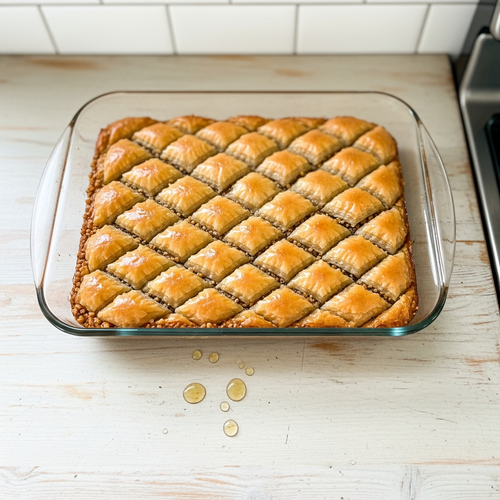
Description: A macro-friendly version of the classic Greek dessert. Layers of flaky phyllo dough and a spiced nut-protein filling are soaked in a sugar-free syrup for a delicious treat that supports your fat loss goals.
Prep Time: 30 minutes | Cook Time: 50 minutes
Servings: 24 pieces
Macros per Serving | Calories: 128 | Protein: 5g | Fat: 6g | Carbohydrates: 16g
Ingredients
- For the Nut Filling: 2 cups mixed raw nuts (walnuts, pistachios), 3 scoops vanilla whey-casein blend protein powder, 2 tsp ground cinnamon, 1/2 tsp ground cardamom, Pinch of salt.
- For the Syrup: 2 cups water, 1 ½ cups powdered erythritol, 1 cinnamon stick, 1 strip lemon peel, 1 tbsp lemon juice, 1 tsp vanilla extract.
- For Assembly: 1 (16-ounce) package phyllo dough, thawed, 3 tbsp light butter, melted, 1/2 cup aquafaba, 1 tbsp maple syrup, 1 large egg white, lightly beaten.
Instructions
- Make Syrup: Combine water, erythritol, cinnamon stick, and lemon peel in a saucepan. Boil, then simmer for 15-20 mins until slightly thick. Remove from heat, discard solids, stir in lemon juice and vanilla. Cool completely.
- Make Filling: In a bowl, mix finely chopped nuts, protein powder, cinnamon, cardamom, and salt.
- Prep: Preheat oven to 350°F (175°C). Grease a 9×13 inch dish. Whisk aquafaba and maple syrup.
- Assemble: Layer 8 phyllo sheets, brushing each with aquafaba mix. Top with 1/4 of nut filling. Repeat with 5 phyllo sheets and 1/4 nut filling three more times. Finish with 8 phyllo sheets on top, brushing each.
- Finish & Cut: Brush the top layer with melted butter. Cut into diamonds or squares, slicing all the way through.
- Bake: Bake for 45-55 minutes until deep golden brown.
- Soak: Immediately pour the cooled syrup evenly over the hot baklava.
- Cool: Let cool uncovered at room temperature for at least 4-6 hours, or overnight, before serving.
Notes
Ensure your syrup is completely cool before pouring it over the hot baklava. This is the key to preventing a soggy result. Don’t cover the baklava while it cools. Store in an airtight container at room temperature.
FAQs About Baklava For Weight Loss
Here are some straightforward answers to the most common questions I receive about this baklava recipe.
Can I really eat this baklava and still lose weight?
Absolutely, and this question gets to the very heart of our philosophy at ADHD FIT. Fat loss is primarily about maintaining a consistent calorie deficit, meaning you consume fewer calories than your body burns over time. There are no “good” or “bad” foods, only foods that have different calorie and macronutrient profiles. This baklava is specifically designed to be much lower in calories and sugar, and higher in protein, than its traditional counterpart.
By using a zero-calorie sweetener and a low-calorie binder like aquafaba, we slash the calorie count dramatically. By adding protein powder, we make each piece more satiating, helping you feel fuller and more satisfied. A single piece fits easily into a well-planned day of eating. Instead of seeing it as a cheat, view it as a tool. It allows you to satisfy a craving in a controlled way, which prevents the feelings of restriction that often lead to much larger, off-plan binges. Flexible dieting, where you include small, planned treats, is far more sustainable for the ADHD brain than a rigid, all-or-nothing approach.
Is this protein baklava recipe difficult for beginners to make?
I’m going to be direct and honest: it’s not the easiest recipe on our site, but it is 100% doable, even for a beginner. The most challenging part is working with the phyllo dough. It’s very thin, dries out quickly, and can tear easily. The key is to accept that it will not be perfect, and that is completely okay. A few tears here and there will be hidden by the other layers and will not affect the final taste or texture at all. Remember, we value consistency over perfection.
My best advice for tackling this as a beginner, especially with an ADHD brain, is to break the process down. Don’t try to do it all at once if you’re feeling overwhelmed. You could make the syrup one day and store it in the fridge. The next day, you could prepare the nut filling. On the third day, when you have a bit more time and focus, you can tackle the assembly. Breaking down a big task into smaller, more manageable steps is a fantastic strategy for overcoming task-initiation hurdles. Just put on some music, take your time, and enjoy the process.
What is the best protein powder to use for this baklava?
For this specific recipe, I strongly recommend a whey-casein blend protein powder. The reason is all about texture. Whey protein digests quickly and can sometimes make baked goods a bit dry. Casein protein is slower to digest and absorbs more liquid, which helps keep the nut filling moist and tender during the long baking time. This combination results in a much more pleasant final product. Vanilla is a great flavor choice as it complements the nuts and spices beautifully, but an unflavored blend would also work perfectly.
If you only have whey isolate, you can still make the recipe, but be aware the filling might be slightly drier. If you need a plant-based option, a blend made from pea and brown rice protein is often a good choice for baking. However, plant-based proteins have a more distinct flavor and can be a bit grittier, so it will change the final result. I suggest using a brand you already know you like the taste of. Ultimately, the best protein powder is the one you have that will allow you to actually make the recipe.
How does this baklava recipe help with sugar cravings?
This baklava recipe is a strategic weapon in the fight against sugar cravings, and it works on two levels: physiological and psychological. On the physiological level, we’ve removed almost all of the refined sugar. The syrup is made with erythritol, a sugar alcohol that provides sweetness without calories and, more importantly, without spiking your blood sugar and insulin levels. That massive spike and subsequent crash from regular sugar is what often triggers a vicious cycle of more cravings. The added protein in the filling also promotes satiety and stable blood sugar, helping to keep cravings at bay.
On the psychological level, this recipe is a game-changer. For those of us with ADHD, restrictive diets are a recipe for disaster. Being told you can “never” have something often makes you want it more, leading to a feeling of deprivation that culminates in a binge. By creating a delicious, satisfying version of baklava that fits your macros, you eliminate that feeling of restriction. You can plan to have a piece, enjoy it without guilt, and move on. This builds a healthy, sustainable relationship with food where nothing is forbidden, and you are in control.
Can I make this baklava without a zero-calorie sweetener?
You certainly can, but it’s important to understand how that change will affect the recipe’s purpose. This recipe was specifically developed to be a low-calorie, fat-loss-friendly dessert. The zero-calorie sweetener is the single biggest factor in achieving that. If you were to replace the 1 ½ cups of erythritol with regular granulated sugar, you would be adding approximately 1,160 calories to the entire pan. When divided by 24 servings, that’s an extra 48 calories per piece, almost all from pure sugar.
If you prefer to use natural sweeteners like honey or maple syrup, you could also do that for the syrup, but the calorie increase would be similar, and the syrup’s consistency would be different. So, while it’s possible from a culinary standpoint, it fundamentally changes the recipe from a “fat loss tool” into a traditional high-calorie dessert. If your goal is fat loss, I highly recommend sticking with the erythritol or a similar zero-calorie substitute to keep the recipe aligned with your goals.
Try These High-Protein Recipes Next
If you loved creating a macro-friendly version of a classic dish, here are a few more recipes you should try.
-
High-Protein Tzatziki Sauce: This creamy, delicious dip uses Greek yogurt for a massive protein boost. It’s perfect with grilled chicken, veggies, or as a salad dressing.
-
The Best Greek Salad Recipe: A fresh, vibrant salad that’s packed with flavor. It pairs perfectly with the tzatziki and makes for an amazing, easy lunch prep.
-
Strawberry Banana Phyllo Cups: If you have leftover phyllo dough from the baklava, this is a fantastic and simple way to use it up for another light and tasty dessert.
Building a library of go-to healthy recipes is one of the best ways to stay consistent on your fitness journey.