
Corned beef and cabbage was always a once-a-year meal for me growing up. It showed up around St. Patrick’s Day, usually a bit greasy, swimming next to some boiled potatoes. It was comfort food, but it definitely wasn’t what I considered “health food.”
When I started my journey to lose 65 pounds, I wrote off meals like this completely. They seemed like the exact opposite of what I needed to eat to get lean. But over time, I realized I was thinking about it all wrong. The core of the meal, lean beef and a ton of vegetables, is actually perfect for fat loss.
The problem wasn’t the corned beef. It was the cut of meat, the high-sodium brine, and the starchy potatoes that usually came with it. I knew I could do better. I needed a version that was high in protein, packed with flavor, and didn’t leave me feeling bloated from a salt overload.
This recipe is the result of that mission. It’s the high-protein corned beef and cabbage I eat now to stay fit and satisfied. It works with my ADHD brain by being a big-batch meal that provides leftovers for days, cutting down on decision fatigue. It’s brutally practical and delicious, just how we like it.
Skip to My Flexibe Diet Recipe!
Why Corned Beef and Cabbage Is Great For Fat Loss
When you look at traditional corned beef recipes, “fat loss” isn’t the first thing that comes to mind. But this ADHD FIT version is engineered specifically to support your goals, and it all comes down to our core principles: protein first and hunger management.
First, we put protein at the center of the plate. We use a lean, flat-cut brisket and take the time to trim off all visible fat. This maximizes the protein content while minimizing unnecessary fats and calories. With a hefty serving of protein, you’ll feel fuller for longer, which is your number one weapon against the random cravings that can derail your progress.
Next, we tackle the carbs. Potatoes are traditional, but they’re starchy and can be easy to overeat. We swap them for radishes. I know it sounds weird, but trust me. When radishes braise in that savory beef broth, they become tender and lose their peppery bite, taking on a texture surprisingly similar to a boiled potato but with a fraction of the carbs and calories.
We also go all-in on volume. The cabbage, carrots, and celery are low-calorie, high-fiber vegetables. This means you get to eat a massive, visually satisfying plate of food that fills you up without filling you out. For the ADHD brain, seeing a full plate can be incredibly satisfying and helps prevent the feeling of restriction that often leads to bingeing.
Finally, we control the sodium. The little spice packets that come with corned beef are salt bombs. Our homemade spice blend gives you all the classic flavor without the insane sodium content, which helps you avoid water retention and bloating. Paired with a protein-boosted Greek yogurt sauce, this corned beef and cabbage is a complete, macro-friendly meal that tastes like a hearty classic.
Ingredients You’ll Need for Corned Beef and Cabbage
The ingredient list for this corned beef and cabbage is very intentional. We’re choosing specific items to boost protein, control sodium, and deliver incredible flavor without adding a bunch of calories. Every single component serves a purpose in making this a fat-loss friendly meal.
The star of the show is, of course, the corned beef. It is absolutely critical that you choose a lean, flat-cut corned beef brisket. The point cut has much more fat marbled throughout. Also, take a few minutes to trim off any large, visible pieces of the fat cap. This simple step can save you hundreds of calories.
Our key twist is the swap from potatoes to radishes. This keeps the dish low-carb and keto-friendly, but more importantly, it reduces the overall calorie load significantly while still providing that tender, hearty vegetable component you expect. Don’t skip these. Any variety of radish will work, from the common red globe to larger daikon radishes cut into chunks.
Here’s exactly what you’ll need to get started:
- For the Corned Beef:
- 1 (4-pound) lean, flat-cut corned beef brisket, trimmed of all visible fat
- 8 cups of beef bone broth, unsalted
- 2 tablespoons homemade low-sodium corned beef seasoning (see recipe below)
- 1 large yellow onion, peeled and quartered
- 4 cloves of garlic, smashed
- 2 celery stalks, cut into large chunks
- 1 tablespoon of avocado oil or other neutral high-heat oil
- For the Vegetables:
- 1 large head of green cabbage, cut into 8 large wedges
- 1 pound of radishes, trimmed and halved
- 4 large carrots, peeled and cut into 2-inch pieces
- 2 additional celery stalks, cut into 2-inch pieces
- For the Homemade Low-Sodium Corned Beef Seasoning:
- 1 tablespoon black peppercorns
- 1 tablespoon mustard seeds
- 1 tablespoon coriander seeds
- 1 teaspoon allspice berries
- 1 teaspoon dill seeds
- 1/2 teaspoon red pepper flakes
- 2 bay leaves, crumbled
- For the High-Protein Horseradish Sauce:
- 1 cup plain non-fat Greek yogurt
- 3 tablespoons prepared horseradish
- 1 tablespoon Dijon mustard
- 1 teaspoon apple cider vinegar
- 1/4 teaspoon salt
- Freshly ground black pepper to taste
- 2 tablespoons of fresh chives, finely chopped (optional)
How To Make Corned Beef and Cabbage (Step-By-Step)
Making this corned beef and cabbage is mostly a hands-off process, which is perfect for days when you have low energy but still want a great meal. The active prep time is minimal. The majority of the time is just letting the pot do its magic on the stove.
Step 1: Prepare the Spice Blend
First, we make our low-sodium seasoning. Toasting the whole spices in a dry skillet for a few minutes is a game-changer. It wakes up the essential oils and makes the flavor way more intense than just using pre-ground spices. Once they’re fragrant, grind them up. An old coffee grinder reserved for spices works great, but a mortar and pestle is perfect too. ADHD Tip: Make a big batch of this blend and store it in an airtight jar. Future you will be very grateful.
Step 2: Sear the Corned Beef
Rinse the brisket and pat it completely dry. Don’t skip this. A dry surface is key to getting a deep, brown crust. Heat the oil in a big, heavy pot like a Dutch oven over medium-high heat. Sear the brisket on all sides. This isn’t just for color; this is the Maillard reaction, and it creates a huge amount of savory flavor that will infuse the entire dish.
Step 3: Braise the Corned Beef
Remove the brisket, toss in your onion and garlic, and cook for a minute. Then place the beef back in the pot, sprinkle over your homemade seasoning, and pour in the beef bone broth. You want a gentle simmer, not a raging boil. Cover the pot, turn the heat down to low, and let it go for about 2.5 hours. ADHD Tip: Set a timer on your phone for 2.5 hours right now. This is your cue to come back and add the vegetables. No need to babysit it.
Step 4: Cook the Vegetables
After the timer goes off, add your cabbage wedges, radishes, carrots, and celery to the pot. Nestle them down into the broth around the beef. Put the lid back on and let it all simmer for another 45 to 60 minutes. You’re looking for everything to be fork-tender. The beef should be tender, and the veggies should be soft but not complete mush.
Step 5: Prepare the Horseradish Sauce
While the vegetables are cooking, you have the perfect window to whip up the sauce. This is a simple, no-cook task that provides a quick win. Just stir all the ingredients together in a bowl. Using plain non-fat Greek yogurt instead of sour cream or mayo gives you a nice protein boost and keeps the fat content low.
Step 6: Rest and Slice the Corned Beef
This step is non-negotiable for tender meat. Take the brisket out of the pot and let it rest on a cutting board for at least 10 minutes. This allows the juices to settle back into the meat. If you slice it right away, all that moisture will run out. Then, find the direction of the muscle fibers (the grain) and slice thinly against them.
Step 7: Serve
Arrange your beautifully sliced corned beef on a platter with all those tender, flavorful vegetables. Add a generous dollop of the high-protein horseradish sauce and you’re ready to eat. It’s a complete, satisfying meal all in one pot.
How To Serve Corned Beef and Cabbage (ADHD-Friendly)
When it comes to serving, our goal is to reduce steps and eliminate decision fatigue. A complicated meal with lots of side dishes is the enemy on a low-motivation day. The beauty of this corned beef and cabbage is that it’s a complete meal right out of the pot.
The best and simplest way to serve this is as an all-in-one bowl. Pile the sliced corned beef, tender cabbage, carrots, and radishes into a large bowl and top it with a big scoop of the creamy horseradish sauce. That’s it. You have protein, tons of vegetables, and a flavorful sauce. No other side dishes are needed, which means fewer things to think about and fewer dishes to wash.
This recipe also shines as a meal prep tool, which is a lifesaver for the ADHD brain. Planning ahead prevents the last-minute “what’s for dinner” panic that often leads to unhealthy choices. Here’s how to make it work for you:
- Immediate Portioning: As soon as you’re done with dinner, portion the leftovers into individual meal prep containers. Don’t leave it in the pot to “deal with later.” Future you is already tired. Pack a balanced amount of meat and vegetables in each container for easy grab-and-go lunches or dinners.
- Visual Cues: Place the prepped containers at eye-level in the front of your fridge. When you see a healthy, delicious meal ready to go, you are far more likely to eat it than to get overwhelmed and order a pizza. Out of sight is truly out of mind for us.
- Sauce on the Side: Store the horseradish sauce in a separate small container. This keeps everything fresh and allows you to add as much as you want right before eating.
By thinking of this as a “cook once, eat four times” meal, you’re building a system that supports your fat loss goals without requiring a ton of daily effort. It’s about working with your brain, not fighting against it.
How To Store, Reheat, and Reuse Corned Beef and Cabbage
Leftovers are a cornerstone of a sustainable fitness lifestyle, especially for those of us with ADHD. They save time, money, and mental energy. This corned beef and cabbage recipe makes a generous amount, so knowing how to properly store and repurpose it is key to avoiding food boredom.
For storage, let the corned beef and vegetables cool slightly before transferring them to airtight containers. You can store them together. To keep the vegetables from getting too soft, you can store the meat and broth separately from the veggies, but it’s not a deal-breaker if you combine them. The leftovers will keep well in the refrigerator for up to 4 days.
When it comes to reheating, you have a few options. The microwave is the fastest and works perfectly fine for a quick lunch. For the best texture, I recommend reheating it gently in a pot on the stovetop with a splash of the cooking liquid to keep things from drying out.
But the real magic is in reusing the leftovers in completely new ways. This prevents the “ugh, this again?” feeling. Here are my favorite ways to transform leftover corned beef and cabbage:
- High-Protein Corned Beef Hash: This is my number one go-to. Finely chop the leftover corned beef, radishes, carrots, and cabbage. Sauté the mixture in a hot skillet with a little avocado oil until it gets nice and crispy. Serve it with a fried or poached egg on top for a fantastic, protein-packed breakfast or lunch.
- Low-Carb Reuben Bowls: Pile the reheated, shredded corned beef into a bowl. Top it with sauerkraut, a sprinkle of Swiss cheese (if it fits your macros), and a drizzle of the horseradish sauce or a low-sugar Thousand Island dressing. It’s all the flavor of a Reuben sandwich without the bread.
- Corned Beef Lettuce Wraps: For a light and refreshing option, shred the cold corned beef and serve it in crisp butter lettuce or romaine cups. Add some shredded carrots and a dollop of the horseradish sauce for a quick, no-cook meal.
By having a plan for your leftovers, you’re not just storing food; you’re creating future easy meals. This is a powerful strategy for staying consistent even on your busiest or most unfocused days.
Easy Swaps & Variations for Corned Beef and Cabbage
One of our core principles at ADHD FIT is that flexible eating always wins. A recipe is a blueprint, not a rigid set of rules. Life happens. Sometimes you can’t find a specific ingredient, or you need to adjust for your budget or pantry. This corned beef and cabbage recipe is very forgiving and easy to adapt.
The goal is consistency, not perfection. If making a small swap means you’ll actually cook the meal instead of ordering takeout, that’s a huge win. Don’t let the “perfect” be the enemy of the “done.” This recipe is designed to be a template you can adjust to fit your life and what you have available.
Here are some simple and effective swaps you can make without derailing your fitness goals:
- For the Beef: If you can’t find a pre-brined corned beef brisket, you can use a regular flat-cut beef brisket. You will need to season it more aggressively with your homemade spice blend and add salt to the cooking liquid, as it won’t be brined.
- For the Vegetables: The radishes are a great low-carb potato swap, but turnips or rutabagas work beautifully as well. If you aren’t strictly low-carb, you can add parsnips or even a small amount of baby potatoes. Feel free to throw in other hearty vegetables like leeks or mushrooms.
- For the Spice Blend: If you’re short on time or don’t have whole spices, you can use a store-bought pickling spice blend. My only caution is to check the sodium content, as it can be very high. If you do this, definitely use unsalted broth to compensate.
- For a Time-Saving Shortcut: Many grocery stores sell pre-cooked corned beef in the deli section. You can buy this, slice it, and simply simmer it with the vegetables in beef broth for 30-40 minutes until the veggies are tender. It’s a fantastic hack for a busy weeknight.
- For the Sauce: If you’re not a fan of horseradish, you can flavor the Greek yogurt sauce differently. Try mixing in Dijon mustard and fresh dill for a different kind of creamy sauce, or even a bit of sriracha for a spicy kick.
Remember, the best healthy meal is the one you actually make and eat. Use these variations to make this recipe work for you.
High-Protein Corned Beef and Cabbage
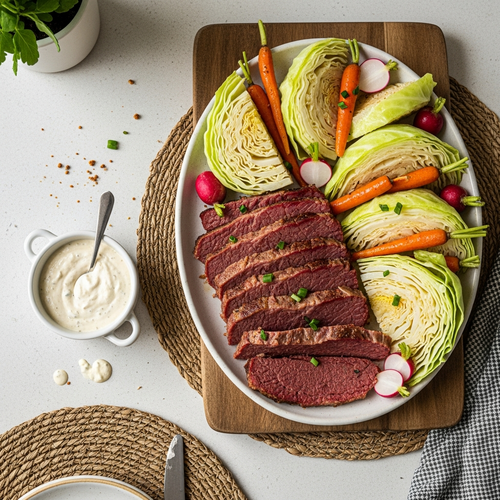
Description: A macro-friendly take on the classic comfort dish. This corned beef and cabbage is high in protein, low in carbs, and packed with flavor, making it perfect for fat loss and a sustainable fit lifestyle.
Prep Time: 15 minutes | Cook Time: 3 hours 30 minutes
Servings: 8
Macros per Serving | Calories: 452 | Protein: 45g | Fat: 25g | Carbohydrates: 10g
Ingredients
- 1 (4-lb) lean, flat-cut corned beef brisket, trimmed
- 8 cups unsalted beef bone broth
- 2 tbsp homemade low-sodium corned beef seasoning
- 1 large yellow onion, quartered
- 4 cloves garlic, smashed
- 4 celery stalks, cut into large chunks (divided)
- 1 tbsp avocado oil
- 1 large head green cabbage, cut into 8 wedges
- 1 lb radishes, trimmed and halved
- 4 large carrots, peeled and cut into 2-inch pieces
- 1 cup plain non-fat Greek yogurt
- 3 tbsp prepared horseradish
- 1 tbsp Dijon mustard
- 1 tsp apple cider vinegar
- Salt and pepper to taste
- Optional: 2 tbsp fresh chives, chopped
Instructions
- Make the seasoning blend by toasting whole spices (peppercorns, mustard/coriander/dill seeds, allspice) until fragrant, then grinding them with red pepper flakes and bay leaves.
- Rinse and pat the brisket dry. Sear on all sides in oil in a large Dutch oven over medium-high heat.
- Remove beef. Add onion, garlic, and 2 stalks of celery. Sauté briefly. Return beef to the pot, top with seasoning, and add bone broth. Bring to a simmer, then reduce heat to low, cover, and cook for 2.5 hours.
- Add cabbage, radishes, carrots, and remaining celery to the pot. Cover and simmer for another 45-60 minutes, until meat and vegetables are tender.
- While veggies cook, mix Greek yogurt, horseradish, Dijon, vinegar, salt, and pepper for the sauce. Stir in chives if using.
- Remove beef from the pot and rest on a cutting board for 10-15 minutes before slicing thinly against the grain.
- Serve sliced beef with vegetables and a dollop of horseradish sauce.
Notes
Choosing a lean, flat-cut brisket and trimming the visible fat is essential for keeping the macros in a fat-loss friendly range. Don’t skip the resting step before slicing the meat; it’s crucial for a tender result.
FAQs About Corned Beef and Cabbage For Weight Loss
Here are some straightforward answers to the most common questions I receive about this corned beef and cabbage recipe.
Can you really lose weight eating corned beef and cabbage?
Yes, you absolutely can, but it all comes down to the preparation. The traditional version served in restaurants or made from a standard recipe can be high in fat and sodium, which isn’t ideal for weight loss. Our version of corned beef and cabbage is specifically designed to support fat loss by focusing on a few key principles.
First, we prioritize lean protein by using a trimmed, flat-cut brisket. Protein is incredibly thermogenic (meaning your body burns more calories digesting it) and highly satiating, which helps control hunger and reduce overall calorie intake. Second, we replace high-carb potatoes with low-carb, low-calorie radishes and load up on other fibrous vegetables like cabbage. This creates a high-volume, filling meal for very few calories. Finally, by making our own seasoning blend and using unsalted broth, we control the sodium, preventing the water retention and bloating that can mask your fat loss progress and make you feel sluggish.
Is this corned beef and cabbage recipe difficult to make for someone with ADHD?
Not at all. In fact, I designed this recipe to be very ADHD-friendly. The vast majority of the cooking time is completely hands-off. It’s a “set it and forget it” style of cooking, which is perfect for days when you lack focus or executive function. The active work—searing the meat, chopping veggies, mixing the sauce—can be broken down into small, manageable tasks.
My biggest tip is to practice “mise en place,” which is just a fancy way of saying “get all your ingredients prepped before you start cooking.” Chop all your vegetables, measure your spices, and have everything laid out. This prevents that mid-recipe scramble where you forget a step or get overwhelmed. The long, 2.5-hour simmering time is a built-in break. Set a timer and go do something else. The single pot also means cleanup is much simpler, which is a huge bonus for avoiding task paralysis after a meal.
Why does this corned beef and cabbage recipe use radishes instead of potatoes?
This is one of the most important swaps in the recipe for making it fat-loss friendly. Potatoes are a great source of nutrients, but they are also very starchy and calorie-dense. For a fat loss phase, we want to maximize volume and protein while keeping carbohydrates and overall calories in check. Radishes are the perfect solution.
When cooked for a long time in a flavorful broth like this, radishes lose their sharp, peppery bite and become wonderfully tender and savory. Their texture becomes soft and surprisingly similar to a well-boiled potato, but they contain only a fraction of the carbs and calories. This swap allows you to have a satisfying, hearty vegetable component in your meal without the significant blood sugar spike and high calorie count of potatoes, making it much easier to stay within your daily calorie and macro targets.
What’s the best way to slice corned beef and cabbage for this recipe?
How you slice both the corned beef and the cabbage makes a big difference in the final dish. For the corned beef, the golden rule is to always slice it against the grain. The “grain” refers to the direction the muscle fibers are running. If you slice with the grain, you’ll end up with long, tough, stringy pieces of meat. By slicing against it, you are shortening those muscle fibers, resulting in a much more tender bite. After the beef has rested, look closely at the surface to identify the direction of the fibers and slice perpendicular to them.
For the cabbage, the best way to prepare it for braising is to cut it into large wedges. Cut the head in half through the core, then cut each half into four wedges, making sure each wedge has a piece of the core attached. This core is what holds the leaves together, preventing them from completely falling apart into a mushy mess during the long cooking time. You’ll end up with perfectly tender, intact wedges of cabbage that are easy to serve.
Can I make this corned beef and cabbage in a slow cooker or Instant Pot?
Yes, this recipe is easily adaptable for both a slow cooker and an Instant Pot, which are great tools for making it even more hands-off. For a slow cooker, I still highly recommend searing the brisket on the stovetop first for maximum flavor. Then, place the seared brisket, onion, garlic, seasoning, and broth into the slow cooker. Cook on low for 8-10 hours or on high for 4-5 hours. Add all the vegetables to the pot during the last 2 hours of cooking time so they don’t get overcooked.
For an Instant Pot, use the “Sauté” function to sear the brisket directly in the pot. Remove the brisket, sauté the onion and garlic, then return the brisket to the pot. Add the seasoning and broth. Lock the lid and cook on high pressure for 90 minutes. Let the pressure release naturally for at least 15 minutes. Carefully release any remaining pressure, then add the vegetables to the pot. Lock the lid again and cook on high pressure for another 3-5 minutes, followed by a quick release. Both methods yield a delicious, tender result.
Try These High-Protein Recipes Next
If you loved this simple and satisfying high-protein meal, here are a few others from our kitchen that you should try next.
- Healthy Smoked Brisket Recipe: Another fantastic way to enjoy brisket that’s perfect for meal prep and loaded with flavor.
- The Best Pot Roast Recipe: The ultimate one-pot comfort meal, redesigned to be macro-friendly and support your fitness goals.
- St. Patrick’s Day Low Carb Corned Beef and Cabbage: A great resource for even more low-carb ideas and variations on this classic dish.
These recipes all follow the same principles of being high in protein, easy to make, and brutally practical for a busy lifestyle.