
I have a confession. Before I started my fitness journey, I thought fish tacos were fancy restaurant food. Something you order on vacation, not something a busy single dad like me makes on a Tuesday night. They seemed complicated, with too many moving parts for my ADHD brain to track.
Then, during the thick of my 65-pound weight loss, I hit a wall. I was tired of plain chicken and broccoli. I needed flavor, something that felt like a treat, but wouldn’t derail my progress. Cravings were hitting hard, and my motivation was dipping. I needed a win.
That’s when I decided to tackle fish tacos. I broke it down into the simplest possible steps, focusing on high-protein ingredients that would keep me full and fight off those afternoon snack attacks. I ditched the deep fryer and heavy sauces for a simple pan-sear and a ridiculously easy Greek yogurt slaw.
The result was a game-changer. This wasn’t just a meal; it was proof that I could eat food I genuinely loved and still lose weight. It became a staple in my rotation, a perfect example of how we can build a sustainable lifestyle by working with our brains, not against them. This recipe is the culmination of that process. It’s simple, fast, and packed with flavor.
Skip to My Flexibe Diet Recipe!
Why Fish Tacos Are Great For Fat Loss
When you’re trying to lose fat, the biggest battle is usually with hunger and cravings. That’s where a meal like these high-protein fish tacos becomes your secret weapon. We’re not just making a tasty dinner; we’re building a plate that sets you up for success for hours afterward.
The foundation is protein. This recipe is loaded with it from two sources. First, the lean white fish like cod or tilapia provides a solid protein base without a lot of fat. Second, we swap out the typical sour cream or mayo-based slaw for one made with non-fat plain Greek yogurt. This simple switch dramatically boosts the protein content, adding to the meal’s staying power.
Protein is the king of macros for fat loss because it’s the most satiating. It keeps you feeling full longer, which means you’re less likely to be derailed by cravings an hour after eating. This is huge for the ADHD brain, which often seeks dopamine hits from sugary or high-fat snacks.
We also get fiber and volume from the cabbage slaw, which adds crunch and helps fill your stomach for very few calories. The healthy fats from the avocado help with satiety too. When you combine high protein, high fiber, and healthy fats, you get a meal that stabilizes blood sugar and keeps your energy levels steady. This isn’t “diet food.” This is smart, strategic eating that tastes incredible and makes fat loss feel effortless, not punishing.
Ingredients You’ll Need for Fish Tacos
One of our core principles is simplicity. You don’t need a bunch of fancy, hard-to-find ingredients to make an amazing meal. This recipe uses straightforward items you can find at any grocery store. Let’s break down what you’ll need.
The star of our slaw, and the recipe’s high-protein twist, is the non-fat plain Greek yogurt. This is a non-negotiable for me. It replaces the heavy, high-fat sour cream or mayonnaise you find in traditional taco slaws, slashing calories while adding a significant protein boost. It gives you a creamy, tangy dressing that actually works for your goals.
For the fish, you want a firm white fish. Cod and tilapia are my go-to options because they are affordable, mild in flavor, and hold up well to cooking. You can absolutely use fresh fish, but don’t sleep on frozen fillets. I often use them for convenience. Just make sure they are fully thawed and patted very dry with paper towels before seasoning to get a good sear.
The tortillas matter, too. I use high-protein, low-calorie tortillas to maximize the macros. Brands like Mission Carb Balance or La Banderita Carb Counter are excellent choices. They give you the satisfaction of a real tortilla without adding a ton of carbs.
- For the Fish:
- 1 lb cod, tilapia, or other firm white fish, cut into 1-inch strips
- 1 tbsp olive oil
- 1 tsp chili powder
- 1 tsp cumin
- 1/2 tsp smoked paprika
- 1/2 tsp garlic powder
- 1/4 tsp salt
- Juice of 1 lime
- For the High-Protein Slaw:
- 2 cups shredded cabbage (a mix of red and green is great for color)
- 1/2 cup non-fat plain Greek yogurt
- 1/4 cup chopped fresh cilantro
- Juice of 1 lime
- 1/4 tsp salt
- 1/4 tsp black pepper
- For Assembly:
- 8 high-protein, low-calorie tortillas
- 1/2 avocado, thinly sliced
- Lime wedges for serving
How To Make Fish Tacos (Step-By-Step)
This is where we make the magic happen. I’ve designed these steps to be as straightforward as possible, perfect for those days when your executive function is running on empty. We’ll even multitask a little bit to get this done fast, without the overwhelm.
Step 1: Season The Fish
Start by getting your fish ready. In a medium bowl, mix together all your spices: the chili powder, cumin, smoked paprika, garlic powder, and salt. Make sure your fish is patted dry, then add the strips to the bowl. Use your hands or a spoon to gently toss the fish until every piece is evenly coated. This dry rub is what creates that flavorful crust when we cook it. Set it aside for a moment to let the flavors sink in.
Step 2: Cook The Fish
Grab a large non-stick skillet. This is important. A non-stick surface prevents the delicate fish from sticking and falling apart, which can be a frustrating mess. Heat the olive oil over medium-high heat. You’ll know it’s ready when the oil shimmers slightly. Carefully place the fish strips in the pan in a single layer. Don’t overcrowd it. Cook for about 2-3 minutes per side. The fish is done when it’s opaque and flakes easily with a fork. Squeeze the juice of one lime over the fish right at the end for a burst of freshness.
Step 3: Prepare The Slaw
Here’s our ADHD-friendly multitasking. While the fish is cooking, you can whip up the slaw. In a separate bowl, whisk the Greek yogurt, chopped cilantro, lime juice, salt, and pepper. Once that’s combined, add the shredded cabbage. Using a bagged cabbage mix is a fantastic shortcut here. Toss it all together until the cabbage is coated in that creamy, high-protein dressing. Done.
Step 4: Assemble Your Tacos
The final, rewarding step. Warm your tortillas. You can do this in the microwave for a few seconds or heat them in a dry skillet for about 30 seconds per side. Now, build your tacos. Place some of the cooked fish in a tortilla, top it with a generous scoop of the slaw, and add a couple of slices of avocado. Serve them right away with extra lime wedges for squeezing over the top.
How To Serve Fish Tacos (ADHD-Friendly)
Serving and eating should be just as simple as the cooking process. Perfection is not the goal. A delicious, satisfying meal that fits our lifestyle is. For those of us with ADHD, reducing decision fatigue is a huge win, and we can apply that to how we serve our fish tacos.
My favorite way to do this is to set up a mini “taco bar.” I put the cooked fish, the bowl of slaw, the sliced avocado, and the warm tortillas on the counter or table. Everyone can build their own. This is great for a few reasons. First, it requires zero fancy plating. Second, it accommodates picky eaters or different preferences without any extra work. Third, it turns the meal into a more interactive, engaging experience, which can be a nice dopamine boost.
When it comes to sides, keep it brutally simple. The goal is to avoid starting a whole new cooking project. Here are a few zero-effort ideas:
- Canned Beans: Open a can of black beans or pinto beans. Rinse them, and you’re done. You can heat them up if you want, but they’re perfectly fine at room temperature.
- Frozen Corn: A scoop of frozen corn, thawed in the microwave for a minute, adds color and a little sweetness. No chopping required.
- Salsa and Guac: A good quality store-bought salsa or guacamole can round out the meal without you having to lift a knife.
The point is to add texture and flavor without adding stress or extra steps. A delicious, balanced meal doesn’t need to involve four different pots and pans. These tacos are the star of the show. Let the sides be simple, easy supports.
How To Store, Reheat, and Reuse Fish Tacos
One of the best systems for sustainable fat loss is cooking once and eating twice (or more). Leftovers are a lifesaver on low-motivation days. But soggy, sad leftovers are the worst. The key to making these fish tacos great the next day is storing the components correctly.
Do not, under any circumstances, store assembled tacos. They will become a mushy mess. Instead, we’re going to separate everything. This might seem like an extra step, but future you will be incredibly grateful. It’s a simple system that preserves the texture and flavor of each part of the meal.
Here’s how to store everything for maximum freshness:
- The Fish: Store the cooked fish in an airtight container in the refrigerator for up to 2-3 days.
- The Slaw: Keep the slaw in a separate airtight container. The cabbage will soften slightly, but it will still be delicious for a couple of days.
- The Toppings: Store tortillas in their bag, and keep any leftover avocado, cilantro, or limes separate.
When you’re ready to eat, reheating the fish properly is crucial. Avoid the microwave if you can, as it can make the fish rubbery. The best way is to heat it for a few minutes in a non-stick skillet over medium heat or in an air fryer at around 350°F for 3-4 minutes. This will bring back some of its original texture.
Don’t feel like having tacos again? Reuse the components! The leftover fish and slaw are fantastic over a bed of quinoa or brown rice for a quick taco bowl. You can also pile them on top of mixed greens for a high-protein fish taco salad. This flexibility is what makes a recipe truly sustainable.
Easy Swaps & Variations for Fish Tacos
A great recipe is one you can adapt. Maybe you don’t have an ingredient on hand, or maybe you just want to change things up. This recipe is incredibly flexible. The framework of lean protein, a creamy sauce, and a crunchy slaw works with a lot of different combinations. Let’s explore some easy swaps.
The most obvious swap is the protein. If you’re not a fan of fish or just want a change, this recipe works beautifully with other proteins. Try it with shrimp, seasoned and cooked the same way. Or use boneless, skinless chicken breast cut into strips. You could even use ground turkey for a different texture.
The slaw is also easy to customize. If you don’t have Greek yogurt, you can use sour cream, but be mindful that it will increase the fat and calorie content. For a dairy-free option, there are some great plant-based yogurts available now. You can also mix up the veggies. Add some shredded carrots or finely sliced red onion for extra color and flavor.
Here are a few more simple variations to try:
- Spice It Up: If you like more heat, add a pinch of cayenne pepper to the spice mix for the fish or some finely diced jalapeño to the slaw.
- Go Low-Carb: Swap the high-protein tortillas for large lettuce cups. Butter lettuce or romaine hearts work well for this.
- Add More Veggies: Sautéed bell peppers and onions make a fantastic addition. You can cook them in the same pan after you remove the fish.
- Budget-Friendly Hack: Using frozen fish fillets is often cheaper than fresh. Canned chicken can also be a super affordable and convenient protein swap.
Remember, the goal is consistency, not perfection. Use what you have, make it work for your tastes, and enjoy the process. A flexible recipe is a recipe you’ll actually use again and again.
High-Protein Fish Tacos For Fat Loss
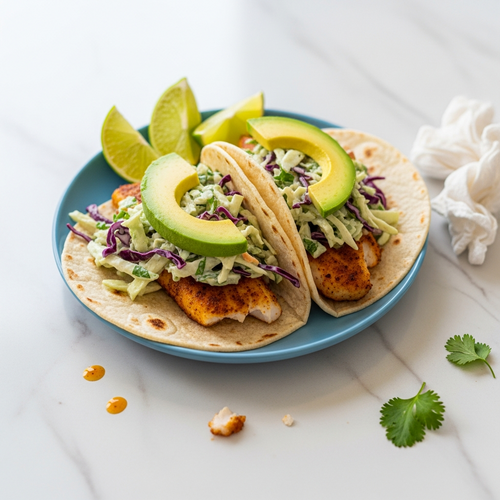
Description: These easy, high-protein fish tacos are designed for fat loss and a busy lifestyle. Featuring pan-seared white fish and a creamy Greek yogurt slaw, this recipe is packed with flavor and helps manage hunger for hours. It’s a perfect weeknight meal that feels like a treat but is built to support your fitness goals.
Prep Time: 5 minutes | Cook Time: 10 minutes
Servings: 4 (2 tacos per serving)
Macros per Serving | Calories: 340 | Protein: 50.5g | Fat: 6.5g | Carbohydrates: 17.5g
Ingredients
- 1 lb cod or tilapia, cut into 1-inch strips
- 1 tbsp olive oil
- 1 tsp chili powder
- 1 tsp cumin
- 1/2 tsp smoked paprika
- 1/2 tsp garlic powder
- 1/4 tsp salt
- Juice of 2 limes, divided
- 2 cups shredded cabbage mix
- 1/2 cup non-fat plain Greek yogurt
- 1/4 cup chopped fresh cilantro
- 1/4 tsp black pepper
- 8 high-protein, low-calorie tortillas
- 1/2 avocado, thinly sliced
Instructions
- In a bowl, combine chili powder, cumin, smoked paprika, garlic powder, and 1/4 tsp salt. Add fish strips and toss to coat.
- Heat olive oil in a large non-stick skillet over medium-high heat. Cook fish for 2-3 minutes per side until cooked through. Squeeze the juice of one lime over the fish.
- While fish cooks, mix Greek yogurt, cilantro, the juice of the second lime, 1/4 tsp salt, and pepper in another bowl. Stir in the shredded cabbage.
- Warm tortillas. Assemble tacos by placing fish on a tortilla, then topping with slaw and avocado slices. Serve immediately.
Notes
For best results, pat the fish very dry before seasoning. This helps it get a nice sear instead of steaming in the pan. Store leftovers in separate containers in the fridge for up to 3 days.
FAQs About Fish Tacos For Weight Loss
Here are some straightforward answers to the most common questions I receive about this fish tacos recipe.
Can you really eat fish tacos and still lose weight?
Absolutely. This is one of the biggest mental hurdles to overcome. We’ve been conditioned to think that “diet food” has to be bland and boring, like plain chicken and steamed broccoli. But that mindset is what leads to burnout and quitting. The truth is, you can eat delicious, satisfying food like tacos and still lose a significant amount of fat. It’s all about how you build them.
This recipe is strategically designed for fat loss. It prioritizes high protein from the fish and Greek yogurt to keep you full and preserve muscle. It includes fiber from the cabbage for volume and satiety. We use healthy fats from avocado and keep the overall calories in check by pan-searing instead of deep-frying and using smart swaps. This combination helps manage hunger, reduce cravings, and keep your metabolism running efficiently. It’s the perfect example of a sustainable meal that doesn’t feel like a sacrifice.
What is the best type of fish for healthy fish tacos?
For this recipe, you want a firm, mild-flavored white fish. My top recommendations are cod and tilapia because they are widely available, affordable, and their texture holds up perfectly to pan-searing. They won’t fall apart in the pan and their mild taste is a great canvas for the spices.
Other great options include mahi-mahi, halibut, or flounder. You can even use salmon if you enjoy a richer, more flavorful fish, but be aware that it will change the macro profile slightly as it’s higher in healthy fats. The most important factor is to choose a fish that you enjoy eating. Don’t be afraid to use frozen fillets. They are just as nutritious as fresh and are incredibly convenient to keep on hand for a quick meal.
How can I make these fish tacos if I don’t have a non-stick skillet?
While a non-stick skillet is the easiest tool for the job, you definitely have other options. If you only have a stainless steel or cast iron pan, just make sure the pan and the oil are fully heated before you add the fish. This will help create a barrier and prevent sticking. Don’t try to move the fish too early. Let it form a crust, and it will release from the pan more easily.
Alternatively, you can bake the fish. Place the seasoned fish strips on a baking sheet lined with parchment paper and bake at 400°F (200°C) for about 10-12 minutes, or until the fish is opaque and flakes easily. The air fryer is another fantastic option. Cook the fish at 400°F for about 7-9 minutes, flipping halfway through. Both baking and air frying are great ways to get perfectly cooked fish with minimal oil.
Are corn or flour tortillas better for fish tacos when trying to lose fat?
This is a great question. Traditionally, corn tortillas are often seen as the “healthier” choice because they are typically lower in calories and fat than their flour counterparts. However, the game has changed in recent years with the introduction of high-fiber, high-protein flour tortillas. These are what I recommend and use in this recipe.
A typical high-protein tortilla might have around 80 calories, 5-7 grams of protein, and a good amount of fiber, which is much better than a standard flour tortilla. While corn tortillas are still a great option, especially if you need a gluten-free choice, the high-protein flour tortillas give you a significant advantage in hitting your protein goals and managing hunger. Ultimately, the “better” choice is the one that fits your personal macros and preferences, but I highly encourage trying the protein-boosted versions.
How do I prevent my fish tacos from becoming soggy?
Soggy tacos are a huge disappointment. There are two main culprits: a watery slaw and assembling the tacos too early. We can easily prevent both. First, for the slaw, make sure you don’t dress it too far in advance. The salt in the dressing will draw water out of the cabbage over time. I recommend mixing the slaw right before you’re ready to eat, or at the earliest, while the fish is cooking.
The second and most important rule is to store all components separately. If you have leftovers, put the fish in one container and the slaw in another. Only assemble the tacos right before you eat them. This ensures the tortilla stays dry, the slaw stays crunchy, and the fish stays flaky. It’s a simple system that makes a world of difference for the quality of your leftovers.
Try These High-Protein Recipes Next
If you loved how simple and satisfying these tacos were, here are a few other recipes designed with the same principles in mind.
- Blackened Mahi-Mahi Recipe – A super flavorful, quick-cooking fish dish that’s perfect for a fast weeknight dinner.
- High-Protein Taco Recipe with Ground Turkey – My go-to recipe for a more traditional taco night, optimized for fat loss macros.
- Blackened Fish Tacos with Avocado Crema – A slightly different take on fish tacos with a delicious avocado-based sauce that’s a must-try.
Each of these recipes focuses on protein, flavor, and convenience to help you stay on track without feeling deprived.