
I used to think of noodle soup as a guilty pleasure. In my pre-fitness days, it was usually a giant bowl of takeout ramen or a late-night package of the instant stuff. It was comforting but always left me feeling sluggish and bloated. When I started my fat loss journey, shedding about 70 pounds over three years, I figured those kinds of meals were off the table for good.
Then I discovered authentic Vietnamese pho. The broth was so clean and aromatic, completely different from the salty packets I was used to. It felt nourishing. But when I looked into the nutrition of restaurant pho, I realized it could still be a calorie and sodium landmine, often made with fatty brisket and mountains of simple carb noodles.
That was not going to work for my goals. I needed something that gave me that same soul-warming comfort without derailing my progress. I wanted a meal that I could eat consistently, even on days when my ADHD brain had zero motivation to cook something complicated.
So, I created this high-protein, low-calorie pho. It’s my brutally practical take on the classic. We get that deep, savory flavor in a fraction of the time and build it around lean protein and fiber to keep you full and satisfied for hours. This is the meal that proves you can absolutely crush your fitness goals while still enjoying delicious, comforting food.
Skip to My Flexibe Diet Recipe!
Why Pho Is Great For Fat Loss
When you are trying to lose fat, the game is won through consistency. And you can only be consistent if your food is satisfying. This high-protein pho recipe is specifically designed to work with your body and brain to make fat loss feel easier, not harder.
Our first principle at ADHD FIT is protein first. This recipe is loaded with it. We use lean beef eye of round or chicken breast, which provides high-quality protein with minimal fat. Adding a soft-boiled egg boosts the protein count even more. Protein is critical for fat loss because it helps you build and preserve lean muscle while you’re in a calorie deficit. More muscle means a higher metabolism.
Protein is also the most satiating macronutrient. It keeps you feeling full and satisfied long after you’ve finished eating. This is where hunger management, our second principle, comes in. The combination of high protein and a huge volume of hot, flavorful broth physically fills your stomach, sending powerful signals to your brain that you are full. This drastically reduces the chances of snacking or overeating later.
We also strategically swap out traditional rice noodles for edamame or black bean noodles. This single change dramatically increases the protein and fiber content of the dish. Fiber slows down digestion, further enhancing satiety and promoting stable blood sugar levels. For those of us with ADHD, stable blood sugar means more stable mood and focus, and fewer cravings for sugary junk food when our energy dips.
Ultimately, this isn’t just a bowl of soup. It’s a tool. It’s a delicious, comforting meal that hits all the right notes to keep you on track with your fat loss goals. It feels like a treat, but its macros are working hard for you. That is how you build a sustainable lifestyle.
Ingredients You’ll Need for Pho
The beauty of this recipe is its simplicity and the way we build incredible flavor from accessible ingredients. We are not simmering bones for 12 hours. We are using smart techniques and high-impact components to create a rich and satisfying broth in under an hour. Here is exactly what you will need.
- For the Broth:
- 8 cups low-sodium beef or chicken broth
- 1 large yellow onion, halved
- 4-inch piece of ginger, halved lengthwise
- 2 whole star anise
- 1 cinnamon stick
- 4 whole cloves
- 1 tbsp coriander seeds
- 2 tbsp fish sauce (adjust to taste)
- 1 tbsp soy sauce or tamari
- For the Protein:
- 1 lb beef eye of round steak or top sirloin, trimmed of all visible fat. Alternatively, 1 lb boneless, skinless chicken breast.
- 4 large eggs (optional, for a soft-boiled egg in each bowl)
- Noodles & Vegetables:
- 1 package (7-8 oz) edamame or black bean fettuccine (for high protein and fiber) or shirataki noodles (for lowest calories).
- 2 cups fresh bean sprouts
- 1 cup sliced mushrooms (enoki or shiitake)
- 1 cup shredded carrots
- 4 green onions, thinly sliced
- For Garnish:
- 1 bunch of fresh cilantro, leaves picked
- 1 bunch of fresh Thai basil leaves
- 1 lime, cut into wedges
- 1 jalapeño, thinly sliced
The real star of this macro-friendly makeover is the noodle swap. By using edamame or black bean fettuccine, we are adding a huge dose of protein and fiber right into the base of the soup. This is what transforms the dish from a carb-heavy meal into a balanced, fat-loss powerhouse. Traditional rice noodles are delicious, but they are mostly simple carbohydrates that can lead to an energy crash.
A quick note on a few key ingredients. For the broth, using a low-sodium version is crucial. Restaurant pho is often packed with salt, which can lead to bloating and water retention. We want to control the sodium ourselves. For the fish sauce, quality makes a difference. Look for a brand like Red Boat; it has a clean, savory flavor without being overwhelmingly fishy. It adds that essential umami depth that defines pho.
How To Make Pho (Step-By-Step)
I know this looks like a lot of steps, but I promise it is incredibly straightforward. Think of it as a series of simple, distinct tasks. This method is perfect for the ADHD brain because you can focus on one thing at a time. We are essentially building layers of flavor, and the end result is so worth it.
1. Prepare the Aromatics
First, we build the foundation of our broth’s flavor. Turn your oven’s broiler on high. While it’s heating up, place your halved onion and ginger on a baking sheet, cut side up. Broil them for 7 to 10 minutes. You are looking for a deep, dark char on the top. Do not be afraid to let them get dark. This step is a massive shortcut that mimics the flavor of bones that have been roasted for hours in traditional pho, adding a smoky, complex sweetness.
ADHD Tip: Set a timer on your phone or Alexa for this step. It is very easy to forget something is under the broiler, and there’s a fine line between charred and incinerated.
2. Toast the Spices
While the onion and ginger are charring, grab your large stockpot. Place the star anise, cinnamon stick, cloves, and coriander seeds in the dry pot over medium heat. Let them toast for just one or two minutes, shaking the pan occasionally. You will know they are ready when your kitchen starts to smell absolutely amazing. This simple step wakes up the essential oils in the spices, making their flavor much more potent in the final broth.
3. Create the Broth
Once the spices are fragrant, carefully add your charred onion and ginger to the pot. Pour in the 8 cups of low-sodium broth, the fish sauce, and the soy sauce. Bring the whole mixture to a boil, then immediately reduce the heat to low, cover the pot, and let it simmer. Thirty minutes is good, but an hour is even better. This is a passive step where the magic happens as all those flavors meld together.
4. Prepare the Protein and Vegetables
Use that simmering time productively. This is what chefs call “mise en place,” and it is a lifesaver for preventing overwhelm. Pop your steak or chicken into the freezer for about 15 to 20 minutes. This firms up the meat, making it incredibly easy to slice paper-thin against the grain. While that is chilling, you can cook your eggs, cook your noodles, and wash and chop all your fresh vegetables and herbs.
5. Strain the Broth
After the broth has simmered and infused, it is time to clarify it. Pour the broth through a fine-mesh sieve into a separate, clean pot. This will remove all the spices and aromatics, leaving you with a beautiful, clear, and intensely flavorful broth. Discard the solids you have strained out. Their job is done.
6. Assemble the Bowls
This is the fun part. Divide your cooked noodles evenly among four large soup bowls. Arrange the thinly sliced raw beef or chicken over the top of the noodles. Try to spread the meat out in a single layer to ensure it cooks evenly when the hot broth hits it.
7. Cook the Meat
Bring your strained broth back to a hard, rolling boil. This is not optional. The broth must be boiling vigorously to instantly cook the meat. Carefully ladle the piping hot broth into each bowl, pouring it directly over the raw meat. You will see it change color and cook in a matter of seconds. This technique keeps the meat incredibly tender.
8. Add Toppings and Serve
Now, make it your own. Top each bowl with a halved soft-boiled egg, a handful of fresh bean sprouts, mushrooms, and carrots. Garnish generously with the sliced green onions, cilantro, and Thai basil. Serve immediately with fresh lime wedges and sliced jalapeños on the side so everyone can customize their spice and acidity level.
How To Serve Pho (ADHD-Friendly)
Serving this pho is less about formal rules and more about creating a fun, interactive experience. For the ADHD brain, novelty and customization are king. A “build your own” pho bar is the perfect way to serve this meal, as it keeps things engaging and allows everyone to get exactly what they want.
Place all of your prepared garnishes into individual small bowls and arrange them on the table. One bowl for cilantro, one for Thai basil, one for bean sprouts, one for lime wedges, and one for jalapeños. This visual, hands-on approach turns dinner from a static meal into an activity. It is especially great if you have kids or partners who might be picky eaters, as it gives them control over their own bowl.
This setup also plays perfectly into an ADHD-friendly meal prep strategy. You can make the broth and prep all the toppings over the weekend. Then, on a busy weeknight, all you have to do is boil the broth, cook some noodles, and assemble. This breaks down a big task into smaller, manageable steps, dramatically lowering the executive function required to get a healthy dinner on the table.
Here are a few more tips to make serving a breeze:
- Systemize Your Assembly. When you are ready to serve, create an assembly line on your counter. Line up your four empty bowls. Next to them, place the container of cooked noodles, then the sliced meat, then have your pot of boiling broth ready. This creates a clear, repeatable workflow and prevents you from running back and forth, wondering what you forgot.
- Use Large Bowls. Give yourself plenty of space. There is nothing more frustrating than trying to load up a bowl of soup only to have the broth sloshing over the sides. A big bowl feels generous and makes it easier to mix everything together without making a mess.
- Embrace The Slurp. This is not a formal meal. Pho is meant to be slurped and enjoyed. Provide everyone with chopsticks for the solids and a large soup spoon for the broth. The combination is part of the experience. It is about comfort and satisfaction, not perfect table manners.
By turning your meal into an experience, you make healthy eating something to look forward to. It becomes a sustainable practice rather than a chore, which is the ultimate goal for long-term success.
How To Store, Reheat, and Reuse Pho
Leftover pho can be just as delicious as the first time around, but only if you store it correctly. The number one rule is to keep the components separate. If you mix everything together in one container, you will end up with mushy noodles, soggy herbs, and sad, overcooked meat. We want to preserve the texture and freshness of each ingredient.
I recommend getting a few airtight containers and creating a little leftover “kit.” This method makes reheating for a quick lunch the next day incredibly simple and ensures your meal is just as good as it was on night one. It takes an extra minute upfront but saves you from a disappointing meal later.
Here is the best way to break it down for storage:
- The Broth: This is the most important part. Store your strained, flavorful broth in its own airtight container. It will keep in the refrigerator for up to 5 days. For longer storage, the broth freezes perfectly. An amazing ADHD hack is to freeze it in single-serving portions using Souper Cubes or large silicone muffin liners. That way, you can grab one block of broth for a super fast meal anytime.
- The Protein and Noodles: Keep your leftover cooked noodles in one container and any uncooked, thinly sliced meat in another. If you have leftover cooked meat, you can store it with the noodles. Both will last for about 2-3 days in the fridge.
- The Garnishes: Fresh herbs are delicate. The best way to store cilantro and basil is to wrap them in a slightly damp paper towel and place them inside a zip-top bag. Keep all your other fresh veggies like bean sprouts and sliced jalapeños in a separate airtight container to maintain their crunch.
To reheat, simply bring a single serving of broth to a rolling boil in a small pot on the stove. Place your cold noodles and protein in a bowl and pour the boiling broth over top. It will heat the noodles and cook the meat perfectly, just like the original assembly. Then, add your fresh garnishes and enjoy. You can microwave the broth in a pinch, but the stovetop method gives the best results.
Easy Swaps & Variations for Pho
One of the core principles we live by at ADHD FIT is flexibility. A plan that breaks the second you can’t find one specific ingredient is a plan that is doomed to fail. This high-protein pho recipe is a template, not a rigid set of rules. You can and should adapt it based on what you have, what you like, and how much time and energy you have on a given day.
Think of the core components: a flavorful broth, a lean protein, a high-fiber noodle, and fresh toppings. As long as you hit those four pillars, you can swap almost anything. This approach not only prevents you from giving up when you’re missing an ingredient but also keeps the meal interesting and new, which is huge for the novelty-seeking ADHD brain.
Here are some simple and effective swaps you can make:
- Protein Variations: If you are not in the mood for beef or chicken, try thinly sliced pork loin. For a seafood version, add cooked shrimp to the bowl right before you pour in the hot broth. If you want a plant-based option, use extra-firm tofu that has been pressed and pan-fried, or a handful of edamame. On a really busy night, a shredded rotisserie chicken is your best friend.
- Noodle Alternatives: If you cannot find edamame or black bean noodles, zucchini noodles (“zoodles”) are a great low-carb, high-volume option. Kelp noodles also work well. And if you are not strictly tracking macros or just want a change, traditional rice noodles or even whole wheat spaghetti are perfectly fine choices. Just be aware of how it changes the nutritional profile.
- Bulk Up The Veggies: You can never have too many vegetables. Add a handful of fresh spinach or chopped bok choy to the bottom of your bowl before adding the broth; it will wilt perfectly. Sliced bell peppers, broccoli florets, or snow peas can also be added for extra crunch, fiber, and micronutrients.
- Broth Shortcuts: On a very low-motivation day, you can absolutely use a high-quality store-bought broth. There are some excellent bone broths and even pho concentrates on the market that can save you a ton of time. While homemade is best for controlling sodium and flavor, a good quality shortcut is infinitely better than ordering a pizza.
The goal is to make this recipe work for you and your life. Do not let perfection be the enemy of a good, healthy meal.
High-Protein, Low-Calorie Pho
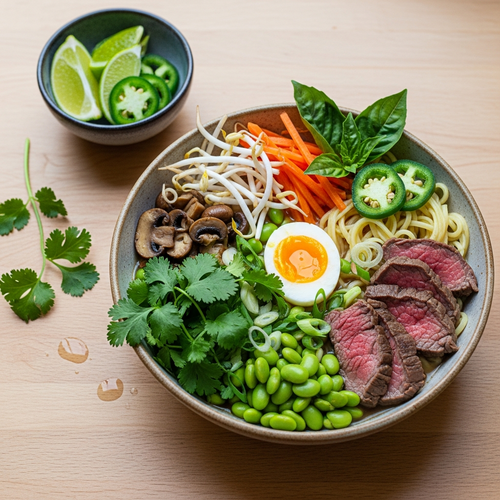
Description: A rich, aromatic, and deeply satisfying bowl of pho designed for fat loss. This recipe uses smart shortcuts to build authentic flavor in under an hour and swaps traditional noodles for a high-protein, high-fiber alternative to keep you full for hours.
Prep Time: 15 minutes | Cook Time: 35 minutes
Servings: 4
Macros per Serving | Calories: 455 | Protein: 42g | Fat: 15g | Carbohydrates: 20g
Ingredients
- For the Broth: 8 cups low-sodium beef/chicken broth, 1 large yellow onion, 4-inch piece of ginger, 2 whole star anise, 1 cinnamon stick, 4 whole cloves, 1 tbsp coriander seeds, 2 tbsp fish sauce, 1 tbsp soy sauce.
- For the Protein: 1 lb beef eye of round or chicken breast, trimmed of fat. 4 large eggs (optional).
- Noodles & Vegetables: 1 package (7-8 oz) edamame or black bean fettuccine, 2 cups bean sprouts, 1 cup sliced mushrooms, 1 cup shredded carrots, 4 green onions.
- For Garnish: Fresh cilantro, Thai basil, lime wedges, sliced jalapeño.
Instructions
- Turn on your broiler. Char the onion and ginger on a baking sheet for 7-10 minutes until blackened in spots.
- Toast the dry spices (star anise, cinnamon, cloves, coriander) in a large stockpot over medium heat for 1-2 minutes until fragrant.
- Add charred onion, ginger, broth, fish sauce, and soy sauce to the pot. Bring to a boil, then reduce heat and simmer, covered, for at least 30 minutes.
- While broth simmers, freeze meat for 15-20 minutes, then slice paper-thin. Cook noodles and eggs, and prep all vegetables and garnishes.
- Strain the simmered broth through a fine-mesh sieve into a clean pot. Discard the solids.
- Divide cooked noodles and raw sliced meat among four large bowls.
- Bring the strained broth back to a rolling boil. Ladle the boiling broth over the meat and noodles to cook the meat instantly.
- Top with soft-boiled egg, fresh vegetables, and herbs. Serve immediately with lime and jalapeño.
Notes
The key to tender meat is slicing it as thinly as possible and ensuring the broth is at a full, rolling boil when you pour it over. For best results, store all components separately in the fridge and reassemble when ready to eat.
FAQs About Pho For Weight Loss
Here are some straightforward answers to the most common questions I receive about this pho recipe.
Can you really eat pho and lose weight?
Yes, you absolutely can eat pho and lose weight, but the details matter. If you are regularly eating a giant bowl of traditional, restaurant-style pho, it could be challenging. Those versions are often made with fatty cuts of meat like brisket, a very large portion of refined rice noodles, and can be extremely high in sodium, which causes water retention and bloating. While delicious, they can easily push you over your daily calorie targets.
This recipe, however, is specifically engineered for fat loss. We make three critical changes: we use lean protein, we control the broth to keep sodium low, and we swap carb-heavy rice noodles for high-protein, high-fiber edamame noodles. This macronutrient shift is a game-changer. The high protein and fiber keep you incredibly full and satisfied on fewer calories, which is the fundamental principle of successful fat loss. You get all the comforting, savory flavor without the calorie bomb, making it a sustainable meal you can enjoy consistently while still being in a calorie deficit.
Is this high-protein pho recipe authentic?
That is a fair question, and the honest answer is no, this is not a traditionally authentic pho recipe. I would describe it as an authentic-tasting, practical adaptation. True authentic pho is a labor of love. It involves charring and simmering beef bones, oxtail, and other bits for many hours, sometimes even days, to develop a deep, rich, gelatinous broth. It is a beautiful process, but it is not practical for a busy single dad or anyone who needs a healthy meal on the table in about an hour.
My approach is to capture the essence and the key flavor profile of pho in a way that fits a busy lifestyle and fitness goals. We use hacks like broiling the onion and ginger and toasting the spices to create a sense of depth and complexity quickly. The final result tastes remarkably similar to what you would get in a restaurant, but it is leaner, higher in protein, and infinitely more accessible for a weeknight. We are aiming for 90% of the flavor for 20% of the time and calories.
What if I don’t have all the pho spices?
This is a common hurdle that stops people from trying new recipes, especially those of us with ADHD who can get overwhelmed by long ingredient lists. Do not let it stop you. While having all the spices creates the most classic flavor profile, you can still make a delicious and satisfying soup without all of them. The two most critical spices for that signature pho aroma are star anise and the cinnamon stick. They provide the warm, sweet, licorice-like notes that are non-negotiable.
If you do not have whole cloves or coriander seeds, go ahead and make it anyway. The broth will still be fantastic. You could also look for a pre-made “pho spice blend” packet at an Asian grocery store or online. These convenient packets contain all the necessary whole spices. The most important thing is to avoid the “all or nothing” thinking that can lead to ordering takeout. Work with what you have. A slightly less complex but still delicious homemade soup is a huge win.
Are edamame noodles healthy for pho?
Yes, for the goals of fat loss and building a fit lifestyle, edamame noodles are an exceptionally healthy choice for this pho recipe. The term “healthy” is always relative to your specific goals. If your primary goal is to increase your protein and fiber intake while managing calories, then these noodles are a clear winner over traditional rice noodles. A single serving of edamame noodles can pack over 20 grams of protein and a significant amount of dietary fiber.
This protein and fiber combination is powerful for hunger management. It slows digestion, helps stabilize blood sugar, and keeps you feeling full for much longer than the simple carbohydrates in rice noodles would. This helps you stick to your calorie deficit without feeling deprived or hungry. In terms of texture, they are a bit firmer and have more of a bite than soft rice noodles, but they hold up beautifully in the hot broth without turning to mush. They are an amazing tool for redesigning a classic comfort food to better serve your fitness goals.
How can I make this pho recipe even faster on a weeknight?
There are definitely days when even an hour feels like too much time. For those low-energy, low-executive-function nights, you can absolutely create a “super-speed” version of this pho. The key is to lean on smart, store-bought shortcuts. The biggest time-saver is the broth. Instead of making your own, use a high-quality pre-made bone broth or pho broth from the store. Brands like Kettle & Fire or Roli Roti make excellent bases. You can also find pho broth concentrate pastes that you just mix with hot water.
For protein, use something that requires zero prep. Pre-cooked shrimp, leftover shredded chicken, or cubed firm tofu are all great options. Just drop them in the bowl. For vegetables, buy pre-sliced mushrooms, pre-shredded carrots, and pre-washed spinach. With these shortcuts, the entire meal becomes an assembly job. You just need to boil the broth, cook the noodles (which usually only take 4-5 minutes), and put it all in a bowl. This lightning-fast version can be ready in 15 minutes and is a million times better for your goals than what you would get from a drive-thru.
Try These High-Protein Recipes Next
If you enjoyed this simple approach to making a classic dish macro-friendly, here are a few other recipes you should try.
- High-Protein Beef and Broccoli: A takeout favorite made healthier, faster, and with way more protein to support your fitness goals.
- 10-Minute Egg Drop Soup: The ultimate quick comfort meal that is surprisingly high in protein, incredibly satisfying, and perfect for a busy night.
- Ground Beef Ramen: Another amazing noodle soup upgrade that transforms a simple package of ramen into a complete, balanced, and macro-friendly meal.
Give them a try and let me know what you think!