
For a long time, cooking felt like my enemy. Especially when I started my fat loss journey, before I was medicated for ADHD. The idea of a complicated recipe was enough to make me order a pizza. I needed meals that were brutally simple but still tasted amazing. That’s where this baked salmon recipe was born.
It started as just salmon with lemon and whatever dried herbs I had. It was good, and more importantly, it was easy. It became a staple that helped me lose the first 65 pounds. It was a meal that made me feel like I was eating something special without the executive dysfunction tax of a dozen steps and a mountain of dishes.
After starting medication and refining my approach, I tweaked it. I wanted to make it even more powerful for fighting cravings and building a fit lifestyle. The big change was adding the high-protein Greek yogurt sauce. It took this simple dish and turned it into a powerhouse for hunger management.
This is the version I make today. It’s the result of years of figuring out what works for my brain and my body. It’s simple, delicious, and built to support your fat loss goals without demanding perfection.
Skip to My Flexibe Diet Recipe!
Why Baked Salmon Is Great For Fat Loss
When it comes to fat loss, food is about 75 percent of the battle. Workouts are important, but you can’t out-train a bad diet. This baked salmon recipe is designed to make that battle easier to win, especially for the ADHD brain.
First, it puts protein front and center. A six-ounce salmon fillet packs a serious protein punch. Protein is crucial for building and maintaining muscle while you’re losing fat. More muscle means a higher metabolism. Protein also takes longer to digest, which is key for hunger management.
That leads to the second point: this meal crushes cravings. The combination of high protein from the salmon and the Greek yogurt sauce, plus healthy omega-3 fatty acids from the fish, keeps you feeling full and satisfied for hours. When you’re not constantly battling hunger, making good food choices becomes infinitely easier. This helps prevent the “what the hell” effect, where one small slip-up leads to a full-blown spiral.
Finally, it’s all about convenience. This recipe takes about 15 minutes to cook and uses one pan. The cleanup is minimal, especially with parchment paper. On days when motivation is low and your brain feels like a browser with 100 tabs open, you can still pull this off. Consistency beats intensity every time, and having a go-to, easy, and delicious meal like this is what builds consistency over the long haul.
Ingredients You’ll Need for Baked Salmon
We keep things simple and effective here. No searching for a dozen obscure ingredients. Everything in this baked salmon recipe is easy to find and serves a clear purpose: maximum flavor and nutrition with minimum fuss.
The star of the show is, of course, the salmon. Don’t get hung up on fresh versus frozen. I often use frozen fillets from Costco because they are high quality, affordable, and I can stock up. Just make sure to thaw them properly. Wild-caught has a slightly better fatty acid profile, but farmed salmon is still a fantastic source of protein and omega-3s. The most important thing is eating it consistently, so buy what fits your budget.
The secret weapon that elevates this dish is the high-protein dill sauce. Instead of a heavy, mayo-based sauce, we use plain Greek yogurt. This simple swap dramatically increases the protein content, helping you stay full longer, while keeping the calories in check. It’s a perfect example of working smarter, not harder.
- 4 (6-ounce) salmon fillets, skinless
- 2 tablespoons fresh lemon juice
- 1 tablespoon olive oil
- 2 cloves garlic, minced
- 1 teaspoon dried Italian herb seasoning
- 1/4 teaspoon black pepper
- 1/2 teaspoon kosher salt
- 1 medium lemon, thinly sliced
- 2 tablespoons chopped fresh parsley, for garnish (optional)
- 1 cup plain Greek yogurt
- 1 tablespoon chopped fresh dill
- 1 small cucumber, grated and squeezed of excess water
A quick ADHD-friendly tip: buy pre-minced garlic in a jar. It saves you the small but sometimes frustrating step of peeling and chopping, making it that much easier to get started.
How To Make Baked Salmon (Step-By-Step)
Let’s get this done. The beauty of this process is its simplicity. There are no complicated techniques, just straightforward steps that lead to a perfect result every single time. We’re aiming for a delicious, healthy meal, not a culinary masterpiece that leaves your kitchen a wreck.
Step 1: Prep Your Oven and Pan
First things first, get that oven preheating to 400°F (200°C). Doing this right away is a classic task-initiation trick. While it heats, line a baking sheet with parchment paper. This is a non-negotiable step for me. It means cleanup is as simple as throwing the paper away. No soaking, no scrubbing. This one small hack removes a huge barrier to cooking on low-energy days.
Step 2: Mix Your Marinade
Grab a small bowl. In it, whisk together the fresh lemon juice, olive oil, minced garlic, Italian herb seasoning, salt, and pepper. It takes less than 60 seconds. This simple mixture is going to create a ton of flavor and help keep the salmon incredibly moist while it bakes.
Step 3: Season the Salmon
Place your salmon fillets on the parchment-lined baking sheet. Leave a little space between them so they cook evenly. Now, take that marinade you just mixed and brush it all over the salmon. Make sure to cover the tops and the sides. If you don’t have a brush, just use a spoon or your clean fingers. The goal is to get that flavor everywhere.
Step 4: Top and Bake
Top each fillet with a few of the thin lemon slices. This not only looks nice but also adds extra moisture and a bright, zesty flavor as it cooks. Now, slide the baking sheet into your preheated oven. Bake for 12 to 15 minutes. The exact time will depend on the thickness of your fillets. You’ll know it’s done when it flakes easily with a fork. For a little extra color, you can switch the oven to broil for the last minute or two, but watch it closely so it doesn’t burn.
Step 5: Make the High-Protein Dill Sauce
While the salmon is in the oven, you have the perfect amount of time to whip up the sauce. This is a great way to use that “in-between” time. In another small bowl, combine the Greek yogurt, chopped fresh dill, and the grated cucumber. Make sure you’ve squeezed out as much water from the cucumber as possible so your sauce isn’t runny. Stir it all together, and you’re done. This sauce adds a cool, refreshing contrast and another blast of protein.
How To Serve Baked Salmon (ADHD-Friendly)
Getting a healthy meal on the plate is only half the battle. With ADHD, decision fatigue is real, especially at the end of a long day. The question “What should I have with this?” can be surprisingly draining. That’s why I rely on meal templates instead of complex side dish recipes.
The goal is to create a balanced, satisfying plate with zero extra mental effort. You’ve already cooked the protein, so the rest should be as close to “grab and go” as possible. Here are my favorite, brutally practical ways to serve this baked salmon.
- The 90-Second Bowl: This is my default. I take one baked salmon fillet and pair it with a microwavable pouch of brown rice or quinoa and a steam-in-bag of vegetables like broccoli or green beans. The entire “side dish” portion is ready in under two minutes in the microwave. It’s a perfectly balanced meal with protein, smart carbs, and fiber, and it requires zero extra cooking.
- The Power Salad: This is perfect for lunch or a lighter dinner. Flake a salmon fillet over a big bowl of pre-washed mixed greens. Add some cherry tomatoes, maybe some sliced bell peppers if you have them, and then use the high-protein dill sauce as your dressing. It’s incredibly filling and delicious.
- Roasted Veggie Combo: If you have a little more energy, make this a true one-pan meal. Chop up some asparagus or broccoli florets, toss them in a little olive oil, salt, and pepper, and add them to the baking sheet for the last 10-12 minutes of the salmon’s cooking time. Everything finishes at once.
The key is to remove as many steps and decisions as possible. Stocking your freezer and pantry with these simple, healthy staples (steamable veggies, microwavable grains) is one of the best systems you can create for consistent, healthy eating with ADHD.
How To Store, Reheat, and Reuse Baked Salmon
Leftovers are a gift to your future self, but only if they’re easy to deal with. Storing and reheating this baked salmon correctly makes a huge difference in whether it gets eaten or forgotten in the back of the fridge. Let’s make sure your effort doesn’t go to waste.
First, storage. As soon as the salmon has cooled to room temperature, place it in an airtight container. It will keep in the refrigerator for up to three days. I like to store the dill sauce in a separate small container to keep everything fresh. This also makes it easier to use the components for different meals later on.
When it comes to reheating, I strongly advise against using the microwave. It can easily overcook the salmon, leaving it rubbery and dry, and it tends to make the whole kitchen smell like fish. Instead, here are a few better options:
- Oven or Toaster Oven: This is the best method. Place the salmon on a small baking sheet, maybe with a splash of water or a squeeze of lemon to add moisture, and heat it at 275°F (135°C) for about 10-15 minutes, or until warmed through. Low and slow is the key.
- Skillet: You can also gently reheat it in a non-stick skillet over medium-low heat. Add a tablespoon of water or a little olive oil to the pan, cover it, and let it steam for a few minutes until warm.
Honestly, my favorite way to use leftover salmon is to not reheat it at all. Cold, flaked salmon is incredible. You can toss it into a salad, mix it with the Greek yogurt dill sauce to make a quick salmon salad for a sandwich or wrap, or stir it into some pasta with a little olive oil and garlic. This approach requires zero extra cooking and creates a brand new, delicious meal.
Easy Swaps & Variations for Baked Salmon
The best recipes are flexible. Life happens. You might not have fresh dill, or maybe you want to use a different kind of fish. This baked salmon recipe is a template, not a strict rulebook. Here are some simple, ADHD-friendly swaps and variations to make it work for you, no matter what’s in your pantry.
Don’t be afraid to experiment with the seasonings. The Italian herb blend is a great all-purpose choice, but you can create different flavor profiles easily. A little smoked paprika and cumin can give it a smoky flavor. Chili powder and a squeeze of lime instead of lemon can create a zesty, southwestern vibe. Use what you have and what you enjoy.
You can also turn this into an all-in-one sheet pan dinner. This is a fantastic strategy for minimizing dishes and cooking time. By adding quick-cooking vegetables to the pan, you get your main and your side dish cooked in the same pan, at the same time.
- Herb Variations: No Italian seasoning? No problem. Use a teaspoon of dried dill, oregano, or thyme. Even just simple garlic powder, salt, and pepper is delicious. If you’re using fresh herbs in the sauce, feel free to swap the dill for fresh parsley, chives, or even basil.
- Citrus Swap: Fresh lime juice works just as well as lemon juice and provides a slightly different, delicious tang. In a pinch, a splash of orange juice can also work, adding a hint of sweetness.
- Add Vegetables: Make it a complete meal by adding vegetables to the baking sheet. Asparagus, sliced zucchini, bell peppers, and broccoli florets are all great options. Toss them with a little olive oil and seasoning and add them to the pan for the last 10-12 minutes of cooking.
- Sauce Adjustments: If you’re not a fan of cucumber, you can leave it out of the sauce. For a different flavor, try adding a little Dijon mustard or a pinch of cayenne pepper to the Greek yogurt base.
Easy Baked Salmon with High-Protein Dill Sauce
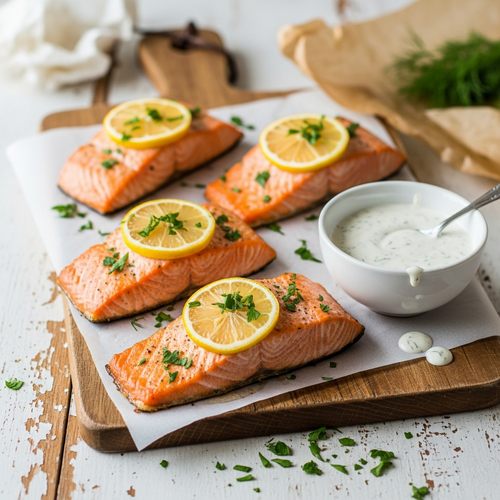
Description: An incredibly simple, fast, and delicious baked salmon recipe designed for fat loss and busy lifestyles. The high-protein Greek yogurt dill sauce keeps you full for hours, making it a perfect weeknight meal.
Prep Time: 10 minutes | Cook Time: 15 minutes
Servings: 4
Macros per Serving | Calories: 485 | Protein: 45g | Fat: 29g | Carbohydrates: 8g
Ingredients
- 4 (6-ounce) salmon fillets, skinless
- 2 tablespoons fresh lemon juice
- 1 tablespoon olive oil
- 2 cloves garlic, minced
- 1 teaspoon dried Italian herb seasoning
- 1/4 teaspoon black pepper
- 1/2 teaspoon kosher salt
- 1 medium lemon, thinly sliced
- 2 tablespoons chopped fresh parsley, for garnish (optional)
- 1 cup plain Greek yogurt
- 1 tablespoon chopped fresh dill
- 1 small cucumber, grated and squeezed of excess water
Instructions
- Preheat oven to 400°F (200°C) and line a baking sheet with parchment paper.
- In a small bowl, whisk together lemon juice, olive oil, minced garlic, Italian seasoning, salt, and pepper.
- Place salmon on the prepared baking sheet and brush the mixture over each fillet. Top with lemon slices.
- Bake for 12-15 minutes, until the salmon flakes easily with a fork.
- While salmon bakes, combine Greek yogurt, dill, and grated cucumber in a small bowl to make the sauce.
- Serve the baked salmon warm, garnished with parsley and topped with the dill sauce.
Notes
Using parchment paper is highly recommended for easy cleanup. Frozen salmon works perfectly; just ensure it’s fully thawed and patted dry before seasoning.
FAQs About Baked Salmon For Weight Loss
Here are some straightforward answers to the most common questions I receive about this baked salmon recipe.
How does this baked salmon recipe actually help with weight loss?
This recipe is effective for weight loss because it’s built on the core principles of hunger management and nutrient density. The main driver is the high protein content from both the salmon and the Greek yogurt sauce. Protein is the most satiating macronutrient, meaning it keeps you feeling full and satisfied longer than carbs or fats. This drastically reduces cravings and mindless snacking between meals, making it easier to maintain a calorie deficit without feeling constantly deprived.
Beyond just protein, salmon is rich in omega-3 fatty acids. These healthy fats are not only great for brain health, which is a big plus for us, but they also contribute to satiety and can help reduce inflammation. A meal that combines high protein and healthy fats like this one helps stabilize your blood sugar levels. This prevents the sharp spikes and crashes that often lead to energy slumps and intense cravings for sugary or high-carb foods. It’s a sustainable approach that works with your body’s natural hunger signals, not against them.
Can I use frozen salmon for this baked salmon recipe?
Absolutely. I use frozen salmon for this recipe all the time. It’s a fantastic, budget-friendly option that allows you to keep a healthy protein source on hand without worrying about it going bad. Modern flash-freezing techniques mean that the quality, taste, and nutritional value of frozen fish are excellent, often just as good as fresh.
The key to using frozen salmon is to thaw it properly. The best method is to transfer it from the freezer to the refrigerator the night before you plan to cook it. This slow, gentle thawing keeps the texture perfect. If you’re in a hurry, you can place the vacuum-sealed fillets in a bowl of cold water for about 30-60 minutes. Before seasoning, it’s very important to pat the thawed fillets completely dry with a paper towel. This removes excess moisture and helps the olive oil and seasonings adhere properly, ensuring you get a great result instead of steamed fish.
What are the best side dishes to serve with baked salmon for a balanced meal?
To create a truly balanced meal that supports fat loss, you want to pair this high-protein salmon with a smart carbohydrate and plenty of fiber from vegetables. This combination provides long-lasting energy, keeps you full, and delivers a wide range of micronutrients. My go-to ADHD-friendly method is to use convenient, pre-portioned options to minimize extra cooking and decision-making.
For a carbohydrate source, think about options like quinoa, brown rice, or a baked sweet potato. Microwavable pouches of grains are a lifesaver here. For vegetables, anything green is a great choice. Roasted asparagus or broccoli are classics that you can even cook on the same sheet pan. A large side salad with a simple vinaigrette is another excellent way to add volume and fiber to your meal for very few calories. The goal is to build a plate that is roughly half vegetables, a quarter protein (the salmon), and a quarter smart carbs.
My baked salmon always comes out dry. How can I prevent that?
Dry salmon is almost always the result of one thing: overcooking. Salmon is a lean fish that cooks very quickly, and the line between perfectly cooked and dry is thin. The most important tip is to start checking for doneness on the early side of the recommended cooking time. For most fillets, I start checking at the 12-minute mark. The fish is done when it changes from translucent to opaque and flakes easily with a fork when you press gently on it. If you see a lot of white stuff (called albumin) seeping out, it’s a sign that it’s getting overcooked.
A few other things can help ensure a moist result. First, make sure you’re using enough healthy fat. The tablespoon of olive oil in this recipe helps to lock in moisture. Second, the lemon slices placed on top not only add flavor but also create a little steam that helps keep the fish tender. Finally, don’t use an extremely high oven temperature. A moderate temperature like 400°F (200°C) is perfect for cooking it through without drying out the exterior too quickly.
Is the skin on baked salmon healthy to eat?
Yes, salmon skin is not only safe to eat, but it’s also very healthy. In fact, the skin contains a high concentration of the same beneficial omega-3 fatty acids found in the fillet. It’s also a good source of collagen. This recipe calls for skinless fillets mainly for simplicity and because some people prefer the texture without it. However, if you enjoy crispy fish skin, you should absolutely cook it with the skin on.
If you choose to use skin-on salmon, the preparation is nearly the same. Just make sure the baking sheet is well-oiled or lined with parchment paper, and place the salmon skin-side down. This will allow the skin to get nice and crispy in the oven, almost like a potato chip. When you cook it this way, you get an amazing texture contrast between the tender flesh and the crunchy skin. It adds another delicious dimension to the final dish.
Try These High-Protein Recipes Next
If you enjoyed this simple and effective approach to fat loss meals, here are a few other recipes you should try.
- The Ultimate High-Protein Salmon Bowl: This recipe takes the idea of a balanced meal and turns it into a simple, prep-friendly bowl with a delicious sriracha-based sauce.
- One-Pan Lemon Herb Chicken and Veggies: For another incredibly easy sheet pan meal, this chicken and veggie recipe delivers amazing flavor with minimal cleanup.
- Sheet Pan Lemon Dijon Salmon: A great variation on sheet pan salmon that uses a tangy Dijon mustard sauce to create a completely different but equally delicious flavor profile.
These are all designed with the same principles in mind: high protein, great flavor, and simple steps that work for a busy life.