
I discovered ceviche on a beach vacation years before I ever thought about macros or fat loss. It was just this incredibly fresh, vibrant bowl of food that made me feel good. It was bright, tangy, and felt like sunshine in a bowl. I loved it instantly, but I always saw it as an appetizer, something you share with a big basket of tortilla chips before the “real” meal arrives.
When I started my fitness journey and lost 65 pounds, I had to rethink everything I ate. I needed meals that were high in protein, packed with flavor, and easy to make on days when my ADHD brain had zero motivation. The memory of that ceviche came back to me. It was already delicious and healthy, but I knew I could tweak it to make it a true fat-loss powerhouse.
This isn’t just a standard ceviche recipe. I’ve engineered it specifically for our goals. I added a secret ingredient to boost the protein and fiber, turning it from a light snack into a full, satisfying meal that crushes cravings and keeps you full for hours. It’s a no-cook recipe, which is a massive win for busy days. This is the meal that proves you don’t have to eat boring food to get fit.
Skip to My Flexibe Diet Recipe!
Why Ceviche Is Great For Fat Loss
When you’re focused on fat loss, every meal needs to work for you, not against you. This ceviche recipe is one of the most effective tools you can have in your arsenal, and it aligns perfectly with our core principles at ADHD FIT.
First and foremost, it’s a protein bomb. We’re using a pound and a half of lean seafood between the white fish and shrimp. Protein is the king of macros for fat loss. It keeps you feeling full and satisfied, which is your number one defense against cravings. It also helps preserve your muscle mass while you’re in a calorie deficit, ensuring you’re losing fat, not just weight.
This recipe is also a prime example of volume eating. We load it up with cucumber, bell peppers, and onions. These vegetables add a ton of bulk, fiber, and nutrients for very few calories. You get to eat a big, satisfying bowl of food that physically fills your stomach, sending signals to your brain that you’re full. This is a game-changer for managing hunger.
The best part for an ADHD brain? There’s no actual cooking involved. The citrus juice does the work. This massively lowers the barrier to entry on low-energy or low-motivation days. You just have to chop and mix. It feels less like a chore and more like a simple assembly project. This ceviche gives you a restaurant-quality meal that keeps you on track without the executive function drain of a complex, multi-step cooking process.
Ingredients You’ll Need for Ceviche
The beauty of this ceviche recipe is its simplicity and the freshness of its components. We’re combining lean proteins, crisp vegetables, and a bright citrus marinade. Each ingredient plays a specific role in creating a balanced, flavorful, and incredibly satisfying meal.
Our secret weapon here is the shelled edamame. This is not a traditional addition, but it’s my personal tweak to make this ceviche a complete nutritional powerhouse. The edamame adds a fantastic pop of texture, a boost of plant-based protein, and a healthy dose of fiber. This is what elevates the dish from a simple appetizer to a meal that will genuinely keep you full and kill cravings for hours.
For the seafood, quality is key. You want a firm white fish that will hold its shape after marinating in the citrus. I prefer cod or halibut, but sea bass or snapper are also excellent choices. Make sure it’s fresh or high-quality frozen fish from a source you trust. The same goes for the shrimp. And please, use fresh lime and lemon juice. The bottled stuff just doesn’t have the same bright flavor or the potency to “cook” the fish properly.
- 1 lb cod, halibut, or other firm white fish, cut into ½-inch cubes
- ½ lb shrimp, peeled, deveined, and chopped
- 1 cup shelled edamame, cooked
- 1 large cucumber, seeded and finely diced
- 1 red bell pepper, finely diced
- ½ medium red onion, finely diced
- 1 jalapeño, seeded and minced
- ¾ cup fresh lime juice (from 5-6 limes)
- ¼ cup fresh lemon juice (from 1-2 lemons)
- ½ cup chopped fresh cilantro
- 1 clove garlic, minced
- ½ teaspoon salt
- ¼ teaspoon black pepper
How To Make Ceviche (Step-By-Step)
Making this ceviche is more about assembly than cooking. We’ll let the acid do all the heavy lifting. Just follow these simple steps, and you’ll have a perfect bowl every time. The key is to work clean and have your ingredients prepped and ready to go.
Step 1: Marinate The Seafood
Find a non-reactive bowl, which means glass, ceramic, or stainless steel. Avoid aluminum or copper, as the acid can react with the metal and give your ceviche a metallic taste. Add your cubed fish and chopped shrimp to the bowl. Pour the fresh lime and lemon juice over the top, giving it a gentle stir to make sure every single piece of seafood is submerged. This is the “cooking” process, called denaturation.
Step 2: Refrigerate and “Cook”
Cover the bowl with plastic wrap or a lid and place it in the refrigerator. Let it marinate for at least 30 minutes. The seafood is ready when it’s no longer translucent and has turned opaque and firm, just like it’s been cooked with heat. You can test a piece of fish by cutting it in half to check the center. Don’t let it marinate for hours, or the texture can become tough and rubbery.
Step 3: Combine Your Vegetables
While the seafood is marinating, grab a separate, larger bowl. This is a perfect ADHD tip: use the “downtime” to get the next step done. Add all your chopped veggies: the cucumber, red bell pepper, red onion, jalapeño, and cooked edamame. Then, add the chopped cilantro and minced garlic. Give it all a good toss to combine.
Step 4: Drain The Marinade
Once your seafood is perfectly “cooked,” take it out of the fridge. We need to drain off some of that extra citrus juice. If you leave it all in, your final ceviche will be more like a soup. I like to drain about half of the liquid, leaving enough to create a light, flavorful dressing for the final dish.
Step 5: Combine Everything
Now it’s time to bring it all together. Add the marinated fish and shrimp, along with the remaining juice, to the large bowl with all the vegetables. This is where the magic happens.
Step 6: Season and Mix
Sprinkle the salt and pepper over the mixture. Use a rubber spatula or large spoon to gently fold everything together. You want to be gentle to avoid breaking up the delicate fish.
Step 7: Chill For Flavor
This step is optional but recommended. For the best flavor, cover the bowl and let the finished ceviche chill in the refrigerator for another 15 to 30 minutes. This gives all the individual flavors a chance to meld together into one cohesive, delicious dish.
Step 8: Serve and Enjoy
Serve your ceviche chilled. It’s fantastic on its own, scooped up with lettuce cups, or with a small, measured portion of your favorite tortilla chips. Enjoy the fresh, vibrant flavors you just created.
How To Serve Ceviche (ADHD-Friendly)
Serving this ceviche is all about keeping things simple, delicious, and aligned with a fat-loss lifestyle. For those of us with ADHD, the fewer steps and decisions required at mealtime, the better. We need options that reduce friction and prevent us from getting overwhelmed and ordering takeout.
The goal is to create a satisfying meal without derailing our progress. This ceviche is already a complete meal thanks to the added protein and fiber from the edamame, so you can absolutely just eat it out of a bowl with a fork. It’s filling, delicious, and requires zero extra prep.
Here are a few of my go-to, brutally practical serving methods:
- Lettuce Cups: This is my number one recommendation. Grab some large butter lettuce or romaine leaves and use them as crunchy, edible boats for your ceviche. You get the satisfying crunch you crave without the extra calories and processed carbs from chips. Plus, it’s one less dish to wash.
- On Top of a Salad: For an even bigger dose of veggies, pile a generous scoop of ceviche on top of a bed of mixed greens. You don’t even need dressing; the citrus marinade from the ceviche will dress the salad for you.
- With a Side of Avocado: Add a quarter or half of a sliced avocado on the side. The creamy texture and healthy fats are a perfect complement to the bright, acidic ceviche. It also adds to the satiety factor, keeping you full even longer.
- The “Flexible Eating” Chip Method: If you absolutely love ceviche with chips, you don’t have to forbid them. Instead of opening a giant family-sized bag (a dangerous trap for the ADHD brain), buy single-serving bags of tortilla chips. Have one small bag. This gives you that comfort food experience in a controlled, planned way. It’s a sustainable system, not a restrictive rule.
By keeping your serving style simple, you make it easier to stay consistent. Consistency is what drives results, not perfection.
How To Store, Reheat, and Reuse Ceviche
Let’s get one thing straight right away: you do not reheat ceviche. Ever. This is a chilled dish. The “cooking” is done by the acid, and applying heat would completely ruin the delicate texture of the fish, making it tough and rubbery. So, put that microwave out of your mind.
Proper storage is crucial for maintaining the quality and safety of your ceviche. Once you’ve made it, you should plan to eat it within a day or two. The acid continues to work on the seafood even in the fridge, and after a couple of days, the texture can start to degrade. The vegetables will also lose their crispness.
Here’s how to handle your leftovers for the best results:
- Storage: Transfer any leftover ceviche to an airtight glass container. Glass is best because it won’t react with the acid or absorb any fishy odors. Store it in the coldest part of your refrigerator, which is usually the back of the bottom shelf.
- Freshen It Up: On day two, your ceviche might have a little extra liquid. You can gently drain some of it off. To bring back some of the fresh vibrancy, you can add a small squeeze of fresh lime juice and a sprinkle of fresh cilantro right before serving.
- Creative Reuse: To avoid flavor fatigue, which is a real struggle for the ADHD brain, you can repurpose the leftovers. Instead of just eating another bowl of ceviche, try adding it to a low-carb tortilla with a slice of avocado for a quick and easy fish taco. Or, you can serve it over a small portion of quinoa or brown rice to create a more substantial ceviche bowl.
Thinking of leftovers as “ingredients” for the next day’s meal can make them feel new and exciting again. This is a great strategy to reduce food waste and stay on track with your eating plan without getting bored.
Easy Swaps & Variations for Ceviche
One of our core principles is that flexible eating always wins. A recipe should be a template, not a rigid set of rules. This ceviche recipe is incredibly adaptable, so feel free to make swaps based on what you have, what you like, or what your budget allows. Working with your brain, not against it, means being able to adjust on the fly.
Don’t let a missing ingredient spiral you into giving up and ordering pizza. There’s almost always a simple substitution you can make. This is about building a sustainable lifestyle, and that means being able to roll with the punches. Here are some easy ways to customize your ceviche.
- Switch Up The Protein: While cod and halibut are fantastic, you could also use snapper, sea bass, or even mahi-mahi. If you want to get a little fancier, bay scallops work wonderfully. To save time, you can use fully cooked, chilled shrimp and just toss them in at the end with the vegetables.
- Play With The Veggies: This recipe is a great way to clean out the crisper drawer. No red bell pepper? Use yellow or orange. Add some diced mango, pineapple, or even firm peach for a sweet and tangy twist that pairs beautifully with the lime and chili. For extra creaminess, gently fold in some diced avocado right before serving.
- Adjust The Heat: You are in complete control of the spice level. If you like it fiery, leave some of the seeds in the jalapeño or add a serrano pepper. If you prefer it mild, make sure you remove all the seeds and membranes, or you can skip the pepper altogether. A dash of your favorite hot sauce or a sprinkle of Tajín can also add a different dimension of flavor.
- Cost-Effective Swaps: Let’s be honest, halibut can be expensive. More budget-friendly fish like tilapia or rockfish can also work, though they are a bit more delicate, so be gentle when you mix. Using high-quality frozen fish and shrimp that you thaw yourself is almost always cheaper than buying fresh from the seafood counter and the quality is often just as good.
High-Protein Ceviche For Fat Loss
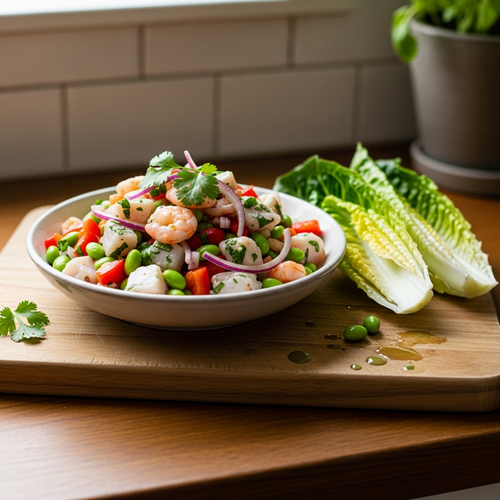
Description: A high-protein, no-cook ceviche recipe designed for fat loss. Loaded with fresh veggies and a surprise ingredient (edamame) that makes it a complete, satisfying meal perfect for a healthy and sustainable lifestyle.
Prep Time: 25 minutes | Cook Time: 0 minutes
Servings: 4
Macros per Serving | Calories: 305 | Protein: 32g | Fat: 8g | Carbohydrates: 26g
Ingredients
- 1 lb cod, halibut, or other firm white fish, cut into ½-inch cubes
- ½ lb shrimp, peeled, deveined, and chopped
- 1 cup shelled edamame, cooked
- 1 large cucumber, seeded and finely diced
- 1 red bell pepper, finely diced
- ½ medium red onion, finely diced
- 1 jalapeño, seeded and minced
- ¾ cup fresh lime juice
- ¼ cup fresh lemon juice
- ½ cup chopped fresh cilantro
- 1 clove garlic, minced
- ½ teaspoon salt
- ¼ teaspoon black pepper
Instructions
- In a non-reactive glass bowl, combine fish, shrimp, lime juice, and lemon juice. Ensure seafood is fully submerged.
- Cover and refrigerate for 30-45 minutes, or until the seafood is opaque.
- In a separate large bowl, combine cucumber, bell pepper, red onion, jalapeño, edamame, cilantro, and garlic.
- Drain about half the citrus marinade from the seafood.
- Add the seafood to the vegetable mixture and stir gently.
- Season with salt and pepper. For best flavor, chill for another 15 minutes before serving.
Notes
Ensure you use a non-reactive bowl (glass or ceramic) for marinating the seafood to prevent a metallic taste. The marinating time is key; check the fish after 30 minutes to ensure it doesn’t get tough.
FAQs About Ceviche For Weight Loss
Here are some straightforward answers to the most common questions I receive about this ceviche recipe.
Is ceviche actually healthy for weight loss?
Yes, absolutely. But the “how” matters. A restaurant ceviche served with a mountain of fried tortilla chips can easily turn into a calorie bomb. My version, however, is specifically designed for fat loss. The foundation is lean protein from fish and shrimp, which is critical for satiety and muscle retention. Protein helps you feel fuller for longer, which is your best defense against mindless snacking.
We then load it up with high-volume, low-calorie vegetables like cucumber and bell peppers. This adds tons of fiber and nutrients, filling up your plate and your stomach without adding a lot of calories. The addition of edamame boosts the protein and fiber even more, making it a truly complete meal. When you serve it in lettuce cups or on its own, you get a massive, flavorful, and satisfying meal that is perfectly aligned with your fat loss goals.
What is the best fish to use for this ceviche recipe?
The best fish for ceviche is a firm or semi-firm white fish with a mild flavor. The firm texture is important because it needs to hold its shape after being marinated in the acidic citrus juice. If the fish is too delicate, it can fall apart and turn mushy. My top choices are halibut, cod, snapper, and sea bass. They all have a clean taste and a texture that stands up well to the “cooking” process.
You generally want to avoid oily fish like salmon or mackerel, as their strong flavor can overpower the delicate balance of the dish. I would also steer clear of very flaky, delicate fish like tilapia or flounder unless you’re very careful, as they can break down too easily. And remember, high-quality frozen fish is a fantastic and often more affordable option. Just make sure to thaw it properly in the refrigerator before using.
Can I make this ceviche ahead of time for meal prep?
This is a great question, and the answer is a qualified yes. Ceviche is best enjoyed the day it’s made, but it can still be very good on day two. However, I wouldn’t push it past that. The texture of the fish will continue to change in the fridge, and it can become tougher. For meal prep, you have a couple of smart options that are perfect for an ADHD brain that benefits from breaking tasks down.
The best method is to prep the components separately. Go ahead and chop all your vegetables (cucumber, pepper, onion, jalapeño) and store them together in an airtight container. You can pre-squeeze your lime and lemon juice and store that separately. Keep your raw, cubed fish in its own container. Then, when you’re ready to eat, all you have to do is combine the fish and juice, let it marinate for 30 minutes, and then toss it with the pre-chopped veggies. This gives you fresh ceviche with only about 5 minutes of active work at mealtime.
How do I know when the fish in my ceviche is “cooked” and safe to eat?
This is a really important question. The acid in the lime and lemon juice “cooks” the fish through a chemical process called denaturation, which changes the structure of the proteins, similar to how heat does. You’ll know the fish is ready when it’s no longer translucent or raw-looking. It will turn an opaque, milky white color and become much firmer to the touch.
The easiest way to check is to take out the largest piece of fish from the marinade, cut it in half, and look at the center. It should be opaque all the way through. It’s crucial to use very fresh, high-quality, sushi-grade or sashimi-grade fish if possible, from a reputable fishmonger. This minimizes any potential risks associated with consuming raw seafood. If you’re concerned, you can also quickly blanch the cubed fish in boiling water for 30-60 seconds before marinating it.
Why did you add edamame to this ceviche recipe?
I added edamame to this ceviche for a very specific and practical reason: to make it a better tool for fat loss. Traditional ceviche is amazing, but it’s primarily protein and a few veggies. It’s often not quite filling enough on its own to be a standalone meal, which leads to eating a ton of chips with it. My goal at ADHD FIT is to build brutally practical recipes that solve a problem.
The edamame solves the satiety problem. It adds a significant amount of plant-based protein and, more importantly, dietary fiber. Fiber is incredibly important for hunger management as it slows down digestion and helps you feel full for hours. The edamame makes the ceviche a truly balanced meal with protein, healthy carbs, and fiber. It transforms it from a light appetizer into a legitimate lunch or dinner that will keep you on track with your goals without leaving you hungry an hour later.
Try These High-Protein Recipes Next
If you loved the fresh and vibrant flavors of this ceviche, here are a few other simple, flavor-packed recipes you should try next.
- 5-Minute High Protein Salsa: A ridiculously fast and easy salsa recipe that’s perfect for pairing with lean proteins or fresh veggies for a healthy snack.
- Authentic Chimichurri Recipe: This zesty, herb-packed sauce is a total game-changer and can elevate any simple grilled chicken, steak, or fish into a restaurant-quality meal.
- 30+ Delicious Cinco de Mayo Recipes: A fantastic roundup of recipes for when you’re craving bold, festive flavors that are both delicious and easy to make.
Building a collection of simple, go-to recipes is one of the best ways to stay consistent on your fitness journey.