
Chicken Alfredo was one of those meals I thought I had to give up forever. You know the kind. The super-rich, heavy, nap-inducing dish you get at a restaurant that feels amazing for ten minutes and then sits like a brick in your stomach for hours. It was a comfort food, but it was also a diet-wrecker. For years, I just wrote it off as incompatible with my fitness goals.
When I was deep in my 70-pound weight loss journey, I learned that complete restriction is a recipe for disaster, especially for an ADHD brain. The all-or-nothing thinking just leads to a binge-and-restrict spiral. I needed a way to enjoy the foods I loved without undoing all my hard work in the gym. I needed a system that worked with my brain, not against it.
That’s what led me to create this high-protein, surprisingly light, and incredibly satisfying chicken alfredo recipe. It took a lot of trial and error to get the sauce just right. I wanted that creamy, comforting texture without the cup of heavy cream and stick of butter. This version delivers all the flavor you crave while packing a serious protein punch to keep you full and kill cravings. It’s the perfect example of our philosophy here at ADHD FIT: flexible eating wins.
Skip to My Flexibe Diet Recipe!
Why Chicken Alfredo Is Great For Fat Loss
When you hear “Chicken Alfredo” and “fat loss” in the same sentence, it’s natural to be skeptical. Traditional recipes are calorie bombs, loaded with saturated fat from butter, heavy cream, and mountains of cheese. They spike your blood sugar, leave you feeling sluggish, and can easily blow a day’s worth of calories in one sitting. This recipe is fundamentally different.
We engineered this meal around our core principles. Protein comes first. With a full pound of chicken breast and the magic of Greek yogurt in the sauce, each serving is packed with protein. This is crucial for fat loss because protein is highly satiating. It keeps you feeling full for hours, which drastically reduces the chances of mindless snacking later. It also helps preserve muscle mass while you’re in a calorie deficit.
Next is hunger management. Beyond the protein, we use high-protein pasta and a generous amount of broccoli. Both are loaded with fiber. The combination of high protein and high fiber slows down digestion, stabilizes blood sugar, and prevents the energy crashes that often lead to cravings for junk food. This isn’t a meal that will have you raiding the pantry an hour later.
Finally, it’s sustainable. A fat loss plan that forces you to eat bland, boring food is doomed to fail. The ADHD brain craves novelty and satisfaction. By creating a genuinely delicious and comforting meal like this healthy chicken alfredo, you don’t feel deprived. You can incorporate it into your weekly rotation, enjoy it with your family, and stay consistent with your goals because you’re eating food you actually love.
Ingredients You’ll Need for Chicken Alfredo
The magic of this recipe is in its simplicity and the smart swaps we make. We’re not using a million fancy ingredients. We’re using everyday items to create something that feels indulgent but is secretly working for your goals. Here’s exactly what you’ll need.
The star of our creamy sauce is plain, non-fat Greek yogurt. This is the key ingredient that replaces heavy cream. It provides a tangy, rich base and a massive protein boost with a fraction of the fat and calories. Make sure you get plain, non-fat yogurt. The flavored ones have added sugars you don’t need.
For the pasta, we’re using a high-protein variety. Chickpea, lentil, or edamame pastas are fantastic choices. They have significantly more protein and fiber than traditional white pasta, which helps with satiety and keeps your macros in check. The texture is a bit firmer, which holds up beautifully in the creamy sauce. Quality matters here; some brands are better than others, so feel free to experiment to find your favorite.
- 1 lb boneless, skinless chicken breasts, cut into 1-inch cubes
- 1 tablespoon olive oil
- 2 cloves garlic, minced
- Salt and freshly ground black pepper to taste
- 8 ounces high-protein pasta (such as chickpea, lentil, or edamame fettuccine)
- 4 cups fresh broccoli florets
- 1 cup low-sodium chicken broth
- 1 cup plain, non-fat Greek yogurt
- 1/2 cup grated Parmesan cheese, plus extra for serving
- 1/4 cup skim milk
- 2 tablespoons cornstarch or all-purpose flour
- 1/2 teaspoon onion powder
- 1/4 teaspoon dried basil
- 1/4 teaspoon dried oregano
- Fresh parsley, chopped, for garnish (optional)
Using freshly grated Parmesan cheese will make a big difference in how well it melts into the sauce. The pre-shredded kind often has anti-caking agents that can make your sauce a bit grainy. It takes an extra minute to grate it yourself, but the result is worth it.
How To Make Chicken Alfredo (Step-By-Step)
Making this dish is straightforward, even on a low-motivation day. We’re going to multitask a little to save time, which is a great strategy for the ADHD brain. The key is to read through the steps once before you start, so you know what’s coming next and don’t feel overwhelmed.
Step 1: Cook the Pasta and Broccoli
Get a large pot of water boiling for your pasta. Once it’s boiling, add a generous pinch of salt and cook your high-protein pasta according to the package directions. An ADHD tip here: set a timer! We want it al dente, not mushy. In the last 2-3 minutes of cooking, toss your broccoli florets right into the pot with the pasta. This blanches them perfectly, so they’re tender-crisp and bright green, and it saves you from washing an extra pot. Once done, drain everything and set it aside.
Step 2: Cook the Chicken
While the pasta is cooking, get your chicken ready. Pat the chicken cubes dry with a paper towel, then toss them in a bowl with the salt, pepper, onion powder, basil, and oregano. Heat your olive oil in a large skillet over medium-high heat. A good non-stick skillet is your best friend here. Add the seasoned chicken and let it cook without moving it too much for the first few minutes to get a nice golden-brown sear. Cook for about 5-7 minutes total, until it’s cooked through. Add the minced garlic and cook for just one more minute until you can smell it. Then, remove the chicken and garlic from the pan and set them aside.
Step 3: Build the Creamy Sauce
Using the same skillet (don’t wash it, those browned bits are flavor), turn the heat down to medium. Pour in the chicken broth and skim milk and whisk to combine. In a separate small bowl, make a slurry by whisking the cornstarch with a few tablespoons of the cold liquid from the pan until it’s smooth. This prevents lumps. Whisk the slurry back into the skillet. Bring the sauce to a simmer, stirring constantly, and let it thicken for 3-5 minutes.
Step 4: Combine Everything
This is the most important part for a perfect sauce. Turn the heat down to low. Very low. Now, gradually whisk in the Greek yogurt and Parmesan cheese. Keep whisking until the cheese is melted and the sauce is smooth and creamy. Do not let the sauce boil after adding the yogurt, or it will curdle and separate. Once it’s smooth, taste it and add more salt and pepper if needed. Add the cooked pasta, broccoli, and chicken back into the skillet. Toss everything gently until it’s all coated in that glorious sauce and heated through.
How To Serve Chicken Alfredo (ADHD-Friendly)
Serving this healthy chicken alfredo is all about making it fit into a busy, goal-oriented lifestyle. We want satisfaction and structure, not guesswork. The best way to do this is to portion it out right away. This is a game-changer for anyone, but especially for those of us with ADHD who can struggle with portion control and decision fatigue.
Once the dish is finished, I recommend using a food scale to divide it into four equal servings. This might seem like a hassle, but it takes less than two minutes and provides certainty. You know exactly what macros and calories you’re getting, which removes the mental load of estimating later. This simple act builds consistency, which is far more important than intensity or perfection.
For an easy, balanced meal, here are a few ways to serve it up:
- As Is: This dish is a complete meal on its own. It has your protein, carbs, fats, and veggies all in one bowl. Garnish with a little fresh parsley and extra Parmesan for that restaurant feel.
- With a Side Salad: If you want to add more volume and nutrients without many extra calories, serve a smaller portion of the alfredo alongside a simple green salad with a light vinaigrette. This can make the meal feel even more substantial.
- Meal Prep Bowls: This is my go-to. I immediately portion the four servings into separate glass containers. That way, lunch for the next few days is already decided, prepped, and ready to grab. It eliminates the “what’s for lunch” spiral and ensures I have a healthy, high-protein meal on hand.
The goal is to make healthy eating the path of least resistance. By pre-portioning and having meals ready, you’re setting your future self up for success. When you’re hungry and your executive function is low, you don’t have to make a good decision, because you already made it for yourself.
How To Store, Reheat, and Reuse Chicken Alfredo
Leftovers are a cornerstone of a sustainable fitness lifestyle. Cooking once and eating multiple times saves time, money, and mental energy. This chicken alfredo recipe holds up beautifully, but there are a few tricks to storing and reheating it properly to maintain that creamy texture.
First, let the alfredo cool down for a bit before storing, but don’t leave it out for more than an hour or two. The best way to store it is in airtight containers. I prefer glass containers because they don’t stain and you can reheat directly in them. For my fellow ADHD folks, clear containers are a must. The “out of sight, out of mind” struggle is real, and if you can’t see the delicious food you prepped, you might forget it exists until it’s too late.
Here’s how to handle your leftovers for the best results:
- Storage: Divide the alfredo into single-serving airtight containers and store them in the refrigerator for up to 3-4 days. Labeling them with the date using a dry-erase marker can be a helpful visual cue.
- Reheating on the Stovetop: This is the best method for preserving the sauce’s texture. Place a serving in a small saucepan over low to medium-low heat. Add a splash of milk or chicken broth (about a tablespoon) to help loosen the sauce as it heats. Stir gently and frequently until it’s warmed through. This prevents the sauce from breaking or becoming oily.
- Reheating in the Microwave: This is the quickest method, but requires a little care. Place a serving in a microwave-safe bowl and cover it loosely. Reheat at 50% power in 60-second intervals, stirring in between each one. Adding that splash of milk or broth before you start microwaving is key here as well.
Don’t be afraid to get creative with any final leftovers. If you have a small amount left, you can mix it with scrambled eggs for a high-protein breakfast or stuff it into a bell pepper and bake it for a completely new meal. The goal is to make your food work for you.
Easy Swaps & Variations for Chicken Alfredo
Flexibility is the key to long-term success. This recipe is a fantastic template, but don’t be afraid to adapt it based on what you have on hand, your dietary needs, or just what you’re in the mood for. Working with your ADHD brain means having options and not getting derailed if one specific ingredient is missing. Here are some simple and effective swaps.
The protein, veggies, and even the sauce base can be easily changed. The core principles of high protein and added fiber remain the same. This approach ensures you always have a filling, macro-friendly meal you can turn to, even when your fridge looks a little bare.
Here are some of my favorite swaps and variations for this chicken alfredo:
- Protein Swaps: No chicken breasts? No problem. You can use cooked, shredded rotisserie chicken for a massive time-saver. Just stir it in at the end with the pasta. Cooked shrimp or even canned tuna (drained well) also work great for a different flavor profile. For a plant-based option, try firm tofu cubes or canned chickpeas.
- Vegetable Add-ins: Broccoli is classic, but almost any vegetable works. Sautéed mushrooms, spinach (wilted into the sauce at the end), roasted red peppers, or green peas are all excellent additions that boost the fiber and nutrient content. Using a bag of frozen mixed vegetables is a perfect freezer hack for low-energy days.
- Sauce Variations: If you’re not a fan of Greek yogurt, you can substitute it with blended low-fat cottage cheese for a similar protein boost and creamy texture. A few tablespoons of light cream cheese can also be whisked in to add extra richness. For a spicier kick, add a pinch of red pepper flakes to the sauce.
- Dietary Adjustments: For a gluten-free version, simply ensure you’re using a certified gluten-free high-protein pasta, like one made from chickpeas or lentils. To lower the carbs, you can swap the pasta for zucchini noodles (“zoodles”) or spaghetti squash. Just be sure to toss them in at the very end to avoid making them watery.
High-Protein Chicken Alfredo
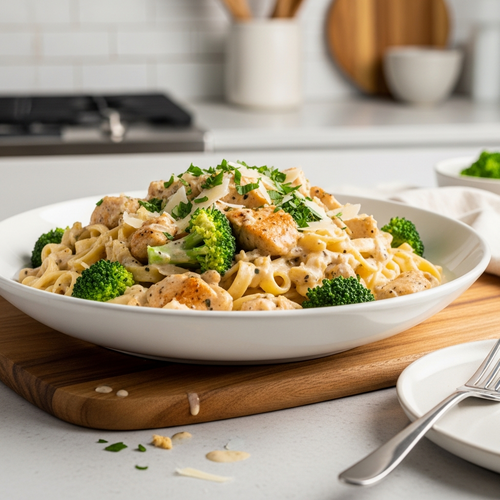
Description: A creamy, satisfying Chicken Alfredo that’s secretly packed with protein and fiber to support your fat loss goals. This macro-friendly version uses Greek yogurt for a light yet rich sauce that will kill your cravings and keep you full for hours.
Prep Time: 10 minutes | Cook Time: 20 minutes
Servings: 4
Macros per Serving | Calories: 545 | Protein: 58g | Fat: 14g | Carbohydrates: 46g
Ingredients
- 1 lb boneless, skinless chicken breasts, cut into 1-inch cubes
- 1 tablespoon olive oil
- 2 cloves garlic, minced
- Salt and freshly ground black pepper to taste
- 8 ounces high-protein pasta (such as chickpea or lentil)
- 4 cups fresh broccoli florets
- 1 cup low-sodium chicken broth
- 1 cup plain, non-fat Greek yogurt
- 1/2 cup grated Parmesan cheese, plus extra for serving
- 1/4 cup skim milk
- 2 tablespoons cornstarch
- 1/2 teaspoon onion powder
- 1/4 teaspoon dried basil
- 1/4 teaspoon dried oregano
- Fresh parsley, chopped, for garnish (optional)
Instructions
- Cook pasta according to package directions. In the last 3 minutes, add broccoli to the pot. Drain and set aside.
- While pasta cooks, season chicken with salt, pepper, and dried herbs. Heat olive oil in a large skillet over medium-high heat. Cook chicken until golden and cooked through, about 5-7 minutes. Add garlic for the last minute. Remove chicken and set aside.
- In the same skillet, whisk together chicken broth and milk. In a small bowl, make a slurry with the cornstarch and a few tablespoons of the broth mixture, then whisk it into the skillet.
- Simmer sauce for 3-5 minutes until it thickens, stirring constantly.
- Reduce heat to low. Whisk in Greek yogurt and Parmesan cheese until smooth. Do not boil.
- Add cooked pasta, broccoli, and chicken back to the skillet. Toss to combine and heat through. Serve immediately.
Notes
For the creamiest sauce, use freshly grated Parmesan cheese. Reheat leftovers gently on the stovetop with a splash of milk to restore the sauce’s consistency.
FAQs About Chicken Alfredo For Weight Loss
Here are some straightforward answers to the most common questions I receive about this chicken alfredo recipe.
Is this healthy chicken alfredo recipe actually good for weight loss?
Yes, absolutely. But it’s important to understand why. Traditional chicken alfredo is a weight loss nightmare because its calories come primarily from fat and refined carbs, with relatively low protein. That combination is easy to overeat and doesn’t keep you full for very long. This recipe flips that equation on its head. We slash the fat content by swapping heavy cream and butter for non-fat Greek yogurt, which also dramatically increases the protein.
Each serving of this chicken alfredo has nearly 60 grams of protein. That is a massive amount, and it’s the key to making this dish work for fat loss. Protein is the most satiating macronutrient, meaning it makes you feel fuller for longer than fats or carbs. It also has a higher thermic effect of food (TEF), meaning your body burns more calories just digesting it. By building the meal around protein, we control hunger and cravings, making it much easier to stick to your calorie goals for the rest of the day.
Can I make this chicken alfredo without Greek yogurt?
You can, but Greek yogurt is really the star player that makes this recipe so macro-friendly. Its combination of creaminess, tang, and high protein is hard to beat. However, if you have an aversion to it or simply don’t have it on hand, there are a couple of decent alternatives. The best substitute would be blended low-fat cottage cheese. Blend it until it’s completely smooth, and it will provide a similar protein boost and creamy texture, though it might be slightly less tangy.
Another option is to use a base of low-fat cream cheese (neufchâtel) blended with skim milk. This will give you a very rich and creamy sauce, but you will lose a significant amount of the protein that makes this dish so effective for hunger management. I would avoid using sour cream, as it’s much more likely to curdle when heated. Ultimately, I highly recommend sticking with the Greek yogurt if you can, as it was chosen specifically to maximize both flavor and fitness benefits.
What’s the best high-protein pasta for this chicken alfredo?
This is a great question, as the market for high-protein pasta has exploded in recent years. My personal favorites for this chicken alfredo recipe are those made from chickpeas or red lentils. Brands like Banza (chickpea) or Barilla Protein+ are widely available and have a great texture that’s very similar to traditional pasta. They hold up well to the creamy sauce without getting mushy and have a mild, slightly nutty flavor that complements the dish.
Edamame or black bean pastas are other options that are even higher in protein and lower in carbs, which can be great if you’re tracking macros closely. However, they tend to have a much more distinct flavor and a firmer, chewier texture that some people don’t enjoy as much in a creamy dish like alfredo. My advice is to experiment. Try a few different kinds and see what you like best. The goal is to find a sustainable option you’ll actually look forward to eating.
How can I make my chicken alfredo recipe even creamier?
If you’re looking for an even more decadent, creamy texture without adding a ton of fat or calories, there are a few simple tricks you can use. First, before you drain your pasta, reserve about a half-cup of the starchy pasta water. The starch in the water acts as a natural emulsifier and thickener. When you’re combining everything at the end, if the sauce feels a little too thick or isn’t coating the pasta enough, stir in a tablespoon or two of the pasta water until you reach your desired consistency.
Another trick is to add a small amount of a ‘binder’ fat. While we’ve removed most of the heavy cream and butter, adding just two or three tablespoons of low-fat cream cheese along with the Greek yogurt can make a huge difference. Whisk it in until it’s completely melted and integrated into the sauce. It will add a velvety smoothness and richness for a minimal caloric cost. Finally, make sure you’re using freshly grated Parmesan; its melting quality is far superior to pre-shredded cheese and contributes to a much smoother sauce.
Can I meal prep this chicken alfredo for the week?
Yes, this chicken alfredo recipe is fantastic for meal prep and is a core part of my own weekly rotation. It stores well in the fridge for up to four days. The key is to store and reheat it correctly to maintain the quality of the sauce. As mentioned earlier, portioning it into individual airtight containers right after cooking is the best approach. This makes it a simple grab-and-go meal for busy days.
The sauce will thicken considerably in the fridge as it cools. This is normal. When you reheat it, it’s essential to add a splash of liquid—a tablespoon of skim milk, water, or chicken broth works perfectly. The best way to reheat is gently in a saucepan on the stove, but the microwave works fine if you use a lower power setting and stir every minute. The broccoli will soften a bit upon reheating, but the flavor remains fantastic. It’s an incredibly convenient and delicious way to ensure you have a healthy, high-protein meal ready when hunger strikes.
Try These High-Protein Recipes Next
If you loved this flexible, high-protein approach to a classic comfort food, I have a few other recipes you should try.
- High-Protein Marry Me Chicken: A rich, creamy, and savory dish featuring a sun-dried tomato cream sauce that’s unbelievably delicious and easy to make.
- Healthy Chicken Parmesan: My take on another Italian-American classic, with crispy baked chicken and plenty of melted cheese, all designed to fit your macros.
- Grilled Chicken Tortellini Alfredo with Calabrian Chili: For when you want to kick things up a notch, this version adds a smoky, spicy twist to the classic alfredo.
These meals are all built on the same principles of being delicious, easy to make, and packed with the protein you need to reach your goals.