
Clam chowder has always been one of my ultimate comfort foods. Growing up, a trip to the coast meant a mandatory stop for a thick, creamy bowl served in a sourdough bread bowl. It was rich, satisfying, and something I associated with special occasions.
When I started my fat loss journey and lost the first 65 pounds, I assumed foods like clam chowder were off the table forever. They seemed like the definition of “unhealthy” with all the heavy cream, butter, and bacon. For a long time, I just avoided it, telling myself it didn’t fit into my new lifestyle.
But that’s not a sustainable way to live. Depriving yourself of foods you love eventually leads to a binge or just giving up entirely. The ADHD brain, especially, rebels against rigid, all-or-nothing rules. So I had to find a better way.
That’s what motivated me to develop this high-protein clam chowder recipe. I wanted to capture the soul of the dish, that creamy, savory, comforting flavor, but build it in a way that actually supports fat loss goals. This version is packed with protein to keep you full, uses a secret vegetable to create creaminess without the calories, and fits perfectly into a flexible, sustainable eating plan.
This is proof you don’t have to give up your favorites. You just have to work with your brain, not against it.
Skip to My Flexibe Diet Recipe!
Why Clam Chowder Is Great For Fat Loss
Let’s be direct. Traditional clam chowder is a calorie bomb. It’s usually loaded with heavy cream, butter, and fatty bacon, which sends the calorie and fat count through the roof without providing much lasting fullness. A single restaurant serving can easily pack over 500 calories, often with very little protein.
This recipe flips the script entirely. We’re building a clam chowder that is specifically designed to support your fat loss goals by prioritizing the things that matter: protein and satiety.
The first and most important swap is our base. Instead of heavy cream, we use pureed cauliflower. Before you click away, hear me out. When cooked and blended with broth and aromatics, cauliflower becomes incredibly smooth and creamy, perfectly mimicking the texture of a traditional chowder. It adds immense volume and fiber for very few calories, which helps you feel physically full.
Next, we boost the protein significantly. Clams are already a decent source of lean protein, but we take it further by swapping heavy cream for non-fat Greek yogurt. This maintains the creamy finish and tangy flavor profile while adding a huge protein punch. For an even bigger boost, you can add a scoop of unflavored protein powder, turning this comfort food into a muscle-supporting powerhouse.
We also make a smart swap with the bacon. By using turkey bacon, we get all that smoky, savory flavor and crispy texture but with a fraction of the saturated fat. It’s a small change that makes a big difference in the overall macros.
The result is a thick, hearty, and satisfying clam chowder that crushes cravings and keeps you full for hours. It’s a perfect example of how you can eat the foods you love while consistently making progress.
Ingredients You’ll Need for Clam Chowder
One of the best parts about this recipe is that the ingredient list is straightforward. There are no weird, hard-to-find items here. We’re using simple, whole-food ingredients to create incredible flavor and texture.
Here’s exactly what you’ll need to make this high-protein clam chowder:
- 4 slices turkey bacon, diced
- 1 large yellow onion, chopped
- 2 celery ribs, finely chopped
- 2 cloves garlic, minced
- 1 head of cauliflower, roughly chopped
- 4 cups low-sodium chicken or vegetable broth, divided
- 1 (8 ounce) bottle clam juice
- 1 pound red potatoes, cut into 1/2-inch cubes
- 1 teaspoon dried thyme
- 1/2 teaspoon black pepper
- 2 (10 ounce) cans minced clams, undrained
- 1 cup plain non-fat Greek yogurt
- 2 tablespoons fresh parsley, chopped
- Optional: 1-2 scoops unflavored protein powder
The undisputed star of this recipe transformation is the cauliflower. This is our secret weapon for creating a thick, creamy base without any cream. For the best result, use a fresh head and chop it yourself. However, for a fantastic ADHD-friendly shortcut, a bag of frozen cauliflower florets works just as well and saves you a ton of prep time. Don’t skip this ingredient; it’s essential to the recipe’s success.
For the canned clams, make sure you buy the ones packed in juice, not oil, and do not drain them. That clam juice is pure flavor and a critical part of the chowder’s taste. The bottled clam juice reinforces that authentic, briny, seaside flavor. It’s a non-negotiable ingredient.
When it comes to the Greek yogurt, choose a plain, non-fat variety. A thick yogurt like Fage or Chobani will yield the creamiest results. This adds a subtle tang that brightens the whole dish and packs in a ton of extra protein.
How To Make Clam Chowder (Step-By-Step)
This recipe comes together in one pot, which is a huge win for anyone who hates doing dishes. The steps are simple and designed to build layers of flavor. Don’t rush the process, and you’ll be rewarded with an amazing bowl of chowder.
Step 1: Crisp the Bacon
Start by placing a large pot or a Dutch oven over medium heat. A heavy-bottomed pot is great here because it distributes heat evenly and prevents scorching. Add your diced turkey bacon and cook, stirring occasionally, until it’s brown and crispy. Use a slotted spoon to transfer the bacon to a paper towel-lined plate, but leave the rendered fat in the pot. That fat is pure flavor and will be the base for our soup.
Step 2: Sauté the Vegetables
Add the chopped onion and celery to the pot with the bacon fat. Sauté for about 5 to 7 minutes, until the vegetables have softened and the onion is translucent. This step, often called “sweating” the aromatics, builds the foundational savory flavor of the chowder. Once they’re soft, stir in the minced garlic and cook for just one more minute until you can smell it. Be careful not to let the garlic burn.
Step 3: Cook and Blend the Cauliflower
Now for the magic trick. Add the chopped cauliflower and 2 cups of the chicken broth to the pot. Bring it to a simmer, then reduce the heat, cover the pot, and let it cook for 10-15 minutes. You want the cauliflower to be very tender, easily pierced with a fork. Carefully transfer this mixture to a blender. If you’re using a standard blender, make sure to vent the lid to let steam escape. Blend until it’s completely smooth and creamy. An immersion blender is a fantastic ADHD-friendly tool here, as you can blend it directly in the pot with less cleanup.
Step 4: Cook the Potatoes
Return the pureed cauliflower mixture to the pot. Stir in the remaining 2 cups of broth, the bottled clam juice, the diced potatoes, dried thyme, and black pepper. Bring the soup back to a simmer and cook for 15-20 minutes. The goal is to get the potatoes perfectly tender but not mushy. You should be able to easily poke a fork through a piece.
Step 5: Add the Clams
Once the potatoes are tender, stir in the two cans of minced clams along with all their juice. Cook for just another 2-3 minutes. The clams are already cooked, so you’re just heating them through. Overcooking them will make them tough and rubbery, so be careful here.
Step 6: Finish with Greek Yogurt
This step is crucial for a creamy, non-curdled soup. Remove the pot from the heat. In a separate bowl, whisk together the Greek yogurt and the optional unflavored protein powder until smooth. Now, you need to temper the yogurt. Slowly ladle about a half-cup of the hot soup into the yogurt bowl while whisking constantly. This gently raises the yogurt’s temperature. Pour the tempered yogurt mixture back into the pot and stir until everything is combined.
Step 7: Garnish and Serve
Stir in the fresh parsley and about half of the crispy turkey bacon you set aside earlier. Ladle the hot clam chowder into bowls and top with the remaining crispy bacon. Serve it immediately and enjoy.
How To Serve Clam Chowder (ADHD-Friendly)
One of the biggest hurdles with ADHD and nutrition is the friction involved in preparing and serving meals. That’s why this clam chowder recipe is designed to be a complete, one-bowl meal. You don’t need to fuss with complicated side dishes. It has your protein, your carbs from the potatoes, and your veggies from the cauliflower and aromatics all in one bowl.
My number one ADHD-friendly tip is to portion out the leftovers immediately. As soon as the soup has cooled down a bit, ladle single servings into microwave-safe containers. This is called “pre-deciding.” When lunch or dinner rolls around tomorrow and you have zero executive function, your healthy, delicious meal is already decided, portioned, and ready to be heated. This prevents the “what do I eat” spiral that can lead to ordering takeout.
When it comes to serving, keep it brutally simple. Here are a few easy ideas:
- Just the Chowder: Honestly, a big bowl of this clam chowder is satisfying enough on its own. The protein and fiber will keep you full for hours.
- Simple Crackers: If you love that classic crunch, serve it with a few oyster crackers or a piece of crusty sourdough. Just be mindful of the portion size if you’re tracking your macros. I like to count out a serving of crackers and put the box away.
- A Dash of Hot Sauce: For a little extra kick, a few dashes of your favorite hot sauce can brighten up the flavors beautifully.
- Fresh Herbs: A final sprinkle of fresh parsley or some chopped chives adds a touch of freshness and makes it feel a little more special with zero extra effort.
The key is to avoid creating more work for yourself. The goal of this meal is to nourish your body and satisfy a craving in the simplest way possible. Fight the urge to overcomplicate it. A warm bowl and a spoon are all you really need.
How To Store, Reheat, and Reuse Clam Chowder
Batch cooking is a superpower for anyone with ADHD. Cooking once and eating multiple times saves energy, reduces decision fatigue, and ensures you always have a healthy meal ready to go. This clam chowder recipe is perfect for batch prepping, but it’s important to store and reheat it properly to maintain its texture.
Here’s the best way to handle your leftovers:
- In the Refrigerator: Allow the chowder to cool down to room temperature before storing. Transfer it to airtight containers and it will keep well in the fridge for up to 4 days. In fact, like many soups, the flavors often meld together and taste even better on the second day.
- In the Freezer: Freezing dairy-based soups can be tricky, and this one is no exception. The Greek yogurt can separate and the potatoes can become a bit grainy upon reheating. It’s not ideal, but it is possible. For the best results, I recommend freezing the soup base *before* you add the Greek yogurt. When you’re ready to eat it, thaw the soup base in the fridge, reheat it gently on the stove, and then stir in the Greek yogurt at the end.
When you’re ready to enjoy your leftovers, reheating correctly is key to preserving that creamy texture. You want to avoid high heat, which can cause the Greek yogurt to curdle or separate.
- Stovetop Method (Recommended): This is the best way to reheat the chowder. Pour your desired portion into a small saucepan and warm it gently over medium-low heat. Stir frequently until it’s heated through. Do not let it boil.
- Microwave Method: If you’re in a hurry, the microwave works. Pour the chowder into a microwave-safe bowl and heat it at 50% power in 60-second intervals. Stir between each interval to ensure it heats evenly and to prevent the yogurt from separating.
If you get tired of eating it as a soup, you can even reuse thicker leftovers as a creamy sauce. Try pouring it over a piece of baked cod or flaky halibut for a completely new and delicious meal.
Easy Swaps & Variations for Clam Chowder
A flexible recipe is a recipe you’ll actually use. My philosophy is all about adapting to what you have on hand, what you can afford, and what your energy levels allow. This clam chowder is a fantastic template that you can easily modify to fit your needs.
Here are some simple swaps and variations that work great:
- For the Protein: If you don’t have turkey bacon, regular bacon works fine. Just consider draining off a bit more of the fat after cooking. For a different seafood flavor, you could add a handful of cooked shrimp or some flaky white fish like cod during the last few minutes of cooking.
- For the Vegetables: No red potatoes? Yukon Gold potatoes are a great substitute as they also hold their shape well. If you want to add even more veggies, finely chopped carrots can be added with the onions and celery, or you can stir in some frozen corn when you add the potatoes.
- For a Lower-Carb Version: To make this clam chowder keto-friendly or simply lower in carbs, you can omit the potatoes. To maintain some of that hearty texture, I recommend adding more cauliflower. Chop up an extra cup or two of cauliflower into small, bite-sized pieces and add them at the same stage you would have added the potatoes. They will become tender and provide a similar “bite.”
- For a Dairy-Free Version: To make this recipe dairy-free, simply leave out the Greek yogurt. The pureed cauliflower base is still remarkably creamy on its own. You can also try using a plain, unsweetened almond or cashew-based yogurt, but be sure to temper it carefully as they can be even more prone to separating. You would also need to use a plant-based protein powder or omit it.
- ADHD Time-Saver Hacks: On a low-spoons day, give yourself permission to use shortcuts. Buy a bag of pre-chopped cauliflower florets. Use the pre-diced onion and celery mix from the produce section. Use a tube of garlic paste instead of mincing fresh cloves. These small things can be the difference between a home-cooked meal and an expensive takeout order.
Remember, the goal is consistency, not perfection. Make the recipe work for you.
High-Protein Clam Chowder
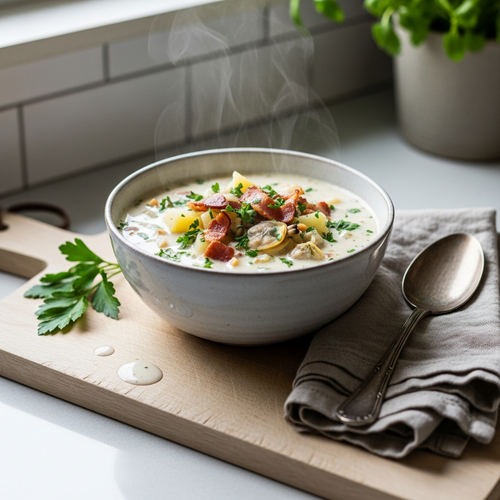
Description: A thick, creamy, and satisfying clam chowder made without any heavy cream. This recipe uses a secret ingredient to keep it low-calorie and packs it with protein to support fat loss goals and keep you full for hours.
Prep Time: 15 minutes | Cook Time: 40 minutes
Servings: 6
Macros per Serving | Calories: 315 | Protein: 28g | Fat: 8g | Carbohydrates: 32g
Ingredients
- 4 slices turkey bacon, diced
- 1 large yellow onion, chopped
- 2 celery ribs, finely chopped
- 2 cloves garlic, minced
- 1 head of cauliflower, roughly chopped
- 4 cups low-sodium chicken or vegetable broth, divided
- 1 (8 ounce) bottle clam juice
- 1 pound red potatoes, cut into 1/2-inch cubes
- 1 teaspoon dried thyme
- 1/2 teaspoon black pepper
- 2 (10 ounce) cans minced clams, undrained
- 1 cup plain non-fat Greek yogurt
- 2 tablespoons fresh parsley, chopped
- Optional: 1-2 scoops unflavored protein powder
Instructions
- In a large pot, cook diced turkey bacon over medium heat until crisp. Remove bacon, leaving fat in the pot.
- Sauté onion and celery in the fat until soft (5-7 min). Add garlic and cook for 1 minute.
- Add cauliflower and 2 cups of broth. Simmer, covered, for 10-15 minutes until cauliflower is very tender.
- Carefully blend the cauliflower mixture until completely smooth (use a blender or immersion blender).
- Return puree to the pot. Add remaining 2 cups broth, clam juice, potatoes, thyme, and pepper. Simmer for 15-20 minutes until potatoes are tender.
- Stir in undrained minced clams and cook for 2-3 minutes.
- Remove pot from heat. Temper the Greek yogurt by whisking in a little hot soup, then stir the mixture into the pot.
- Stir in fresh parsley and reserved bacon. Serve immediately.
Notes
To prevent the Greek yogurt from curdling, do not boil the soup after it has been added and be sure to temper it properly before stirring it in.
FAQs About Clam Chowder For Weight Loss
Here are some straightforward answers to the most common questions I receive about this clam chowder recipe.
Can I really eat clam chowder and still lose weight?
Yes, you absolutely can, but the key is that it has to be the right kind of clam chowder. A traditional New England clam chowder from a restaurant or can is typically made with loads of heavy cream, butter, and high-fat pork bacon. This makes it incredibly calorie-dense, meaning a small portion contains a large number of calories, and it often lacks the protein needed to keep you feeling full.
This recipe is fundamentally different. It was engineered from the ground up for fat loss. By replacing the high-fat cream with a high-volume, low-calorie base of pureed cauliflower and protein-rich Greek yogurt, we dramatically lower the calorie count while increasing the nutritional value. This version is high in protein, which is crucial for satiety (the feeling of fullness) and for preserving muscle mass while you’re in a calorie deficit. It allows you to eat a large, satisfying portion that crushes cravings without derailing your progress. It’s the perfect example of a sustainable approach: enjoying the foods you love in a way that aligns with your goals.
Is this clam chowder recipe healthy?
When we talk about “healthy,” we’re usually talking about nutrient density and how a food contributes to our overall well-being. By that measure, this clam chowder is exceptionally healthy. It is packed with lean protein from the clams and Greek yogurt, which is essential for bodily repair, muscle growth, and keeping you full.
It’s also loaded with vegetables. The cauliflower provides fiber, vitamins, and minerals, while the onion, celery, and garlic offer their own array of micronutrients and antioxidants. The potatoes provide complex carbohydrates, which are your body’s preferred source of energy. By using turkey bacon and low-sodium broth, we also keep the saturated fat and sodium levels in check compared to traditional versions. It’s a well-rounded, balanced meal in a single bowl, providing a great mix of macronutrients (protein, carbs, and fat) and micronutrients, making it far more than just “empty calories.”
Will the cauliflower make my clam chowder taste weird?
This is probably the most common hesitation people have, and it’s a valid question. The answer is a resounding no. When cauliflower is cooked until tender and blended with savory ingredients like chicken broth, onion, garlic, and the rendered bacon fat, its own flavor becomes incredibly mild and neutral. It loses that distinct cruciferous taste you might associate with raw or roasted cauliflower.
In this recipe, its primary role is to provide texture, not flavor. It creates a silky, velvety, and thick consistency that beautifully mimics the richness of heavy cream. The dominant flavors you’ll taste are the ones you expect from a great clam chowder: the briny clams, the smoky bacon, the savory herbs, and the aromatic vegetables. I’ve served this to many people who were shocked to learn it contained a whole head of cauliflower. They couldn’t taste it at all but loved how thick and creamy the soup was.
Can I make this clam chowder without the potatoes to make it low-carb?
Yes, this recipe is very easy to adapt for a low-carb or ketogenic diet. The potatoes add that classic chowder heartiness and provide a great source of satisfying carbohydrates, but they are not structurally essential to the soup. To make it low-carb, simply omit the potatoes entirely.
The soup will be slightly thinner without the starch from the potatoes, but it will still be delicious and creamy thanks to the cauliflower base. If you want to replace the “bite” and bulk that the potatoes provide, the best substitute is to use more cauliflower. Cut about 1 to 2 cups of additional cauliflower florets into small, potato-sized pieces. Add them to the soup at the same time you would have added the potatoes and simmer until they are tender. This will give you a similar texture and make the soup even more voluminous without adding significant carbs.
Why did my clam chowder curdle or separate?
Curdling is a common issue with dairy-based soups, and it almost always happens for one of two reasons when using Greek yogurt. The first and most likely culprit is “temperature shock.” If you add cold Greek yogurt directly into a pot of simmering hot soup, the proteins in the yogurt will seize up and clump together, resulting in a grainy or separated texture. This is why the “tempering” step in the instructions is so critical. By whisking a small amount of the hot liquid into the yogurt first, you gently raise its temperature, allowing it to incorporate smoothly into the rest of the soup without curdling.
The second reason is excessive heat. You should never, ever boil a soup after you have added the Greek yogurt. High heat will break the emulsion and cause the yogurt to separate. Once you stir the tempered yogurt in, you should only keep the soup on very low heat, just enough to keep it warm. This also applies to reheating. Always reheat the chowder gently on the stovetop over low heat or in the microwave at a reduced power setting.
Try These High-Protein Recipes Next
If you loved this simple and satisfying high-protein soup, you’re going to love these other ADHD-friendly recipes.
- High-Protein Potato Soup: A rich and creamy potato soup that uses similar techniques to pack in protein and flavor without excess calories.
- Healthy Zuppa Toscana (Olive Garden Copycat): My version of the classic Olive Garden soup, made healthier and higher in protein for a guilt-free indulgence.
- Easy Clam Chowder Recipe by This Gal Cooks: For a more traditional take on clam chowder that is still simple and straightforward to make, this is a fantastic recipe.
Give them a try and let me know what you think!