
For most of my life, crepes were a “cheat day” food. The kind of thing you only eat on vacation, drowned in Nutella and powdered sugar. When I started my fat loss journey, they were one of the first things I mentally blacklisted. They just seemed impossible to fit into a plan focused on protein and hunger management. It was either eat perfectly clean or go all out and feel sick afterward. That all-or-nothing thinking is a classic ADHD trap.
But I missed them. I wanted that delicate, thin pancake experience without the sugar crash and the feeling that I’d undone a week of hard work. That’s what motivated me to create these high-protein crepes. I needed a version that worked with my goals, not against them. A recipe that was simple enough to make on a low-energy morning but felt like a genuine treat.
After a lot of trial and error, I landed on this recipe. It’s packed with protein, low in carbs, and incredibly versatile. It satisfies the craving for something special while keeping me full for hours. These crepes have become a weekend staple in my house, a perfect example of how you can build the foods you love into a sustainable, fit lifestyle. You don’t have to give up anything. You just have to build a better version.
Skip to My Flexibe Diet Recipe!
Why These High-Protein Crepes Are Great For Fat Loss
When we talk about fat loss, the conversation always comes back to two things: managing hunger and hitting your protein goals. This recipe for crepes is specifically engineered to crush both of those things. Food is 75 percent of your results, and starting your day with a meal like this sets you up for success.
First, let’s talk protein. A single serving of this recipe packs nearly 40 grams of protein, primarily from whey protein and egg whites. This is huge. Protein is the most satiating macronutrient, meaning it keeps you feeling full and satisfied for longer. That powerful feeling of fullness is what helps kill random cravings before they even start. You won’t be reaching for a snack an hour after breakfast.
Traditional crepes are the opposite. They are made almost entirely of refined flour and sugar. They give you a quick burst of energy, followed by a blood sugar crash that leaves you hungry and craving more sugar. It’s a vicious cycle that can derail your entire day. We’re breaking that cycle here.
These crepes are also incredibly macro-friendly. The base recipe is very low in fat and carbohydrates, which gives you a ton of flexibility with your toppings. You have room in your daily calorie budget to add fruit, Greek yogurt, or even a little bit of real maple syrup. This isn’t about restriction. It’s about building a meal that feels indulgent but functions as a high-performance tool for your body.
This is the core of our philosophy at ADHD FIT. We build sustainable systems. A breakfast that tastes great, keeps you full for hours, and helps you reach your protein target is a system for success. It makes fat loss feel easier because you are working with your body’s hunger signals, not fighting against them.
Ingredients You’ll Need for Crepes
One of our core principles is simplicity. Complicated recipes with a dozen niche ingredients are a setup for failure, especially on low-motivation days. This list is short, simple, and uses ingredients you likely already have if you’re focused on a high-protein lifestyle.
- For the Crepes:
- 1/2 cup (120g) liquid egg whites
- 1 scoop (30g) vanilla or unflavored whey protein powder
- 2 tablespoons (15g) oat flour
- 1/4 cup (60ml) unsweetened almond milk
- 1/2 teaspoon vanilla extract
- 1 teaspoon zero-calorie sweetener (e.g., erythritol or stevia), or to taste
- Pinch of salt
- Cooking spray or a very small amount of coconut oil for the pan
- For the High-Protein Filling & Topping (Optional):
- 1/2 cup (125g) plain non-fat Greek yogurt
- 1/2 cup mixed berries (fresh or frozen)
- Sugar-free syrup or a drizzle of maple syrup for topping
The key ingredient that makes these crepes work is the whey protein powder. It replaces the bulk of the flour you’d find in a traditional recipe, which is how we get the protein so high and the carbs so low. The quality and taste of your protein powder matter here. Use a vanilla whey protein that you genuinely enjoy the taste of, as it will be a primary flavor. I find whey isolate blends the smoothest.
Next are the liquid egg whites. This is a massive convenience hack. Using them from a carton means no cracking eggs, no separating yolks, and no waste. It’s pure protein that acts as the perfect binder for the crepes. It’s a small shortcut that makes the process feel much less daunting.
Finally, we use a small amount of oat flour. This gives the crepes a bit more structure and a better, less “eggy” texture. You don’t need to buy special oat flour. Just put two tablespoons of old-fashioned rolled oats into your blender and blitz them into a fine powder before adding the other ingredients. Simple, practical, and effective.
How To Make Crepes (Step-By-Step)
Making crepes sounds fancy and difficult, but the reality is much simpler. The key is in the technique, not the complexity. And our best friend for an ADHD-friendly kitchen is here to help: the blender. It ensures a perfectly smooth batter every single time, with minimal effort.
Step 1: Combine and Blend Your Batter
This is the easiest step. Put everything for the crepe batter—the egg whites, protein powder, oat flour, almond milk, vanilla, sweetener, and salt—into a blender. Don’t try to do this in a shaker cup or with a whisk. Protein powder is notorious for clumping, and a blender completely eliminates that problem. Blend it on high for about 20 to 30 seconds until it’s perfectly smooth.
Step 2: Let The Batter Rest
This is the most important step that people often skip. Let the batter sit for at least 10 minutes. This gives the oat flour time to fully absorb the liquid. This hydration process is what makes the crepes stronger and less likely to tear when you flip them. ADHD tip: Set a timer on your phone immediately so you don’t forget. Use this time to pull out your fillings or wipe down the counter.
Step 3: Heat and Prep Your Pan
A good non-stick skillet is essential. Heat it over medium-low heat. If your heat is too high, the batter will cook too fast and you won’t have time to swirl it thin. It will also be more likely to burn. Lightly coat the pan with cooking spray or a tiny bit of coconut oil on a paper towel. You want a very thin layer of oil.
Step 4: Pour and Swirl
Pour about 1/4 cup of batter into the center of the warm pan. As soon as the batter hits the pan, lift the pan off the heat and gently swirl it in a circular motion to spread the batter into a large, thin circle. Don’t worry if the first one looks like a mess. The first crepe is always a sacrifice to the cooking gods. It’s the test run.
Step 5: Cook and Flip
Cook the crepe for 1 to 2 minutes. You’ll know it’s ready to flip when the edges start to look dry and lift away from the pan. The surface will also look matte instead of glossy. Use a long, thin spatula to gently lift an edge and peek underneath. Once it’s golden, carefully flip it over and cook for another 30 to 60 seconds on the other side. Then slide it onto a plate.
Step 6: Assemble and Repeat
Repeat the process with the remaining batter, adding a little more cooking spray between crepes if needed. To serve, spread your Greek yogurt and berries down the middle of each crepe, fold it into a triangle, and top with your favorite syrup.
How To Serve Crepes (ADHD-Friendly)
The beauty of these high-protein crepes is their flexibility. The base is your consistent, high-protein foundation. The toppings are where you can adapt to your cravings, your goals, and whatever you happen to have in the fridge. This prevents boredom and makes the meal feel new each time.
An important ADHD tip here is to avoid decision fatigue. Instead of staring into the pantry overwhelmed by options, create two or three “go-to” topping combinations that you know you love and that fit your macros. This simplifies the process on mornings when your executive function is low. My personal go-tos are Greek yogurt with berries or peanut butter with sliced banana.
Here are a few simple, delicious, and ADHD-friendly ways to serve your crepes:
- The Classic: Spread a layer of non-fat Greek yogurt down the center and top with a handful of fresh or frozen berries. The warmth of the crepe will slightly thaw frozen berries, creating a nice sauce. This is my default for a balanced, high-protein meal.
- PB & Banana: Smear a tablespoon of natural peanut butter or powdered peanut butter (mixed with water) on the warm crepe and add some sliced banana. This adds healthy fats and is incredibly satisfying.
- Cottage Cheese & Peaches: For an even bigger protein punch, blend some cottage cheese until smooth and use it as a filling. Top with sliced peaches (canned in water works great as a shortcut).
- Savory Style: If you made the crepes with unflavored protein powder, they become a fantastic vessel for savory fillings. Fill them with scrambled eggs and a slice of cheese, or some leftover shredded chicken and salsa.
Think of the crepes as a blank canvas. By keeping the base simple, you give yourself the freedom to play. This approach removes the pressure of having to make a “perfect” meal and instead focuses on building a good-enough, delicious meal that serves your goals.
How To Store, Reheat, and Reuse Crepes
One of the best strategies for staying consistent with your nutrition, especially with an ADHD brain, is to cook once and eat multiple times. These high-protein crepes are perfect for meal prep. Making a double or triple batch over the weekend can set you up with a quick, high-protein breakfast or snack for several days.
Proper storage is key to making sure they are just as good on day three as they are on day one. Here’s how to do it right:
- To Store in the Refrigerator: Let the cooked crepes cool completely. If you stack them while they’re warm, they will steam and get soggy. Once cool, stack them with a small square of parchment paper or wax paper between each one. This is a crucial step to prevent them from sticking together into one giant crepe-blob. Store the stack in an airtight container or a large zip-top bag in the fridge for up to 4 days.
- To Freeze for Later: You can also freeze these crepes for long-term storage. Follow the same process of cooling and stacking with parchment paper. Place the stack in a freezer-safe bag, press out as much air as possible, and freeze for up to 3 months. This is a lifesaver for busy weeks.
Reheating is fast and simple. You can pop a couple in the microwave for about 20-30 seconds until they are warm and pliable. If you prefer a slightly crispier edge, you can also reheat them for a minute in a dry, non-stick skillet over medium heat. For frozen crepes, you can either thaw them in the fridge overnight or microwave them for a bit longer, about 45-60 seconds.
Don’t forget you can reuse them in different ways. A leftover crepe can be a great afternoon snack. Spread it with a bit of Greek yogurt or roll it up with a couple of slices of deli turkey for a quick, savory protein boost.
Easy Swaps & Variations for Crepes
Flexibility is the name of the game. A recipe is only useful if you can adapt it to what you have on hand and what fits your dietary needs. The goal is consistency, not perfection. Here are some simple and practical swaps you can make for these protein crepes without derailing your progress.
These variations are designed to work with your life, whether you need to adjust for allergies, save a trip to the store, or just feel like experimenting with different flavors.
- For the Protein Powder: While vanilla whey isolate works best for texture, you can absolutely use other flavors. Chocolate protein powder makes for a rich, dessert-like crepe. If you only have plant-based protein, it will work, but be aware that it absorbs more liquid. You will likely need to add a few extra tablespoons of almond milk to get the right batter consistency.
- For the Oat Flour: If you’re out of oats, you can substitute an equal amount of all-purpose flour, whole wheat flour, or a gluten-free all-purpose blend. The macros and fiber content will change slightly, but the crepes will still turn out great.
- For the Milk: Unsweetened almond milk is my go-to for keeping calories low, but any milk will work here. Regular dairy milk, soy milk, or oat milk can all be substituted in a 1:1 ratio. Use whatever you have in the fridge.
- Make Them Savory: To create a savory version of these crepes, simply use an unflavored whey protein powder. Omit the vanilla extract and sweetener, and instead add a pinch of salt, black pepper, and maybe a little garlic powder or dried herbs to the batter. These are amazing filled with scrambled eggs, cheese, or leftover chicken.
- Dairy-Free Option: To make this recipe completely dairy-free, just ensure you are using a plant-based protein powder (like a pea or soy isolate blend) instead of whey.
Remember, the best recipe is the one you actually make. Don’t let a missing ingredient stop you. Use these swaps to make the recipe work for you.
High-Protein Fat Loss Crepes
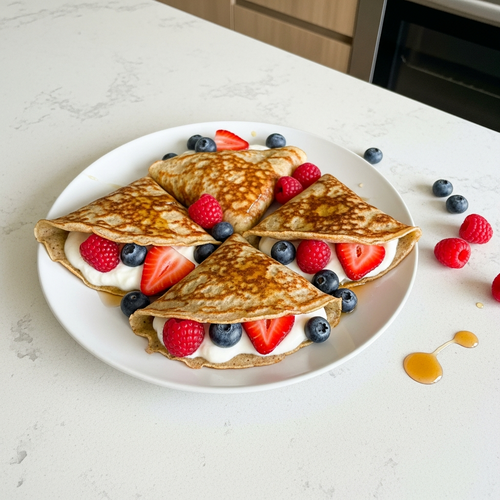
Description: A simple, delicious recipe for high-protein crepes designed for fat loss. This recipe is perfect for managing hunger and satisfying cravings without the sugar crash of traditional crepes.
Prep Time: 5 minutes | Cook Time: 10 minutes
Servings: 1 (makes 2-3 crepes)
Macros per Serving | Calories: 252 | Protein: 39g | Fat: 3g | Carbohydrates: 15g
Ingredients
- 1/2 cup (120g) liquid egg whites
- 1 scoop (30g) vanilla whey protein powder
- 2 tablespoons (15g) oat flour
- 1/4 cup (60ml) unsweetened almond milk
- 1/2 teaspoon vanilla extract
- 1 teaspoon zero-calorie sweetener
- Pinch of salt
- Cooking spray
Instructions
- Combine all ingredients in a blender. Blend on high for 20-30 seconds until completely smooth.
- Let the batter rest for at least 10 minutes to allow the oat flour to hydrate.
- Heat a non-stick skillet over medium-low heat and coat with cooking spray.
- Pour 1/4 cup of batter into the pan and swirl to create a thin, even circle.
- Cook for 1-2 minutes until the edges lift and the surface is dry. Flip and cook for another 30-60 seconds.
- Slide onto a plate and repeat with the remaining batter. Serve with your favorite high-protein toppings.
Notes
The first crepe is always a test run, so don’t worry if it doesn’t look perfect. The key is medium-low heat and a good non-stick pan.
FAQs About Crepes For Weight Loss
Here are some straightforward answers to the most common questions I receive about this protein crepes recipe.
Can I eat these protein crepes every day for weight loss?
You absolutely can. Consistency is one of the most powerful tools you have for fat loss. Having a reliable, high-protein breakfast that you enjoy can create a solid foundation for your day. It automates a meal, which frees up mental energy for other decisions. Knowing you have a breakfast that hits your protein target and keeps you full can prevent the kind of impulsive food choices that happen when you’re starving.
That said, variety is also important for long-term adherence and nutrient diversity. While these crepes are great, you might find yourself getting bored if you eat them every single day for months. I suggest keeping them in a rotation with two or three other high-protein breakfast staples. This gives you options while still keeping your choices simple and aligned with your goals. The key is having a system of easy, repeatable meals, and these crepes are a fantastic part of that system.
Why did my crepes fall apart or stick to the pan?
This is the most common troubleshooting question, and it usually comes down to one of four things. First is the pan temperature. If your pan is too hot, the bottom of the crepe will cook and burn before the top has a chance to set, causing it to tear when you try to flip it. Always use medium-low heat. Second is not letting the batter rest. This step is critical because it allows the oat flour to absorb liquid and create a stronger structure. If you skip it, your crepes will be much more delicate.
Third, you need a good non-stick pan. If your pan is old and scratched, even a perfect batter will stick. It’s worth investing in a decent non-stick skillet just for eggs and crepes. Finally, be patient with the flip. Don’t try to flip it until the edges are clearly pulling away from the pan and the surface looks matte, not shiny. Trying to flip it too early is a guaranteed way to make a mess. Remember, the first one is always a practice run!
Can I make these crepes without protein powder?
You can, but it would fundamentally change the recipe and its purpose. In this recipe, the protein powder isn’t just a supplement; it’s a core structural ingredient that replaces the flour. Its purpose is to drastically increase the protein content while keeping carbs low, which is the entire reason these crepes are so effective for fat loss and hunger management. Without it, you would have a very thin, eggy batter.
If you were to omit the protein powder, you would need to replace it with a significant amount of flour (like a half cup or more) to get a workable batter. At that point, you would essentially be making traditional, high-carb crepes. So while it’s technically possible to make crepes without it, you would lose all the fat-loss benefits that this specific recipe is designed to provide.
Are these crepes suitable for a low-carb or keto diet?
This recipe is very low-carb friendly. With only 15 grams of carbohydrates for the entire batch, it can easily fit into most low-carb diets. The majority of those carbs come from the small amount of oat flour, which also provides some helpful fiber. To make them fully keto, you would need to make one small adjustment.
Simply swap the 2 tablespoons of oat flour for 2 tablespoons of a keto-friendly flour, such as fine almond flour or a tablespoon of coconut flour. Almond flour works as a nearly 1:1 substitute here. Be mindful that coconut flour is extremely absorbent, so you may need a little extra almond milk. As always, the toppings matter. Stick to low-carb toppings like berries, sugar-free syrup, or a smear of nut butter to keep it keto-friendly.
What’s the best type of protein powder to use for these crepes?
The type of protein powder you use will have a noticeable impact on the final texture and taste of your crepes. For the best results, I strongly recommend a whey protein isolate or a whey-casein blend. Whey isolate is very fine and mixes incredibly smoothly, which results in a delicate, thin crepe that is very close to the traditional version. A blend that includes casein will result in a slightly thicker, fluffier crepe, almost like a very thin pancake.
Taste is also critical. Since the protein powder provides a lot of the flavor, use a brand and flavor that you genuinely enjoy drinking as a shake. A chalky or overly sweet protein powder will ruin the recipe. While you can use plant-based protein powders, they tend to be much more absorbent and can result in a gummier or denser texture. If using a plant-based powder, you will almost certainly need to add more liquid to get the batter to the right consistency.
Try These High-Protein Recipes Next
If you loved how simple and effective these crepes are, here are a few other recipes that follow the same philosophy.
- High-Protein Savory Crepes: This post shows you how to take the base recipe and turn it into a delicious and filling savory meal for lunch or dinner.
- The Easiest Protein Pancakes: For mornings when you want something a bit fluffier, this recipe delivers perfect pancakes every time using a very similar, blender-based method.
- Plum Clafoutis: If you’re looking for another simple, fruit-forward dessert that feels elegant but is easy to make, this is a fantastic option to try.
Building a collection of go-to recipes is the secret to making your fitness journey feel effortless.