
I have a long and complicated history with enchiladas. For years, they were my ultimate comfort food. But the canned enchilada sauce I used felt like a compromise. It was either bland or loaded with sodium, sugar, and ingredients I couldn’t pronounce. It didn’t fit the way I wanted to eat.
When I started my fat loss journey, long before I was medicated for ADHD, I had to build brutally practical systems. I needed food that felt satisfying, or I knew I wouldn’t stick with it. Giving up enchiladas wasn’t an option. That meant I had to tackle the sauce.
The challenge was creating a homemade enchilada sauce that was simple enough for a low-motivation day but packed the deep, authentic flavor I craved. It also had to support my macros, not sabotage them. After a lot of trial and error, this recipe was born. It’s rich, smoky, and has a secret protein boost that helps crush cravings.
This sauce became a cornerstone of my meal prep. It proved that eating for fat loss didn’t have to be boring. It could be delicious, flexible, and work with my brain, not against it.
Skip to My Flexibe Diet Recipe!
Why Enchilada Sauce Is Great For Fat Loss
Let’s be direct. The food you eat accounts for at least 75 percent of your fat loss results. Workouts are important, but you can’t out-train a diet that works against you. That’s why I build recipes like this enchilada sauce. It’s designed to make hitting your goals easier, not harder.
First, we’re ditching the junk found in most store-bought sauces. Canned versions are often filled with cheap vegetable oils, added sugars, and modified corn starch. Those ingredients can spike cravings and add empty calories. My version uses whole food ingredients and has zero added sugar or unhealthy fats.
The magic happens with two key swaps. Instead of just water, we use bone broth. This instantly adds protein, which is critical for satiety. Protein helps you feel fuller for longer, managing the hunger that can derail your progress. Then, we add non-fat Greek yogurt or cottage cheese. This not only gives the sauce a wonderful creamy texture but also adds another significant protein boost. It makes the sauce a functional part of your meal, not just a topping.
Flavor is always a priority. When your food is delicious, you don’t feel deprived. This sauce uses real dried chiles for a deep, smoky flavor that makes lean proteins like chicken breast, ground turkey, or even fish taste incredible. It turns a simple meal into something you genuinely look forward to eating. This is how you build a sustainable lifestyle. Consistency wins, and you can’t be consistent with food you hate.
Ingredients You’ll Need for Enchilada Sauce
I believe in using simple, powerful ingredients. You don’t need a massive list to create incredible flavor. This recipe focuses on a few key items that do the heavy lifting, making the process straightforward even on days when your executive function is low.
Here’s exactly what you’ll need to make this high-protein enchilada sauce.
- 2 dried Ancho chiles, stems and seeds removed
- 2 dried Guajillo chiles, stems and seeds removed
- 2 cups hot vegetable or chicken bone broth
- 1 (15-ounce) can fire-roasted crushed tomatoes
- 1/2 cup plain non-fat Greek yogurt or low-fat cottage cheese
- 1/4 cup chopped white onion
- 2 cloves garlic, peeled
- 2 teaspoons chili powder
- 1 teaspoon smoked paprika
- 1 teaspoon ground cumin
- 1/2 teaspoon dried Mexican oregano
- 1/4 teaspoon unsweetened cocoa powder
- 1 tablespoon arrowroot starch
- 2 tablespoons cold water
- Salt and pepper to taste
The stars of the show are the dried Ancho and Guajillo chiles. They provide a depth of flavor that you simply cannot get from chili powder alone. Ancho chiles are smoky and slightly sweet, while Guajillo chiles are a bit tangy and fruity. You can usually find them in the international aisle of your grocery store or at a local Latin market.
Our secret weapon for macros is the non-fat Greek yogurt or cottage cheese. This is the twist that adds creaminess and a solid dose of protein without the fat of traditional cream-based sauces. I also highly recommend using bone broth instead of regular broth or water. A quality bone broth can add 5–10 grams of protein to the entire batch, supporting both satiety and gut health. Finally, using fire-roasted tomatoes adds another layer of smoky flavor without any extra effort.
How To Make Enchilada Sauce (Step-By-Step)
This process is designed to be as simple as possible. We lean heavily on a blender to do most of the work, which is a perfect strategy for our ADHD brains. It minimizes hands-on time and reduces the number of steps where you can get distracted. The goal is maximum flavor with minimum fuss.
A good quality blender, especially a high-speed one, will make this process incredibly smooth. But a standard blender will work just fine; you’ll just need to be diligent with the straining step.
Step 1: Soak The Chiles
Start by placing your stemmed and seeded dried chiles in a bowl. Pour the hot bone broth over them, making sure they are fully submerged. Let them soak for about 20 to 30 minutes. This step is crucial. It rehydrates the chiles, making them soft and pliable, which is essential for blending them into a smooth sauce. It also starts to release their deep, complex flavors into the broth.
Step 2: Combine and Blend
Once the chiles are soft, transfer them and the soaking broth directly into your blender. Don’t throw that liquid out. It’s full of flavor. Add the fire-roasted tomatoes, Greek yogurt (or cottage cheese), onion, garlic, and all the spices: chili powder, smoked paprika, cumin, oregano, and cocoa powder. Now, blend everything on high until it is completely smooth. This might take a minute or two depending on your blender’s power.
Step 3: Strain For Smoothness
This is the one step I urge you not to skip. Pour the blended mixture through a fine-mesh sieve set over a saucepan. Use the back of a spatula to press the liquid through, scraping the bottom of the sieve to get all the goodness. This will catch any stray seeds or tough bits of chile skin, guaranteeing a silky, restaurant-quality texture.
Step 4: Simmer and Thicken
Place the saucepan with the strained sauce on the stove over medium heat and bring it to a gentle simmer. While it’s heating up, mix the arrowroot starch and cold water in a small bowl until it forms a smooth paste, known as a slurry. Slowly pour the slurry into the simmering sauce while stirring constantly. This will prevent lumps. Let the sauce simmer for another 3 to 5 minutes until it has thickened nicely.
Step 5: Season to Taste
The final step is to taste your creation. Depending on the saltiness of your bone broth, you may need to add salt. Add fresh ground black pepper as well. Adjust the seasonings until the flavor is exactly where you want it. Your delicious, macro-friendly enchilada sauce is now ready to use.
How To Serve Enchilada Sauce (ADHD-Friendly)
Having a batch of this enchilada sauce ready in your fridge is a superpower. It’s a perfect example of what I call “meal component prep.” Instead of making full, rigid meals for the week, which can feel overwhelming, you just prep versatile components. This gives you flexibility and drastically lowers the effort needed to eat well on a daily basis.
For the ADHD brain, reducing decision fatigue is everything. When you’re tired and hungry, the last thing you want to do is figure out a complex meal. With this sauce on hand, you’re already halfway to a delicious, high-protein dinner.
Here are some brutally simple ways to use your enchilada sauce:
- Quick Enchilada Skillet: Sauté some ground turkey or chicken. Stir in black beans, corn, and a generous amount of this sauce. Top with a little cheese and serve. It has all the flavor of enchiladas with a fraction of the work.
- Shredded Chicken Bowls: Place a few chicken breasts in a slow cooker and pour this sauce over them. Cook on low for 4–6 hours. Shred the chicken right in the sauce. Use it all week for protein bowls with rice, salads, or tacos.
- Upgraded Scrambled Eggs: Add a few tablespoons of the sauce to your eggs before scrambling them. It’s an instant flavor boost that makes a boring breakfast feel special. Top with a little avocado or cilantro.
- Healthy Stuffed Peppers: Mix cooked quinoa and ground meat with the sauce. Stuff the mixture into hollowed-out bell peppers and bake until the peppers are tender. It’s a complete, balanced meal.
The key is to make healthy eating the path of least resistance. This sauce does exactly that. It transforms basic proteins and vegetables into something exciting, ensuring you stay consistent with your nutrition goals without burning out.
How To Store, Reheat, and Reuse Enchilada Sauce
One of my core principles is to work smarter, not harder. That means making a recipe once and using it multiple times. This enchilada sauce is perfect for that approach. Properly storing it means you have a high-flavor, low-effort meal component ready to go, which is a lifesaver on low-energy days.
Making a double batch is a fantastic “gift” to your future self. It takes barely any extra time and pays off all week long.
Here’s how to handle storing and reheating:
- In the Refrigerator: Let the sauce cool completely, then transfer it to an airtight container. Mason jars work great for this. It will keep in the fridge for up to a week. The flavors will actually meld and deepen after a day or two.
- In the Freezer: This sauce freezes exceptionally well. Pour the cooled sauce into freezer-safe bags, containers, or my personal favorite, silicone trays. Freezing it in smaller portions (like in large ice cube trays or Souper Cubes) is an ADHD-friendly hack. You can pop out just what you need without having to defrost a huge container. It will last for up to 3 months in the freezer.
- Reheating: The best way to reheat the sauce is gently in a saucepan on the stovetop over medium-low heat. Stir it occasionally until it’s warmed through. This helps maintain its smooth texture. If you’re in a hurry, you can microwave it in a microwave-safe bowl. Just be sure to stir it halfway through to ensure it heats evenly.
Don’t just think “enchiladas” when you see this sauce in your fridge. You can reuse it as a marinade for chicken or pork, a base for a hearty tortilla soup, or a flavorful drizzle over roasted vegetables. Having it ready to go opens up a world of quick, healthy meal possibilities.
Easy Swaps & Variations for Enchilada Sauce
A flexible eating plan requires flexible recipes. Life happens. Sometimes you can’t find a specific ingredient, or you need to adjust a recipe to fit your dietary needs or what you have in the pantry. This recipe is a solid template, but don’t be afraid to make it your own. The goal is consistency, not perfection.
Here are a few simple swaps and variations that work well with this enchilada sauce and keep things practical.
- Chile Variations: If you can’t find both Ancho and Guajillo chiles, you can use all of one type. Pasilla chiles are another great option that adds a rich, almost raisin-like flavor. In a real pinch, you can substitute about 1/4 cup of high-quality ancho chili powder, but the flavor won’t be quite as deep or complex.
- Spice Level Control: This sauce is mild to medium in heat. To increase the spice, you can add one or two small, dried chiles de árbol to the soaking liquid. Alternatively, blend in a canned chipotle pepper in adobo sauce or simply add a pinch of cayenne pepper.
- Dairy-Free Option: To make this sauce dairy-free, you can omit the Greek yogurt or cottage cheese. The sauce will be less creamy but still delicious. For a creamy texture, try blending in 1/4 cup of soaked raw cashews with the other ingredients. Just remember this will change the macro profile.
- Broth and Thickener: Any broth works. Vegetable, chicken, or beef broth are all fine substitutes for bone broth. If you don’t have arrowroot starch, an equal amount of cornstarch will work perfectly as a thickener.
These adjustments allow you to adapt the recipe based on your needs and preferences. The important thing is to have a go-to sauce that you love and that helps you stay on track with your fitness goals.
High-Protein Enchilada Sauce
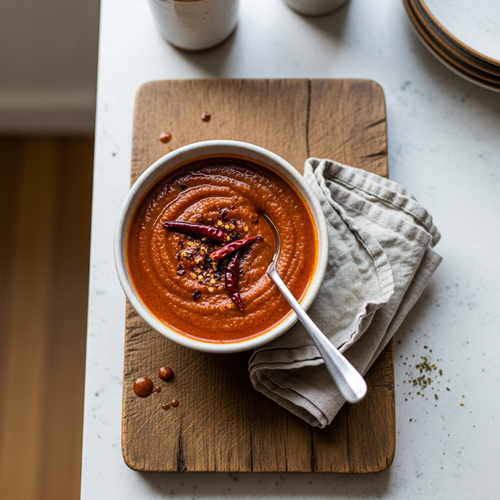
Description: A rich, smoky, and macro-friendly enchilada sauce made with real dried chiles and a secret protein boost from Greek yogurt. Perfect for fat loss and a sustainable fit lifestyle.
Prep Time: 5 minutes (+20 min soaking) | Cook Time: 10 minutes
Servings: 4 (makes approx. 3 cups)
Macros per Serving | Calories: 65 | Protein: 5g | Fat: 1g | Carbohydrates: 8g
Ingredients
- 2 dried Ancho chiles, stems and seeds removed
- 2 dried Guajillo chiles, stems and seeds removed
- 2 cups hot vegetable or chicken bone broth
- 1 (15-ounce) can fire-roasted crushed tomatoes
- 1/2 cup plain non-fat Greek yogurt or low-fat cottage cheese
- 1/4 cup chopped white onion
- 2 cloves garlic, peeled
- 2 teaspoons chili powder
- 1 teaspoon smoked paprika
- 1 teaspoon ground cumin
- 1/2 teaspoon dried Mexican oregano
- 1/4 teaspoon unsweetened cocoa powder
- 1 tablespoon arrowroot starch
- 2 tablespoons cold water
- Salt and pepper to taste
Instructions
- Place dried chiles in a bowl and cover with hot bone broth. Let soak for 20-30 minutes until soft.
- Transfer chiles and broth to a blender. Add tomatoes, Greek yogurt, onion, garlic, and all spices. Blend on high until completely smooth.
- Pour the sauce through a fine-mesh sieve into a saucepan, pressing on the solids to extract all liquid.
- Bring sauce to a simmer over medium heat.
- In a small bowl, whisk together arrowroot starch and cold water to make a slurry. Slowly stir the slurry into the simmering sauce.
- Continue to simmer for 3-5 minutes, stirring, until the sauce has thickened.
- Season with salt and pepper to taste.
Notes
For a spicier sauce, add a pinch of cayenne pepper or a small, dried chile de árbol. The sauce will keep in an airtight container in the refrigerator for up to one week.
FAQs About Enchilada Sauce For Weight Loss
Here are some straightforward answers to the most common questions I receive about this enchilada sauce recipe.
Can I make this enchilada sauce without a high-speed blender?
Yes, you absolutely can. A high-speed blender like a Vitamix or Ninja makes the process quicker and results in a super smooth texture, but it’s not a requirement. If you’re using a standard blender, you may just need to let it run a little longer to break down the chile skins as much as possible.
The most important step when using a standard blender is the straining process. Do not skip it. You might have a bit more solid material left in the sieve, but that’s okay. Just be thorough with your spatula, pressing and scraping to get all the liquid through. Your final sauce will still be delicious and have a great texture.
Is homemade enchilada sauce healthier than store-bought?
Without a doubt, yes. This is one of those cases where the homemade version is leaps and bounds better for you. Take a look at the ingredient label on a typical can of enchilada sauce from the grocery store. You’ll often find added sugars, modified corn starch, soybean or canola oil, and various preservatives.
This recipe contains none of that. You control every single ingredient. We use whole foods, rely on bone broth and Greek yogurt for a natural protein boost, and skip the unnecessary fats and sugars. This means our sauce not only tastes better but also actively supports your fat loss goals by providing more protein and nutrients per calorie, which helps with hunger management.
Why use dried chiles in this enchilada sauce instead of just chili powder?
This is all about flavor depth. Chili powder is convenient, but it’s a seasoning blend, often containing cumin, garlic powder, and oregano along with ground chiles. Using whole dried chiles, like Ancho and Guajillo, provides a complex, smoky, and slightly fruity flavor base that you simply cannot replicate with powder alone.
Soaking and blending the chiles creates a sauce with layers of flavor. It’s the difference between a sauce that tastes fine and one that tastes truly authentic and rich. While it seems like an extra step, the 20 minutes of soaking time is passive. The massive upgrade in taste is well worth that small amount of planning.
How can I make this enchilada sauce spicier?
This recipe is designed to be flavorful but not overly spicy, making it adaptable for most people. However, adjusting the heat level is very easy. The most straightforward way is to add a pinch of cayenne pepper to the blender along with the other spices. Start with 1/4 teaspoon, blend, and taste before adding more.
For a more complex heat, you can add a different type of chile. Including one or two small, potent chiles de árbol along with the Ancho and Guajillo chiles during the soaking step will add a significant kick. Another excellent option is to add one canned chipotle pepper in adobo sauce to the blender. This will add both heat and a lovely smoky flavor.
Can I use this enchilada sauce for meal prep?
This recipe was specifically designed with meal prep in mind. In fact, I consider it a “meal component prep” essential. Making a batch of this sauce at the beginning of the week is one of the best things you can do to set yourself up for success. It dramatically lowers what I call the “activation energy” required to cook a healthy meal.
When you have this sauce ready in the fridge, you can create a high-protein, delicious meal in under 15 minutes. This is a game-changer for the ADHD brain, which often struggles with planning and execution, especially when tired or hungry. Knowing you have a flavorful component ready to go can prevent you from reaching for takeout or processed foods.
Try These High-Protein Recipes Next
Once you have a batch of this amazing enchilada sauce, here are a few great ways to put it to use.
- High-Protein Chicken Enchilada Bake: The perfect way to use this sauce. It’s a macro-friendly, family-approved bake that’s amazing for leftovers.
- Simple & Savory Beef Enchiladas: If you prefer ground beef, this recipe shows you how to build another satisfying, high-protein meal using this exact sauce.
- Authentic Homemade Enchilada Sauce from This Gal Cooks: For days you want to explore a more traditional approach without the protein boost, this is a fantastic and flavorful recipe to try.
I hope these recipes help you stay consistent and enjoy the process.