
I used to think salads were boring. To me, they were punishment food. Something you had to eat on a “diet,” but never something you’d actually want. That all changed during my 70-pound fat loss journey, long before I started any ADHD medication.
I realized I was just making salads wrong. I needed something that was filling, packed with flavor, and didn’t require a ton of complicated steps my brain would fight against. This high-protein Greek salad became one of my go-to lunches. It was the perfect combination of crunchy, savory, and fresh.
This isn’t just any recipe. I designed it specifically for the ADHD brain. It’s built around our core principles at ADHD FIT: protein first, hunger management second, and convenience always. It’s a meal that keeps you full for hours, crushes cravings, and is simple enough to make even on days when your executive function has left the building.
It’s proof that you don’t have to eat bland, unsatisfying food to lose fat and build a body you feel good in. You just need the right systems in place.
Skip to My Flexibe Diet Recipe!
Why Greek Salad Is Great For Fat Loss
When it comes to fat loss, food is about 75 percent of the battle. Workouts are important, but you can’t out-train a bad diet. That’s why having go-to meals like this Greek salad is a complete game-changer. It’s not about restriction; it’s about building a plate that works for your goals, not against them.
The number one principle we follow is protein first. This salad is loaded with it. You get a huge dose from the grilled chicken breast, a solid amount from the feta cheese and chickpeas, and a bonus boost from our high-protein Greek yogurt dressing. Protein is the most satiating macronutrient, meaning it keeps you feeling full and satisfied for longer. This is your best weapon against mindless snacking and afternoon cravings.
Next, we focus on hunger management. Besides the protein, this salad is packed with fiber from the mixed greens, cucumber, tomatoes, and bell peppers. Fiber slows down digestion and helps stabilize your blood sugar. You avoid the energy crashes that often send us running for quick-hit sugar or carbs. The healthy fats from the Kalamata olives and olive oil in the dressing also play a huge role in satiety.
Finally, it’s about consistency over intensity. You won’t stick to a fat loss plan if the food is boring or complicated. This salad is bursting with flavor. The salty olives, tangy feta, and creamy dressing make it something you actually look forward to eating. And because it’s so simple to assemble, especially if you prep ingredients ahead of time, it’s a realistic meal for a busy life. It’s a win on every level.
Ingredients You’ll Need for Greek Salad
The beauty of this recipe is its simplicity. We’re using fresh, whole ingredients that are easy to find at any grocery store. No weird, expensive powders or supplements needed. Just real food that tastes incredible and fuels your body properly.
The absolute star of this recipe is our High-Protein Greek Yogurt Dressing. This is where we make a huge upgrade from traditional Greek salads that are often swimming in oil. By using low-fat Greek yogurt as the base, we slash the calories and fat while dramatically increasing the protein content. It makes the salad incredibly creamy and satisfying without derailing your macros.
Here’s exactly what you’ll need to have on hand.
- For the Salad:
- 1 boneless, skinless chicken breast (about 6 ounces)
- 1/8 teaspoon garlic salt
- Juice of 1/2 lemon
- Olive oil spray
- 3 cups of mixed greens (such as spinach and romaine)
- 1 cup cherry tomatoes, halved
- 1 large cucumber, seeded and chopped
- 1/2 red bell pepper, chopped
- 1/4 cup thinly sliced red onion
- 1/4 cup pitted Kalamata olives
- 1/4 cup crumbled feta cheese
- 1/2 cup canned chickpeas, rinsed and drained
- For the High-Protein Greek Yogurt Dressing:
- 1/2 cup plain low-fat Greek yogurt
- 1 tablespoon extra virgin olive oil
- 1 tablespoon red wine vinegar
- 1/2 tablespoon Dijon mustard
- 1 clove garlic, minced
- 1 tablespoon fresh dill, finely chopped
- 1/4 teaspoon dried oregano
- Pinch of black pepper
- 2-4 tablespoons cold water, to thin
A quick note on ingredients. For the feta, I recommend buying a block packed in brine instead of the pre-crumbled kind. The flavor and texture are so much better, and it only takes a few seconds to crumble it yourself. For the olives, make sure you get pitted Kalamata olives. Pitting them yourself is a task none of us with ADHD have time for. And remember, store-bought rotisserie chicken is a fantastic shortcut on low-energy days.
How To Make Greek Salad (Step-By-Step)
Let’s build this powerhouse salad. The goal here is efficiency and simplicity. We’re going to multitask a bit by making the dressing while the chicken cooks, which is a great way to save time and keep momentum going in the kitchen. Remember, we work with our brains, not against them.
1. Cook The Chicken
Start by seasoning your chicken breast with the garlic salt and a squeeze of fresh lemon juice. Get a pan over medium-high heat and give it a light coat with olive oil spray. Cook the chicken for about 5-7 minutes per side. The exact time will depend on the thickness of the breast. The key is to get it cooked through (165°F internally) without drying it out. Once it’s done, transfer it to a cutting board and let it rest for a few minutes. This step is crucial for keeping the chicken juicy.
2. Prepare The Dressing
While that chicken is cooking, it’s prime time to mix the dressing. Here’s an ADHD tip: get all your dressing ingredients out on the counter before you start. It’s called “mise en place,” and it prevents that mid-recipe panic when you can’t find the oregano. In a small bowl, combine the Greek yogurt, olive oil, red wine vinegar, Dijon mustard, minced garlic, fresh dill, oregano, and black pepper. Whisk it all together until it’s smooth and creamy.
3. Thin The Dressing
Your dressing will probably be quite thick at this point. To get it to a perfect, drizzly consistency, slowly add the cold water. Start with just one tablespoon, whisk it in completely, and see how it looks. Keep adding water, one tablespoon at a time, until it’s just right. This gives you total control and prevents a watery dressing disaster.
4. Combine The Salad Ingredients
Grab your largest salad bowl. This is where it all comes together. Add your mixed greens, halved cherry tomatoes, chopped cucumber, chopped red bell pepper, sliced red onion, Kalamata olives, and the rinsed chickpeas. The different colors and textures are what make this salad so satisfying, both visually and to eat.
5. Slice and Add The Chicken
By now, your chicken should be rested and ready. Slice it into bite-sized pieces against the grain. Adding the warm, freshly cooked chicken to the cool, crisp vegetables creates a fantastic temperature and texture contrast that elevates the whole dish.
6. Dress The Salad
Drizzle your beautiful, creamy Greek yogurt dressing over the salad. My advice is to start with about half of the dressing, toss everything gently, and then add more as needed. It’s easy to add more, but impossible to take it away. You want every leaf coated, not swimming.
7. Add The Feta
The final touch. Sprinkle the crumbled feta cheese right over the top. This adds a final burst of salty, tangy flavor that ties the whole Greek salad together. Now it’s ready to serve immediately.
How To Serve Greek Salad (ADHD-Friendly)
One of the biggest hurdles for people with ADHD is decision fatigue, especially around meals. What should I eat? What goes with what? The best part about this Greek salad is that it’s a complete, balanced meal all in one bowl. You don’t need to think about side dishes. It has your protein, healthy fats, carbs, and micronutrients covered.
This “one bowl” concept is our best friend. It means fewer dishes, less cleanup, and less mental energy spent on meal planning. On most days, I eat this salad exactly as is, straight from the bowl. It’s perfect for a quick and satisfying lunch that won’t leave you feeling sluggish or ready for a nap. It provides steady energy that helps with focus for the rest of the afternoon.
But flexibility is key for long-term success. If you’re feeling extra hungry or it’s a workout day and you need more carbs, here are a few simple ways to serve it up:
- In a Pita: Stuff the salad into a warm whole-wheat pita pocket. It turns it into a portable, sandwich-style meal that’s great for eating on the go.
- With Quinoa: Serve the salad over a bed of ½ cup of cooked quinoa. This adds complex carbohydrates for sustained energy, making it a more substantial dinner.
- As a “Power Bowl”: Add a scoop of hummus to the bowl alongside the salad. It adds extra flavor, creaminess, and a bit more protein and fiber.
The goal is to have options that don’t require a lot of extra cooking or planning. These small additions can help prevent food boredom and keep you on track without adding stress or complexity to your routine.
How To Store, Reheat, and Reuse Greek Salad
Let’s be honest, cooking every single day can be a huge challenge with ADHD. That’s why a good leftover strategy is non-negotiable. Prepping ingredients or making extra for later is one of the best ways to ensure you have healthy food ready on low-motivation days. The key to storing this salad is to keep the components separate to avoid a sad, soggy mess.
Here’s the most brutally practical way to handle leftovers for this recipe:
- Store Components Separately: This is the golden rule. Store the chopped veggies and greens in one airtight container. To keep them extra crisp, you can place a paper towel on top to absorb moisture. Keep the cooked chicken in a separate container. And most importantly, store the Greek yogurt dressing in its own small jar or container.
- Assemble Just Before Eating: When you’re ready for your next meal, just pull out your containers and assemble a fresh salad in seconds. It will taste just as good as it did on day one. The salad components will last for about 3-4 days in the fridge this way.
- Do Not Reheat The Salad: Please don’t put this salad in the microwave. You can enjoy the chicken cold, which is delicious, or you can warm just the chicken up for about 30-45 seconds before adding it to your cold, crisp veggies.
To combat food boredom, you can also reuse the components in new ways. Toss the leftover chicken and veggies with some whole-wheat pasta for a quick pasta salad. Or, wrap the chicken and veggies in a low-carb tortilla with a smear of your Greek yogurt dressing for a quick and easy wrap. This makes your initial cooking effort go even further.
Easy Swaps & Variations for Greek Salad
The best diet plan is the one you can actually stick to, and flexibility is a massive part of that. This Greek salad recipe is a fantastic template, but you should feel free to adapt it based on what you have on hand, your personal preferences, or your dietary needs. Sticking to a plan perfectly is impossible; having smart swaps in your back pocket is sustainable.
Don’t let one missing ingredient derail your healthy meal. Here are some simple and effective swaps you can make:
- Protein Power-Up: The chicken is great, but you can easily swap it. Grilled salmon, sautéed shrimp, or even a can of tuna (in water, drained) work wonderfully. For a vegetarian option, you can double the chickpeas or add a handful of edamame.
- Veg Out: Don’t have a red bell pepper? Use a yellow or orange one. No mixed greens? Spinach or chopped romaine works great. You can also add other veggies like artichoke hearts, sliced zucchini, or chopped celery. Think of this salad as a great way to use up any vegetables that are nearing the end of their life in your fridge.
- Dressing Tweaks: If you don’t have fresh dill, you can use 1 teaspoon of dried dill instead. No red wine vinegar? Apple cider vinegar or more lemon juice can work in a pinch. If you need a dairy-free option, you can use a plain, unsweetened almond or coconut-based yogurt for the dressing.
- Cheese Choices: While feta is classic, you could also use crumbled goat cheese or small fresh mozzarella balls if that’s what you prefer or have available. For a dairy-free version, there are some great vegan feta alternatives on the market now.
The point is to make the recipe work for you. Having a flexible system means you’re more likely to stay consistent, and consistency is what drives results.
High-Protein Greek Salad (ADHD-Friendly)
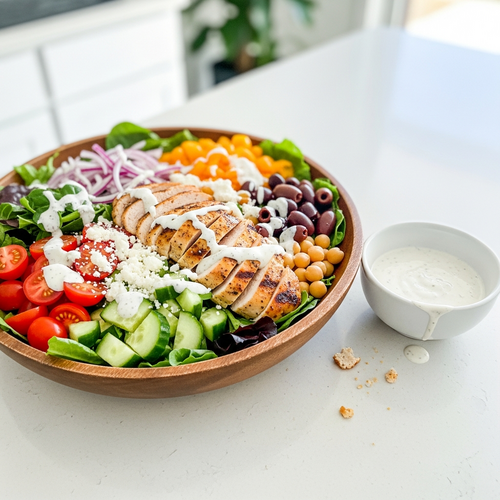
Description: A fresh, flavorful, and incredibly satisfying Greek salad designed for fat loss and an ADHD-friendly lifestyle. Packed with protein to keep you full for hours and simple enough to make on low-energy days.
Prep Time: 5 minutes | Cook Time: 10 minutes
Servings: 2
Macros per Serving | Calories: 445 | Protein: 42g | Fat: 15g | Carbohydrates: 26g
Ingredients
- 1 boneless, skinless chicken breast (about 6 ounces)
- 1/8 teaspoon garlic salt & Juice of 1/2 lemon
- Olive oil spray
- 3 cups mixed greens
- 1 cup cherry tomatoes, halved
- 1 large cucumber, chopped
- 1/2 red bell pepper, chopped
- 1/4 cup thinly sliced red onion
- 1/4 cup pitted Kalamata olives
- 1/4 cup crumbled feta cheese
- 1/2 cup canned chickpeas, rinsed
- 1/2 cup plain low-fat Greek yogurt
- 1 tbsp extra virgin olive oil & 1 tbsp red wine vinegar
- 1/2 tbsp Dijon mustard
- 1 clove garlic, minced
- 1 tbsp fresh dill, chopped
- 1/4 tsp dried oregano & pinch of black pepper
- 2-4 tbsp cold water
Instructions
- Season chicken with garlic salt and lemon juice. Cook in a lightly oiled pan over medium-high heat for 5-7 minutes per side, until cooked through. Let rest, then slice.
- While chicken cooks, whisk together Greek yogurt, olive oil, red wine vinegar, Dijon, garlic, dill, oregano, and pepper for the dressing.
- Slowly whisk in cold water, 1 tablespoon at a time, until dressing reaches desired consistency.
- In a large bowl, combine mixed greens, tomatoes, cucumber, bell pepper, red onion, olives, and chickpeas.
- Add the sliced chicken to the salad bowl.
- Drizzle with the dressing and toss gently to combine.
- Sprinkle with crumbled feta cheese and serve immediately.
Notes
For easy meal prep, store the dressing, chicken, and chopped vegetables in separate airtight containers in the fridge for up to 4 days.
FAQs About Greek Salad For Weight Loss
Here are some straightforward answers to the most common questions I receive about this Greek salad recipe.
Is Greek salad actually healthy for weight loss?
Yes, but with a big asterisk. A traditional Greek salad from a restaurant can often be a calorie bomb in disguise. They are typically drenched in an oil-heavy vinaigrette and loaded with large amounts of feta cheese, which can quickly push the fat and calorie content way up, sometimes rivaling that of a burger and fries.
This recipe, however, is specifically designed for weight loss. We make a critical swap by creating a dressing with a plain Greek yogurt base. This simple change dramatically cuts down on the oil and calories while adding a significant amount of protein. We also control the amount of high-fat items like feta and olives, using them as flavor enhancers rather than the main event. The result is a meal that is high in protein and fiber, two key nutrients for satiety, which helps you stay full and control your overall calorie intake without feeling deprived.
How can I make this Greek salad recipe fit into my meal prep?
This recipe is perfect for meal prep, which is an essential strategy for anyone, but especially for those of us with ADHD. The key is component prep. On a Sunday, or whenever you have a bit of extra time and energy, you can prepare all the individual parts of the salad. Cook a few chicken breasts at once, let them cool, and store them whole or sliced in an airtight container.
Wash and chop all your vegetables—cucumber, bell pepper, red onion—and store them in a large container. A great tip is to line the container with a paper towel to absorb extra moisture and keep them crisp. Mix a big batch of the Greek yogurt dressing and store it in a mason jar. With these components ready to go, assembling your salad each day takes less than two minutes. This removes the friction and decision-making from lunchtime, making it incredibly easy to stick to your plan even on your busiest days.
What makes this Greek salad recipe good for ADHD?
I designed this recipe with the ADHD brain in mind. First, it’s high in protein from the chicken and yogurt dressing. Protein is vital for neurotransmitter production, including dopamine, which can help with focus and mood regulation. A protein-rich meal provides sustained energy and avoids the sharp blood sugar spikes and crashes that can exacerbate ADHD symptoms like irritability and brain fog.
Second, the recipe is simple and flexible. The steps are straightforward and don’t require long, sustained attention. The flexibility in ingredients means you can use what you have, which reduces the executive function load of meticulous planning and shopping. Finally, the sensory experience of the salad—the crunch of the cucumber, the coolness of the tomato, the saltiness of the feta—can be very satisfying and help prevent the kind of food boredom that often leads us to seek out less healthy, hyper-palatable processed foods.
Can I make this Greek salad recipe vegetarian or vegan?
Absolutely. This recipe is very easy to adapt. For a vegetarian version, simply omit the chicken and double the amount of chickpeas to ensure you’re still getting a solid source of protein and fiber. You could also add a scoop of lentils, a hard-boiled egg, or some baked tofu or tempeh.
To make it vegan, you’ll make a few more swaps. Replace the chicken with a plant-based protein like chickpeas, lentils, or a vegan chicken alternative. For the cheese, you can use one of the many excellent dairy-free feta crumbles available now or simply leave it out and add a sprinkle of nutritional yeast for a cheesy flavor. For the dressing, use a plain, unsweetened plant-based yogurt, like one made from almond, soy, or coconut milk, as your base. The recipe remains just as flavorful and satisfying.
My cravings get bad in the afternoon. Will this Greek salad help?
This is one of the main reasons this salad is a staple for me. Those intense afternoon cravings for something sweet or salty are often a direct result of an unstable blood sugar level or a lunch that wasn’t satisfying enough. This salad is engineered to prevent exactly that. The powerful combination of high protein, high fiber, and healthy fats is what I call the “satiety trio.”
The protein and fiber slow down the absorption of carbohydrates, leading to a very gradual and stable rise in blood sugar instead of a sharp spike followed by a crash. The healthy fats also contribute to a feeling of fullness and satisfaction. When you eat a meal like this for lunch, you’re providing your body with sustained energy that lasts for hours. This keeps your hunger hormones in check and dramatically reduces, or even eliminates, those desperate afternoon cravings that can so easily sabotage your fat loss goals.
Try These High-Protein Recipes Next
If you loved the fresh, satisfying flavors in this salad, here are a few other simple, high-protein recipes you should try.
- High-Protein Cucumber Salad: A super refreshing and crunchy salad with a creamy, protein-packed dressing that’s perfect as a side dish or a light lunch.
- High-Protein Tzatziki Recipe: This is a game-changing dip or sauce. Perfect with grilled meats, veggies, or as a healthy spread for wraps.
- Greek Cucumber Tomato Salad: A classic and simple salad focusing on the core fresh flavors of cucumber and tomato with a light vinaigrette.
Building a collection of easy, reliable recipes is the key to making healthy eating a sustainable part of your life.