
For the longest time, my fat loss journey felt like a repeating cycle of chicken breast, broccoli, and brown rice. It worked, but my ADHD brain craved novelty. I was bored, and boredom is the enemy of consistency. I stumbled upon pork tenderloin at the grocery store one day, mostly because it looked different and was on sale. I thought it was a fancy, complicated cut of meat reserved for nice restaurants.
I was completely wrong. It was one of the easiest, fastest, and most delicious proteins I had ever cooked. It felt like I was eating a gourmet meal, but it took less than 30 minutes and was incredibly lean. This was a game-changer. It broke the monotony of my diet without derailing my progress.
This simple pork tenderloin recipe became a staple. It showed me that eating for fat loss didn’t have to be a bland, repetitive chore. You can have incredible flavor, feel satisfied, and still hit your goals. It’s the perfect example of working with your brain, not against it. It delivers a huge win with minimal effort, which is exactly what we need to stay in the game long-term.
Skip to My Flexibe Diet Recipe!
Why Pork Tenderloin Is Great For Fat Loss
When you’re building a sustainable fat loss plan, your food choices have to pull their weight. We focus on four things: high protein, solid hunger management, convenience, and amazing flavor. This pork tenderloin recipe nails all four.
First, let’s talk protein. Pork tenderloin is a protein powerhouse. It’s one of the leanest cuts of pork available, with macros that are almost identical to skinless chicken breast. A high-protein diet is critical for fat loss because it helps you feel fuller for longer, which crushes cravings before they even start. It also helps preserve muscle mass while you’re in a calorie deficit, ensuring the weight you lose is primarily fat.
This recipe is designed for maximum flavor with minimal calories. We use a simple dry rub of spices you probably already have in your pantry. The real magic happens with the pan sauce. By using chicken broth, balsamic vinegar, and Dijon mustard, we create a rich, tangy sauce without any of the heavy cream or sugar found in traditional recipes. You get all the flavor without the fat and calories.
From an ADHD perspective, this recipe is a huge win. It’s incredibly fast. From prep to plate, you’re looking at under 30 minutes. The steps are simple and linear, making it easy to follow even on a low-energy day. Plus, the result feels special. It’s a satisfying meal that feels like a treat, which helps prevent the feeling of deprivation that can lead to falling off track. It’s a perfect example of how to eat well and consistently, which is where 75 percent of your results come from.
Ingredients You’ll Need for Pork Tenderloin
The beauty of this recipe is its simplicity. We’re using basic pantry staples to create something that tastes complex and delicious. No need for a special trip to the store for a dozen obscure ingredients.
Here’s exactly what you’ll need:
- 1.25 lbs pork tenderloin
- 1 tbsp olive oil
- 1 tsp garlic powder
- 1 tsp onion powder
- 1 tsp smoked paprika
- 1/2 tsp dried thyme
- 1/2 tsp salt
- 1/4 tsp black pepper
- 1 cup low-sodium chicken broth
- 2 tbsp balsamic vinegar
- 1 tbsp Dijon mustard
- 2 cloves garlic, minced
- 1 sprig fresh rosemary
The star, of course, is the pork tenderloin. This is a very lean, tender cut of meat. Don’t confuse it with a pork loin, which is a much larger, wider cut. When you’re buying it, look for one that has a uniform thickness, which will help it cook evenly. Most come pre-trimmed, but you may need to remove a thin, shiny membrane called the “silverskin.”
The key ingredients that give this recipe its signature flavor are the balsamic vinegar and Dijon mustard. They form the base of our quick pan sauce. The balsamic provides a subtle sweetness and acidity that cuts through the richness of the pork, while the Dijon adds a tangy, savory depth. Using quality versions of these can make a difference, but any standard bottle from your grocery store will work just fine.
We use low-sodium chicken broth to control the salt content and build the sauce. For the spices, smoked paprika is a great one to have. It adds a smoky depth that regular paprika doesn’t. And a single sprig of fresh rosemary infuses the sauce with an incredible aroma and flavor. If you don’t have fresh, you can use a pinch of dried, but fresh is definitely better here.
How To Make Pork Tenderloin (Step-By-Step)
This process is designed to be as straightforward as possible. We use one pan for searing and roasting, which means less cleanup. The key is to follow the steps for searing, roasting, and resting. This ensures a juicy, perfectly cooked result every single time.
Step 1: Prep the Oven and Pork
First things first, get your oven preheating to 400°F (200°C). An ADHD tip for task initiation: do this the moment you decide to cook. While it heats, you can prep the pork. Take the tenderloin out of its packaging and pat it completely dry with paper towels. This is a critical step. A dry surface is what allows the meat to form a beautiful, flavorful crust when you sear it. If it’s wet, it will just steam in the pan. Then, look for a thin, silvery membrane on the surface. That’s the silverskin. Slide a thin knife under it and slice it away. It’s tough and chewy, so you want it gone.
Step 2: Season the Tenderloin
In a small bowl, mix together all your dry spices: the garlic powder, onion powder, smoked paprika, dried thyme, salt, and pepper. You’re creating a simple but powerful rub. Sprinkle this mixture evenly over the entire pork tenderloin. Use your hands to rub it in, making sure every surface is coated. This doesn’t need to marinate for hours; the flavor will stick right to the surface and create an amazing crust.
Step 3: Sear for Flavor
Heat your tablespoon of olive oil in a large, oven-safe skillet over medium-high heat. A cast-iron skillet is perfect for this. When the oil is shimmering slightly, it’s ready. Carefully place the seasoned tenderloin in the hot pan. You should hear a satisfying sizzle. Let it sear for 2-3 minutes per side without moving it. You want to develop a deep, golden-brown crust. This isn’t about cooking the pork through; it’s about building flavor through the Maillard reaction.
Step 4: Roast to Perfection
Once the tenderloin is seared on all sides, transfer the entire skillet directly into your preheated oven. Let it roast for 10-15 minutes. The exact time will depend on the thickness of your tenderloin, which is why a meat thermometer is your best friend here. For a perfectly juicy and safe result, you want to pull the pork out when the internal temperature reaches 145°F.
Step 5: Rest the Meat
This is a non-negotiable step. Remove the skillet from the oven and transfer the pork tenderloin to a cutting board. Let it rest for 5-10 minutes before slicing. While it rests, the juices inside the meat will redistribute, ensuring every slice is moist and tender. If you slice into it immediately, all that amazing juice will run out onto the board.
Step 6: Make the Pan Sauce
While the pork rests, make the sauce in the same skillet you used to cook. Place it back on the stove over medium heat. Add the minced garlic and cook for about 30 seconds until it’s fragrant. Then, pour in the balsamic vinegar to deglaze the pan. Use a wooden spoon to scrape up all those browned bits stuck to the bottom. That’s pure flavor. Whisk in the chicken broth and Dijon mustard, and add the sprig of rosemary. Let it simmer for 3-5 minutes until it reduces and thickens slightly. Remove the rosemary, slice the pork, and drizzle this incredible sauce over the top.
How To Serve Pork Tenderloin (ADHD-Friendly)
Once you have perfectly cooked pork tenderloin, the goal is to get it on a plate with minimal extra steps or decision-making. We want a balanced, satisfying meal that feels like a full dinner, not just a piece of meat. The key is to use simple, “plug-and-play” side dishes that require very little active cooking time.
My entire approach is built around reducing friction. Thinking about complex side dishes after you’ve already cooked the main course can feel overwhelming. So, we keep it brutally simple. The goal is to pair the high-protein pork with a fibrous vegetable and a smart carb source.
Here are some of my go-to, low-effort pairings:
- Steam-in-Bag Veggies: These are a lifesaver. Grab a bag of frozen broccoli florets or green beans that you can pop directly into the microwave. They’re ready in 5-6 minutes, perfectly steamed, and require zero prep or cleanup.
- Quick-Cook Grains: Many stores sell pre-cooked pouches of quinoa, brown rice, or farro that heat up in the microwave in 90 seconds. Another great option is couscous, which just needs to be covered with boiling water for 5 minutes.
- Simple Salad Kit: A bagged salad kit is the definition of convenience. It comes with greens, toppings, and dressing all in one place. Just dump it in a bowl and toss. It adds a fresh, crunchy element to the meal.
- Roasted Vegetables: If you have a bit more energy, roasting vegetables is a great hands-off method. Chop up some asparagus or bell peppers, toss with a little olive oil and salt, and roast them on a sheet pan at the same temperature as the pork. They can often cook in about the same amount of time.
An ADHD-friendly strategy is to build a “meal template” in your head: this pork tenderloin + one microwavable veggie + one quick-cook grain. By having these default options on hand, you eliminate the mental load of meal planning on busy nights. You just execute the simple plan and enjoy a delicious, balanced meal that fully supports your fat loss goals.
How To Store, Reheat, and Reuse Pork Tenderloin
Leftovers are not a sign of failure; they are a strategic asset for your future self. For those of us with ADHD, having a ready-to-eat, high-protein meal component in the fridge can be the difference between staying on track and ordering takeout. Cooking this pork tenderloin once means you have the foundation for several future meals.
Proper storage is simple. Once the pork has cooled completely, slice it and place it in an airtight container. Be sure to pour any leftover pan sauce over the slices to help keep them moist. It will keep well in the refrigerator for up to 3 or 4 days.
When it comes to reheating, you have a few options. The microwave is the fastest, but it can sometimes make lean meat like this a bit dry. To avoid this, place the slices on a plate, drizzle with a tiny bit of water or chicken broth, and cover with a damp paper towel before microwaving for about 60-90 seconds.
A better method, if you have an extra two minutes, is to reheat it in a skillet. Add the pork slices to a non-stick pan over medium heat with a splash of broth or water. Heat for a minute or two per side until warmed through. This does a much better job of preserving the original texture.
But you don’t just have to eat it as a repeat of the original meal. Here are some easy ways to reuse the leftovers:
- On a Salad: Slice the cold pork thinly and add it to a big salad for an instant high-protein lunch. It’s delicious with a balsamic vinaigrette.
- In a Sandwich or Wrap: Layer the sliced pork into a high-fiber wrap or bread with some lettuce, tomato, and a smear of mustard or light mayo.
- Quick Stir-Fry: Chop the cooked pork into cubes and toss it into a vegetable stir-fry at the very end of cooking, just to heat it through.
- With Eggs: Dice it up and add it to an omelet or scramble for a protein-packed breakfast.
By viewing leftovers as ingredients, you make future meals easier and ensure you’re never without a healthy option when hunger strikes. It’s a simple system that supports consistency.
Easy Swaps & Variations for Pork Tenderloin
One of the core principles we live by is flexibility. A recipe is a template, not a rigid set of rules. Your diet needs to adapt to what’s in your pantry, what’s on sale, and what your brain has the capacity for on any given day. This pork tenderloin recipe is incredibly adaptable.
Don’t feel like you have to follow it to the letter. If you’re missing an ingredient or want to try a different flavor profile, go for it. Consistency is built on making things work for you, not on achieving perfection every single time. A slightly modified healthy meal is always better than no healthy meal at all.
Here are a few simple swaps and variations you can try:
- Spice Rubs: The spice blend here is a classic, but you can swap it for almost any pre-made rub you enjoy. A Cajun seasoning, an Italian herb blend, or even a simple mix of salt, pepper, and chili powder would be fantastic.
- The Sauce: If you don’t have balsamic vinegar, you could try apple cider vinegar for a different kind of tang. No Dijon? A stone-ground mustard would also work. For a slightly different flavor, you could swap the chicken broth for beef broth.
- Fresh Herbs: I love rosemary here, but a few sprigs of fresh thyme or sage would be equally delicious in the pan sauce. If you have no fresh herbs, you can skip it or add an extra pinch of dried herbs with the garlic.
- Cooking Method: If you’re comfortable with a grill, this recipe is amazing grilled. Sear it over high heat on all sides, then move it to a cooler part of the grill to finish cooking indirectly until it reaches 145°F. You can make the sauce separately on the stovetop.
The goal is to empower you to use what you have and make cooking less stressful. Think of these suggestions as a starting point. Experiment, find what you like, and make this recipe your own. That’s how you build a set of go-to meals that you’ll actually stick with for the long haul.
Easy Balsamic Pork Tenderloin
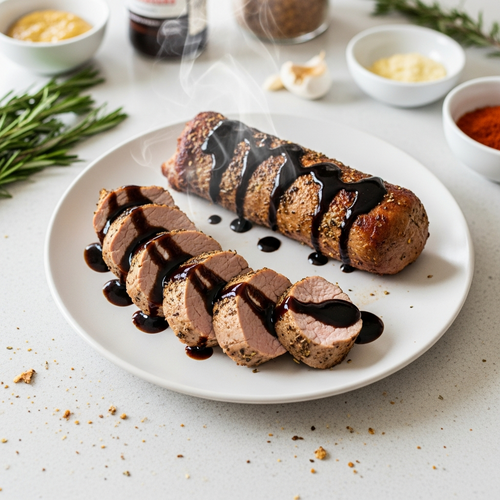
Description: A juicy, flavorful, and incredibly easy pork tenderloin recipe that’s perfect for a quick weeknight dinner. A simple spice rub and a tangy balsamic pan sauce make this high-protein meal feel gourmet without any of the effort.
Prep Time: 10 minutes | Cook Time: 20 minutes
Servings: 4
Macros per Serving | Calories: 245 | Protein: 35g | Fat: 9g | Carbohydrates: 4g
Ingredients
- 1.25 lbs pork tenderloin, trimmed of silverskin
- 1 tbsp olive oil
- 1 tsp garlic powder
- 1 tsp onion powder
- 1 tsp smoked paprika
- 1/2 tsp dried thyme
- 1/2 tsp salt
- 1/4 tsp black pepper
- 1 cup low-sodium chicken broth
- 2 tbsp balsamic vinegar
- 1 tbsp Dijon mustard
- 2 cloves garlic, minced
- 1 sprig fresh rosemary
Instructions
- Preheat oven to 400°F (200°C). Pat pork tenderloin completely dry with paper towels.
- In a small bowl, mix garlic powder, onion powder, paprika, thyme, salt, and pepper. Rub seasoning all over the pork.
- Heat olive oil in a large oven-safe skillet over medium-high heat. Sear the pork for 2-3 minutes per side until golden brown.
- Transfer the skillet to the oven and roast for 10-15 minutes, until a thermometer reads 145°F.
- Remove pork to a cutting board and let it rest for 5-10 minutes.
- Return the skillet to the stovetop over medium heat. Add minced garlic and cook for 30 seconds.
- Pour in balsamic vinegar to deglaze, scraping up any browned bits. Whisk in chicken broth and Dijon mustard. Add rosemary sprig and simmer for 3-5 minutes until slightly thickened.
- Slice the rested pork and serve with the pan sauce drizzled on top.
Notes
Using an oven-safe skillet (like cast iron) is key to making this a one-pan meal. A meat thermometer is highly recommended to prevent overcooking the pork.
FAQs About Pork Tenderloin For Weight Loss
Here are some straightforward answers to the most common questions I receive about this pork tenderloin recipe.
Is pork tenderloin healthy for weight loss?
Absolutely. Pork tenderloin is one of the best-kept secrets in the world of lean protein. Many people mistakenly think of all pork as being fatty, but the tenderloin is an exceptionally lean cut. Ounce for ounce, its nutritional profile is very similar to that of a skinless chicken breast, boasting high protein and low fat content.
For weight loss, protein is your most important macronutrient. It promotes satiety, which means it helps you feel full and satisfied after a meal, reducing the likelihood of snacking on high-calorie foods later. It also has a higher thermic effect of food (TEF), meaning your body burns more calories just digesting it. This recipe is designed to keep the pork tenderloin healthy by using a simple spice rub and a light pan sauce made from broth and vinegar, avoiding the heavy, calorie-dense sauces that can turn a healthy protein into a diet-wrecker.
What is the best internal temperature for pork tenderloin?
The single most important key to a juicy, tender pork tenderloin is not overcooking it. The official USDA guideline for safely cooking whole cuts of pork, including tenderloin, is an internal temperature of 145°F (63°C), followed by a minimum three-minute rest period. When you pull the pork from the oven at 145°F, the temperature will continue to rise a few degrees as it rests, ensuring it’s both perfectly safe and maximally juicy.
Many of us grew up with the idea that pork had to be cooked until it was completely white and tough as leather, but modern farming practices have made pork much safer. Cooking it to 145°F will leave it with a slightly pink center, which is not only safe but also the sign of a perfectly cooked, tender piece of meat. Using an instant-read digital meat thermometer is the only reliable way to achieve this. It’s a small investment that pays huge dividends in the quality of your cooking.
How do I keep my pork tenderloin from drying out?
Dry pork tenderloin is usually the result of a few common mistakes, but they’re all easy to avoid. First and foremost, as mentioned above, do not overcook it. Use a meat thermometer and pull it from the heat at 145°F. Every minute past that point will result in a drier final product.
Second, the initial high-heat sear is crucial. Searing the outside of the tenderloin in a hot pan before roasting creates a flavorful crust that helps to lock in the juices during the cooking process. Finally, you must let it rest. After you take it out of the oven, let it sit on a cutting board for at least 5-10 minutes before you even think about slicing it. This allows the juices that have been pushed to the center of the meat to redistribute throughout the tenderloin. If you skip the rest, all that moisture will spill out onto your cutting board instead of staying in the meat.
Can I make this pork tenderloin recipe in an air fryer?
Yes, you can definitely adapt this pork tenderloin recipe for an air fryer, and it works very well. The circulating hot air in an air fryer is great for creating a nice crust. To start, you would still season the pork as directed. For the best flavor, I still recommend searing it in a hot skillet on the stove for a couple of minutes per side before transferring it to the air fryer basket.
If you want to do the whole thing in the air fryer, preheat it to 400°F (200°C). Place the seasoned tenderloin in the basket and cook for about 15-20 minutes, flipping it halfway through. However, because all air fryers cook differently, the only way to be sure is to use a meat thermometer. Start checking the internal temperature after about 12 minutes. Once it hits 145°F, take it out and let it rest. You can make the pan sauce on the stovetop while the pork is resting.
What’s the difference between pork tenderloin and pork loin?
This is a very common point of confusion, and it’s important because they are not interchangeable cuts of meat. A pork tenderloin is a long, narrow, boneless cut of meat that comes from the muscle that runs along the backbone. It’s the pork equivalent of a beef filet mignon, which is why it’s so lean and tender. A typical tenderloin weighs about 1 to 1.5 pounds.
A pork loin, on the other hand, is a much larger, wider, and thicker cut of meat. It can be sold boneless or bone-in and is the cut where you get pork chops and pork roasts from. Because it’s a larger and slightly tougher muscle, it benefits from different cooking methods, often slower roasting. Using a pork loin in this quick-cooking recipe would likely result in tough, undercooked meat. Always make sure the package specifically says “pork tenderloin.”
Try These High-Protein Recipes Next
If you enjoyed this simple and flavorful recipe, here are a few others from our site and around the web that fit the same high-protein, easy-to-make philosophy.
- ADHD-Friendly American Goulash: A one-pot comfort food classic, packed with protein and perfect for meal prep.
- Simple & Healthy Gumbo Recipe: A lighter, easier take on the Louisiana favorite that doesn’t sacrifice flavor.
- Best Smoked Pork Tenderloin: If you have a smoker, this recipe is a fantastic way to impart incredible flavor into this lean cut of meat.
Building a rotation of reliable, delicious meals is the key to long-term success.