
For years, I thought quiche was off-limits. I pictured a heavy, buttery crust filled with cream and cheese. It seemed like the opposite of fat-loss food. It also seemed complicated, and with ADHD, complicated recipes are a guaranteed way to end up with a messy kitchen and an order for pizza.
But during my journey of losing 65 pounds, I learned to see food differently. I started looking at the core components of a dish. What was really in a quiche? Eggs, some kind of filling, and a binder. That’s it. Eggs are a protein powerhouse. The filling could be lean protein and vegetables.
The problem was the binder and the crust. The crust was empty calories, and the heavy cream was a fat bomb. So, I got rid of them. This recipe is the result of that experiment. It’s a crustless, high-protein quiche that completely changed my breakfast and lunch game.
It’s brutally simple to make, packs a massive protein punch to keep you full for hours, and it’s perfect for meal prep. It’s the kind of recipe that helps you stay consistent, which is the real secret to fat loss. It proves you don’t have to give up satisfying, delicious food to reach your goals.
Skip to My Flexibe Diet Recipe!
Why Quiche Is Great For Fat Loss
When we’re talking about fat loss, the game is all about managing hunger and staying in a calorie deficit without feeling miserable. This high-protein quiche is engineered to do exactly that, and it aligns perfectly with our core principles at ADHD FIT.
First and foremost, this recipe is built around protein. We have eggs, lean ham, cottage cheese, Greek yogurt, and Parmesan cheese. That’s five sources of protein working together. Protein is the most satiating macronutrient. It keeps you feeling full and satisfied long after you eat, which is your number one defense against the random, dopamine-seeking cravings that can derail our progress.
By ditching the traditional crust, we immediately slash hundreds of calories from processed carbs and fats. That buttery, flaky crust is delicious, but it doesn’t offer much in the way of nutrition or satiety. Our crustless version lets the protein and veggies be the star, maximizing nutrient density for every calorie you consume.
The secret weapon here is the blended cottage cheese and Greek yogurt base. This replaces the heavy cream found in traditional quiche recipes. It gives you an incredibly creamy and rich texture while dramatically cutting fat and adding even more high-quality protein. It’s a perfect example of working smarter, not harder, with your ingredients.
Finally, this quiche is a meal prepper’s dream. For those of us with ADHD, having healthy, ready-to-eat meals on hand is non-negotiable. It removes decision fatigue. Instead of staring into the fridge wondering what to make, you have a perfect slice of protein-packed goodness waiting for you. Consistency beats intensity every time, and this recipe makes consistency easy.
Ingredients You’ll Need for Quiche
One of our core rules is simplicity. This recipe uses straightforward ingredients you can find at any grocery store. No need to hunt for specialty items. Here’s exactly what you’ll need to put this high-protein quiche together.
The ingredient list is designed for maximum flavor and nutrition with minimal fuss. Remember, we love store-bought shortcuts if they help you stay on track.
- Cooking spray or 1 tsp olive oil
- 1 cup chopped broccoli florets
- 1/2 cup diced lean ham or turkey bacon
- 1/4 cup finely chopped onion
- 6 large eggs
- 1 cup low-fat cottage cheese
- 1/2 cup plain non-fat Greek yogurt
- 1/4 cup grated Parmesan cheese
- 1/4 tsp black pepper
- 1/8 tsp nutmeg
- 2 tbsp chopped fresh chives or green onions
The key ingredient that gives this recipe its magic is the combination of low-fat cottage cheese and plain non-fat Greek yogurt. When blended, they create a smooth, creamy custard that mimics the richness of heavy cream but with a fraction of the fat and a huge boost of protein. Don’t skip the blending step. It’s essential for getting that perfect, silky texture, especially if you’re not a fan of the texture of cottage cheese curds.
When it comes to the other ingredients, a few small choices can make a difference. For the ham, look for a lean, low-sodium variety. If you’re using broccoli, buying a bag of pre-chopped florets is a fantastic ADHD-friendly shortcut that saves time and reduces cleanup. For the Parmesan, grating your own from a block will always provide better flavor and meltiness than the pre-shredded kind, but either will work just fine. We choose practicality over perfection.
How To Make Quiche (Step-By-Step)
Making this quiche is incredibly straightforward. We break it down into simple, scannable steps to make it easy to follow, even on a low-energy day. The whole process is designed to be as low-friction as possible.
Just follow these steps, and you’ll have a perfect, protein-packed meal ready to go.
Step 1: Preheat Oven and Sauté Your Filling
First, get your oven preheating to 375°F (190°C). While it warms up, lightly grease a 9-inch pie dish. Next, heat a non-stick skillet over medium heat. This is an important tool; using a good non-stick pan means you need less oil. Add your chopped broccoli, diced ham, and onion to the skillet. Cook them for about 5 to 7 minutes. The goal is to soften the vegetables and release some of their moisture. This is a critical step. Skipping it will result in a watery quiche.
Step 2: Create the Creamy Egg Base
This is where the magic happens. In a blender or food processor, combine the six large eggs, the low-fat cottage cheese, and the non-fat Greek yogurt. Blend this mixture until it’s completely smooth and creamy. You shouldn’t see any cottage cheese curds left. This process incorporates air and ensures your final quiche has a light, custardy texture, not a dense, rubbery one.
Step 3: Combine and Season the Mixture
Once the fillings are cooked, spread them evenly across the bottom of your prepared pie dish. Pour your blended egg mixture from the blender into a separate mixing bowl. Now, stir in the grated Parmesan cheese, black pepper, and a pinch of nutmeg. Nutmeg might sound strange, but it’s a classic ingredient in creamy dishes and adds a subtle warmth that enhances the savory flavors. Whisk everything together until just combined.
Step 4: Assemble and Bake the Quiche
Carefully pour the seasoned egg mixture over the ham and vegetables in the pie dish. Bake for 35 to 45 minutes. You’ll know it’s done when the center is set. A simple way to check is to gently shake the dish; it shouldn’t be liquidy in the middle. You can also insert a knife into the center. If it comes out clean, your quiche is ready. The top will be a beautiful light golden brown.
Step 5: Cool, Garnish, and Serve
This is an important final step. Let the quiche cool in the dish for at least 10 minutes before you try to slice it. This allows the custard to finish setting, ensuring clean, beautiful slices. If you cut it too soon, it may fall apart. Once it has rested, sprinkle the fresh chives or green onions on top for a bit of fresh flavor and color. Then, you’re ready to serve.
How To Serve Quiche (ADHD-Friendly)
One of the best things about this high-protein quiche is its versatility. It’s not just for breakfast. You can eat it hot, warm, or even cold straight from the fridge. This flexibility is perfect for the ADHD brain, as it removes the pressure of having to prepare a complicated meal every time you’re hungry.
The key is to make it as easy as possible to grab a healthy meal. To do this, I recommend slicing the entire quiche into portions as soon as it has cooled. Store these individual slices in containers in the fridge. This is a game-changer for preventing decision fatigue. When hunger strikes, you don’t have to think. You just open the fridge and grab a serving.
Here are a few simple ways to turn a slice of quiche into a complete, satisfying meal:
- With a Simple Green Salad: This is my go-to. A handful of mixed greens, a drizzle of olive oil and vinegar, and you’re done. Use a bagged salad mix to make it even easier. The freshness of the salad cuts through the richness of the quiche perfectly.
- With a Side of Fruit: For a quick breakfast or lunch, pair a slice of quiche with a handful of berries, a sliced apple, or a banana. The fiber and natural sugars from the fruit provide a nice energy boost.
- With a Dollop of Greek Yogurt or Salsa: To add extra flavor and even more protein, top your slice of quiche with a spoonful of plain Greek yogurt or your favorite salsa. It adds a creamy or zesty kick that keeps things interesting.
The goal is to have a balanced plate without a lot of extra work. By pairing the protein-heavy quiche with a simple carb or a fibrous vegetable, you create a meal that supports stable energy levels and keeps you full for hours. It’s a sustainable system, not a rigid diet.
How To Store, Reheat, and Reuse Quiche
Proper storage is essential for making this recipe a true meal-prep asset. You want it to taste just as good on day three as it did on day one. Luckily, this quiche holds up incredibly well and is simple to store and reheat.
Once the quiche has cooled completely, you can either cover the entire pie dish tightly with plastic wrap or foil, or you can slice it into individual portions. As I mentioned before, I highly recommend pre-slicing. It’s an act of kindness to your future self. Place the slices in an airtight container and store them in the refrigerator. The quiche will stay fresh and delicious for up to 4 days.
When it comes to reheating, you have a few options depending on how much time you have:
- Microwave (Fastest): Place a slice on a microwave-safe plate and heat for 60-90 seconds. This is the quickest method, but it can sometimes make the texture a little softer. It’s perfect when you’re in a rush.
- Oven or Toaster Oven (Best Texture): For a texture that’s closer to freshly baked, preheat your oven or toaster oven to 350°F (175°C). Place the quiche on a baking sheet and heat for 10-15 minutes, or until warmed through.
- Air Fryer (Great Option): The air fryer is a fantastic middle ground. Set it to 325°F (160°C) and heat a slice for 5-7 minutes. It does a great job of warming the inside while keeping the outside from getting soggy.
You can also freeze this quiche for longer-term storage. Let it cool completely, wrap individual slices tightly in plastic wrap and then in foil, and place them in a freezer-safe bag. It will last for up to 3 months. To reheat from frozen, unwrap it and bake at 375°F (190°C) for 20-25 minutes. Don’t be afraid to make a double batch to stock your freezer.
Easy Swaps & Variations for Quiche
A great recipe isn’t just one you can follow; it’s one you can adapt. The ADHD brain thrives on flexibility, and this quiche recipe is incredibly forgiving. You can easily swap ingredients based on what you have in the fridge, your dietary needs, or just your personal preferences. Don’t be afraid to experiment.
The core of the recipe—the egg, cottage cheese, and Greek yogurt base—should stay the same, as it’s key to the texture and protein content. But the fillings are where you can get creative. The goal is to build a system that works for you, not to follow a rigid set of rules.
Here are some simple and effective swaps you can try:
- Vary Your Vegetables: Don’t have broccoli? No problem. Sautéed spinach (make sure to squeeze out all the excess water!), bell peppers, mushrooms, or asparagus work beautifully. You can also use a bag of frozen mixed vegetables for ultimate convenience. Just remember to cook them first to remove moisture.
- Switch Up the Protein: Instead of ham, try cooked shredded chicken, ground turkey, or crumbled sausage. For a vegetarian option, you can leave out the meat entirely and add more vegetables or some plant-based sausage crumbles.
- Experiment with Cheeses: Parmesan adds a nice, salty bite, but feel free to use other cheeses. Sharp cheddar, feta, goat cheese, or a Swiss cheese would all be delicious. A small amount of a strong-flavored cheese can add a lot of flavor without adding too many calories.
- Add More Flavor: Feel free to add other herbs and spices to the egg mixture. A pinch of garlic powder, onion powder, or some dried thyme can add another layer of flavor. A little bit of hot sauce or red pepper flakes can also give it a nice kick.
Think of this recipe as a template. By learning the basic technique, you can create dozens of different quiche variations. This not only prevents flavor boredom but also helps you reduce food waste by using up leftover vegetables and proteins you have on hand.
High-Protein Crustless Quiche
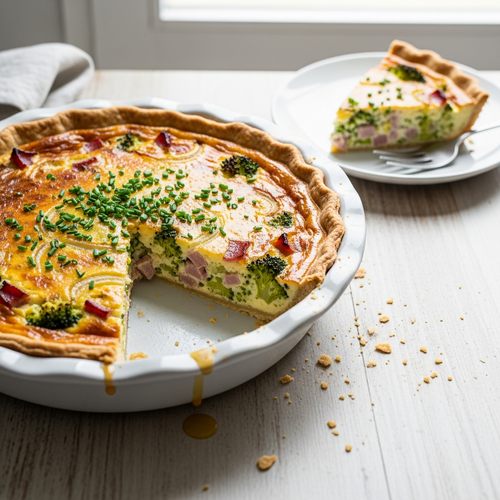
Description: A ridiculously easy, high-protein crustless quiche that’s perfect for meal prep. It’s creamy, satisfying, and designed to keep you full for hours, making fat loss feel effortless.
Prep Time: 10 minutes | Cook Time: 40 minutes
Servings: 4
Macros per Serving | Calories: 215 | Protein: 26g | Fat: 10g | Carbohydrates: 5g
Ingredients
- Cooking spray or 1 tsp olive oil
- 1 cup chopped broccoli florets
- 1/2 cup diced lean ham or turkey bacon
- 1/4 cup finely chopped onion
- 6 large eggs
- 1 cup low-fat cottage cheese
- 1/2 cup plain non-fat Greek yogurt
- 1/4 cup grated Parmesan cheese
- 1/4 tsp black pepper
- 1/8 tsp nutmeg
- 2 tbsp chopped fresh chives or green onions
Instructions
- Preheat oven to 375°F (190°C) and grease a 9-inch pie dish.
- Sauté broccoli, ham, and onion in a skillet for 5-7 minutes until tender. Spread evenly in the pie dish.
- Blend eggs, cottage cheese, and Greek yogurt until completely smooth.
- Stir Parmesan, pepper, and nutmeg into the egg mixture.
- Pour the egg mixture over the fillings in the pie dish.
- Bake for 35-45 minutes, until the center is set.
- Let cool for 10 minutes, then garnish with chives before serving.
Notes
Ensure you sauté the vegetables before baking to prevent a watery quiche. Blending the egg base is crucial for a smooth, creamy texture.
FAQs About Quiche For Weight Loss
Here are some straightforward answers to the most common questions I receive about this quiche recipe.
Why is my high-protein quiche watery?
A watery quiche is almost always caused by excess moisture from the fillings. This is the most common mistake people make. Vegetables, especially ones like mushrooms, spinach, and zucchini, release a lot of water when they cook. If you add them to the egg mixture raw, that water will seep out during baking, preventing the custard from setting properly and creating a soupy, separated texture at the bottom of your dish.
The solution is simple but essential: you must pre-cook your vegetables. By sautéing them in a skillet beforehand, as the recipe directs, you allow most of that water to evaporate before the quiche even goes into the oven. For extra watery vegetables like spinach or frozen broccoli, you might even want to give them a gentle squeeze with a paper towel after cooking to remove any lingering moisture. Taking this extra five-minute step will guarantee a perfectly set, creamy quiche every time.
Can I make this quiche recipe ahead of time?
Absolutely. In fact, this recipe was specifically designed to be made ahead of time. It’s a cornerstone of an ADHD-friendly meal prep strategy. Having healthy, delicious meals ready to go is one of the most powerful tools for staying consistent with your nutrition. It eliminates the “what’s for dinner?” panic that can lead to ordering takeout or grabbing unhealthy snacks.
You can bake the entire quiche, let it cool completely, and then store it in the refrigerator for up to four days. I strongly recommend slicing it into individual portions before you store it. That way, when you’re hungry, you can just grab a single slice without any extra effort. It’s also freezer-friendly, so feel free to make a double batch. Wrap individual slices tightly and freeze them for up to three months for a future easy meal.
How do I know when the quiche is fully cooked?
Knowing when a quiche is done can be tricky, as overcooking will make it rubbery and dry. The key is to look for a center that is “mostly set.” When you gently shake the pie dish, the edges of the quiche should be firm and not move, while the very center might have a very slight jiggle to it, similar to set Jell-O. It shouldn’t be sloshy or liquidy.
The most reliable method is the knife test. Insert a thin knife or a toothpick into the center of the quiche. If it comes out clean, without any wet egg mixture on it, the quiche is done. Remember that the quiche will continue to cook from residual heat for a few minutes after you take it out of the oven. This is why the 10-minute cooling period is so important; it allows the custard to finish setting up perfectly.
Can I add a crust to this high-protein quiche?
You certainly can, but it’s important to understand how that changes the nutritional profile of the dish. This recipe is crustless by design to keep the calories and carbs low, maximizing the protein per calorie. Adding a traditional pastry crust will significantly increase the fat and carbohydrate content, turning it into a much more calorie-dense meal.
If you love the texture of a crust, there are a few options. For convenience, you can use a store-bought frozen pie crust; just follow the package instructions for pre-baking it before you add the filling. For a healthier alternative, you could explore crusts made from almond flour, shredded sweet potato, or even quinoa. Just be sure to account for the extra calories and macros if you are tracking them for your fat loss goals.
Is this crustless quiche recipe suitable for a low-carb or keto diet?
Yes, this recipe is naturally very low in carbohydrates, making it an excellent choice for a low-carb or ketogenic lifestyle. The main ingredients—eggs, cheese, meat, and low-carb vegetables like broccoli—are all staples of these eating plans. The total carbohydrate count per serving is only around 5 grams, most of which comes from the vegetables and the small amount of lactose in the dairy.
To ensure it’s fully keto-compliant, you’ll want to use full-fat cottage cheese and full-fat Greek yogurt to increase the fat content. Also, double-check the labels on your ham or bacon to ensure there are no added sugars. This quiche is a fantastic way to get a high-protein, high-fat meal that will keep you full and in ketosis without feeling like you’re on a restrictive diet.
Try These High-Protein Recipes Next
If you enjoyed this simple and satisfying quiche, here are a few other recipes from our collection that are built on the same principles of high protein and ADHD-friendly prep.
- Healthy Chicken Pot Pie: A comforting classic redesigned for fat loss, with a high-protein filling and a simple biscuit topping instead of a heavy crust.
- High-Protein Deviled Eggs: This recipe uses a Greek yogurt trick to slash the fat and boost the protein, making it the perfect healthy snack or appetizer.
- Tomato Bacon Spinach Quiche: For another great quiche variation, check out this recipe that uses a delicious combination of savory bacon and fresh vegetables.
Give them a try and keep building your arsenal of simple, sustainable meals.