
For most of my life, I put Mexican food in the “cheat meal” category. It was something you had on a Friday night with a margarita, not something that could help you lose 65 pounds. The refried beans I knew came from a can, loaded with lard and salt, and felt heavy and indulgent. They were delicious, but they were a clear part of my “before” picture, not the “after.”
When I started my fitness journey, I had to rethink everything I thought I knew about food. My ADHD brain loves all-or-nothing thinking, so I initially just cut out everything I labeled “bad.” But that wasn’t sustainable. The real breakthrough came when I realized I didn’t have to give up the foods I loved. I just had to understand what made them work and rebuild them to fit my goals.
That’s how this recipe for refried beans was born. It started as an experiment. Could I get that same creamy, satisfying texture without the fat? Could I pack it with flavor and protein to keep me full and kill cravings? The answer was a resounding yes. This recipe became a staple in my meal prep, a versatile side dish that fueled my workouts and kept me on track without feeling deprived.
This isn’t just a recipe. It’s proof that you can build a fit, sustainable lifestyle without giving up delicious food. It’s about working with your brain, not against it, and finding simple, practical ways to make healthy eating feel easy and enjoyable. This is a cornerstone of the ADHD FIT philosophy.
Skip to My Flexibe Diet Recipe!
Why Refried Beans Are Great For Fat Loss
When you hear “refried beans,” you probably don’t think “fat loss food.” The traditional restaurant and canned versions are often made with lard or other fats, which sends the calorie count through the roof. But when we build them from scratch with the right ingredients, they become an absolute powerhouse for a sustainable fitness plan.
First, let’s talk about hunger management. This is 75 percent of the battle, especially with an ADHD brain that chases dopamine through snacking. Pinto beans are packed with fiber and protein. This combination is the ultimate tool for satiety. The fiber slows down digestion, keeping you feeling full for hours, which helps prevent the mindless grazing that can derail your progress. The protein helps build and maintain muscle, which is critical for a healthy metabolism.
We take the protein a step further in this recipe by swapping out the traditional lard for non-fat Greek yogurt. This is a game-changer. It gives the beans an incredibly creamy texture while adding a significant protein boost and almost zero fat. You get all the comfort and satisfaction without the unnecessary calories. More protein means you stay fuller longer and are less likely to experience intense cravings later in the day.
Finally, this recipe is brutally practical. It uses canned beans, which means it’s fast and requires minimal planning. On a low-motivation day, you can still whip this up in about 15 minutes. It’s a flexible food you can use all week as a side, in a burrito bowl, or as a dip. Consistency beats intensity every time, and having easy, delicious, and macro-friendly staples like these refried beans on hand is what creates real, lasting results.
Ingredients You’ll Need for Refried Beans
Building a healthier version of a classic comfort food doesn’t require a long list of complicated ingredients. Our focus is on simple, accessible items that deliver maximum flavor and nutrition. We’re keeping it straightforward so you can make this even when your executive function is running on empty.
The secret weapon in this recipe is the non-fat plain Greek yogurt. This is what gives our refried beans their rich, creamy texture without adding the lard or oil found in traditional recipes. It also significantly bumps up the protein content, which is a core principle of our eating plan for managing hunger and supporting muscle growth. It’s a simple swap that completely changes the nutritional profile of the dish.
Here’s everything you’ll need to make these incredible refried beans:
- 2 (15-ounce) cans pinto beans, no salt added, rinsed and drained: Using “no salt added” beans is key. It allows you to control the sodium level yourself. Rinsing them well removes excess starch and salt from the canning liquid.
- 1/2 cup non-fat plain Greek yogurt: This is our high-protein creaminess agent. Make sure it’s plain, not flavored or sweetened.
- 1/2 cup vegetable broth, plus more as needed: We use this to sauté the onions without oil and to adjust the consistency of the beans.
- 1/2 white onion, finely chopped: Provides a foundational layer of savory flavor.
- 2 cloves garlic, minced: Essential for that classic, aromatic taste.
- 1 teaspoon chili powder: For warmth and a gentle kick.
- 1/2 teaspoon ground cumin: Adds a smoky, earthy depth.
- 1/4 teaspoon smoked paprika: A little bit goes a long way to add a delicious smoky flavor.
- 1/4 teaspoon dried oregano: Complements the other spices perfectly.
- Salt and freshly ground black pepper to taste: To enhance all the flavors.
- 1 tablespoon fresh lime juice: Brightens everything up at the end. Don’t skip this.
- 2 tablespoons chopped fresh cilantro: Adds a fresh, vibrant finish.
An ADHD tip for prep: Use a food processor or a mini chopper for the onion and garlic. It saves time and the sensory hassle of chopping, making the task much easier to start.
How To Make Refried Beans (Step-By-Step)
This process is designed to be as simple and foolproof as possible. We’re building layers of flavor quickly, so you can get a delicious, healthy side dish on the table in under 20 minutes. You don’t need any fancy chef skills, just a skillet and something to mash with.
Step 1: Sauté Your Aromatics
Start by heating a large non-stick skillet over medium heat. Instead of oil, pour in about 2 tablespoons of the vegetable broth. Once it’s simmering, add your finely chopped white onion. Cook the onion, stirring every so often, for about 5 to 7 minutes. You want it to become soft and translucent. If the pan starts to look dry, just add another splash of broth. This technique, called water-sautéing, gives you all the flavor of sautéed onions without any added fat.
Step 2: Bloom the Spices
Once the onions are soft, add the minced garlic, chili powder, cumin, smoked paprika, and dried oregano. Stir everything together constantly for about one minute. This step is called “blooming” the spices. Cooking them for a minute in the hot pan unlocks their essential oils and makes their flavor much more intense and aromatic. You’ll know it’s ready when you can really smell them.
Step 3: Simmer the Beans
Now, pour in the rinsed and drained pinto beans along with 1/4 cup of vegetable broth. Stir everything to combine and bring the mixture to a gentle simmer. Let it bubble away for a minute or two to allow the beans to heat through and start absorbing all those amazing flavors you just built.
Step 4: Mash to Your Liking
Reduce the heat to low. Now it’s time to mash. For a chunkier, more rustic texture, use a potato masher or even just the back of a sturdy fork. If you prefer super smooth, creamy refried beans like you get in a restaurant, an immersion blender is your best friend. Mash or blend until you reach your desired consistency, then continue to cook for another 3 to 5 minutes, stirring, so the flavors can meld together. If they get too thick, add more broth, a tablespoon at a time.
Step 5: Finish with Creaminess and Freshness
Remove the skillet from the heat. This is an important step because you don’t want the Greek yogurt to curdle. Stir in the Greek yogurt, fresh lime juice, and chopped cilantro. Mix until the yogurt is fully incorporated and the beans are smooth and creamy. Finally, season with salt and pepper to your taste. Serve them up warm and enjoy!
How To Serve Refried Beans (ADHD-Friendly)
One of the best things about these refried beans is their versatility. For an ADHD brain that can get bored with eating the same thing every day, having a flexible “component” like this is a huge win. You cook it once and can use it in a dozen different ways throughout the week, which simplifies meal decisions and keeps things interesting.
Think of these beans as a building block for easy, high-protein meals. Don’t overthink it. The goal is to make healthy eating feel effortless, not like a chore that requires immense planning and focus. Keep it simple and pair them with other easy-to-grab items.
Here are a few brutally practical ways to serve your refried beans:
- As a Side Dish: The most obvious way! Serve a scoop alongside grilled chicken or steak, with a side of my Easy Mexican Rice. It turns a simple protein into a full, satisfying meal.
- In a Burrito Bowl: This is my go-to. I’ll layer a bowl with brown rice, a big scoop of these beans, some pre-cooked ground turkey or shredded rotisserie chicken, salsa, and a little avocado. It takes five minutes to assemble and is perfectly balanced.
- For Quick Tacos: Grab some low-carb tortillas, spread on a layer of warm refried beans, add your protein of choice, and top with lettuce and pico de gallo. An instant, healthy taco night.
- As a Healthy Dip: Serve the beans warm in a bowl, topped with a little extra cilantro. Use bell pepper strips, celery sticks, or high-protein crackers for dipping. It’s a fantastic, filling snack that crushes afternoon cravings.
- On Top of a Salad: Add a warm scoop to a taco salad. The creamy beans act almost like a dressing, adding flavor, protein, and fiber to keep you full for hours.
The key ADHD-friendly strategy here is component prep. Make a big batch of these refried beans on Sunday. Store them in the fridge. Now, throughout the week, you have a ready-made, healthy carb and protein source you can instantly add to any meal. This reduces the friction of cooking and makes sticking to your plan so much easier.
How To Store, Reheat, and Reuse Refried Beans
Meal prep is a lifeline for anyone, but it’s especially crucial when you have ADHD. It removes the daily “what’s for dinner?” decision fatigue. These refried beans are perfect for prepping ahead because they store beautifully and taste just as good, if not better, the next day as the flavors have more time to meld together.
Proper storage is simple. Once the beans have cooled down to room temperature, transfer them to an airtight container. They will keep well in the refrigerator for up to 4-5 days. You can also freeze them for longer-term storage. I like to portion them out into smaller, single-serving containers or even freezer-safe zip-top bags. They’ll last for up to 3 months in the freezer.
Here’s how to handle reheating and reusing them:
- Reheating from the Fridge: The beans will thicken up considerably once they’re chilled. To reheat, you can use the microwave or the stovetop. In the microwave, place them in a microwave-safe bowl and heat in 60-second intervals, stirring in between, until hot. On the stovetop, place them in a small saucepan over medium-low heat. You will likely need to add a splash of vegetable broth or water (a tablespoon or two) to loosen them up as they heat. Stir frequently until they are smooth and hot.
- Reheating from the Freezer: The best way is to let them thaw overnight in the refrigerator first. Then, you can reheat them using the stovetop or microwave method described above. If you’re in a hurry, you can use the defrost setting on your microwave before heating them through.
- Creative Leftover Ideas: Don’t just eat them as a side! Spread leftover beans on a tortilla, sprinkle with cheese, and make a quick quesadilla. Mix them into a soup to add creaminess and protein. Or, my personal favorite, top a baked potato with a scoop of hot refried beans, salsa, and a dollop of Greek yogurt for a super filling, easy lunch.
By having a plan for your leftovers, you reduce food waste and make your life easier. It’s a simple system that supports consistency, which is the true secret to long-term success.
Easy Swaps & Variations for Refried Beans
The best recipes are the ones you can adapt to what you have on hand or to your personal taste. This refried beans recipe is incredibly forgiving and flexible. The goal is to have a reliable, healthy staple, so don’t be afraid to make it your own. Perfection is the enemy of progress, so work with what you’ve got.
Whether you need to accommodate a dietary restriction, use up something in your pantry, or just want to change up the flavor profile, there are plenty of easy swaps you can make. This is all about reducing the friction to get a healthy meal on the table, so if a substitution makes it easier for you to cook, do it.
Here are some simple and effective variations:
- Change the Beans: While pinto beans are classic for refried beans, this recipe works wonderfully with black beans too. Black beans will give you a slightly sweeter, earthier flavor. You could even try it with cannellini beans for an extra creamy, milder version.
- Make It Vegan/Dairy-Free: The Greek yogurt is key for creaminess, but you can easily make this recipe vegan. Simply omit the yogurt altogether, or substitute it with a plain, unsweetened dairy-free yogurt (like a coconut or soy-based one). You might need a little extra broth to get the right consistency.
- Adjust the Spice Level: If you love heat, feel free to add it! Finely mince a jalapeño and sauté it with the onion. You could also add a pinch of cayenne pepper or a dash of your favorite hot sauce at the end. If you prefer it milder, you can reduce the amount of chili powder.
- Use Different Spices: Don’t have smoked paprika or oregano? No problem. You can still make delicious beans. The core spices are chili powder and cumin. You could also add a pinch of coriander or a bay leaf while the beans simmer for extra depth.
- Add Some Veggies: To boost the fiber and nutrient content even more, you can sauté some finely chopped bell peppers or zucchini along with the onions at the beginning.
These swaps allow you to keep the recipe in your rotation without getting bored. Remember, the core principles are what matter: lean protein, high fiber, and great flavor. As long as your swaps support those goals, you’re on the right track.
High-Protein Refried Beans
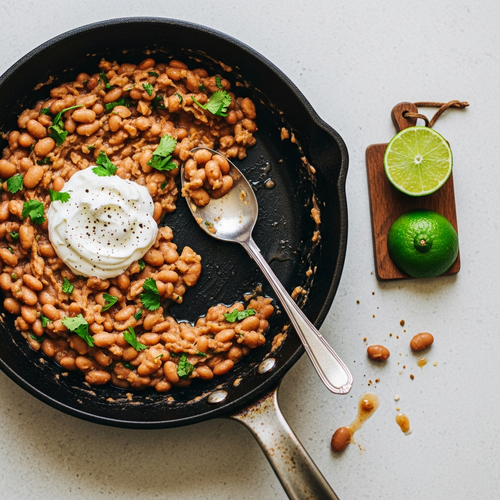
Description: An incredibly creamy, flavorful, and high-protein refried beans recipe made without any lard or oil. Perfect for meal prep and a healthy, fat-loss-focused lifestyle.
Prep Time: 5 minutes | Cook Time: 15 minutes
Servings: 4
Macros per Serving | Calories: 140 | Protein: 11g | Fat: 1g | Carbohydrates: 24g
Ingredients
- 2 (15-ounce) cans pinto beans, no salt added, rinsed and drained
- 1/2 cup non-fat plain Greek yogurt
- 1/2 cup vegetable broth, plus more as needed
- 1/2 white onion, finely chopped
- 2 cloves garlic, minced
- 1 teaspoon chili powder
- 1/2 teaspoon ground cumin
- 1/4 teaspoon smoked paprika
- 1/4 teaspoon dried oregano
- Salt and freshly ground black pepper to taste
- 1 tablespoon fresh lime juice
- 2 tablespoons chopped fresh cilantro
Instructions
- Heat a non-stick skillet over medium heat. Add onion and 2 tbsp of broth. Cook for 5-7 minutes until soft.
- Add garlic and all spices. Cook for 1 minute until fragrant.
- Stir in the beans and 1/4 cup of broth. Bring to a simmer.
- Reduce heat and mash beans to your desired consistency. Cook for another 3-5 minutes.
- Remove from heat. Stir in Greek yogurt, lime juice, and cilantro.
- Season with salt and pepper to taste and serve warm.
Notes
The beans will thicken as they cool. Add a splash of vegetable broth or water when reheating to restore their creamy consistency.
FAQs About Refried Beans For Weight Loss
Here are some straightforward answers to the most common questions I receive about this refried beans recipe.
Are canned refried beans healthy for weight loss?
This is a great question because it gets to the heart of why making food from scratch can be so powerful. Generally, most commercially canned refried beans are not ideal for weight loss. They are often made with lard, bacon fat, or hydrogenated oils to make them creamy and shelf-stable. This adds a significant amount of saturated fat and calories without providing much nutritional benefit.
Additionally, they are typically very high in sodium, which can lead to water retention and bloating, and isn’t great for overall heart health. By making your own refried beans using our recipe, you control every single ingredient. You replace the fat with protein-rich Greek yogurt, you control the salt, and you avoid any unnecessary preservatives. The result is a dish that is high in fiber and protein, low in fat, and full of flavor—a perfect fit for a fat-loss plan.
How can I make these refried beans creamier without adding fat?
Achieving that signature creamy texture without fat is the main goal of this recipe. The first key is the non-fat Greek yogurt, which adds a tangy richness and a smooth consistency. Be sure to stir it in off the heat to prevent it from curdling. The second factor is your mashing technique. For the absolute creamiest result, an immersion blender is the best tool. It breaks down the beans completely, creating a silky-smooth puree.
If you don’t have an immersion blender, you can transfer the beans to a regular blender, but that can be messy. Mashing thoroughly with a potato masher also works well. The final tip is to manage the liquid content. Don’t be afraid to add a little extra vegetable broth, a tablespoon at a time, as you mash or blend until you reach that perfect, creamy consistency. A little patience here goes a long way.
Can I make these refried beans in a crockpot?
Yes, you absolutely can, and using a slow cooker is a fantastic ADHD-friendly strategy. It’s a “set it and forget it” method that requires minimal active cooking time. To adapt this recipe for a crockpot, I would still recommend doing the first two steps on the stovetop—sautéing the onions and blooming the spices. This five-minute step builds a flavor base that you just can’t get by dumping everything in raw.
After that, transfer the onion and spice mixture to your slow cooker. Add the rinsed beans and the vegetable broth, stir, and cook on low for 3-4 hours or on high for 1-2 hours. The beans will become very soft. Once they’re done cooking, you can mash them directly in the crockpot with a potato masher. Then, turn off the heat and stir in the Greek yogurt, lime juice, and cilantro just before serving.
What’s the best type of bean for homemade refried beans?
The classic, most traditional choice for refried beans is the pinto bean. Pinto beans have a naturally creamy, almost buttery texture when cooked and mashed, and their earthy flavor is what most people associate with this dish. They are my top recommendation and what this recipe is built around. They provide that authentic taste and texture that feels like pure comfort food.
However, you can definitely experiment with other beans. Black beans are a very popular alternative and create a slightly sweeter, denser version of the dish. They are equally delicious, just different. For a unique twist, you could even use cannellini beans or great northern beans. These white beans have a much milder flavor and create an incredibly smooth and creamy final product. Don’t be afraid to use what you have in your pantry.
How do I meal prep with these refried beans?
These refried beans are a meal prep superstar. The best way to incorporate them is through “component prepping.” Instead of making fully assembled meals that can get soggy or boring, you prepare the individual components. On a Sunday, you can make a big batch of these beans, a batch of my Mexican rice, and cook up a pound or two of ground turkey or shredded chicken.
Store each component in a separate airtight container in the fridge. Now, during the week, you have a grab-and-go toolkit for building healthy meals in minutes. You can assemble a burrito bowl for lunch, make quick tacos for dinner, or have a scoop of beans with a chicken breast as a side. This system reduces decision fatigue, prevents you from getting bored, and makes it incredibly easy to hit your macros and stay consistent with your plan, even on the busiest days.
Try These High-Protein Recipes Next
If you loved how simple and delicious these refried beans were, here are a few other recipes that follow the same principles.
- Easy & Healthy Mexican Rice Recipe: The perfect companion to these refried beans. It’s a flavorful, lightened-up version of the restaurant classic that’s perfect for building burrito bowls.
- Healthy & High-Protein Chicken Enchiladas: A satisfying and macro-friendly enchilada recipe that proves you don’t have to give up your favorite comfort foods to lose fat.
- Easy Refried Beans from This Gal Cooks: For another fantastic take on homemade refried beans, check out this simple and delicious recipe. It’s always great to have a few variations in your toolkit.
Building a collection of go-to, easy recipes is the key to making your fitness journey sustainable and enjoyable.