
Tomato soup has always been one of those ultimate comfort foods for me. Growing up, it meant a rainy day, a grilled cheese sandwich, and a feeling of total contentment. But when I started my fitness journey and lost 65 pounds, I put foods like that on the “do not eat” list. The canned stuff was full of sugar and sodium, and the creamy restaurant versions were loaded with fat.
I figured it was off the table for good. But as I learned more about sustainable fat loss, I realized that restriction is a recipe for failure. The real key is to rebuild your favorite foods to work for your goals, not against them. That’s exactly what I did with this high-protein tomato soup.
This recipe was born out of a need for something warm, satisfying, and easy to make on days when my ADHD brain felt completely overwhelmed. It had to be simple, packed with flavor, and most importantly, it had to crush my cravings and keep me full for hours. The secret ingredient I landed on makes it incredibly creamy and boosts the protein without all the fat of heavy cream.
This is the tomato soup that fits our lifestyle. It supports fat loss, quiets the food noise, and feels like a warm hug in a bowl. It’s brutally practical, just how we like it.
Skip to My Flexibe Diet Recipe!
Why Tomato Soup Is Great For Fat Loss
When we talk about fat loss, remember the core principle: food is 75 percent of your results. Workouts are important, but what you eat moves the needle the most. This tomato soup is specifically designed to make hitting your goals easier, not harder.
First, we’ve re-engineered it to be a protein-first meal. Traditional creamy tomato soup uses heavy cream, which adds a ton of calories and fat with zero protein. We’re swapping that out for low-fat cottage cheese. This one simple change adds a significant protein punch, which is critical for feeling full and satisfied after a meal. Protein helps you stay full longer, which means fewer random cravings later in the day.
Second, this soup is a perfect example of a high-volume food. It’s packed with tomatoes, onions, carrots, and broth, all of which have very few calories for the amount of space they take up in your stomach. A big, warm bowl of this soup is incredibly filling, making it much easier to stay in a calorie deficit without feeling like you’re starving. Hunger management is everything, especially for the ADHD brain that can be prone to impulsive snacking.
Finally, it’s just plain satisfying. A warm, flavorful soup can provide the psychological comfort we often seek from food. By having a planned, healthy comfort food like this tomato soup, you’re less likely to give in to cravings for high-calorie, low-nutrient junk food. It’s a flexible eating strategy that allows you to enjoy your food while consistently moving toward your goals.
Ingredients You’ll Need for Tomato Soup
Building a solid meal starts with having the right ingredients on hand. For those of us with ADHD, having a stocked pantry with reliable staples is a game-changer. It removes the friction of having to run to the store and makes it easier to follow through on making a healthy meal.
This tomato soup uses simple, accessible ingredients that deliver a huge amount of flavor. Here’s exactly what you’ll need to make it.
-
1 tablespoon olive oil
-
1 large yellow onion, quartered
-
2 large carrots, roughly chopped
-
4 cloves garlic, peeled
-
2 (28-ounce) cans of whole peeled tomatoes, undrained
-
2 cups low-sodium chicken or vegetable bone broth
-
1 cup low-fat cottage cheese
-
2 tablespoons tomato paste
-
1 teaspoon dried basil
-
1/2 teaspoon dried oregano
-
1/2 teaspoon dried thyme
-
1/4 teaspoon red pepper flakes (optional, for a little heat)
-
Salt and freshly ground black pepper to taste
-
Fresh basil leaves, for garnish
The absolute star of this recipe is the low-fat cottage cheese. I know what some of you might be thinking, but trust me. Once you blend it into the hot soup, the texture disappears completely, and you’re left with a rich, creamy consistency that’s incredible. You get all the creaminess of a traditional soup with a massive protein boost and way less fat. You will not taste the cottage cheese, I promise.
A quick note on tomatoes: the quality of your canned tomatoes matters. If you can find San Marzano tomatoes, they have a wonderful sweetness and lower acidity that really elevates the soup. However, any good quality brand of whole peeled tomatoes will work just fine. Using canned tomatoes ensures you get a deep, rich flavor that’s consistent year-round.
How To Make Tomato Soup (Step-By-Step)
One of my rules for ADHD-friendly cooking is to find steps that add a lot of flavor for very little active effort. Roasting the vegetables is a perfect example of this. It’s a hands-off step that dramatically deepens the flavor of the final soup, making it taste like it simmered for hours.
This process is simple and broken down into easy-to-follow chunks. Don’t get overwhelmed, just take it one step at a time.
Step 1: Roast The Vegetables
First, get your oven preheating to 400°F (200°C). While it heats up, toss your quartered onion, chopped carrots, and whole garlic cloves onto a baking sheet with a tablespoon of olive oil. Use your hands to make sure everything is lightly coated. Spread them out in a single layer and pop them in the oven for 20-25 minutes.
You’re looking for the vegetables to become tender and get some nice caramelized, slightly browned edges. This roasting process brings out their natural sweetness and gets rid of any harsh, raw flavors. It’s a simple trick that makes a huge difference.
Step 2: Combine in Pot and Simmer
Once the vegetables are roasted, it’s time to build the soup. In a large pot or a Dutch oven, add the two cans of whole peeled tomatoes with all their juices. Then, add your beautifully roasted vegetables directly from the baking sheet. Pour in the bone broth and stir in the tomato paste and all the dried herbs: basil, oregano, thyme, and the optional red pepper flakes.
Bring everything to a simmer over medium-high heat. As soon as it starts bubbling, reduce the heat to low, put a lid on the pot, and let it gently simmer for at least 30 minutes. This is where all those amazing flavors get to know each other and meld into a cohesive, delicious soup.
Step 3: Blend Until Creamy
This is where the magic happens. Carefully transfer the hot soup into a blender. You will likely need to do this in two batches to avoid overfilling it. Add the cottage cheese to the blender along with the soup. It’s very important to allow steam to escape while blending hot liquids, so remove the small cap from the blender lid and cover the opening with a folded kitchen towel.
Blend until the soup is completely smooth and creamy. If you have an immersion blender, you can use that directly in the pot, which is a fantastic ADHD-friendly shortcut. It means less mess and fewer dishes to wash.
Step 4: Season and Serve
Pour the blended soup back into the pot. Now it’s time to taste and season. Add salt and freshly ground black pepper until the flavors pop. Gently reheat the soup over low heat just until it’s warmed through, but don’t let it boil.
Serve the soup hot, and if you’re feeling fancy, garnish it with a few fresh basil leaves. That’s it. You just made an incredibly delicious, high-protein tomato soup.
How To Serve Tomato Soup (ADHD-Friendly)
This tomato soup is fantastic on its own, but serving it with the right extras can turn it into an even more satisfying and well-rounded meal. For the ADHD brain, the key is to make these additions easy. Think “assembly,” not more cooking. Having a few ready-to-go toppings can prevent that feeling of a meal being incomplete, which often leads to foraging for snacks afterward.
Of course, the classic pairing is a grilled cheese sandwich. You can absolutely still have one! My approach is to make it work for my goals. I use a high-protein or whole-grain bread, a slice of reduced-fat provolone or cheddar, and a light spray of olive oil instead of butter. It satisfies the craving perfectly without being a huge calorie bomb.
Beyond grilled cheese, here are some simple, ADHD-friendly ways to serve up your soup and boost its nutritional value:
-
Add a Protein Topper: This is the easiest way to make the soup even more filling. Top it with some leftover shredded rotisserie chicken, a swirl of plain Greek yogurt for extra creaminess, or a sprinkle of nutritional yeast for a cheesy flavor.
-
Incorporate Healthy Fats and Crunch: Texture is key to making a meal feel satisfying. A small sprinkle of toasted pumpkin seeds, sunflower seeds, or even a few store-bought croutons adds a great crunch. A drizzle of high-quality extra virgin olive oil on top is also delicious.
-
Use Freezer Hacks for Freshness: Fresh herbs are great, but they can go bad quickly, which is frustrating. I often buy fresh parsley or basil, chop it up, and freeze it in an ice cube tray with a little water or olive oil. You can pop a cube right into your hot soup for a burst of fresh flavor.
The goal is to have these simple additions on hand so that on a low-motivation day, you can still assemble a meal that feels complete and satisfying. This small bit of planning prevents the “what now?” spiral and helps you stay consistent with your nutrition.
How To Store, Reheat, and Reuse Tomato Soup
One of the best things about this tomato soup recipe is that it’s perfect for batch cooking. I almost never make a single-day supply. Cooking once and eating multiple times is a core strategy for anyone, but it’s especially crucial for managing life with ADHD. It’s a gift you give your future self for those days when energy and executive function are low.
Proper storage is key to making sure your delicious soup is just as good on day three as it was on day one. Here’s my brutally practical guide to storing, reheating, and even reusing your leftovers.
An essential ADHD tip: label everything. Get some painter’s tape and a permanent marker and label every container with what it is and the date you made it. This tiny step prevents your fridge and freezer from turning into a graveyard of mystery containers.
-
In the Refrigerator: Once the soup has cooled down a bit, transfer it to airtight containers. It will stay fresh and delicious in the fridge for up to 5 days. This makes it perfect for quick lunches or easy dinners throughout the week.
-
In the Freezer: This tomato soup freezes incredibly well. Let it cool completely before storing it. I highly recommend freezing it in single-serving portions using freezer-safe containers or Souper Cubes. This way, you can pull out exactly what you need for a near-instant meal. It will last for up to 3 months in the freezer.
When it’s time to reheat, you have a couple of options. The best way is to gently warm it in a saucepan on the stove over medium-low heat, stirring occasionally until it’s hot. But let’s be real, sometimes we need food now. The microwave is perfectly fine. Just use a microwave-safe bowl, cover it to prevent splatters, and heat it in 60-second intervals, stirring in between, until it’s ready.
Want to get creative? You can also reuse the leftover soup as a sauce base. Simmer it in a pan to thicken it up, and then toss it with some high-protein pasta and cooked ground turkey for a completely new and easy meal.
Easy Swaps & Variations for Tomato Soup
Remember, one of our core principles is that flexible systems win. This recipe is a fantastic template, but you should feel empowered to adapt it based on what you have on hand, your dietary needs, or just what you’re in the mood for. Perfection is not the goal; a delicious, healthy meal is. This tomato soup is very forgiving, so don’t be afraid to experiment.
Here are a few simple swaps and variations you can try to make this recipe your own:
-
For a Vegan or Dairy-Free Version: The main swap here is the cottage cheese. You can achieve a similar creaminess by blending in 1 cup of soaked raw cashews (soaked in hot water for at least 30 minutes, then drained) or by using a store-bought vegan cream cheese or sour cream. Also, be sure to use vegetable broth instead of chicken bone broth.
-
To Make it Spicy: If you like a bit of heat, this soup takes it on beautifully. You can increase the red pepper flakes, or for a deeper, smokier heat, add a chopped chipotle pepper in adobo sauce to the pot when you add the tomatoes. A little goes a long way, so start with half a pepper.
-
“Clean Out the Fridge” Variation: This soup is a great way to use up vegetables that are on their last legs. Have some celery, a bell pepper, or a zucchini that needs to be used? Roughly chop it and roast it right along with the carrots and onions. It’s an easy way to reduce food waste and add extra nutrients.
-
Adjust the Herbs: If you don’t have the individual dried herbs, you can substitute them with 2 teaspoons of a good Italian seasoning blend. If you have fresh herbs, you can use those too! A handful of fresh basil or oregano stirred in at the very end after blending adds a wonderful, bright flavor.
High-Protein Creamy Tomato Soup
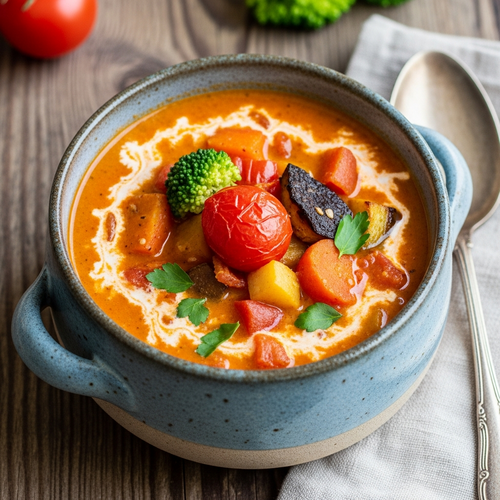
Description: A rich and creamy tomato soup packed with protein to keep you full and satisfied. The perfect comfort food for a fat loss lifestyle, designed to be simple and ADHD-friendly.
Prep Time: 10 minutes | Cook Time: 55 minutes
Servings: 6
Macros per Serving | Calories: 150 | Protein: 7g | Fat: 4g | Carbohydrates: 20g
Ingredients
- 1 tablespoon olive oil
- 1 large yellow onion, quartered
- 2 large carrots, roughly chopped
- 4 cloves garlic, peeled
- 2 (28-ounce) cans of whole peeled tomatoes, undrained
- 2 cups low-sodium chicken or vegetable bone broth
- 1 cup low-fat cottage cheese
- 2 tablespoons tomato paste
- 1 teaspoon dried basil
- 1/2 teaspoon dried oregano
- 1/2 teaspoon dried thyme
- 1/4 teaspoon red pepper flakes (optional)
- Salt and freshly ground black pepper to taste
- Fresh basil leaves, for garnish
Instructions
- Preheat oven to 400°F (200°C). Toss onion, carrots, and garlic with olive oil on a baking sheet. Roast for 20-25 minutes until tender and caramelized.
- In a large pot, combine canned tomatoes, roasted vegetables, and broth. Stir in tomato paste and dried herbs.
- Bring to a simmer, then reduce heat to low, cover, and let simmer for 30 minutes.
- Carefully transfer the soup to a blender in batches. Add the cottage cheese and blend until completely smooth. (An immersion blender can be used directly in the pot).
- Return soup to the pot, season with salt and pepper to taste, and gently reheat. Serve hot, garnished with fresh basil.
Notes
To boost the protein even further, feel free to add an extra 1/2 cup of cottage cheese when blending. You can also serve it topped with shredded chicken or a swirl of Greek yogurt.
FAQs About Tomato Soup For Weight Loss
Here are some straightforward answers to the most common questions I receive about this tomato soup recipe.
Can you really lose weight by eating tomato soup?
Yes, but it’s important to understand how. You don’t lose weight because of a magical property in tomatoes. You lose weight by consistently maintaining a calorie deficit. This tomato soup is a powerful tool to help you do that. It’s a low-calorie, high-volume food, meaning you can eat a large, satisfying portion for relatively few calories. This helps you feel full and combat hunger, making it easier to stick to your overall calorie goal for the day.
So, this soup isn’t a magic diet pill, but it’s an excellent addition to a balanced fat loss plan. It helps manage the biggest obstacle for most people: hunger and cravings. By incorporating foods like this, you make the process of being in a deficit feel less like a punishment and more like a sustainable lifestyle.
Is canned tomato soup healthy for fat loss?
This is a great question because the answer is “it depends.” Many popular store-bought canned tomato soups can work against your fat loss goals. They are often very high in sodium, which can cause water retention and bloating, and many contain a surprising amount of added sugar or high-fructose corn syrup to balance the acidity of the tomatoes. These added sugars can spike your blood sugar and lead to more cravings later.
That’s the primary reason I advocate for making your own. When you make this tomato soup recipe at home, you have 100% control over the ingredients. You control the sodium level, you ensure there are no added sugars, and you can add beneficial ingredients like bone broth and cottage cheese to massively increase the protein content. Homemade is almost always the better choice for health and fat loss.
How does this tomato soup recipe help with cravings?
This recipe tackles cravings from two different angles: physical and psychological. Physically, the protein from the cottage cheese and bone broth is a game-changer. Protein is the most satiating macronutrient, meaning it helps you feel fuller for longer. When you’re physically satisfied and your blood sugar is stable, you’re far less likely to experience intense, hard-to-ignore cravings for snacks.
Psychologically, a warm bowl of creamy soup is classic comfort food. Often, our cravings aren’t just about physical hunger; they’re about seeking comfort, reducing stress, or rewarding ourselves. By having a planned, delicious, and comforting meal that fits your goals, you satisfy that emotional need without derailing your progress. It fills the gap that might otherwise be filled with chips, ice cream, or other high-calorie choices.
Won’t the cottage cheese make my tomato soup taste weird?
This is by far the most common question I get, and the answer is a resounding no. I completely understand the skepticism, especially if you’re not a fan of the texture or taste of cottage cheese on its own. However, something magical happens when you blend it into the hot soup base. The heat and the blending action completely transform it.
The lumpy texture melts away entirely, leaving you with nothing but a silky, creamy consistency that rivals any soup made with heavy cream. The flavor becomes neutral and slightly savory, perfectly balancing the acidity of the tomatoes. You will not be able to detect a “cottage cheese” taste. It just tastes like a rich, decadent, and creamy tomato soup. It’s a trick I use in many recipes, and it works every time.
What can I do to make this tomato soup even more filling?
While this soup is already quite satisfying, there are definitely days when you need something with a little more staying power. The best way to increase the fullness factor is by adding more protein and fiber. An easy way to do this is to simply double the amount of cottage cheese in the recipe. It will make the soup even creamier and richer while packing in more protein.
Another fantastic option is to add legumes. Tossing in a can of rinsed cannellini beans or chickpeas during the last 10 minutes of simmering will add a significant boost of both fiber and plant-based protein. Topping your bowl with a scoop of cooked quinoa or serving it alongside a piece of grilled chicken or high-protein toast are also excellent strategies to turn this soup into a complete powerhouse meal.
Try These High-Protein Recipes Next
If you enjoyed this practical and delicious approach to fat loss, you’ll love these other recipes from my collection.
-
ADHD-Friendly Chili Recipe: A hearty, beefy chili that’s perfect for meal prep and loaded with protein to keep you full for hours.
-
High-Protein Taco Soup: All the incredible flavor of your favorite tacos, transformed into a simple and satisfying soup that’s packed with nutrients.
-
Classic Roasted Tomato Soup: If you want to try another delicious take on roasted soup that focuses on deep tomato flavor, this one is fantastic.
Give them a try and keep building your arsenal of simple, sustainable meals that work with your brain, not against it.