
Tuna casserole used to be one of those meals I had a complicated relationship with. I grew up on the classic version, the one with condensed cream of mushroom soup, a mountain of cheddar, and a buttery cracker topping. It was pure comfort, but it was also a nutritional black hole.
When I started my fitness journey and lost over 65 pounds, I thought I had to say goodbye to foods like that forever. It felt like I was stuck with grilled chicken and broccoli for the rest of my life. That kind of restrictive thinking is a classic ADHD trap. It’s an all-or-nothing mindset that almost always leads to burnout and giving up.
I knew if I wanted to make this lifestyle stick, I had to find a way to include comfort foods, not banish them. I needed meals that felt satisfying but still moved me toward my goals. That’s why I created this high-protein tuna casserole recipe. It has all the creamy, savory goodness of the original but is built from the ground up to support fat loss and muscle maintenance.
This isn’t a “cheat meal.” It’s a smart, strategic meal that works with your body and your brain. It’s easy to make on a low-energy day, packed with protein to kill cravings, and makes enough for leftovers, which is a lifesaver for any busy single dad, especially one with ADHD.
Skip to My Flexibe Diet Recipe!
Why Tuna Casserole Is Great For Fat Loss
Let’s be brutally practical. For fat loss, food is about 75 percent of the battle. Workouts are important, but you can’t out-train a bad diet. That’s why recipes like this high-protein tuna casserole are the foundation of my entire approach. It’s designed specifically to make fat loss easier, not harder.
The number one principle here is Protein First. This recipe is loaded with it. We get a huge dose from the tuna itself, but the real secret is the sauce. Instead of calorie-dense canned soup, we use a base of non-fat Greek yogurt and low-fat cottage cheese. This simple swap dramatically increases the protein content while slashing the fat. Protein is key for satiety, which is just a fancy word for feeling full and satisfied. When you eat a protein-rich meal, you’re less likely to be raiding the pantry an hour later.
Next up is Hunger Management. The combination of protein, fiber from the whole wheat pasta and vegetables, and a moderate amount of healthy fats helps stabilize your blood sugar. This prevents the energy crashes and intense cravings that often derail our best intentions. This meal provides slow, steady energy, which is critical for managing ADHD symptoms and staying on track with your eating plan.
Finally, this is a flexible, sustainable meal. It feels like a hearty, comforting classic, not a restrictive “diet food.” This is crucial for long-term success. When your healthy meals are also your comfort meals, you stop feeling deprived. You build a system where you can enjoy your food, stay full, and consistently hit your fat loss goals without feeling like you’re making a huge sacrifice.
Ingredients You’ll Need for Tuna Casserole
Building a healthier recipe doesn’t mean using a bunch of weird, expensive ingredients. We’re just making smart, targeted swaps that boost the good stuff (protein, fiber) and reduce the stuff that doesn’t serve our fat loss goals. Everything here is easy to find at a regular grocery store.
Here’s exactly what you’ll need:
- 8 oz. whole wheat or protein-enhanced rotini pasta
- 1 tbsp olive oil
- 1 medium yellow onion, chopped
- 2 cloves garlic, minced
- 8 oz. cremini mushrooms, sliced
- 1 cup frozen peas
- 1 cup chopped carrots
- 1 cup non-fat plain Greek yogurt
- 1/2 cup low-fat cottage cheese
- 1/4 cup unsweetened almond milk or skim milk
- 2 (5 oz.) cans of solid white albacore tuna in water, drained
- 1/2 cup shredded sharp cheddar cheese, reduced-fat
- 1 tsp Dijon mustard
- 1/2 tsp black pepper
- 1/4 tsp salt
- 1/4 cup whole wheat breadcrumbs
- 2 tbsp grated Parmesan cheese
The key ingredient that completely changes the game here is the combination of non-fat plain Greek yogurt and low-fat cottage cheese. This is our replacement for the traditional canned cream of mushroom soup. Blended together, they create an incredibly creamy, tangy, and protein-packed sauce that forms the perfect base for the casserole.
A quick note on the tuna: I strongly recommend using solid white albacore tuna packed in water. It has a firmer, meatier texture that holds up well in the casserole. Tuna packed in oil adds unnecessary fats and calories. Also, don’t be afraid to use store-bought shortcuts. Buying pre-chopped carrots or sliced mushrooms can be a great ADHD-friendly hack to reduce prep time and make getting started feel less overwhelming.
How To Make Tuna Casserole (Step-By-Step)
One of my core rules is to keep things simple. Complex, multi-part recipes are a recipe for disaster on a low-motivation day. This process is straightforward and designed to minimize mess and mental energy. We’ll even use a few ADHD-friendly tricks like task batching to make it smoother.
Step 1: Preheat Oven and Cook Pasta
First things first, get your oven preheating to 375°F (190°C). Doing this right away is a classic task initiation trick. It gets the process started and creates a sense of momentum. While the oven heats, get your pasta water boiling and cook the rotini according to the package directions, but make sure it’s al dente (still has a slight bite). The pasta will cook more in the oven, and starting with it al dente prevents the final dish from turning to mush.
Step 2: Sauté the Aromatics and Mushrooms
While the pasta is cooking, heat the olive oil in a large skillet or Dutch oven over medium heat. This is task batching. You’re using the pasta’s cooking time to get another step done. Add the chopped onion and cook for a few minutes until it softens up. Then, stir in the garlic and mushrooms. Cook until the mushrooms release their liquid and start to get some nice golden-brown color. This step builds the foundational flavor of the entire dish.
Step 3: Add Frozen Veggies
Now, toss the frozen peas and chopped carrots directly into the skillet. There’s no need to thaw them first, which is a perfect convenience hack. Cook for just a couple of minutes until they are heated through. You don’t want to overcook them; they’ll finish cooking in the oven.
Step 4: Make the High-Protein Sauce
In a large bowl, it’s time to make our magic sauce. Whisk together the Greek yogurt, cottage cheese, and milk until it’s as smooth as you can get it. If you’re not a fan of the texture of cottage cheese curds, you can give it a quick blitz with an immersion blender. Stir in the Dijon mustard, black pepper, and salt.
Step 5: Combine Everything
Gently fold the drained tuna, the cooked pasta, and the entire vegetable mixture from the skillet into the bowl with the sauce. Use a spatula and a gentle hand here. The goal is to coat everything evenly without breaking up the pasta or tuna chunks too much.
Step 6: Assemble the Casserole
Pour the mixture into a 9×13 inch baking dish and use your spatula to spread it into a nice, even layer. This ensures that every bite will have the perfect ratio of ingredients and that it will bake evenly.
Step 7: Prepare the Topping
In a small bowl, mix the whole wheat breadcrumbs and the grated Parmesan cheese. Sprinkle this mixture evenly over the entire top of the casserole. This will give you that delicious, crunchy, golden-brown crust that is essential for a good casserole.
Step 8: Bake to Perfection
Place the casserole in your preheated oven and bake for 20-25 minutes. You’re looking for the edges to be bubbly and the topping to be a beautiful golden brown. Let it rest for a few minutes before serving. This helps it set up and makes it easier to serve.
How To Serve Tuna Casserole (ADHD-Friendly)
How you serve and plan to eat a meal is just as important as how you cook it, especially when you have ADHD. The goal is to make healthy eating as easy and automatic as possible, removing future decision-making when your willpower might be low.
This tuna casserole is a fantastic meal prep dish. My number one tip is to portion it out as soon as it has cooled down a bit. Don’t just put the whole baking dish in the fridge and tell yourself you’ll deal with it later. “Later” often turns into “never,” and the food goes to waste. Or, you end up eating a much larger portion than you intended.
Here’s a simple system:
- Portion Immediately: After the casserole has cooled for about 15-20 minutes, divide it into six equal portions and place them in individual airtight containers. Now you have lunch or dinner ready to go for most of the week. This is a gift to your future self.
- Keep Sides Simple: This dish is practically a complete meal on its own, with protein, carbs, and veggies. On a low-energy day, it’s perfectly fine to eat it by itself. Don’t let perfection be the enemy of good.
- Easy Add-Ons: If you have a bit more energy, serve it with a simple side salad. A bagged salad kit is an amazing shortcut. No chopping required. A side of steamed green beans (from a frozen bag) also works perfectly.
By pre-portioning your meals, you eliminate the guesswork. When it’s time to eat, you just grab a container, reheat it, and you’re done. This systematic approach reduces the cognitive load of mealtime, which is a huge win for the ADHD brain. It helps prevent the “what’s for dinner” spiral that can easily lead to ordering takeout.
How To Store, Reheat, and Reuse Tuna Casserole
Leftovers are a cornerstone of a sustainable fitness lifestyle. Cooking once and eating multiple times saves energy, money, and time. But only if you store and reheat them properly. Nobody wants to eat a dried-out, sad version of a once-delicious meal.
Proper storage is the first step. Once the casserole has cooled down, it needs to be refrigerated promptly. As I mentioned before, I highly recommend portioning it into individual glass or BPA-free plastic containers.
- Refrigerating: Stored in an airtight container, the tuna casserole will stay fresh and delicious in the refrigerator for up to 4 days. This makes it perfect for a Sunday meal prep session to cover lunches for most of the work week.
- Freezing: You can absolutely freeze this casserole. Dairy-based sauces can sometimes change texture slightly upon thawing, but this one holds up quite well. For best results, freeze in individual portions in freezer-safe containers for up to 3 months. This is an incredible hack for emergency meals on days when you have zero energy to cook.
When it’s time to eat your leftovers, reheating correctly makes all the difference. You want to restore its creamy texture, not turn it into a rubbery brick.
- Microwave Method: This is the fastest and best for single portions. Place the casserole in a microwave-safe dish, add a small splash of milk or water (about a tablespoon), and cover it with a damp paper towel. This creates steam and prevents it from drying out. Heat for 60-90 seconds, stir, and heat for another 30-60 seconds until hot.
- Oven Method: If you’re reheating a larger portion, the oven is your best bet. Place the casserole in an oven-safe dish, cover it with foil to prevent the top from burning, and bake at 350°F (175°C) for 15-20 minutes, or until heated through.
Easy Swaps & Variations for Tuna Casserole
The best recipes are flexible. Life happens. Sometimes you don’t have a specific ingredient, or you just want to switch things up. This tuna casserole recipe is incredibly forgiving and easy to adapt. Think of it as a template, not a strict set of rules. Working with what you have is a key skill for consistency.
Here are some simple swaps and variations you can try based on your dietary needs, preferences, or what’s currently in your pantry:
- Change the Protein: If you’re not a fan of tuna, canned salmon or shredded rotisserie chicken works perfectly here. Just make sure to use the same amount (about 10 ounces). This is an easy way to vary the flavor profile.
- Go Gluten-Free: To make this recipe gluten-free, simply swap the whole wheat pasta for your favorite gluten-free variety. Pastas made from chickpeas or lentils are great options as they also add an extra boost of protein and fiber.
- Switch Up the Veggies: This casserole is a great way to use up any vegetables you have on hand. Feel free to swap the peas and carrots for a cup or two of chopped broccoli florets, corn, or green beans. A frozen vegetable medley is a super convenient shortcut.
- Low-Carb/Keto-Friendly: For a low-carb version, omit the pasta entirely. You can replace it with cauliflower rice or steamed broccoli florets. The result is a creamy, cheesy tuna bake that’s just as satisfying.
- Spice It Up: If you like a little heat, add a pinch of red pepper flakes or a dash of your favorite hot sauce to the yogurt mixture. You could also add a teaspoon of smoked paprika for a deeper, smokier flavor.
Don’t be afraid to experiment. The core of the recipe—the protein-packed sauce and the base of tuna and veggies—is solid. Changing a few of the supporting characters is a great way to keep your meals interesting without having to find a completely new recipe.
High-Protein Tuna Casserole for Fat Loss
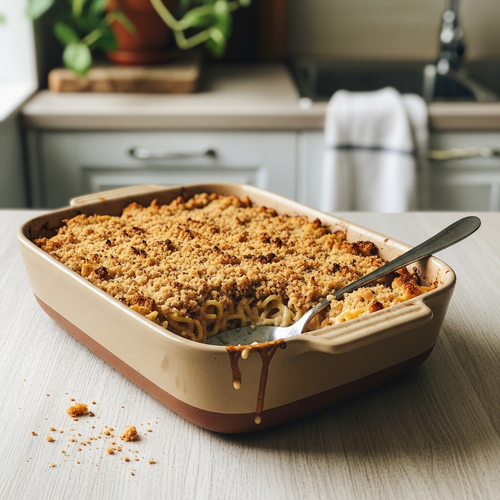
Description: A creamy, comforting, and macro-friendly tuna casserole that’s packed with protein and veggies. This recipe ditches the canned soup for a healthy and delicious Greek yogurt sauce, making it the perfect meal for a sustainable fat loss lifestyle.
Prep Time: 15 minutes | Cook Time: 40 minutes
Servings: 6
Macros per Serving | Calories: 350 | Protein: 27g | Fat: 8g | Carbohydrates: 43g
Ingredients
- 8 oz. whole wheat or protein-enhanced rotini pasta
- 1 tbsp olive oil
- 1 medium yellow onion, chopped
- 2 cloves garlic, minced
- 8 oz. cremini mushrooms, sliced
- 1 cup frozen peas
- 1 cup chopped carrots
- 1 cup non-fat plain Greek yogurt
- 1/2 cup low-fat cottage cheese
- 1/4 cup unsweetened almond milk or skim milk
- 2 (5 oz.) cans of solid white albacore tuna in water, drained
- 1/2 cup shredded sharp cheddar cheese, reduced-fat
- 1 tsp Dijon mustard
- 1/2 tsp black pepper
- 1/4 tsp salt
- 1/4 cup whole wheat breadcrumbs
- 2 tbsp grated Parmesan cheese
Instructions
- Preheat oven to 375°F (190°C). Cook pasta until al dente; drain.
- While pasta cooks, heat oil in a skillet. Sauté onion until soft, then add garlic and mushrooms and cook until browned. Stir in frozen peas and carrots until heated through.
- In a large bowl, whisk together Greek yogurt, cottage cheese, milk, Dijon, salt, and pepper until smooth.
- Gently fold in the drained tuna, cooked pasta, and vegetable mixture into the sauce.
- Transfer to a 9×13 inch baking dish and spread evenly.
- In a small bowl, mix breadcrumbs and Parmesan. Sprinkle over the casserole.
- Bake for 20-25 minutes, until bubbly and golden brown. Let cool slightly before serving.
Notes
For an even creamier sauce, blend the Greek yogurt and cottage cheese with an immersion blender before mixing with other ingredients. This recipe is excellent for meal prep and leftovers can be stored in the fridge for up to 4 days.
FAQs About Tuna Casserole For Weight Loss
Here are some straightforward answers to the most common questions I receive about this tuna casserole recipe.
Can I make this tuna casserole ahead of time?
Absolutely. This is one of the best things about this recipe for anyone with a busy life or ADHD. You have two great options for making it ahead. The first is to assemble the entire casserole without baking it. Just follow all the steps right up to putting it in the oven, then cover the baking dish tightly with foil and refrigerate it for up to 24 hours. When you’re ready to eat, you can bake it straight from the fridge; just add about 10-15 minutes to the baking time.
The second option is to bake it completely, let it cool, and then store the entire dish or individual portions in the fridge. This is my preferred method for meal prep because it makes grabbing a single meal even faster. Prepping ahead like this is a powerful strategy to combat decision fatigue and ensure you have a healthy, goal-oriented meal ready when you need it.
Is tuna casserole actually healthy for you?
This question really depends on the ingredients. A traditional tuna casserole made with full-fat cheese, butter, whole milk, and condensed cream of anything soup is very high in calories, saturated fat, and sodium, and it generally isn’t aligned with fat loss goals. It’s a classic comfort food, but not something that supports a lean physique when eaten regularly.
However, this specific tuna casserole recipe is designed to be healthy and incredibly effective for a fat loss phase. We systematically replaced the high-calorie ingredients with high-protein, lower-fat alternatives. The Greek yogurt and cottage cheese sauce provides creaminess and a massive protein boost. We use whole wheat pasta for more fiber and sustained energy, and we pack it with vegetables for added nutrients and volume. So yes, this version is absolutely a healthy meal that fits perfectly into a balanced diet.
What can I use instead of Greek yogurt in this tuna casserole?
If you don’t have Greek yogurt or don’t care for the taste, the best substitution to keep the protein high is to use more low-fat cottage cheese. You can replace the 1 cup of Greek yogurt with another cup of cottage cheese, blending it all until it’s very smooth to create the sauce. This will keep the macros very similar and deliver that creamy texture we’re looking for.
Another option is to use light sour cream or even low-fat cream cheese (neufchâtel), but be aware that this will change the nutritional profile. It will increase the fat content and decrease the protein content of the final dish. While it will still be delicious, it won’t be as optimized for fat loss as the original recipe. I would advise against using mayonnaise, as it’s very high in fat and will completely alter the flavor and texture.
How do I keep my tuna casserole from being dry?
A dry tuna casserole is a huge disappointment, but it’s easy to avoid. The most common culprit is overcooking the pasta. If your pasta is already fully cooked or mushy before it even goes in the oven, it will just absorb all the sauce and fall apart, leading to a dry, pasty texture. Always cook your pasta to al dente, so it still has a firm bite.
Second, make sure your sauce is plentiful and not too thick. The quarter cup of milk in the recipe helps thin it to the right consistency. If your yogurt is particularly thick, you might need an extra splash. Finally, don’t overbake the casserole. As soon as it’s hot, bubbly at the edges, and the top is golden, take it out. When reheating leftovers, always add a tablespoon of milk or water to reintroduce some moisture.
Can I make this tuna casserole without pasta for a low-carb option?
Yes, making a low-carb version of this tuna casserole is very easy and delicious. The simplest swap is to replace the 8 ounces of pasta with about 4 to 5 cups of a non-starchy vegetable. Steamed cauliflower rice or chopped broccoli florets are my top recommendations. They have a neutral flavor and a great texture that mixes well with the creamy sauce and tuna.
To do this, you would simply skip the pasta-cooking step. Prepare the sauce and the sautéed vegetable base as directed. Then, mix in your steamed cauliflower rice or broccoli along with the tuna. Transfer to the baking dish, top with the breadcrumb mixture (or a low-carb alternative like crushed pork rinds mixed with Parmesan for a keto-friendly crunch), and bake. It creates a rich, satisfying bake that is packed with protein and fiber, but very low in carbohydrates.
Try These High-Protein Recipes Next
If you loved this simple and effective approach to a classic comfort food, here are a few other recipes built on the same principles.
- High-Protein Tuna Salad: My go-to recipe for a quick, no-cook lunch that is loaded with protein and flavor. Perfect for sandwiches, wraps, or with crackers.
- Healthy Green Bean Casserole: Another holiday classic reinvented for a fitness lifestyle. We use a creamy, high-protein sauce to transform this side dish into a guilt-free favorite.
- The Best Tuna Casserole Recipe by This Gal Cooks: A great resource for a more traditional take on the classic, perfect for when you’re cooking for a crowd that might not be focused on macros.
Building a collection of reliable, macro-friendly recipes is the key to making your fitness journey sustainable and enjoyable.