
For most of my life, a waffle was a weekend treat. It meant slow mornings, butter, and a lake of maple syrup. It was pure comfort. When I started my fitness journey, that kind of comfort food was the first thing I cut out. My meals became chicken and broccoli. Effective, yes, but not exactly something to look forward to on a Saturday morning.
I lost the first 65 pounds with that grind-it-out mentality. But I knew it wasn’t sustainable. My ADHD brain craves novelty and reward, and bland “diet food” was a one-way ticket to burnout and binging. I needed to find a way to bring back the foods I loved without derailing my progress. This high-protein waffle was one of my first major breakthroughs.
It took a lot of trial and error. My first attempts were dense, rubbery discs that tasted vaguely of vanilla chalk. But I kept tweaking the recipe, focusing on texture and flavor just as much as macros. I wanted a waffle that was crispy on the outside, fluffy on the inside, and packed with enough protein to keep me full and focused for hours.
This is the result of that obsession. It’s a recipe that works with your brain, not against it. It satisfies cravings, supports fat loss, and feels like a genuine reward. It’s proof that you don’t have to give up your favorite foods to build a body you love. You just need a better system.
Skip to My Flexibe Diet Recipe!
Why Waffles Are Great For Fat Loss
Let’s be brutally honest. A traditional waffle from a diner is a fat loss disaster. It’s a pile of refined flour and sugar that spikes your blood sugar, leaving you hungry and craving more junk food an hour later. It’s the opposite of what we need for sustained energy and hunger control. This recipe fundamentally flips the script on what a waffle can be.
The core principle here is Protein First. Each serving of these waffles is loaded with protein from whey powder, Greek yogurt, and eggs. Starting your day with a high-protein meal is probably the single most effective tool for managing hunger. It keeps you feeling full and satisfied for hours, which dramatically reduces the chances of mindless snacking later in the day.
For those of us with ADHD, this is a game-changer. Unmanaged hunger and blood sugar swings can wreck our executive function, making focus and emotional regulation feel impossible. A protein-packed breakfast stabilizes your energy levels, providing a solid foundation for your brain to work properly, whether you’re medicated or not.
We also replace empty-calorie white flour with oat flour, which provides slow-digesting complex carbohydrates and fiber. This combination of protein and fiber is the ultimate weapon against cravings. It prevents the rapid energy crash that follows a sugary breakfast, helping you stay in control of your food choices all day. It’s not about restriction; it’s about eating smarter so you don’t have to rely on willpower alone.
Finally, this recipe embraces flexible eating. It tastes like an indulgent treat, which helps prevent the feeling of deprivation that so often leads to falling off the wagon. When you can have a delicious, satisfying waffle for breakfast and still hit your fat loss goals, you’re building a sustainable lifestyle, not just following a temporary diet.
Ingredients You’ll Need for Waffles
The magic of this waffle recipe is in the combination of simple, powerful ingredients. We’re not using anything exotic here. Everything is designed to maximize protein and flavor while keeping calories and sugar in check. Let’s break down what you’ll need.
The key ingredient that truly elevates these waffles is the non-fat plain Greek yogurt. It’s our secret weapon. It adds a significant protein boost, but more importantly, it provides moisture and a slight tang that prevents the waffle from tasting dry or bland, a common problem with protein-based baked goods. It completely changes the texture, making them tender on the inside while they stay crispy on the outside.
For the protein source, I use a vanilla or unflavored whey protein powder. The quality of your protein powder matters here. Some brands can be gritty or have a strong artificial aftertaste. I recommend finding one you genuinely enjoy drinking on its own. If you use an unflavored powder, you might want to add a little extra sweetener or vanilla extract to boost the flavor.
Here’s the full list of what you’ll be grabbing from your pantry and fridge:
- Dry Ingredients:
- 1/2 cup oat flour (or rolled oats blended into a fine powder)
- 1 scoop (around 30g) vanilla or unflavored whey protein powder
- 1 tablespoon coconut flour
- 1 tablespoon cornstarch
- 2 teaspoons baking powder
- 1/4 teaspoon salt
- 1-2 tablespoons erythritol or your preferred zero-calorie sweetener, to taste
- Wet Ingredients:
- 1/2 cup non-fat plain Greek yogurt
- 1/4 cup unsweetened almond milk
- 2 large egg whites, whipped to stiff peaks
- 1 large whole egg
- 1 teaspoon vanilla extract
A quick note on the flours. We use oat flour as the base for its fiber content. Coconut flour helps absorb moisture and adds structure, but use it sparingly as it’s very absorbent. The cornstarch is my trick for getting that extra crispy exterior. It’s a small detail that makes a big difference.
How To Make Waffles (Step-By-Step)
Making this high-protein waffle is straightforward, but a few key steps make the difference between a fluffy, delicious breakfast and a dense, rubbery one. We’ve designed this to be as simple as possible, even on low-motivation days. The most important thing is not to rush the process. Grab your bowls and let’s get started.
Step 1: Combine Your Dry Ingredients
In a large bowl, add all your dry ingredients: the oat flour, protein powder, coconut flour, cornstarch, baking powder, salt, and sweetener. Use a whisk to mix them together thoroughly. This is a crucial step! If you don’t mix them well now, you could end up with clumps of baking powder or salt in your final waffle. Getting it all evenly distributed ensures a consistent texture and flavor.
Step 2: Mix The Wet Ingredients
In a separate, medium-sized bowl, combine the Greek yogurt, almond milk, the single whole egg, and the vanilla extract. Whisk these together until the mixture is smooth and completely combined. Breaking up the yolk and fully incorporating the yogurt is key here. This will be the creamy, liquid base for your batter.
Step 3: Whip The Egg Whites
This is the most important step for getting a light and fluffy waffle. In another clean bowl (or using a stand mixer), whip your two egg whites until they form stiff peaks. This means when you lift the whisk out, the peak of egg white that forms holds its shape. Whipping air into the egg whites is what will give our waffle its incredible, airy texture and prevent it from becoming a dense protein brick.
Step 4: Combine, Fold, and Rest
Pour your wet ingredient mixture into the large bowl of dry ingredients. Mix them until they are just combined. A few lumps are perfectly fine. Overmixing will develop the gluten and make the waffle tough. Now, gently fold the whipped egg whites into the batter using a spatula. Be gentle here; you want to keep as much of that air in the batter as possible. Once incorporated, let the batter rest for 5 to 10 minutes. This allows the flours to hydrate and makes a big difference in the final texture.
Step 5: Cook Your Waffle
While the batter rests, preheat your waffle iron. Once it’s hot, give it a light spray with non-stick cooking spray. Pour your batter onto the iron, spreading it gently but quickly. Cook for 4 to 6 minutes, or until it’s golden brown and crispy. The exact time will depend on your machine. Once cooked, place it on a wire rack for a minute to prevent it from getting soggy. Then, it’s ready to serve.
How To Serve Waffles (ADHD-Friendly)
Once you have a perfect, golden-brown protein waffle, the next step is dressing it up. The goal is to add flavor and texture without piling on a mountain of sugar and calories. For the ADHD brain, keeping this step simple is key to avoiding overwhelm and making this a repeatable, easy meal. The fewer decisions you have to make in the morning, the better.
My go-to default is a “set it and forget it” topping combination. This is what I have 90% of the time because it requires zero thought. I always have frozen berries and sugar-free maple syrup on hand. A handful of mixed berries (I throw them on while the waffle is still hot so they thaw a bit) and a drizzle of syrup. It’s simple, delicious, and hits the spot every time.
Having a default option is a great ADHD strategy. It removes decision fatigue. But for days when you crave variety, here are a few other simple, macro-friendly ideas to keep in rotation:
- Extra Protein & Creaminess: Add a dollop of non-fat plain Greek yogurt on top. You can even mix a little sweetener or protein powder into the yogurt first. It adds a cool, creamy contrast to the warm waffle.
- Healthy Fats & Crunch: A small sprinkle of chopped nuts (like almonds or walnuts) or a spoonful of chia seeds adds a fantastic crunch and healthy fats that contribute to satiety. Just be mindful of the portion size, as calories from nuts add up quickly.
- Flavor Boosters: A simple dash of cinnamon goes a long way. If you made a more neutral-flavored waffle, you could also add a very light drizzle of melted dark chocolate or a dusting of unsweetened cocoa powder.
To make this even easier, try prepping your toppings. Wash a container of berries at the start of the week. Portion out some nuts into small bags. Keep your sugar-free syrup right at the front of the fridge. Reducing the tiny barriers to making a healthy choice is how we build consistency over time.
How To Store, Reheat, and Reuse Waffles
One of the best things about this waffle recipe is that it’s perfect for meal prep. Let’s be real, most of us with ADHD aren’t whipping up fresh waffle batter on a busy Tuesday morning. Making a double or triple batch over the weekend is a fantastic strategy for setting yourself up with high-protein, grab-and-go breakfasts for the week.
Storing them correctly is the key to making sure they taste just as good on day three as they did on day one. The enemy here is moisture, which will make your crispy waffles sad and soggy. You must let them cool completely on a wire rack before you even think about storing them. Stacking hot waffles will trap steam and ruin their texture.
Once they are completely cool, here are the best ways to store and reheat your waffles:
- For the Fridge (1-3 Days): If you plan to eat them within a few days, you can store them in an airtight container in the refrigerator. I like to place a small piece of parchment paper between each waffle to prevent any sticking and absorb any potential moisture.
- For the Freezer (Up to 3 Months): For longer-term storage, the freezer is your best friend. The best way to do this is to “flash freeze” them first. Place the cooled waffles in a single layer on a baking sheet and pop them in the freezer for about an hour. Once they are frozen solid, you can transfer them into a large freezer-safe zip-top bag. This prevents them from sticking together in a giant clump.
- Reheating for Maximum Crispiness: Do not use the microwave. I repeat, do not use the microwave unless you enjoy a soft, chewy texture. The best way to bring a waffle back to life is in a toaster or a toaster oven. It reheats it and re-crisps the outside beautifully. An air fryer on a low setting also works wonders.
These pre-made waffles are a lifesaver on low-energy days. When you’re rushing out the door, being able to pop a high-protein meal into the toaster is a massive win. You can even eat it plain like a piece of toast on your way out the door. It’s a system that supports you when motivation is low.
Easy Swaps & Variations for Waffles
A great recipe is one that’s flexible. We all have different dietary needs, preferences, and pantries. The beauty of this waffle recipe is that it’s a solid base that you can easily adapt. Whether you need to make it gluten-free, want to try a different flavor, or just ran out of one ingredient, there’s usually a simple solution.
Remember, cooking isn’t about rigid perfection. It’s about creating systems that work for you. Don’t let a missing ingredient derail your plan to eat a healthy breakfast. The goal is consistency, not following a recipe to the absolute letter every single time. Get creative and see what works best for you and your taste buds.
Here are some of the most common and effective swaps you can make to this protein waffle recipe:
- Protein Powder Swaps: While I use whey protein, you can experiment with others. A casein blend will create a thicker, more cake-like waffle. A plant-based protein powder (like soy or pea) can also work, but you may need to add a little extra almond milk, as they tend to be more absorbent than whey.
- Flour Alternatives: The oat flour in this recipe is already gluten-free (if you use certified GF oats). If you want to try other flours, you can sub half of the oat flour for almond flour to add healthy fats and a richer texture. I don’t recommend replacing all of it, as the waffle might become too delicate.
- Dairy-Free Option: To make this waffle dairy-free, swap the Greek yogurt for a dairy-free yogurt alternative, like one made from coconut or almond. Also, ensure you are using a dairy-free protein powder. The results will be very similar.
- Flavor Variations: This is the fun part. Add a teaspoon of cinnamon or pumpkin pie spice to the dry ingredients for a warmer flavor. For a chocolate version, add a tablespoon of unsweetened cocoa powder and use chocolate protein powder. You could also add a bit of citrus zest for a brighter taste.
These simple changes can keep the recipe feeling fresh and exciting, which is critical for staying consistent long-term. Don’t be afraid to experiment and find your perfect waffle combination.
High-Protein Waffle for Fat Loss
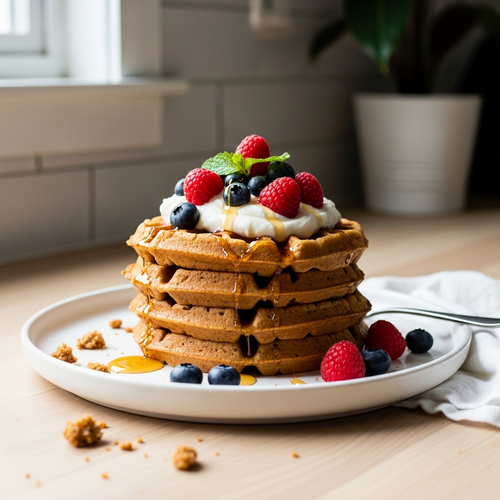
Description: A light, crispy, and fluffy waffle packed with protein to keep you full for hours. This recipe is designed to support fat loss goals without sacrificing the joy of a delicious weekend breakfast.
Prep Time: 10 minutes | Cook Time: 5 minutes
Servings: 2 medium waffles
Macros per Waffle | Calories: 245 | Protein: 28g | Fat: 7g | Carbohydrates: 18g
Ingredients
- 1/2 cup oat flour
- 1 scoop (30g) vanilla whey protein powder
- 1 tablespoon coconut flour
- 1 tablespoon cornstarch
- 2 teaspoons baking powder
- 1/4 teaspoon salt
- 1-2 tablespoons erythritol (or preferred sweetener)
- 1/2 cup non-fat plain Greek yogurt
- 1/4 cup unsweetened almond milk
- 2 large egg whites, whipped to stiff peaks
- 1 large whole egg
- 1 teaspoon vanilla extract
Instructions
- In a large bowl, whisk together all dry ingredients: oat flour, protein powder, coconut flour, cornstarch, baking powder, salt, and sweetener.
- In a separate bowl, mix the wet ingredients: Greek yogurt, almond milk, whole egg, and vanilla.
- Pour wet ingredients into the dry and mix until just combined. Do not overmix.
- Gently fold in the whipped egg whites until just incorporated.
- Let the batter rest for 5-10 minutes while you preheat your waffle iron.
- Spray the hot iron with non-stick spray and cook the batter according to your machine’s instructions (usually 4-6 minutes) until golden and crispy.
- Serve immediately with your favorite macro-friendly toppings.
Notes
For best results, do not skip whipping the egg whites. This is the key to a light and fluffy texture. Waffles can be stored in the fridge for 3 days or frozen for up to 3 months. Reheat in a toaster for best results.
FAQs About Waffles For Weight Loss
Here are some straightforward answers to the most common questions I receive about this waffle recipe.
Can I make this protein waffle recipe without protein powder?
Yes, you can make a version of this waffle without protein powder, but it will fundamentally change the nutritional profile and you’ll need to make some adjustments. The protein powder provides a huge portion of the protein content, which is key for hunger management and fat loss. It also acts as a “flour” in the recipe, providing structure.
If you omit it, you will need to replace its volume with more flour. I would suggest adding about 1/4 cup more oat flour to compensate. The final waffle will be much lower in protein and higher in carbohydrates. While it will still be a healthier option than a traditional waffle due to the oat flour and Greek yogurt, it won’t have the same powerful, long-lasting satiety effect. If your main goal is fat loss, I strongly recommend finding a protein powder you like, as it’s a cornerstone of this recipe’s effectiveness.
Why is my protein waffle dry or tough?
This is the most common issue people face with protein baking, and it usually comes down to one of two things: overmixing the batter or the type of protein powder used. When you mix the batter too much after combining the wet and dry ingredients, you develop the gluten in the flour, which leads to a tough, chewy texture instead of a light, fluffy one. Mix only until the ingredients are just combined; a few lumps are okay.
The other culprit is often the protein powder itself. Some brands, especially certain whey isolates or plant-based proteins, are extremely absorbent and can suck all the moisture out of the batter, resulting in a dry, chalky waffle. Using Greek yogurt helps combat this, but if you’re still getting dry results, try a different brand of protein powder (a whey concentrate or casein blend often works well) or add an extra tablespoon or two of almond milk or yogurt to the batter to increase the moisture content.
Can I make these waffles ahead of time for meal prep?
Absolutely! This waffle recipe is practically designed for meal prep. In fact, that’s how I recommend most people with busy lives approach it. Making a double or even triple batch on a Sunday can set you up with a fantastic, high-protein breakfast for most of the week. The key is proper storage to maintain texture.
As I mentioned in the storage section, you have to let them cool completely on a wire rack first. This is non-negotiable. Then, you can store them in an airtight container in the fridge for a few days or flash-freeze them for long-term storage. When you’re ready to eat, skip the microwave and pop one in your toaster or air fryer. It will be warm, crispy, and ready in minutes. It’s an incredibly effective system for staying on track, even on chaotic mornings.
What are the best low-calorie toppings for this waffle?
Toppings are where a healthy waffle can quickly turn into a calorie bomb, so being strategic is important. The goal is to add flavor and enjoyment without adding a ton of sugar or fat. My top recommendation is always fresh or frozen berries. They provide natural sweetness, fiber, and micronutrients for very few calories. A handful of raspberries, blueberries, or sliced strawberries is perfect.
For syrup, a quality sugar-free maple syrup is a fantastic choice. The market for these has improved dramatically, and many taste great without any weird aftertaste. Another great option is a dollop of Greek yogurt mixed with a little bit of sweetener or some powdered peanut butter for a creamy, high-protein sauce. A sprinkle of cinnamon or a dusting of unsweetened cocoa powder can also add a ton of flavor for virtually zero calories.
Is this waffle recipe gluten-free?
Yes, this waffle recipe can easily be made gluten-free. The primary flour we use is oat flour. Oats are naturally gluten-free, but they are often processed in facilities that also handle wheat, leading to cross-contamination. To ensure the recipe is 100% gluten-free for those with celiac disease or a high sensitivity, you must purchase oats or oat flour that is specifically labeled “certified gluten-free.”
All the other ingredients in the recipe, such as the protein powder, coconut flour, cornstarch, and baking powder, are typically gluten-free, but it’s always wise to double-check the labels on your specific products to be certain. As long as you use certified gluten-free oats, you can enjoy this delicious waffle without any worry.
Try These High-Protein Recipes Next
Building a small rotation of reliable, delicious, and macro-friendly meals is one of the best strategies for long-term success, especially with an ADHD brain. Here are a few other high-protein breakfast recipes to try next.
- The Ultimate High-Protein Pancakes: If you’re more of a pancake person, this recipe uses similar principles to create fluffy, satisfying pancakes that will keep you full all morning.
- Easy High-Protein French Toast: This recipe transforms regular bread into a protein powerhouse. It’s incredibly quick to make and perfect for using up bread before it goes bad.
- Easy Buttermilk Waffles: For a day when you’re not focused on protein and want a more traditional, classic waffle experience, this recipe is a fantastic and straightforward choice for a comfort-food treat.
Adding these to your breakfast toolkit will give you variety and help you stay consistent on your fitness journey.