
For most of my life, turkey was just a holiday thing. It was that giant, intimidating bird that showed up once a year, took forever to cook, and often ended up dry. When I started my fitness journey, losing 65 pounds before I even considered ADHD medication, I needed protein sources that were simple, reliable, and didn’t feel like a massive project.
Chicken breast was my go-to, but burnout is real. I needed another option. That’s when I started experimenting with this roasted turkey breast recipe. I wanted something that delivered that satisfying, savory flavor of a holiday meal but was simple enough to make on a regular Sunday for meal prep. No brining, no complex trussing, just straightforward steps for a juicy, flavorful result every time.
This recipe is the outcome of that process. It’s built for those of us with ADHD who need meals that are high in protein, low in complexity, and big on flavor. It became a cornerstone of my diet, helping me stay full, reduce cravings, and consistently hit my protein goals. It’s proof that you don’t need a special occasion to enjoy amazing food that supports your fitness goals.
This is my brutally practical approach to a perfect roasted turkey, designed for our brains and our bodies.
Skip to My Flexibe Diet Recipe!
Why This Turkey Recipe Is Great For Fat Loss
When it comes to fat loss, we know that food is about 75 percent of the equation. Workouts are important, but you can’t out-train a diet that isn’t aligned with your goals. This roasted turkey recipe is designed specifically to support a sustainable fat loss journey, especially for those of us with ADHD.
The first principle here is protein first. Turkey breast is an incredibly lean and dense source of protein. A high-protein diet is critical for fat loss because it helps you build and maintain muscle mass, which boosts your metabolism. More importantly, protein is highly satiating, meaning it keeps you feeling full for longer.
This leads to the second principle: hunger management. For the ADHD brain, intense cravings and impulsivity can derail our best intentions. When you feel full and satisfied from a meal packed with protein, you’re far less likely to get hit with distracting cravings for sugar and processed junk. This recipe helps stabilize your energy and mood by preventing the blood sugar spikes and crashes that often trigger a spiral into mindless snacking.
Finally, it’s about consistency over intensity. This recipe isn’t complicated. It uses simple ingredients and a straightforward process. You can roast a turkey breast on a Sunday and have a delicious, high-protein option ready for meals all week. This reduces decision fatigue and makes it easy to stay on track, even on low-motivation days. It’s a practical system that works with your brain, not against it, to get you the results you want.
Ingredients You’ll Need for This Turkey Recipe
The beauty of this recipe is its simplicity. We’re using a handful of common spices and aromatics to create a deeply flavorful and juicy roasted turkey without any complicated steps. These are ingredients you likely have in your pantry already, which is a huge win for avoiding that last-minute, overwhelming trip to the grocery store.
The key ingredient that gives this recipe its signature flavor is the smoked paprika. While regular paprika is fine, the smoked version adds a rich, smoky depth that makes the turkey taste like it was slow-roasted over a fire for hours. It’s a simple swap that elevates the entire dish and makes it feel like a gourmet meal.
When selecting your turkey breast, try to get a bone-in, skin-on cut. The bone helps insulate the meat as it cooks, leading to a much juicier result. The skin gets crispy and delicious, and it also protects the meat underneath from drying out. You don’t have to eat the skin to get the benefits, but it makes a huge difference in the cooking process. Using a low-sodium chicken broth is also a good choice to control the salt content while still adding moisture and flavor.
- 4-5 pound bone-in, skin-on turkey breast
- 1 tablespoon olive oil
- 2 teaspoons smoked paprika
- 2 teaspoons dried thyme
- 1 teaspoon dried rosemary, crushed
- 1 teaspoon garlic powder
- 1/2 teaspoon onion powder
- 1/2 teaspoon black pepper
- 1/4 teaspoon salt
- 1 large yellow onion, quartered
- 1 lemon, halved
- 4 cloves garlic, smashed
- 1 cup low-sodium chicken broth
How To Make This Turkey Recipe (Step-By-Step)
This process is designed to be as straightforward as possible. No fancy techniques, just a few key steps that guarantee a perfect result. The most important tool you can have here is an instant-read meat thermometer. It takes all the guesswork out of cooking and is the single best way to ensure your turkey is juicy and not overcooked.
Step 1: Preheat and Prep the Turkey
First things first, get your oven preheating to a hot 450°F. That initial blast of high heat is what helps make the skin extra crispy. While it heats, take your turkey breast and pat it completely dry with paper towels. Don’t skip this. A dry surface is essential for browning and crisping the skin. Any moisture will just steam it.
Step 2: Mix the Spices and Season the Turkey
In a small bowl, combine all your dry spices: the smoked paprika, thyme, rosemary, garlic powder, onion powder, salt, and pepper. This is a great “task batching” moment. Get it all done at once. Next, carefully loosen the skin from the turkey meat with your fingers. Rub about half the olive oil directly on the meat, then sprinkle half the spice mix under the skin. This seasons the meat directly. Rub the remaining oil and spices all over the outside of the skin.
Step 3: Prepare the Roasting Pan
Place the quartered onion, halved lemon, and smashed garlic cloves in the bottom of your roasting pan. These are your aromatics; they will infuse the pan drippings and the turkey with incredible flavor as they cook. Pour the chicken broth into the bottom of the pan. This creates a moist environment in the oven, preventing the turkey from drying out.
Step 4: Roast the Turkey
Place the turkey breast on a rack in the roasting pan, on top of the aromatics. Pop it into the 450°F oven for 15 minutes. After 15 minutes, reduce the oven temperature to 350°F. Continue roasting for about 1 hour and 15-30 minutes. The exact time will depend on the size of your breast. This is where your meat thermometer is your best friend. Cook until the thickest part of the breast reads 165°F.
Step 5: Rest and Carve
This is a non-negotiable step. Once the turkey hits 165°F, take it out of the oven and let it rest for at least 15-20 minutes before you even think about carving it. Tenting it loosely with foil is a good idea. Resting allows all the juices that have been pushed to the surface to redistribute back into the meat. If you slice it too soon, all that moisture will run out onto your cutting board, and you’ll be left with dry turkey. After it has rested, carve and serve.
How To Serve This Turkey Recipe (ADHD-Friendly)
One of the biggest hurdles for those of us with ADHD is decision fatigue, especially when it comes to figuring out what to eat. Having a versatile protein like this roasted turkey breast ready to go is a game-changer. The goal is to make healthy eating the path of least resistance.
My favorite way to combat mealtime overwhelm is to use a simple plate formula: Protein + Veggie + Smart Carb. This roasted turkey is your protein. Now you just have to pick one of each of the other categories. No complex meal planning needed. Just grab a handful of sliced turkey and add your sides.
Here are a few brutally practical ways to build a balanced meal with this turkey:
- The Quick Lunch Plate: Pile slices of turkey next to a big handful of pre-washed spinach or mixed greens. Add a side of microwaveable brown rice or quinoa and a drizzle of your favorite dressing over the greens. It takes less than five minutes to assemble.
- The Post-Workout Refuel: Serve the turkey with a roasted sweet potato (you can bake a few at the same time as the turkey) and some steamed green beans from a frozen bag. This gives you quality protein and carbs to replenish your muscles.
- The Low-Carb Bowl: Shred some of the turkey meat and serve it over a bed of cauliflower rice with sautéed bell peppers and onions. Top it with a little salsa or avocado for a simple, flavorful, and filling meal.
- The Simple Sandwich: Use high-quality whole-grain bread, a generous serving of turkey, some lettuce, tomato, and a smear of hummus or avocado. It’s a classic for a reason and much healthier and more filling than processed deli meat.
By having the main component—the protein—cooked and ready, you eliminate the biggest step and the most significant barrier to making a healthy choice. It turns mealtime from a daunting task into a simple assembly job.
How To Store, Reheat, and Reuse This Turkey Recipe
Leftovers are your superpower, especially with an ADHD brain. Cooking once and eating multiple times saves executive function, time, and energy. Storing this roasted turkey correctly ensures it stays delicious and ready for quick meals throughout the week. The key is to handle it right after your initial meal.
Don’t let the turkey sit out for hours. Once everyone has eaten and the meat has cooled down, it’s time to prep it for storage. My go-to ADHD hack is to pre-portion the leftovers immediately. Instead of putting the entire remaining breast in one giant container, slice or shred the meat and divide it into individual portions in smaller containers or zip-top bags. This way, you have grab-and-go protein packs ready for lunches or dinners, eliminating another step later on.
Here’s how to handle storing, reheating, and reusing your turkey leftovers:
- Storing: Once portioned, store the turkey in airtight containers in the refrigerator for up to 4 days. If you want to keep it longer, it freezes beautifully. Place the portioned meat in freezer-safe bags, squeeze out as much air as possible, and it will keep for up to 3 months.
- Reheating: Dry turkey is the enemy. The best way to reheat it is gently. If you’re using a microwave, place the turkey on a plate, add a splash of chicken broth or water, and cover it with a damp paper towel. Heat it in 30-second intervals until just warmed through. You can also reheat it in a covered skillet over medium-low heat with a little broth.
- Reusing (No Reheating Needed): My favorite way to use leftovers is cold. This turkey is fantastic sliced thin for sandwiches or wraps, chopped into salads for a huge protein boost, or mixed with Greek yogurt, celery, and herbs for a quick turkey salad. This requires zero extra cooking time.
By thinking about your future self when you put away the leftovers, you’re setting yourself up for easy wins all week long. It’s a simple system that makes consistency feel effortless.
Easy Swaps & Variations for This Turkey Recipe
Flexible eating is the only sustainable way to approach nutrition. Life happens, and you won’t always have every single ingredient on hand. The good news is that this roasted turkey recipe is incredibly forgiving and easy to adapt. Perfection is the enemy of progress, so work with what you have.
The spice rub is the easiest place to make changes. Think of the listed ingredients as a starting point. Don’t have smoked paprika? Use regular paprika and maybe a pinch of cumin or chili powder for warmth. Out of dried thyme? Oregano or an Italian seasoning blend works great. The goal is to create a flavor profile you enjoy, so feel free to experiment with your favorite herbs and spices.
Here are some other simple swaps and variations you can try:
- Herb Variations: If you have fresh herbs, use them! Fresh rosemary and thyme are fantastic. A good rule of thumb is to use three times the amount of fresh herbs as you would dried. You can also stuff a few sprigs inside the turkey cavity.
- Citrus Swap: No lemon? An orange will work just as well, adding a slightly sweeter, different aromatic note to the turkey and the pan drippings.
- Different Cooking Fats: If you don’t have olive oil, you can use melted butter or avocado oil. Butter will help the skin brown beautifully and add a rich flavor.
- Boneless Breast Option: You can absolutely use a boneless, skin-on turkey breast. Just be aware that it will cook much faster. You’ll need to reduce the cooking time significantly and rely heavily on your meat thermometer to avoid overcooking it. Start checking the temperature after about 45 minutes at 350°F.
The point is to make this recipe work for you, your pantry, and your preferences. Don’t let a missing ingredient stop you from making a delicious, healthy meal. A good-enough plan that you actually execute is always better than a perfect plan that stays on paper.
Juicy Roasted Turkey Breast for Fat Loss
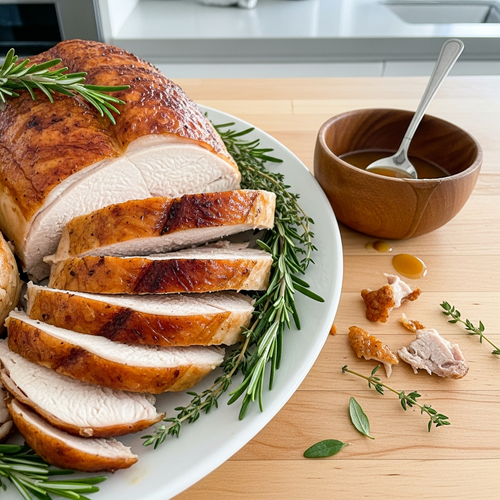
Description: A brutally practical recipe for a perfectly juicy, flavorful, and crispy-skinned roasted turkey breast. It’s high in protein and simple to make, perfect for ADHD-friendly meal prep and supporting your fat loss goals.
Prep Time: 15 minutes | Cook Time: 1 hour 45 minutes
Servings: 8
Macros per Serving | Calories: 255 | Protein: 46g | Fat: 7g | Carbohydrates: 1g
Ingredients
- 4-5 pound bone-in, skin-on turkey breast
- 1 tablespoon olive oil
- 2 teaspoons smoked paprika
- 2 teaspoons dried thyme
- 1 teaspoon dried rosemary, crushed
- 1 teaspoon garlic powder
- 1/2 teaspoon onion powder
- 1/2 teaspoon black pepper
- 1/4 teaspoon salt
- 1 large yellow onion, quartered
- 1 lemon, halved
- 4 cloves garlic, smashed
- 1 cup low-sodium chicken broth
Instructions
- Preheat oven to 450°F (232°C). Pat the turkey breast completely dry with paper towels.
- In a small bowl, mix together all the dried spices.
- Loosen the skin from the turkey meat. Rub half the olive oil and half the spice mix directly onto the meat under the skin.
- Rub the remaining oil and spice mix all over the outside of the skin.
- Place onion, lemon, and garlic in a roasting pan. Pour in the chicken broth. Place the turkey on a rack in the pan.
- Roast at 450°F for 15 minutes. Then, reduce oven temperature to 350°F (177°C).
- Continue roasting for 1 hour 15-30 minutes, or until an instant-read thermometer registers 165°F (74°C) in the thickest part.
- Remove from oven and let the turkey rest for 15-20 minutes before carving and serving.
Notes
Using an instant-read meat thermometer is the most reliable way to ensure your turkey is perfectly cooked and not dry. Don’t skip the resting step!
FAQs About This Turkey Recipe For Weight Loss
Here are some straightforward answers to the most common questions I receive about this roasted turkey recipe.
Can I use a boneless turkey breast for this recipe?
Yes, you absolutely can use a boneless turkey breast, but you will need to adjust your cooking time. Boneless cuts cook much faster because there is no bone to insulate the meat from the heat. A boneless breast might be fully cooked in as little as 45 to 60 minutes at 350°F after the initial high-heat blast.
Because of this, using a meat thermometer is even more critical when cooking a boneless turkey breast. It’s very easy to overcook it, resulting in dry, tough meat. Start checking the internal temperature early and pull it from the oven the moment it reaches 165°F in the thickest part. The resting period will still be just as important to lock in the juices.
How do I know when the turkey is cooked without a thermometer?
While I strongly recommend using a meat thermometer for guaranteed results, I understand you might not have one. The traditional method is to pierce the thickest part of the breast with a knife or skewer. If the juices run clear, it’s generally considered cooked. If the juices have a pinkish tint, it needs more time in the oven.
However, this method is not foolproof and can lead to overcooked or undercooked meat. Overcooking is the number one reason people end up with dry turkey. An inexpensive instant-read thermometer is one of the best investments you can make for your kitchen. It removes all the stress and guesswork, which is a huge win for an ADHD brain that doesn’t need more things to worry about.
Is the skin on this turkey recipe healthy to eat for weight loss?
This is a great question that gets into the core of flexible eating. The turkey skin is where most of the fat is concentrated. From a pure calorie and macro perspective, skipping the skin will lower the fat content of your meal. The turkey meat itself is incredibly lean, so if your goal is to maximize protein while minimizing fat and calories, you can simply remove the skin before eating.
That said, we don’t believe in cheat meals; we believe in incorporating small, planned comforts. The crispy skin is delicious. If eating a small piece of it makes the meal more satisfying and helps you stick to your plan long-term, then it’s a win. It’s better to enjoy a small amount of what you love than to feel deprived and risk a binge later. Food is 75 percent of results, and sustainable enjoyment is key to consistency.
Can I prepare this roasted turkey ahead of time?
Definitely. This recipe is perfect for meal prep. You can roast the entire turkey breast up to 3-4 days in advance. Let it cool completely, then carve it and store it in an airtight container in the refrigerator. This makes assembling quick lunches and dinners throughout the week incredibly easy.
You can also do some of the prep work ahead of time to make cooking day easier. For example, you can mix the spice blend and store it in a small container. You can also get the turkey breast patted dry and seasoned a day in advance. Store it uncovered in the fridge on a rack set over a pan. This helps the skin dry out even more, leading to an even crispier result when you roast it.
What makes this turkey recipe good for managing ADHD symptoms?
This recipe is designed with the ADHD brain in mind. First, it’s high in protein. A protein-rich diet helps in the production of neurotransmitters like dopamine, which can improve focus and mood regulation. Stable blood sugar from high-protein meals also prevents the energy crashes that can worsen inattention and impulsivity.
Second, the process is simple and the ingredient list is short, which reduces the potential for overwhelm that can lead to task avoidance. The recipe creates leftovers, which is a built-in system for future you. By cooking once and creating multiple meals, you reduce decision fatigue for the next few days. It’s a practical, sustainable approach that delivers a nutritional and neurological advantage, helping you feel more in control both in the kitchen and in your life.
Try These High-Protein Recipes Next
If you loved this simple and delicious roasted turkey, here are a few other recipes that fit our brutally practical approach to fat loss.
- ADHD-Friendly Cranberry Sauce: A simple, low-sugar cranberry sauce that pairs perfectly with this turkey and takes just a few minutes to make.
- High-Protein Stuffing Recipe: Forget the carb-heavy classic. This version is packed with protein to keep you full and on track with your goals.
- Oven Roasted Turkey with Garlic Herb Butter: For when you want to tackle a whole bird, this recipe offers a fantastic garlic and herb butter method that keeps the entire turkey moist.
Building a collection of go-to recipes is the key to making healthy eating a sustainable part of your lifestyle.