
Let’s be honest. For most of my life, the turkey burger was just a sad, dry substitute for the real thing. It was something you ate because you were on a diet, not because you actually wanted to. I avoided them for years, especially during the early days of my 65-pound weight loss journey.
But when I committed to a high-protein diet to manage my hunger and build muscle, I knew I had to find a way to make it work. I needed meals that were fast, packed with protein, and didn’t make me feel deprived. A good burger was non-negotiable.
After a ton of trial and error in my own kitchen, I finally cracked the code. This isn’t just another bland turkey burger recipe. This is the one that changed my mind completely. It’s juicy, flavorful, and incredibly simple to make, even on days when my ADHD brain has zero motivation.
It became a staple for me, both before I started medication and after. It proved that food for fat loss could be something I genuinely looked forward to eating. This recipe is the result of that journey, built for people like us who need practical, delicious solutions that fit a busy life.
This is the turkey burger that will make you a believer.
Skip to My Flexibe Diet Recipe!
Why This Turkey Burger Is Great For Fat Loss
When it comes to fat loss, food is about 75 percent of the battle. Workouts are important, but you can’t out-train a bad diet. That’s why my approach is always protein first. Protein is the key to managing hunger and preserving muscle while you’re in a calorie deficit.
This turkey burger recipe is designed specifically for that purpose. We start with 99% lean ground turkey, which is an incredibly efficient protein source. It gives you a huge amount of protein for very few calories and almost no fat. Each patty in this recipe packs a serious protein punch, which keeps you feeling full and satisfied for hours.
Feeling full is the secret weapon against cravings. When your meals are satisfying, you’re far less likely to spiral into snacking on high-calorie foods later. This turkey burger feels like a hearty, comforting meal, not a restrictive diet food. It hits that spot for a classic comfort food without derailing your progress.
The ADHD brain thrives on simplicity and routine. This recipe is simple enough to become a weekly staple. You can double the batch and have high-protein meal components ready for days. This reduces decision fatigue around “what’s for dinner” and makes it easy to stay consistent, which is always more important than being perfect.
It’s a brutally practical meal that delivers on macros, flavor, and convenience. That’s the winning combination for sustainable fat loss.
Ingredients You’ll Need for This Turkey Burger
I believe in using simple, accessible ingredients to get amazing results. You don’t need a bunch of fancy items to make a delicious and healthy turkey burger. This recipe relies on a few key players to deliver moisture and a deep, savory flavor.
The secret weapon here is non-fat plain Greek yogurt. It might sound strange, but it’s a game-changer for lean ground turkey. It adds a ton of moisture without adding any fat, and it gives the burgers a slight tang and a protein boost. This is what keeps them from turning into dry, sad pucks.
Here’s everything you’ll need:
- 1 lb 99% lean ground turkey: This is the foundation. Using 99% lean is crucial for keeping the calories and fat low while maximizing protein. If you can’t find it, 93/7 is the next best option, but be aware it will change the macros.
- 1/4 cup non-fat plain Greek yogurt: Our secret for juicy burgers. Don’t skip this.
- 1/4 cup finely grated sweet onion: Grating the onion is an important step. It releases moisture and allows the flavor to distribute evenly throughout the meat, unlike diced onion which can fall out.
- 1 large egg: This acts as a binder, helping the patties hold their shape.
- 1 tablespoon Worcestershire sauce: This brings a deep, savory, umami flavor that mimics the richness of a beef burger.
- 1 teaspoon smoked paprika: Adds a smoky depth that complements the turkey perfectly.
- 1 teaspoon garlic powder: A staple for savory flavor.
- 1/2 teaspoon onion powder: Reinforces the onion flavor for a more robust taste.
- 1/2 teaspoon dried oregano: Adds a touch of earthy, aromatic flavor.
- 1/2 teaspoon black pepper: For a little bit of spice.
- 1/4 teaspoon salt: To bring all the flavors together.
The quality of your ground turkey matters, but don’t stress about finding a super-premium brand. Any 99% lean ground turkey from your local grocery store will work perfectly for this recipe.
How To Make Turkey Burger (Step-By-Step)
Making this turkey burger is incredibly straightforward. We’re keeping the steps simple so you can get this done even on low-energy days. The most important things to remember are not to overwork the meat and to cook it to the right temperature.
Step 1: Mix Your Burger Base
In a large mixing bowl, add all your ingredients: the ground turkey, Greek yogurt, grated sweet onion, egg, Worcestershire sauce, and all the spices. An ADHD-friendly tip here is to pull out all your spices and measuring spoons before you even open the turkey. Getting everything ready first prevents that mid-recipe scramble where you forget an ingredient. Use your hands to gently combine everything until it’s just mixed. The biggest mistake people make is overmixing, which develops the proteins too much and leads to a tough, rubbery burger. Mix only until you can no longer see streaks of yogurt or big clumps of spice.
Step 2: Shape the Patties
Once the mixture is combined, divide it into four equal portions. A simple way to do this is to flatten the mixture in the bowl and score it into four quadrants with your hand. Gently roll each portion into a ball and then flatten it into a patty about a half-inch thick. Try to make them slightly wider than your bun, as they will shrink a bit during cooking. A pro tip is to press a small, shallow indent into the center of each patty with your thumb. This helps prevent the burger from puffing up into a dome shape while it cooks, ensuring it stays flat and cooks evenly.
Step 3: Cook to Perfection
You have a few great options for cooking. For all methods, the goal is an internal temperature of 165°F. Using a meat thermometer is the best way to guarantee your turkey burger is cooked safely without being overcooked. If you’re pan-searing, use a non-stick skillet over medium-high heat for 5-7 minutes per side. For grilling, preheat to medium-high and cook for about the same amount of time. If you want a hands-off method, baking at 400°F on a parchment-lined sheet for 20-25 minutes is perfect. Just be sure to flip them halfway through.
How To Serve Turkey Burger (ADHD-Friendly)
One of the best things about this turkey burger is its versatility. Having a few go-to serving options reduces decision fatigue, which is a huge win for the ADHD brain. You can fit this meal into your day no matter what your carb or calorie goals are.
Here are my favorite simple ways to serve it up:
- The Classic Burger: Don’t deny yourself a real burger experience. Serve it on a whole wheat or keto-friendly bun with your favorite toppings. I like crisp lettuce, a slice of tomato, and some red onion. For sauces, look for low-sugar ketchup or use mustard. This makes it feel like a satisfying treat, not diet food.
- The Low-Carb Wrap: For a lighter, lower-carb option, skip the bun and use large, crisp lettuce leaves as a wrap. Iceberg, butter lettuce, or romaine leaves work great. This gives you that hand-held burger feel with a fresh crunch and saves a lot of calories.
- The Burger Bowl: This is my go-to for meal prep. Crumble a cooked turkey burger patty over a bed of greens, quinoa, or brown rice. Add some of your favorite roasted or fresh veggies. A simple dressing of olive oil and vinegar or a dollop of that Greek yogurt works perfectly.
To make this even easier, lean on store-bought shortcuts. Keep bags of pre-washed salad greens, frozen steam-in-a-bag vegetables, and your favorite low-calorie buns on hand. When everything is ready to assemble, you’re more likely to make the healthy choice, even when you’re feeling overwhelmed or unmotivated.
How To Store, Reheat, and Reuse Turkey Burger
Meal prep is a lifeline for anyone with a busy schedule, especially for those of us with ADHD. Making a batch of these turkey burgers ahead of time is a gift to your future self. It removes the friction of cooking and makes it easy to grab a high-protein meal.
Proper storage is key to keeping them fresh and delicious.
- Refrigerating: Once cooked and cooled, place the patties in an airtight container. They will last in the refrigerator for up to 4 days. I like to keep them ready to go for quick lunches or dinners.
- Freezing (Cooked): You can also freeze cooked patties. Let them cool completely, then wrap them individually in plastic wrap or place them in a freezer-safe bag with parchment paper between each patty. They’ll keep for up to 3 months.
- Freezing (Uncooked): To make cooking even faster later, you can freeze the uncooked patties. Shape them, place them on a baking sheet lined with parchment paper, and freeze until solid. Once frozen, transfer them to a freezer bag. You can cook them directly from frozen, just add a few extra minutes to the cooking time.
When it’s time to reheat, you want to avoid drying them out. The best way to reheat a cooked turkey burger is in a skillet over medium heat for a couple of minutes per side. You can also use an air fryer at around 350°F for 3-5 minutes. If you’re in a hurry, the microwave works too. Just place the patty on a plate and cover it with a damp paper towel to help it retain moisture.
Leftover patties are also great when repurposed. Crumble one up and toss it into a quick pasta sauce, add it to a breakfast scramble with eggs, or make a delicious turkey melt on a slice of whole wheat toast.
Easy Swaps & Variations for Turkey Burger
The best recipes are flexible. Life happens, and sometimes you don’t have every single ingredient on hand. Or maybe you just want to change things up. This turkey burger recipe is very forgiving and easy to adapt based on what you have or what you’re in the mood for.
Here are some simple swaps and variations that work well:
- Ground Meat: While 99% lean turkey is ideal for fat loss, 93/7 ground turkey or lean ground chicken are excellent substitutes. They have slightly more fat, which will make the burger even juicier, but remember to account for the difference in macros.
- Moisture & Binder: If you’re out of Greek yogurt, you can use an equal amount of non-fat cottage cheese (blended smooth) or even light sour cream. If you don’t have an egg, a “flax egg” (1 tablespoon ground flaxseed mixed with 3 tablespoons water) can work as a binder.
- Add-Ins for Flavor & Veggies: This is where you can get creative. For a Mediterranean feel, mix in 1/4 cup of crumbled feta cheese and a teaspoon of dried dill. For a little heat, add a pinch of red pepper flakes or some finely diced jalapeño. You can also boost the veggie content by mixing in finely chopped spinach or sautéed mushrooms.
- Spice Blends: Feel free to swap the spices. A teaspoon of chili powder and a half teaspoon of cumin will give the burgers a delicious taco-inspired flavor. A pre-made Italian seasoning blend can also replace the oregano and other herbs for a different profile.
Don’t be afraid to experiment. The core of this recipe is the technique: adding moisture and not overmixing. As long as you stick to those principles, you can customize the flavors to create a turkey burger you’ll never get tired of.
The Juiciest High-Protein Turkey Burger
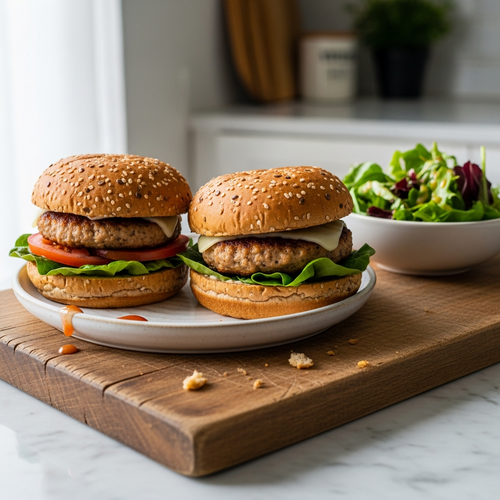
Description: A surprisingly juicy and flavorful turkey burger recipe designed for fat loss. Packed with protein and simple to make, this will become your new go-to for a healthy, satisfying meal that doesn’t taste like diet food.
Prep Time: 5 minutes | Cook Time: 10 minutes
Servings: 4
Macros per Serving | Calories: 165 | Protein: 30g | Fat: 2g | Carbohydrates: 2g
Ingredients
- 1 lb 99% lean ground turkey
- 1/4 cup non-fat plain Greek yogurt
- 1/4 cup finely grated sweet onion
- 1 large egg
- 1 tablespoon Worcestershire sauce
- 1 teaspoon smoked paprika
- 1 teaspoon garlic powder
- 1/2 teaspoon onion powder
- 1/2 teaspoon dried oregano
- 1/2 teaspoon black pepper
- 1/4 teaspoon salt
Instructions
- In a large mixing bowl, add all ingredients. Gently mix with your hands until just combined. Do not overmix.
- Divide the mixture into four equal portions and shape them into patties about 1/2-inch thick. Press a slight indent into the center of each patty.
- Cook the patties until the internal temperature reaches 165°F. You can pan-sear on medium-high for 5-7 minutes per side, grill for 5-7 minutes per side, or bake at 400°F for 20-25 minutes, flipping halfway.
- Serve immediately on a bun, in a lettuce wrap, or over a salad.
Notes
Grating the onion instead of dicing it is key for moisture and even flavor distribution. A meat thermometer is highly recommended to ensure the burgers are cooked through but not dry.
FAQs About Turkey Burger For Weight Loss
Here are some straightforward answers to the most common questions I receive about this turkey burger recipe.
Why is my turkey burger always so dry?
This is the number one complaint about turkey burgers, and it usually comes down to two things: the wrong ingredients and overcooking. Lean ground turkey has very little fat, and fat is what provides moisture and flavor in traditional burgers. When you remove the fat, you have to add moisture back in through other ingredients.
This recipe combats dryness in two specific ways. First, the non-fat Greek yogurt adds a significant amount of moisture without adding fat. Second, grating the onion instead of chopping it allows its natural juices to be released and distributed throughout the entire patty. The other major culprit is overcooking. Even a minute too long can dry out lean meat. That’s why using a meat thermometer is so important. Cooking to an internal temperature of exactly 165°F ensures the burger is safe to eat but still juicy.
Can I make this turkey burger recipe ahead of time?
Absolutely. This recipe is perfect for meal prep, which is a critical strategy for staying on track with ADHD. Having healthy, high-protein options ready to go eliminates the “what should I eat” debate and makes it easy to make a good choice. You can prep these burgers in a couple of ways to fit your schedule.
You can mix and form the raw patties, then store them in the fridge in an airtight container with parchment paper between them for up to 24 hours before cooking. For longer-term prep, freeze the raw patties. They’ll last for months and you can cook them straight from the freezer. You can also cook a full batch ahead of time and store the cooked patties in the fridge for up to four days. They reheat beautifully in a skillet or air fryer for a lightning-fast meal.
Is a turkey burger healthier than a beef burger?
This really depends on the type of meat you’re comparing. A burger made from 99% lean ground turkey is significantly healthier than a typical burger made from 80/20 ground beef, especially from a fat loss perspective. The 99% lean turkey burger will have far fewer calories and much less saturated fat, while providing a comparable amount of protein.
However, if you compare a 93/7 turkey burger to a 93/7 lean beef burger, their nutritional profiles are quite similar. The main advantage of the turkey burger in this recipe is its extremely low fat content, which makes it a very efficient source of protein for your calorie budget. For fat loss, managing calories is key, and this lean turkey burger makes it much easier to do that while still enjoying a satisfying meal.
What can I use instead of Greek yogurt in my turkey burger?
The Greek yogurt serves as both a binder and a source of moisture. If you don’t have it on hand, you have a few options that serve a similar purpose. The best substitute is an equal amount of non-fat or low-fat cottage cheese. For the best texture, you might want to blend it first to make it smooth. Light sour cream can also work in a pinch.
If you don’t have any dairy options, you could try using a tablespoon of olive oil to add some fat and moisture back in, though this will increase the calorie count. Another classic technique is to make a “panade,” which is a mixture of bread soaked in milk. A small piece of bread torn up and soaked in a couple of tablespoons of milk, then mashed into a paste, will also keep the burgers incredibly moist.
How do I know when my turkey burger is fully cooked?
With poultry, food safety is critical, so you need to be certain your turkey burger is cooked through. While some people rely on visual cues like cutting it open to check for pinkness or seeing if the juices run clear, these methods are not foolproof. A turkey burger can sometimes remain slightly pink even when fully cooked, or its juices might not run perfectly clear.
The only 100% reliable way to know your turkey burger is done is to use an instant-read meat thermometer. Poultry is safe to eat when it reaches an internal temperature of 165°F (74°C). Insert the thermometer into the thickest part of the patty to get an accurate reading. This not only guarantees safety but also prevents you from overcooking the burger and drying it out. It’s a small investment that makes a huge difference in the quality and safety of your cooking.
Try These High-Protein Recipes Next
If you loved this simple and effective recipe, here are a few others you should try next.
- High-Protein Smash Burger Recipe: My take on the classic smash burger, optimized with lean ground beef for a high-protein meal that crushes cravings.
- Ground Turkey Teriyaki Rice Bowl: A quick and easy bowl recipe that is perfect for ADHD-friendly meal prep and packed with flavor.
- Juicy Turkey Pan Burgers: Another fantastic approach to making juicy turkey burgers right on the stovetop, with a focus on simple seasonings.
These recipes all follow the same principles of being high in protein, easy to make, and delicious enough to keep you on track with your goals.