
Let’s be honest. Before I figured out my fitness journey, breakfast was a mess. It was usually a bowl of sugary cereal or a couple of carb-loaded toaster pastries, chased with a giant coffee. I’d get a quick dopamine hit, followed by a massive energy crash an hour later. That crash would trigger cravings for the rest of the day. It was a vicious cycle.
When I finally committed to losing weight, I knew breakfast had to change. I needed something that would keep me full, kill my cravings, and not require a ton of effort in the morning when my ADHD brain is barely online. That’s when I discovered the magic of the meal-prep frittata.
This wasn’t just a recipe. It was a system. It was my first real lesson in the power of protein and planning ahead. I could spend 30 minutes on a Sunday and have a delicious, satisfying breakfast ready to go for the next three or four days. No thinking. No decisions. Just grab, heat, and eat.
This high-protein frittata recipe is the result of years of refining that system. It’s packed with protein to manage hunger, loaded with veggies for nutrients, and has just enough flavor to make you forget you’re eating “health food.” It’s designed to work with your brain, not against it, making fat loss feel less like a chore and more like a simple choice.
Skip to My Flexibe Diet Recipe!
Why This Frittata Is Great For Fat Loss
When it comes to fat loss, food is about 75 percent of the battle. You can’t out-train a bad diet, and consistency with your nutrition is what delivers real, lasting results. This frittata is engineered to make that consistency not just possible, but easy, especially for those of us with ADHD.
First and foremost, it’s built on our core principle: protein first. We use a powerful combination of whole eggs, liquid egg whites, low-fat cottage cheese, and turkey bacon. This massive protein punch does two critical things. It helps you build and maintain lean muscle, which is essential for a healthy metabolism. More importantly, protein is incredibly satiating. It keeps you feeling full and satisfied for hours, which is your number one defense against cravings.
This brings us to hunger management. When you start your day with a meal like this, you’re setting yourself up for success. You won’t experience that mid-morning energy slump that sends you running for the snack machine. The fiber from the broccoli, peppers, and spinach also helps with fullness and provides essential micronutrients. Stable blood sugar and a full stomach mean fewer impulsive food choices throughout the day.
Finally, there’s convenience. The enemy of any good eating plan is decision fatigue. Having to figure out what to cook when you’re already hungry or low on motivation is a recipe for disaster. This frittata is the ultimate “grab-and-go” solution. By making it ahead of time, you remove the guesswork from your mornings. It’s a simple, repeatable system that ensures you start your day with a win.
Ingredients You’ll Need for a Frittata
One of the best things about making a frittata is its flexibility, but this specific combination is my go-to for a perfect balance of macros, flavor, and texture. It’s designed to be simple, using ingredients that are easy to find at any grocery store. Here’s exactly what you’ll need.
The secret weapon in this recipe is the low-fat cottage cheese. Don’t skip it. When you whisk it into the eggs, it melts down and creates an incredibly creamy, custardy texture that you just can’t get with eggs alone. Plus, it adds a significant boost of casein protein, a slow-digesting protein that enhances satiety and keeps you full even longer.
- 1 tablespoon olive oil
- 1/2 cup diced yellow onion
- 1 cup chopped bell peppers (any color)
- 1 cup chopped broccoli florets
- 2 cloves garlic, minced
- 3 strips of turkey bacon, diced
- 1 cup fresh spinach
- 4 large eggs
- 1 cup liquid egg whites
- 1/2 cup low-fat cottage cheese
- 1/4 cup crumbled feta cheese
- 1/4 teaspoon salt
- 1/4 teaspoon black pepper
- 1 tablespoon chopped fresh parsley (for garnish)
A few notes on these ingredients. For the turkey bacon, look for a low-sodium variety if you can. It helps keep the overall salt content in check. You can use fresh or frozen broccoli florets; if using frozen, just make sure to thaw them and pat them dry to avoid adding extra water to the frittata. The liquid egg whites are a great shortcut for bumping up the protein without adding extra fat and cholesterol, but you could also use more whole eggs if that’s what you have on hand.
How To Make a Frittata (Step-By-Step)
Making this frittata is a straightforward process that you can easily tackle even on a low-energy day. The key is to have everything prepped before you start cooking. This is a classic ADHD hack called “mise en place.” Chop your veggies, dice your bacon, and measure your ingredients first. This prevents the mid-recipe scramble and keeps the process smooth and stress-free.
The most important piece of equipment is a 10-inch oven-safe skillet, preferably cast iron. A well-seasoned cast-iron skillet provides even heat and helps prevent sticking. If you don’t have one, you can cook the veggies on the stovetop and then transfer everything to a greased pie plate or baking dish before it goes in the oven.
Step 1: Preheat Your Oven and Sauté The Veggies
First things first, get your oven preheating to 375°F (190°C). Then, heat the olive oil in your oven-safe skillet over medium heat. Add the diced onion, bell peppers, and broccoli. Cook them for about 5 to 7 minutes. You want them to soften up and maybe get a tiny bit of color. Don’t rush this step; cooking the water out of the vegetables is key to preventing a soggy frittata.
Step 2: Cook The Bacon and Aromatics
Add the diced turkey bacon to the skillet with the vegetables. Continue to cook for another 2 to 3 minutes. The goal is to get the bacon a little crispy and render some of its flavor into the pan. Once the bacon is looking good, stir in the minced garlic. Cook for just 30 seconds until it’s fragrant. Be careful not to burn the garlic, as it can become bitter.
Step 3: Wilt The Spinach
Now, add the fresh spinach. It will look like a mountain in the skillet, but don’t worry. It cooks down in about a minute or two. Just keep stirring it until it has completely wilted. This step adds extra nutrients without adding bulk.
Step 4: Whisk The Egg Mixture
In a separate medium bowl, combine the whole eggs, liquid egg whites, and low-fat cottage cheese. Add the salt and pepper. Whisk everything together vigorously until it’s light, airy, and frothy. Getting some air into the eggs is what helps the frittata puff up in the oven and gives it a lighter texture.
Step 5: Combine and Bake
Pour the frothy egg mixture directly over the cooked vegetables and bacon in the skillet. Use a spatula to gently spread everything into an even layer. Sprinkle the crumbled feta cheese evenly over the top. Now, transfer the entire skillet into your preheated oven. Bake for 15 to 20 minutes. You’ll know it’s done when the center is set (it shouldn’t jiggle) and the edges are lightly golden. Let it cool for a few minutes before slicing and serving. This helps it hold its shape.
How To Serve Frittata (ADHD-Friendly)
The beauty of this frittata is that it’s a complete meal on its own, but how you serve it can make a big difference in sticking to your goals. The key, especially for an ADHD brain, is to eliminate as many barriers and decisions as possible. We want to make eating healthy the path of least resistance.
My number one tip is to pre-portion it. As soon as the frittata has cooled, slice it into four or six equal wedges. Place each slice in its own airtight container. Now, breakfast for the next few days requires zero thought. You just open the fridge, grab a container, and you’re good to go. This “task batching” is incredibly effective for staying consistent.
While the frittata is fantastic by itself, you can easily pair it with other simple items to round out the meal or just add some variety. The goal is to keep these additions just as easy as the frittata itself. Here are a few of my favorite no-fuss pairings:
- A Side of Fruit: A handful of berries, a small apple, or an orange adds some healthy carbs and fiber. No cooking required.
- Avocado Slices: A quarter of an avocado with a sprinkle of everything bagel seasoning adds healthy fats that increase satiety.
- Whole-Grain Toast: A single slice of toasted Ezekiel bread or sourdough provides some complex carbohydrates for sustained energy.
- A Dollop of Greek Yogurt or Salsa: A spoonful on top can add extra protein (with yogurt) or a kick of flavor (with salsa) without adding many calories.
Remember, the goal isn’t perfection; it’s consistency. By having these simple, pre-planned serving options, you avoid the “what should I eat with this” spiral. You make one decision when you’re planning, and then you just execute for the rest of the week. It’s a brutally practical system that just plain works.
How To Store, Reheat, and Reuse Frittata
Proper storage is crucial for making this frittata a true meal-prep champion. If you store it correctly, it will taste just as good on day four as it did on day one. The most important rule is to let the frittata cool completely to room temperature before you put it in the fridge. Storing it while it’s still warm creates condensation, which leads to a soggy, watery texture.
Once cooled, you have a few options for storage depending on your preference. My preferred method is pre-slicing it and storing the individual portions in separate containers. This makes it a true grab-and-go meal. It’s a simple system that removes one extra step from your busy mornings. A little planning upfront saves you executive function later.
Here are the best ways to store and reheat your frittata:
- In the Refrigerator: Place the cooled frittata (either whole or sliced) in an airtight container. It will stay fresh for up to 4 days. This is my standard approach for the work week.
- In the Freezer: Yes, you can freeze it. For best results, wrap individual slices tightly in plastic wrap, then place them in a freezer-safe bag or container. This prevents freezer burn. It will last for up to 3 months. To eat, let it thaw overnight in the fridge.
- Reheating in the Microwave: This is the quickest method. Place a slice on a microwave-safe plate and heat for 60-90 seconds, depending on your microwave. To prevent it from getting rubbery, you can cover it with a damp paper towel.
- Reheating in the Oven or Air Fryer: For the best texture, reheat slices in an oven or toaster oven at 350°F for about 10 minutes, or in an air fryer at 325°F for 4-5 minutes, until warmed through. This keeps the edges slightly crisp.
You can also enjoy the frittata cold or at room temperature, which is a great option if you’re in a huge rush. Think of it like a savory breakfast pie. The versatility is what makes it such a sustainable part of a fat loss lifestyle.
Easy Swaps & Variations for This Frittata
One of our core principles is flexible eating. A recipe is only useful if it can adapt to your life, your budget, and what you happen to have in the fridge. This frittata recipe is a perfect template for experimentation. Think of the core components—eggs, veggies, protein, cheese—and feel free to mix and match.
This approach is perfect for the ADHD brain because it reduces the pressure to be perfect. Don’t have broccoli? No problem. Ran out of feta? Use something else. This prevents the “all-or-nothing” thinking that can derail our progress. If we don’t have one specific ingredient, we don’t abandon the healthy meal; we just adapt.
Here are some simple and effective swaps you can make:
- Protein Power-Up: Swap the turkey bacon for diced ham, cooked chicken sausage, or crumbled ground turkey. For a vegetarian option, you can use plant-based sausage crumbles or simply add a can of drained and rinsed black beans for extra fiber and protein.
- Vegetable Overhaul: This is a great “clean out the fridge” recipe. Almost any vegetable works. Try sautéed mushrooms, asparagus tips, chopped zucchini, or kale. Just be sure to cook down any high-water-content vegetables (like mushrooms or zucchini) thoroughly to avoid a watery frittata.
- Cheese Please: The feta gives a great salty bite, but you can easily substitute it with goat cheese, shredded sharp cheddar, Monterey Jack, or Parmesan. Use what you love.
- Make It Dairy-Free: To make this recipe dairy-free, simply omit the cottage cheese and feta. You can use a splash of unsweetened almond milk in the eggs for moisture and substitute your favorite dairy-free shredded cheese.
Don’t be afraid to play with herbs and spices either. A pinch of red pepper flakes can add a nice kick, or some dried oregano can give it a Mediterranean feel. The goal is to create a meal you genuinely look forward to eating. That’s the secret to long-term consistency and results.
High-Protein Veggie & Turkey Bacon Frittata
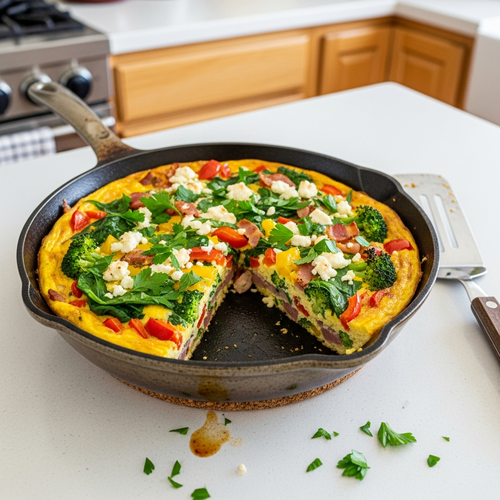
Description: A simple, high-protein frittata designed for easy meal prep. It’s packed with veggies, turkey bacon, and a secret ingredient (cottage cheese!) for a creamy texture that keeps you full for hours, making fat loss easier and more delicious.
Prep Time: 10 minutes | Cook Time: 25 minutes
Servings: 4
Macros per Serving | Calories: 245 | Protein: 26g | Fat: 13g | Carbohydrates: 7g
Ingredients
- 1 tablespoon olive oil
- 1/2 cup diced yellow onion
- 1 cup chopped bell peppers (any color)
- 1 cup chopped broccoli florets
- 2 cloves garlic, minced
- 3 strips of turkey bacon, diced
- 1 cup fresh spinach
- 4 large eggs
- 1 cup liquid egg whites
- 1/2 cup low-fat cottage cheese
- 1/4 cup crumbled feta cheese
- 1/4 teaspoon salt
- 1/4 teaspoon black pepper
- 1 tablespoon chopped fresh parsley (for garnish)
Instructions
- Preheat your oven to 375°F (190°C).
- Heat olive oil in a 10-inch oven-safe skillet over medium heat. Sauté onion, bell peppers, and broccoli for 5-7 minutes until softened.
- Add diced turkey bacon and cook for 2-3 minutes. Stir in garlic for 30 seconds.
- Add spinach and cook until wilted, about 1-2 minutes.
- In a separate bowl, whisk together whole eggs, egg whites, cottage cheese, salt, and pepper until frothy.
- Pour the egg mixture over the vegetables in the skillet. Sprinkle with feta cheese.
- Transfer the skillet to the oven and bake for 15-20 minutes, until the center is set.
- Let cool for a few minutes, then garnish with parsley, slice, and serve.
Notes
Ensure your skillet is oven-safe. If not, transfer the cooked vegetable mixture to a greased 9-inch pie plate before adding the eggs and baking.
FAQs About Frittata For Weight Loss
Here are some straightforward answers to the most common questions I receive about this frittata recipe.
Why is my frittata watery or soggy?
A watery frittata is the most common problem people run into, and it almost always comes down to one thing: excess moisture from the vegetables. Vegetables release a lot of water when they cook. If you don’t cook that water off before adding the eggs, it will seep out during baking and create a soggy, spongy texture.
To prevent this, make sure you sauté your vegetables (like onions, peppers, mushrooms, or zucchini) for a good 5-7 minutes, until they have softened and the pan looks relatively dry. If you’re using frozen vegetables, it’s even more critical. Thaw them completely and pat them thoroughly dry with a paper towel before adding them to the skillet. The same goes for spinach. Cook it until it’s fully wilted and the liquid has evaporated. Taking a few extra minutes on this step makes all the difference.
Can I make this frittata without an oven-safe skillet?
Absolutely. While an oven-safe skillet (especially cast iron) is convenient because it’s a one-pan meal, you can easily make this recipe without one. The process is nearly identical, with just one extra step. You’ll simply need a standard skillet and a separate baking dish, like a 9-inch pie plate or an 8×8 inch square baking dish.
Follow the instructions to cook all your vegetables and turkey bacon on the stovetop in your regular skillet. While that’s happening, lightly grease your baking dish. Once the veggie mixture is cooked, transfer it from the skillet into the greased baking dish and spread it out evenly. Then, whisk your egg mixture as directed and pour it over the top. Sprinkle with cheese and bake as usual. It works perfectly and gives you the exact same delicious result.
What is the difference between a frittata and a quiche?
This is a great question because they look very similar. The main differences come down to three things: the crust, the dairy content, and the cooking method. The most obvious difference is that a quiche almost always has a pastry crust, while a frittata is crustless. This is one reason why a frittata is often a better choice for fat loss, as you skip the extra calories and refined carbs from the crust.
Second, the filling is different. A quiche is a savory custard made with a higher ratio of cream or milk to eggs, which gives it a softer, richer, and more delicate texture. A frittata is egg-based, with dairy added more for flavor and texture (like the cottage cheese and feta in our recipe) rather than as the primary liquid. This makes a frittata denser and more firm. Finally, a frittata starts cooking on the stovetop and finishes in the oven, while a quiche is typically baked entirely in the oven.
How can I add more protein to this frittata recipe?
This recipe is already high in protein, but if you have higher protein goals for your macros or you’re looking for an even more filling meal, it’s very easy to boost it further. The simplest way is to adjust the ratio of your core ingredients. You can increase the liquid egg whites from one cup to one and a half cups. You can also increase the low-fat cottage cheese from a half cup to three-quarters of a cup.
Another easy option is to double the amount of turkey bacon or add another protein source alongside it, like some cooked chicken sausage. If you’re open to supplements, you could even whisk a scoop of unflavored collagen peptides or a savory-flavored protein powder into the egg mixture. Just be mindful that this might slightly alter the texture. Start with these simple food-based additions first, as they are the most reliable.
Is this frittata recipe good for meal prep?
Yes, this frittata recipe is not just good for meal prep, it’s one of the best meal-prep breakfasts you can make. It was designed specifically for that purpose. The entire concept is built around the “cook once, eat for days” philosophy, which is a lifesaver for anyone, but especially for those of us managing ADHD. It dramatically reduces decision fatigue in the morning.
The ingredients hold up incredibly well in the refrigerator for up to four days without getting soggy (as long as you cook the moisture out of the veggies). It reheats quickly in the microwave or air fryer, and it even tastes great cold. By investing about 30 minutes on a Sunday, you solve the breakfast puzzle for most of your work week. This creates a simple, sustainable habit that ensures you start your day with a high-protein, nutrient-dense meal, which is a massive win for both your fitness goals and your focus.
Try These High-Protein Recipes Next
If you loved the simplicity and effectiveness of this frittata, here are a few other high-protein breakfast recipes that follow the same principles.
-
High-Protein Crustless Quiche: Very similar to a frittata but with a slightly different, creamier texture. Another fantastic meal-prep option.
-
Easy Meal Prep Egg Bites: These are like mini frittatas made in a muffin tin. Perfectly portioned and easy to grab on your way out the door.
-
Brussels Sprouts, Bacon, & Goat Cheese Frittata: A delicious variation with a unique flavor combination if you’re looking to mix things up.
Give them a try and see how easy it can be to stay on track with your goals.