
I used to think certain foods were off-limits on a fitness journey. Paella was definitely on that list. I saw it as a vacation-only, special-occasion meal. Something you eat with zero regard for your goals. It felt complicated, heavy, and totally out of sync with the high-protein, low-fuss meals I was building my life around.
But when I started getting serious about losing weight, I realized I couldn’t just eat chicken and broccoli forever. My ADHD brain craves novelty and flavor. Restriction leads to burnout, which leads to quitting. I needed to find a way to make the foods I loved work for me, not against me.
That’s what led me to create this high-protein, fat-loss-friendly paella recipe. I wanted to capture that rich, savory, communal feeling of a traditional paella without the restaurant-level calories and fat. I wanted a meal that felt like a celebration but was simple enough to make on a weeknight and packed enough protein to keep me full and satisfied.
This recipe is the result of that mission. It’s a brutally practical approach to a classic dish, designed for people like us who need our food to be delicious, filling, and supportive of our goals. It’s proof that you don’t have to give up your favorite foods to build a body and life you love.
Skip to My Flexibe Diet Recipe!
Why Paella Is Great For Fat Loss
When you hear “paella,” you might think of a carb-heavy dish, but we’ve engineered this recipe specifically for a fat loss lifestyle. It’s built on the core principles that have helped me and hundreds of my clients achieve sustainable results. It’s all about strategic choices that work with your body and your brain.
First, we put protein front and center. This isn’t an accident. With a full pound of chicken breast, half a pound of shrimp, clams, and smoked turkey sausage, each serving is loaded with high-quality protein. This is critical for fat loss. Protein keeps you feeling full and satisfied for hours, which crushes cravings and prevents mindless snacking. It also helps preserve muscle mass while you’re in a calorie deficit, ensuring you’re losing fat, not muscle.
Next, we manage hunger with smart carbs and fiber. We swap the traditional white bomba rice for short-grain brown rice. It provides slow-releasing energy, preventing the blood sugar spikes and crashes that can trigger hunger. We also pack this paella with vegetables like bell peppers, onions, and peas. These add volume and micronutrients for very few calories, making your plate look and feel full.
Finally, it’s all about sustainable flavor. A fat loss plan fails if the food is boring. The smoked paprika, fire-roasted tomatoes, and a hint of saffron create an incredibly deep, savory flavor profile. This makes the meal feel indulgent and satisfying, which is key for long-term consistency. When your healthy food tastes this good, you never feel deprived. This is how you build a flexible eating plan that you can actually stick with for life.
Ingredients You’ll Need for Paella
Getting the right ingredients is the first step to a successful dish. For this high-protein paella, we’re focusing on lean proteins, complex carbs, and tons of flavor. The list might look long, but many of these are pantry staples, and the process is straightforward. We’re building layers of flavor with every component.
Our key twist is using low-sodium chicken bone broth instead of regular chicken stock. This is a game-changer. Bone broth adds a richer, deeper flavor to the entire dish and provides an extra boost of collagen and protein. It’s a simple swap that elevates the nutritional profile and the taste without any extra work.
Here’s exactly what you’ll need to grab:
- 1 lb boneless, skinless chicken breasts, cut into 1-inch pieces
- ½ lb jumbo shrimp, peeled and deveined
- 12 little neck clams, cleaned
- 1 tbsp olive oil
- 4 oz smoked turkey sausage, sliced
- 1 medium onion, diced
- 1 red bell pepper, diced
- 1 green bell pepper, diced
- 3 cloves garlic, minced
- 1 ½ cups short-grain brown rice
- 3 cups low-sodium chicken bone broth
- 1 (15 oz) can fire-roasted diced tomatoes, drained
- 1 tsp smoked paprika
- ½ tsp saffron threads
- 1 cup frozen peas, thawed
- ¼ cup fresh parsley, chopped
- 1 lemon, cut into wedges
A quick note on a few key ingredients. For the shrimp, buying them already peeled and deveined is a fantastic ADHD-friendly shortcut. It saves time and a tedious task. When it comes to saffron, a little goes a long way. It can be pricey, but it’s essential for that authentic paella color and aroma. Look for threads, not powder, for the best quality. Finally, using smoked turkey sausage keeps the fat content lower than traditional chorizo while still adding a wonderful smoky flavor.
How To Make Paella (Step-By-Step)
Making paella can seem intimidating, but I promise this process is broken down into simple, manageable steps. We’ll build the flavors methodically. The key is to have all your ingredients prepped and ready to go before you even turn on the stove. This is a classic “mise en place” approach, and it’s a lifesaver for the ADHD brain. It prevents that mid-recipe panic when you realize you forgot to chop an onion.
Step 1: Brown The Proteins
In a large paella pan or a wide, heavy-bottomed skillet, heat your olive oil over medium-high heat. Add the chicken pieces. Your goal is to get a nice brown crust on all sides, which adds a ton of flavor. This isn’t about cooking it through just yet. Once browned, use tongs to remove the chicken and set it aside on a plate. Do the same with the sliced turkey sausage, letting it get a little color for 2-3 minutes before removing it.
Step 2: Sauté The Aromatics
In that same pan, add your diced onion and bell peppers. All those browned bits from the meat will mix with the vegetables, creating an incredible flavor base. Cook them for about 5 minutes until they start to soften. Then, add the minced garlic and cook for just another minute until you can smell it. Be careful not to burn the garlic.
Step 3: Toast The Rice And Add Liquids
Add the brown rice directly into the pan with the vegetables. Stir it around for a minute or two. This toasting step gives the rice a slightly nutty flavor and helps it absorb the liquid better. Now, stir in the smoked paprika and saffron. Pour in the chicken bone broth and the drained fire-roasted tomatoes. Give everything a good stir and bring it to a simmer.
Step 4: Simmer And Cook
Once simmering, reduce the heat to low. Add the cooked chicken and sausage back to the pan. Nestle the cleaned clams into the rice mixture, hinge-side down. Cover the pan tightly and let it simmer for 35-40 minutes. Don’t stir it. Let the rice do its thing and absorb all that flavorful liquid.
Step 5: Add Seafood And Rest
After the rice is tender, gently place the shrimp on top of the rice and scatter the peas over everything. Cover the pan again and cook for another 5-7 minutes, just until the shrimp are pink and the clams have popped open. Make sure to throw away any clams that didn’t open. Finally, remove the pan from the heat and let it rest, still covered, for 5-10 minutes. This step is crucial for the flavors to meld together. Garnish with fresh parsley and serve with lemon wedges.
How To Serve Paella (ADHD-Friendly)
Serving this paella is where the flexibility of our system really shines. This is a complete, all-in-one meal. You have your protein, your complex carbs, and your vegetables all cooked together in one pan. This is perfect for reducing decision fatigue on busy weeknights. There’s no need to figure out what sides to make. The work is already done.
For me, the best way to serve it is directly from the pan, family-style. It creates a great centerpiece and a communal feeling. Squeeze a fresh lemon wedge over your portion right before eating. The acidity brightens up all the smoky and savory flavors beautifully. It’s a small step that makes a huge difference in taste.
Here are a few ADHD-friendly tips for serving and incorporating this paella into your meal plan:
- Portion It Out Immediately. Before you even sit down to eat, portion out leftovers into individual containers. This is a form of pre-planning for your future self. It eliminates the friction of having to pack up food later and makes grabbing a healthy lunch the next day effortless.
- Visual Cues for Portions. Don’t stress about a food scale if that feels like too much. Use a simple measuring cup or even a specific ladle as your serving size. Consistency is more important than perfection. Knowing that “one scoop” is your portion helps you stay on track without getting bogged down in details.
- Pair with a Simple Green. If you feel you need more greens, don’t overcomplicate it. A handful of pre-washed arugula or spinach on the side with a squeeze of lemon and a pinch of salt is perfect. It adds freshness and nutrients with zero extra cooking.
The goal is to make healthy eating feel easy and rewarding. This dish does exactly that. It’s a satisfying, impressive meal that requires minimal cleanup and thought once it’s on the table. It fits perfectly into a sustainable lifestyle where good food supports your goals without adding stress.
How To Store, Reheat, and Reuse Paella
Leftovers are not a burden. They are a gift to your future self. This is especially true for those of us with ADHD. Having a delicious, pre-made meal waiting in the fridge can be the difference between staying on track and ordering takeout on a low-energy day. This paella stores and reheats beautifully, making it perfect for meal prep.
The key is proper storage. Once the paella has cooled down slightly, you want to get it into the refrigerator within two hours. This prevents bacteria growth and keeps it fresh. I highly recommend storing it in individual, airtight containers. This “planned-over” strategy removes all guesswork for future meals. You just grab a container, and you’re good to go.
Here’s how to best handle your leftover paella:
- Storing: Divide the paella into single-serving airtight containers. It will keep well in the refrigerator for up to 3-4 days. I wouldn’t recommend freezing this dish, as the texture of the rice and seafood can change significantly upon thawing.
- Reheating in the Microwave: This is the quickest method. Place a serving on a microwave-safe plate. Sprinkle it with a tablespoon of water or chicken broth. This helps steam the rice and prevents it from drying out. Cover it with a damp paper towel and microwave for 2-3 minutes, or until heated through.
- Reheating on the Stovetop: For the best texture, use a non-stick skillet over medium heat. Add the paella and a splash of water or broth. Break it up gently with a spoon and heat, stirring occasionally, until it’s hot. This method can even help bring back a little of that crispy bottom texture.
Don’t be afraid to reuse the leftovers in a new way. You can stir a beaten egg into a hot portion to create a quick, protein-packed fried rice dish. Or, you can stuff the leftover paella into bell peppers and bake them for a completely different meal. Finding creative ways to use leftovers keeps things interesting and reduces food waste.
Easy Swaps & Variations for Paella
One of my core principles is flexibility. A recipe is a template, not a rigid set of rules. Your diet needs to adapt to your life, your budget, and what’s in your fridge. This paella recipe is incredibly forgiving and easy to modify. Don’t let a missing ingredient stop you from making a great meal. Task initiation is hard enough with ADHD. Let’s make it easier.
The proteins are the easiest place to make swaps. You can tailor this dish completely to your preferences or what you have on hand. The cooking method for the base of the paella will remain the same. Just be sure to cook your chosen protein appropriately before adding it back into the dish.
Here are some simple and effective variations:
- All-Chicken Version: If you’re not a fan of seafood or have a shellfish allergy, simply omit the shrimp and clams. You can increase the chicken to 1.5 lbs or add more smoked turkey sausage to keep the protein content high.
- Vegetarian Option: To make this vegetarian, replace the meats and seafood with a can of drained and rinsed chickpeas and some firm tofu or mushrooms. Use a high-quality vegetable broth instead of bone broth. Add the chickpeas along with the rice and add sliced mushrooms in the last 10 minutes of cooking.
- Budget-Friendly Swaps: Saffron can be expensive. While it adds a unique flavor, you can substitute it with a ½ teaspoon of turmeric for a similar golden color and a pinch more smoked paprika for flavor depth. You can also use chicken thighs instead of breasts for a lower-cost, high-flavor alternative.
- Freezer & Pantry Hacks: Use a bag of frozen mixed bell pepper and onion strips to save on chopping time. Canned chicken (drained) can work in a real pinch, just stir it in at the end with the peas to heat through. Don’t be afraid to use what you have.
The goal is to get a healthy, protein-packed meal on the table. These swaps ensure you can make this delicious paella work for you, no matter the circumstances. Consistency will always beat perfection.
High-Protein Paella for Fat Loss
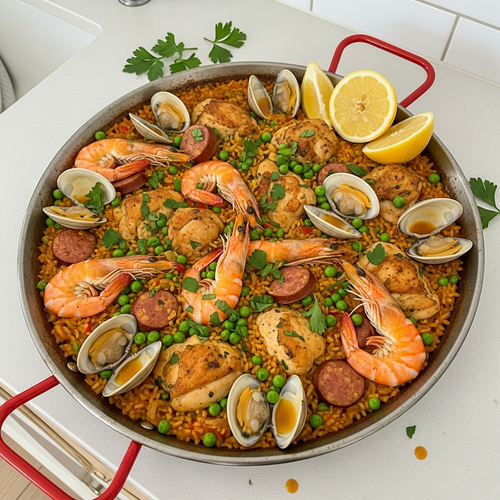
Description: A delicious, high-protein take on classic paella, designed to support fat loss goals without sacrificing flavor. This one-pan meal is packed with lean protein, fiber, and slow-digesting carbs to keep you full and satisfied for hours.
Prep Time: 15 minutes | Cook Time: 60 minutes
Servings: 6
Macros per Serving | Calories: 415 | Protein: 34g | Fat: 10g | Carbohydrates: 33g
Ingredients
- 1 lb boneless, skinless chicken breasts, cut into 1-inch pieces
- ½ lb jumbo shrimp, peeled and deveined
- 12 little neck clams, cleaned
- 1 tbsp olive oil
- 4 oz smoked turkey sausage, sliced
- 1 medium onion, diced
- 1 red bell pepper, diced
- 1 green bell pepper, diced
- 3 cloves garlic, minced
- 1 ½ cups short-grain brown rice
- 3 cups low-sodium chicken bone broth
- 1 (15 oz) can fire-roasted diced tomatoes, drained
- 1 tsp smoked paprika
- ½ tsp saffron threads
- 1 cup frozen peas, thawed
- ¼ cup fresh parsley, chopped
- 1 lemon, cut into wedges
Instructions
- Heat olive oil in a large paella pan or skillet over medium-high heat. Brown the chicken pieces, then remove. Brown the sausage, then remove.
- Add onion and bell peppers to the pan and cook for 5 minutes until soft. Stir in garlic for 1 minute.
- Add the brown rice and toast for 1-2 minutes. Stir in paprika and saffron.
- Pour in the bone broth and drained tomatoes. Bring to a simmer, then reduce heat to low.
- Return chicken and sausage to the pan. Arrange clams in the rice. Cover and simmer for 35-40 minutes, until rice is tender.
- Nestle shrimp into the paella and add peas. Cover and cook for 5-7 minutes, until shrimp are pink and clams have opened. Discard any unopened clams.
- Remove from heat, let rest covered for 5-10 minutes. Garnish with parsley and serve with lemon wedges.
Notes
Ensure you do not stir the rice once it is simmering. This helps develop the “socarrat,” the delicious crispy layer of rice at the bottom of the pan.
FAQs About Paella For Weight Loss
Here are some straightforward answers to the most common questions I receive about this paella recipe.
Is this paella recipe actually healthy for weight loss?
Absolutely. The term “healthy” can be confusing, so I prefer to talk about whether a food is “goal-supportive.” This paella is specifically designed to support fat loss goals. Traditional paella can be high in refined carbs from white rice and high in fat from chorizo and large amounts of olive oil. We’ve made strategic adjustments to flip that script.
Our version prioritizes lean protein from chicken, shrimp, and clams, which is crucial for satiety and muscle retention. We use a smaller amount of smoked turkey sausage for flavor without excessive fat. The foundation of the dish is short-grain brown rice, a complex carbohydrate that provides sustained energy and fiber, helping to manage hunger and prevent energy crashes. It’s also loaded with vegetables, which add volume and essential nutrients for minimal calories. It’s a complete, balanced meal that fits perfectly within a calorie-controlled, flexible eating plan.
Can I make this paella without a special paella pan?
Yes, you definitely can. While a traditional paella pan is wide and shallow, which promotes even cooking and liquid evaporation, it’s not a requirement. The most important thing is to use a pan that is wide and has a heavy bottom. A 12-inch cast-iron skillet, a large stainless steel skillet, or even a wide Dutch oven will work well.
The key is to have a large surface area so the rice can cook in a relatively thin layer. This is what helps create the coveted “socarrat”—that crispy, toasted rice layer at the bottom. If you use a pan that’s too deep or small, the rice will steam more than it toasts, and you’ll miss out on that texture. Just make sure whatever pan you use has a tight-fitting lid or that you have a large piece of foil to cover it securely during the simmering phase.
How do I get the crispy rice bottom (socarrat) in this paella?
Ah, the socarrat! That’s the best part for many people. Getting that crispy bottom layer is a simple technique. The most important rule is: do not stir the rice after you add the liquid and bring it to a simmer. Just let it be. The rice on the bottom will toast against the hot pan, creating that delicious crust.
Once the rice has absorbed most of the liquid and is fully cooked (after about 35-40 minutes), you can turn up the heat to medium-high for the last 60-90 seconds of cooking time. Listen closely. You should hear a gentle crackling sound, like rice popping. This is the sound of the bottom layer toasting. You might also smell a slightly toasty aroma. Be careful not to burn it. This final blast of heat is what really solidifies that crispy texture. It takes a little practice, but it’s well worth it.
Can I effectively meal prep this paella recipe for the week?
This is an excellent recipe for meal prep, with one small consideration for the seafood. The rice, chicken, sausage, and vegetable base holds up perfectly for 3-4 days in the fridge. When I meal prep this, I portion out the base into my containers right after cooking. This locks in the flavor and makes grab-and-go lunches incredibly easy.
For the best texture, I sometimes cook the shrimp separately and add it to each portion just before reheating. Shrimp can get a bit rubbery if it’s repeatedly microwaved. However, if that feels like too much work, it’s perfectly fine to store and reheat everything together. The convenience often outweighs the slight change in texture. Just be sure to reheat it gently with a splash of water to keep everything moist.
What is the best rice for paella if I can’t find short-grain brown rice?
The type of rice is important for the texture of paella. You need a short or medium-grain rice that can absorb a lot of liquid without turning to mush. Short-grain brown rice is my top choice for its nutritional benefits and texture. If you can’t find it, your next best option would be Arborio rice, the kind used for risotto. It will create a creamier texture than traditional paella, but it works very well and is widely available.
Do not use long-grain rice like basmati or jasmine. These varieties don’t absorb liquid in the same way and will result in a much drier, fluffier texture that isn’t right for paella. In a pinch, any short-grain white rice (like Calrose or “sushi rice”) will also work, but you may need to reduce the cooking time slightly, so keep an eye on it.
Try These High-Protein Recipes Next
If you loved the simple, high-flavor approach of this paella, here are a few other recipes you should try.
- Quick & Easy Spanish Rice Skillet: This is another one-pan wonder that delivers huge flavor with minimal cleanup, perfect for a busy weeknight.
- High-Protein Jambalaya: If you enjoy the savory rice and protein combination, this healthier take on a Louisiana classic is a must-try.
- Thirty-Minute Paella with Tomatoes: For days when you’re really short on time, this recipe offers a super-fast way to get your paella fix.
Building a library of go-to healthy recipes is one of the best ways to stay consistent on your fitness journey.