
Pasta was one of the first foods I cut out when I started my weight loss journey. I figured it was just empty carbs, a one-way ticket to gaining back the 70 pounds I was working so hard to lose. And for a simple, supposedly “minimalist” dish, a traditional cacio e pepe felt especially off-limits. It’s basically just cheese, butter, and pepper. Delicious, but not exactly a fat-loss champion.
But living a life without pasta is, frankly, not a life I want to live. That all-or-nothing thinking is a classic ADHD trap. It leads to burnout and binge cycles. When I realized that sustainability was more important than perfection, I knew I had to find a way to make my favorite foods fit my goals. I needed a version that worked with my brain, not against it.
This high-protein cacio e pepe recipe is the result of that mission. It’s my go-to for a quick, satisfying meal that crushes cravings without derailing my progress. We’re keeping all the bold, peppery, cheesy flavor but re-engineering the macros to build muscle and keep you full for hours. It’s proof that you don’t have to give up comfort food to get fit.
Skip to My Flexibe Diet Recipe!
Why Cacio e Pepe Is Great For Fat Loss
Let’s be direct. A traditional cacio e pepe from a restaurant is a calorie bomb of refined carbs and fat. It’s delicious, but it won’t keep you full for long and it certainly won’t help you hit your protein goals. This version, however, is specifically designed for a fat-loss lifestyle.
The magic starts with two key swaps. First, we use high-protein pasta. Brands like Barilla Protein+ or Banza chickpea pasta fundamentally change the nutritional profile of the dish. Instead of just carbs, you’re getting a significant dose of protein and fiber right from the base of the meal. This is crucial for satiety, which is the feeling of fullness that prevents you from snacking on junk an hour later.
Second, we bring in non-fat Greek yogurt. This is my secret weapon for creating a creamy, luscious sauce without piling on the fat and calories from extra cheese and butter. The yogurt not only provides that silky texture but also adds another solid serving of protein. When you prioritize protein, you protect your muscle mass while in a calorie deficit, which is essential for a healthy metabolism.
This recipe turns a classic comfort food into a balanced meal. You get complex carbohydrates for energy, a huge hit of protein to build and maintain muscle, and enough healthy fat to make it satisfying. It’s the perfect example of our core principle at ADHD FIT: flexible eating wins. You get to enjoy amazing food while consistently moving toward your goals.
Ingredients You’ll Need for Cacio e Pepe
The beauty of cacio e pepe is its simplicity. This ingredient list stays true to that spirit, with just a few smart upgrades to align it with our fitness goals. Each component is chosen to maximize flavor and macros, proving that you don’t need a complicated recipe to make a healthy, satisfying meal.
Here’s exactly what you’ll need:
- 8 oz high-protein spaghetti or linguine (such as Barilla Protein+ or Banza Chickpea Pasta)
- 1 tbsp olive oil
- 2 tsp freshly cracked black pepper, plus more for garnish
- 1/2 cup grated Pecorino Romano cheese
- 1/4 cup nutritional yeast
- 1/4 cup plain, non-fat Greek yogurt
- 1/2 cup reserved pasta water, plus more as needed
- Salt to taste
The most important ingredient here is the Pecorino Romano cheese. Do not buy the pre-shredded kind in a bag or tub. Those contain anti-caking agents like potato starch that will prevent your sauce from becoming smooth and creamy, resulting in a clumpy mess. Buy a small wedge of Pecorino Romano and grate it yourself. It’s a small step that makes a world of difference.
Our key twist is the plain, non-fat Greek yogurt. This is what allows us to get that restaurant-quality creaminess while dramatically increasing the protein and cutting down on fat. It also adds a subtle tang that beautifully complements the sharp, salty cheese. The nutritional yeast is another powerhouse, adding a savory, cheesy flavor and B vitamins without extra calories.
And finally, do not underestimate the power of freshly cracked black pepper. The flavor is immensely more potent and aromatic than the pre-ground dust. Toasting it briefly in the pan is a non-negotiable step that unlocks its full potential and is the heart of this dish.
How To Make Cacio e Pepe (Step-By-Step)
This recipe comes together fast, which is perfect for busy weeknights or days when your executive function is low. The key to a perfect, creamy sauce is all in the technique and temperature control. Don’t rush the final steps, and you’ll be rewarded with a perfect bowl of pasta every time.
Step 1: Cook The Pasta
Bring a large pot of water to a rolling boil and season it generously with salt. It should taste like the ocean. This is your only chance to season the pasta itself. Add your high-protein pasta and cook according to the package directions until it’s al dente, which means it still has a slight bite. Mushy pasta will fall apart and won’t hold the sauce well.
Step 2: Reserve The Pasta Water
This is the most critical step. The starchy, salty water left over from boiling the pasta is liquid gold. It’s the emulsifier that helps the cheese and fat bind together into a smooth sauce instead of a greasy, clumpy mess. Just before you drain the pasta, scoop out at least one cup of this water and set it aside. ADHD Tip: Put your measuring cup inside the colander in the sink. You physically can’t drain the pasta without remembering to save the water.
Step 3: Toast The Pepper
In a large skillet or pan that will be big enough to hold all the pasta, heat the olive oil over medium heat. Add the freshly cracked black pepper and toast it for about a minute, swirling the pan. You’ll know it’s ready when it becomes incredibly fragrant. This simple act of “blooming” the spice elevates the entire dish.
Step 4: Create The Sauce Base
Pour about 1/2 cup of your reserved pasta water into the skillet with the toasted pepper. Bring it to a gentle simmer, scraping up any peppery bits from the bottom of the pan. Let it bubble for a minute to combine the flavors.
Step 5: Mix The Cheeses
While the water simmers, get a separate bowl. Add your freshly grated Pecorino Romano cheese and the nutritional yeast, and whisk them together. This ensures they are evenly distributed before going into the sauce.
Step 6: Emulsify The Sauce
Now for the most important part: turn the heat off. Remove the skillet from the burner completely and let it cool for about 30 seconds. If the pan is too hot, the cheese will seize and clump. Slowly whisk in the Greek yogurt until it’s completely smooth. This cools the sauce base down even more, preparing it for the cheese.
Step 7: Finish The Sauce
Begin adding the cheese mixture to the skillet one handful at a time, whisking constantly until it melts into a smooth, creamy sauce. If the sauce looks too thick, add another tablespoon of the reserved pasta water. Keep adding water slowly until you reach a consistency that looks like heavy cream.
Step 8: Combine and Serve
Add the drained pasta directly to the skillet with the sauce. Use tongs to toss everything together vigorously until every single strand is coated in the creamy sauce. If needed, add another splash of pasta water to keep things loose. Season with salt if necessary, though the cheese and pasta water are already salty. Serve immediately with an extra sprinkle of cheese and a lot more black pepper.
How To Serve Cacio e Pepe (ADHD-Friendly)
One of the best things about this high-protein cacio e pepe is that it’s a nutritionally complete meal all on its own. You have your protein, carbs, and fat in one simple, satisfying bowl. This is a huge win for those of us with ADHD because it reduces the number of steps and decisions required to get a healthy meal on the table.
However, if you want to add more volume to your meal or boost your veggie intake, the key is to keep it simple. Don’t create extra work that becomes a barrier to cooking. Here are a few brutally practical ways to serve it up:
- Add Pre-Cooked Protein: This is my favorite hack. Keep pre-cooked chicken strips, shredded rotisserie chicken, or even a can of tuna on hand. Just toss it right into the finished pasta for an extra protein punch with zero extra cooking.
- Use Frozen or Bagged Veggies: Forget chopping and prepping. Throw a handful of frozen peas into the pasta water during the last minute of cooking. Or, while the pasta cooks, steam a bag of frozen green beans or broccoli in the microwave. A bagged salad kit is also a perfect, no-effort side.
- The One-Bowl Rule: Serve everything in one big bowl. This minimizes cleanup, which is a major executive function hurdle for many of us. Less friction between you and a clean kitchen means you’re more likely to cook again tomorrow.
When it comes to portioning, be mindful. Just because it’s a healthier version doesn’t mean calories don’t count. I often use a slightly smaller bowl than I think I need. It’s a simple psychological trick that helps with portion control without the hassle of a food scale for every meal. The goal is to create a system that’s easy to repeat, even on your most distracted, low-motivation days.
How To Store, Reheat, and Reuse Cacio e Pepe
I’ll be honest with you: cacio e pepe is a dish that is absolutely best when served fresh. The delicate, emulsified cheese sauce can be tricky to bring back to its original glory. When it gets cold, the fats and proteins can separate, sometimes leading to a clumpy or slightly greasy texture upon reheating. But with a busy life and an ADHD brain, leftovers are a non-negotiable part of my meal strategy.
So, if you do have leftovers, don’t despair. You can still make them delicious with the right technique. Here’s the best way to handle it:
- Storage: Let the pasta cool down completely, then transfer it to an airtight container. It will keep in the refrigerator for up to 3 days. I wouldn’t recommend freezing it, as the texture of the sauce will be seriously compromised upon thawing.
- Reheating: The microwave is not your friend here. It tends to heat unevenly, making the sauce separate and the pasta rubbery. The best method is to reheat it gently in a non-stick skillet over low heat. Add the pasta to the pan along with a splash of water, milk, or unsweetened almond milk to help loosen the sauce. Stir frequently until it’s warmed through and the sauce becomes creamy again.
- Creative Reuse: My favorite way to deal with leftovers is to transform them. Chop up the cold pasta, mix it with a beaten egg and a little extra cheese, and pan-fry it like a pancake or frittata until golden and crispy on both sides. It creates an entirely new meal that is incredibly delicious and perfect for a quick lunch.
Thinking about leftovers before you even cook is a great ADHD-friendly habit. It means you’re cooking once but eating two or three times, saving you valuable time and mental energy later in the week. Even if this dish isn’t *perfect* the next day, a “good enough” leftover meal is always better than ordering expensive, unhealthy takeout.
Easy Swaps & Variations for Cacio e Pepe
Think of this recipe as a flexible template, not a rigid set of rules. The core technique of creating a creamy sauce with pasta water is what matters most. Once you master that, you can adapt the ingredients based on what you have on hand, your dietary needs, or your specific taste. Working with what you’ve got is always better than abandoning a meal because you’re missing one “perfect” ingredient.
Here are some simple and effective swaps you can make:
- For the Pasta: While I recommend high-protein pasta for the macros, you can use any long pasta you like. Whole wheat spaghetti will add extra fiber, and gluten-free pasta works great for those with sensitivities. Just remember to adjust your macros accordingly.
- For the Cheese: Pecorino Romano is traditional for its sharp, salty bite. However, a good quality Parmigiano-Reggiano is a fantastic and slightly milder substitute. You can also use a fifty-fifty blend of both for a more complex flavor.
- For a Protein Boost: To make this an even bigger protein powerhouse, fold in some shredded rotisserie chicken, shrimp, or crispy prosciutto at the end. For a plant-based option, add a can of rinsed chickpeas or some white beans.
- For Added Veggies: This dish is a great canvas for vegetables. Wilt a few large handfuls of fresh spinach into the sauce at the very end. You can also toss the finished pasta with roasted broccoli, asparagus, or sun-dried tomatoes.
- For a Spicy Kick: If you like heat, add a pinch of red pepper flakes to the pan when you toast the black pepper. It adds a wonderful warmth that cuts through the richness of the cheese.
High-Protein Cacio e Pepe
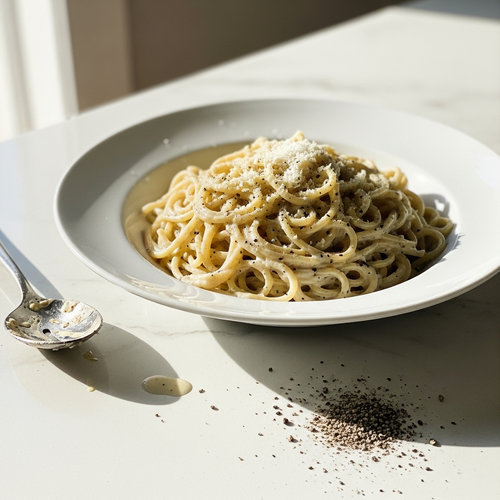
Description: A rich, creamy, and peppery cacio e pepe recipe redesigned for fat loss. Packed with protein to keep you full and satisfied without sacrificing the classic comfort food flavor you love.
Prep Time: 5 minutes | Cook Time: 10 minutes
Servings: 2
Macros per Serving | Calories: 538 | Protein: 32.5g | Fat: 18.5g | Carbohydrates: 60g
Ingredients
- 8 oz high-protein spaghetti or linguine
- 1 tbsp olive oil
- 2 tsp freshly cracked black pepper
- 1/2 cup grated Pecorino Romano cheese
- 1/4 cup nutritional yeast
- 1/4 cup plain, non-fat Greek yogurt
- 1/2 cup reserved pasta water
- Salt to taste
Instructions
- Cook pasta in heavily salted water until al dente. Reserve 1 cup of pasta water before draining.
- In a large skillet, toast the black pepper in olive oil over medium heat for 1 minute until fragrant.
- Add 1/2 cup of reserved pasta water to the skillet and bring to a simmer.
- In a separate bowl, whisk together the Pecorino cheese and nutritional yeast.
- Remove skillet from heat. Whisk in the Greek yogurt until smooth.
- Gradually whisk in the cheese mixture until a creamy sauce forms. Add more pasta water if too thick.
- Add the drained pasta to the skillet and toss vigorously to coat.
- Serve immediately with extra cheese and pepper.
Notes
Use freshly grated cheese from a block for the smoothest sauce. Pre-shredded cheese contains anti-caking agents and will make the sauce clumpy.
FAQs About Cacio e Pepe For Weight Loss
Here are some straightforward answers to the most common questions I receive about this cacio e pepe recipe.
Can you really eat Cacio e Pepe and still lose weight?
Absolutely, yes. Fat loss comes down to being in a consistent calorie deficit, meaning you burn more energy than you consume over time. No single food or meal can make you gain or lose weight on its own. It’s all about how it fits into your overall diet.
This specific cacio e pepe recipe is engineered to support a calorie deficit. By using high-protein pasta and Greek yogurt, we’ve loaded it with protein, which is incredibly satiating. A meal high in protein keeps you feeling full and satisfied for much longer than a meal of simple carbs and fat. This reduces cravings and makes it much easier to stick to your daily calorie target without feeling deprived.
Why is my Cacio e Pepe sauce clumpy?
This is the number one problem people face when making cacio e pepe, and it almost always comes down to two things: heat and the type of cheese. If your pan is too hot when you add the cheese, the proteins will tighten up and squeeze out the fat, causing it to seize into clumps instead of melting smoothly. This is why it is critical to remove the pan from the heat before adding the yogurt and cheese.
The second culprit is pre-shredded cheese. Bagged, pre-shredded cheeses are coated in starches and cellulose to prevent them from sticking together in the bag. These anti-caking agents will ruin your sauce, guaranteed. You must buy a block of real Pecorino Romano (or Parmesan) and grate it yourself right before you use it. The fine, fresh shreds will melt beautifully into the starchy pasta water to create that signature creamy emulsion.
What’s the best high-protein pasta for this Cacio e Pepe recipe?
You have several great options, and the “best” one often comes down to personal preference for taste and texture. My top recommendations are chickpea-based pastas like Banza or lentil-based pastas. They offer a huge amount of protein and fiber and have a firm texture that holds up well with the sauce. Some people find they have a slightly earthy flavor, which I think works well in this dish.
If you prefer a taste and texture closer to traditional pasta, look for a fortified wheat pasta like Barilla Protein+. It’s made with a blend of wheat and protein isolates from legumes, so it tastes very similar to regular spaghetti but with a significant protein boost. Experiment with a few different kinds to find the one you enjoy the most.
Can I make this Cacio e Pepe recipe dairy-free?
Yes, you can make a dairy-free version, but it will require some specific substitutions and it will taste different from the original. The name “cacio e pepe” literally means “cheese and pepper,” so removing the cheese changes it fundamentally. However, you can create something delicious in the same spirit.
For the cheese, use a high-quality vegan Parmesan alternative that you grate yourself. Many brands are made from nuts or soy and have a nice salty, savory flavor. For the creaminess, substitute the Greek yogurt with a plain, unsweetened dairy-free yogurt, like one made from almonds or cashews. You will lean heavily on the nutritional yeast to provide that cheesy, umami depth. The technique remains the same: create an emulsion off the heat with the pasta water for the best results.
How can I add more vegetables to this Cacio e Pepe?
Boosting the vegetable content is a fantastic way to add more fiber, vitamins, and volume to the meal, making it even more filling. The easiest method is to incorporate quick-cooking green vegetables. My favorite hack is to add a few big handfuls of fresh spinach or arugula to the pan with the finished pasta and sauce. The residual heat will wilt it perfectly in about 30 seconds of tossing.
Another great option is to throw frozen peas or chopped asparagus into the boiling pasta water for the last 2-3 minutes of cooking. They’ll cook right alongside the pasta, and you can drain them all together. You can also serve the cacio e pepe over a bed of roasted vegetables like broccoli, mushrooms, or cherry tomatoes for a more substantial and nutrient-dense meal.
Try These High-Protein Recipes Next
If you loved this simple and satisfying pasta dish, here are a few other high-protein recipes designed for a sustainable fat-loss lifestyle.
- High-Protein Carbonara Recipe: A lighter, macro-friendly take on another classic Roman pasta dish, using Greek yogurt to create a creamy sauce without all the fat.
- Healthy Chicken Alfredo Recipe: This recipe delivers all the rich, creamy flavor you crave from alfredo but is packed with protein and made with a healthier sauce.
- One Pot Creamy Cajun Chicken Pasta: A fantastic one-pot meal that minimizes cleanup and is bursting with bold, spicy flavors, perfect for a busy weeknight.
Give these a try the next time you need a quick, delicious meal that keeps you on track with your goals.