
I used to think of pancakes as a once-in-a-while treat. The kind of thing you have on a special Sunday, knowing full well it will derail your diet and probably lead to a nap an hour later. That’s because traditional pancakes are mostly flour and sugar. They’re a recipe for a blood sugar spike and crash, which is a nightmare for focus and fat loss goals.
Then I discovered the dutch baby. It looked even more impressive and indulgent than a stack of regular pancakes. It was this giant, puffy, golden-brown thing that felt like a restaurant-level brunch. But the standard recipes were still a problem. Delicious, but not built for the sustainable, fit lifestyle I was after.
As a single dad with ADHD trying to lose weight, I needed breakfasts that were fast, delicious, and packed with protein. I needed food that would keep me full and focused, not send me searching for snacks by 10 a.m. So, I started experimenting. I wanted to capture that “wow” factor of a Dutch baby but re-engineer it to work for me, not against me.
This recipe is the result of that mission. It’s a high-protein powerhouse that tastes like a weekend treat but has the macros to support your fat loss journey. It works with your ADHD brain by being simple, visually rewarding, and genuinely satisfying. It’s proof you don’t have to eat boring food to get in shape.
Skip to My Flexibe Diet Recipe!
Why This Dutch Baby Is Great For Fat Loss
Let’s be brutally practical. When it comes to fat loss, food is about 75 percent of the battle. Workouts are important, but you can’t out-train a bad diet. That’s why the first principle we follow at ADHD FIT is “protein first.” This high-protein dutch baby is built on that foundation.
A typical dutch baby pancake is a carb bomb. It’s made almost entirely of flour, milk, and sugar. It tastes amazing for five minutes, and then your energy levels crash. You’re left feeling hungry and craving more sugar soon after. That cycle is a huge obstacle to consistent fat loss.
My version flips the script. We slash the flour and supercharge the protein using three key ingredients: eggs, low-fat cottage cheese, and whey protein powder. This combination delivers a massive dose of protein that accomplishes two critical things for fat loss. First, protein is highly satiating. It keeps you feeling full and satisfied for hours, which is your number one defense against mindless snacking and overeating later in the day.
Second, a high-protein breakfast helps stabilize your blood sugar. Instead of a sharp spike and crash, you get a steady supply of energy. For those of us with ADHD, this is a game-changer for focus and mood regulation. You’re not fighting against your own body’s chemistry all morning. You’re fueled, you’re focused, and you’re in control. This dutch baby isn’t a cheat meal. It’s a strategic tool that makes sticking to your plan easier and more enjoyable.
Ingredients You’ll Need for Dutch Baby
One of the best things about this recipe is its simplicity. There are no weird, hard-to-find ingredients. We use a few basic staples and give them a high-protein twist. The goal is to make healthy eating accessible, not a chore that requires a special trip to a specialty grocery store.
The secret weapon in this dutch baby recipe is low-fat cottage cheese. Before you click away, hear me out. You will not taste it. I promise. When you blend it, the texture becomes incredibly smooth and creamy, adding moisture and a huge protein boost without the fat of cream cheese or other dairy. It completely disappears into the batter, leaving you with a perfect, custard-like texture.
For protein powder, a vanilla-flavored whey isolate is a great choice because it mixes well and adds a nice background flavor. If you only have unflavored, that works perfectly too. The brand isn’t super important, just use one you like the taste of. This is a perfect way to use that giant tub of protein you bought and are tired of drinking as a shake.
Here’s the full list of what you’ll need:
- 3 large eggs
- ½ cup low-fat cottage cheese
- ¼ cup unsweetened almond milk
- 2 tablespoons vanilla or unflavored whey protein powder.
- 3 tablespoons all-purpose flour
- 1 tablespoon monk fruit sweetener or other zero-calorie sugar substitute
- ½ teaspoon vanilla extract
- ¼ teaspoon salt
- 1 teaspoon ghee or coconut oil
- ½ cup fresh berries (optional, for topping)
- Powdered monk fruit sweetener for dusting (optional)
We’re using a very small amount of all-purpose flour just to provide the structure needed for the classic “puff.” And for the sweetener, monk fruit is my go-to, but any zero-calorie substitute you have on hand will work just fine. Flexibility is key.
How To Make Dutch Baby (Step-By-Step)
Making this high-protein dutch baby is surprisingly easy, especially for a dish that looks so impressive. The whole process is designed to be low-effort and ADHD-friendly. We use a blender to do all the work, which means less mess and fewer steps to worry about.
Step 1: Preheat Your Oven and Skillet
This is the most important step, so do it first. Before you even get the ingredients out, turn your oven to 425°F (220°C) and put your 10-inch cast-iron skillet inside. A screaming hot skillet is what creates the instant puff when the batter hits it. Letting it preheat for a solid 10 to 15 minutes is non-negotiable for getting that dramatic rise. An ADHD tip: setting the oven is the perfect “task initiation” trigger. Once it’s on, the clock is ticking, which can help motivate you to start the next step.
Step 2: Combine Ingredients in a Blender
This is the best part. There’s no need for multiple bowls or whisking by hand. Just dump everything for the batter into your blender: the eggs, cottage cheese, almond milk, protein powder, flour, monk fruit sweetener, vanilla extract, and salt. It’s a true one-step process.
Step 3: Blend Until Smooth
Blend everything on high for about 30 to 60 seconds. The goal is to get the batter completely smooth. You want to make sure there are absolutely no cottage cheese curds left. The final texture should be thin and liquidy, like a crepe batter. Don’t worry if it seems too runny; that’s exactly what you want.
Step 4: Prepare the Hot Skillet
Using a heavy-duty oven mitt, very carefully remove the hot skillet from the oven. Add the ghee or coconut oil. It should melt and sizzle immediately. Swirl the pan to make sure the fat coats the entire bottom and up the sides. This prevents sticking and helps the dutch baby climb the walls of the pan as it bakes.
Step 5: Pour and Bake
Pour the batter directly into the center of the hot, oiled skillet. You should hear a satisfying sizzle as it hits the pan. Immediately return the skillet to the oven.
Step 6: Bake Until Puffed and Golden
Bake for 15 to 20 minutes. The most crucial rule here is: DO NOT OPEN THE OVEN DOOR. Peeking will cause the steam to escape and your dutch baby will deflate prematurely. Set a timer and trust the process. You’re looking for it to be dramatically puffed up and deep golden brown around the edges.
Step 7: Remove and Serve
Carefully take the skillet out of the oven. The dutch baby will begin to sink and deflate almost immediately. This is completely normal! It’s part of the experience. The center will become soft and custardy while the edges stay crisp.
Step 8: Add Toppings
Slice it up and serve right away. Top with your fresh berries and a light dusting of powdered monk fruit sweetener if you’re using them. Enjoy the simple, delicious, and protein-packed reward.
How To Serve Dutch Baby (ADHD-Friendly)
How you serve this dutch baby can make all the difference in keeping it a healthy, sustainable meal. The goal is to add flavor and texture without piling on sugar that will negate all the benefits of our high-protein base. With an ADHD brain, simplicity is our best friend, as it helps us avoid decision fatigue.
My go-to strategy is to create a “default” topping combination that I know I love and that fits my macros. This way, I don’t have to stand in front of the fridge wondering what to do. For me, that’s a handful of mixed berries and a spoonful of plain Greek yogurt. It’s simple, fast, and adds more protein and fiber.
Here are a few ADHD-friendly topping ideas that work with your goals, not against them:
- Fresh or Frozen Berries: A handful of strawberries, blueberries, or raspberries adds natural sweetness and fiber. A freezer hack: I always keep a big bag of frozen mixed berries on hand. You can toss them on top while the dutch baby is still hot, and they’ll thaw perfectly.
- Plain Greek Yogurt: A dollop on top adds a creamy texture and another protein boost. It also provides a nice temperature contrast.
- A Dusting of Powdered Monk Fruit: This gives you the visual satisfaction of powdered sugar without any of the calories or the sugar crash. A little goes a long way.
- A Sprinkle of Cinnamon: Simple, calorie-free, and adds a wonderful warmth to the dish.
The key is to avoid drenching it in maple syrup or honey. While a small amount is fine if it fits your plan, it’s very easy to pour on hundreds of empty calories. This dutch baby is a complete meal on its own. It has your protein, healthy fats, and carbs all in one. You don’t need to add a side of anything, which simplifies both cooking and cleanup.
How To Store, Reheat, and Reuse Dutch Baby
Let’s be realistic. A dutch baby is at its absolute best right out of the oven. But as a busy dad, I know that leftovers are essential for staying on track. We don’t have time to cook every single meal from scratch. So yes, you can absolutely store and reheat this.
The texture will change a bit. It won’t be as puffy or have those crispy edges, but it will still be a delicious, high-protein meal that’s ready in minutes. That’s a win in my book. Consistency beats perfection every single time. Having a healthy option ready to go is far better than skipping a meal or reaching for something less healthy because you’re in a rush.
Here’s the best way to handle leftovers:
- To Store: Let the dutch baby cool completely to room temperature. This prevents condensation from making it soggy. Once cool, you can either keep it in the skillet and cover it tightly with foil or slice it into portions and place them in an airtight container. It will last in the refrigerator for up to 3 days.
- To Reheat: You have a few options. The fastest way is the microwave. Place a slice on a plate and heat for 30-60 seconds. It will be soft but still tasty. For a better texture, use an air fryer or toaster oven at around 350°F (175°C) for 3-5 minutes. This will help bring back some of the crispness to the edges.
- To Reuse: Think of the leftovers as a high-protein pancake bar. I’ve been known to just grab a cold slice from the fridge and eat it on my way out the door. It’s a fantastic quick snack. An ADHD pro-tip: label the container with the date you made it. This helps avoid the “is this still good?” guessing game that can lead to food waste.
Don’t let the pursuit of perfection stop you from being practical. Leftover dutch baby is a fantastic tool to have in your arsenal for busy mornings or afternoon protein boosts.
Easy Swaps & Variations for Dutch Baby
One of my core principles is that flexible eating always wins. A recipe is only useful if it can adapt to what you have in your kitchen and what your preferences are. This dutch baby recipe is incredibly forgiving and easy to modify. Don’t be afraid to experiment to find what works best for you.
The goal is to stay consistent, and that means not having to run to the store for one specific ingredient. Use these swaps as a guide to make the recipe fit your life, whether you need to adjust for dietary restrictions, use up ingredients you already have, or just want to try a new flavor combination.
Here are some simple and effective swaps you can make:
- For the Protein Powder: Feel free to use chocolate protein powder for a rich, dessert-like breakfast. A plant-based protein powder (like pea or soy) can also work, though it may result in a slightly denser texture.
- For the Flour: You can substitute the all-purpose flour with whole wheat flour for a bit more fiber, or use a 1-to-1 gluten-free baking blend if you need to avoid gluten.
- For the Milk: Any milk works here. Regular dairy milk, soy milk, or oat milk can be swapped in for almond milk. Just be mindful that this may slightly change the final macro count.
- For a Savory Twist: This is a fun one. Omit the sweetener and vanilla extract. In their place, add a pinch of black pepper, a ¼ cup of grated Parmesan or cheddar cheese, and some chopped chives or scallions to the batter. It bakes up into an amazing savory, soufflé-like dish that’s perfect with a fried egg on top.
Remember, the base of eggs and cottage cheese is what provides the protein and structure. As long as you keep those core components, you have a lot of room to play around with the other ingredients. This flexibility is what helps you build a sustainable lifestyle where you don’t feel restricted.
High-Protein Dutch Baby Pancake
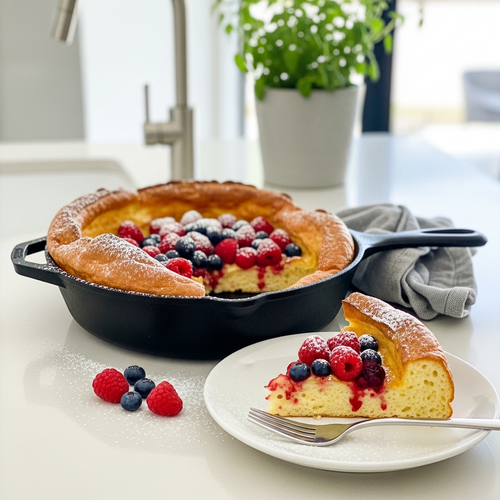
Description: A ridiculously easy, high-protein Dutch baby pancake that tastes like an indulgent brunch but is built for fat loss. It’s fast, satisfying, and perfect for a sustainable fitness lifestyle.
Prep Time: 5 minutes | Cook Time: 20 minutes
Servings: 2
Macros per Serving | Calories: 250 | Protein: 24g | Fat: 11g | Carbohydrates: 12g
Ingredients
- 3 large eggs
- ½ cup low-fat cottage cheese
- ¼ cup unsweetened almond milk
- 2 tablespoons vanilla or unflavored whey protein powder
- 3 tablespoons all-purpose flour
- 1 tablespoon monk fruit sweetener
- ½ teaspoon vanilla extract
- ¼ teaspoon salt
- 1 teaspoon ghee or coconut oil
- ½ cup fresh berries (for topping)
Instructions
- Preheat oven to 425°F (220°C). Place a 10-inch cast-iron skillet in the oven to heat for at least 10-15 minutes.
- Combine eggs, cottage cheese, almond milk, protein powder, flour, sweetener, vanilla, and salt in a blender. Blend on high until completely smooth, about 30-60 seconds.
- Carefully remove the hot skillet from the oven. Add ghee and swirl to coat the bottom and sides.
- Pour the batter into the hot skillet and immediately return it to the oven.
- Bake for 15-20 minutes until puffed and golden brown. Do not open the oven door while baking.
- Remove from the oven, top with fresh berries, slice, and serve immediately.
Notes
The Dutch baby will deflate after you remove it from the oven—this is normal. For best results, use a blender to ensure the cottage cheese is fully incorporated and the batter is smooth.
FAQs About Dutch Baby For Weight Loss
Here are some straightforward answers to the most common questions I receive about this dutch baby recipe.
Can I make this Dutch baby without protein powder?
Yes, you absolutely can. If you don’t have protein powder or prefer not to use it, you can simply omit it. To maintain a similar batter consistency, I would recommend replacing the 2 tablespoons of protein powder with 1 additional tablespoon of all-purpose flour. The recipe will still work beautifully and will puff up just the same.
The main thing to keep in mind is the change in macros. By removing the protein powder, you’ll be subtracting about 12 grams of protein from the total recipe. It will still be a high-protein breakfast thanks to the eggs and cottage cheese, far better than a traditional pancake, but it won’t be quite the powerhouse it is with the powder. If your primary goal is to maximize protein intake, I’d recommend keeping it in.
Why did my Dutch baby deflate?
It’s supposed to! A deflating dutch baby is a sign that you did it right, not wrong. The dramatic puff you see in the oven is created by steam. The hot oven and hot skillet turn the moisture in the thin batter into steam very quickly, which inflates the egg structure like a big balloon. It’s a temporary, beautiful bit of food science.
As soon as you take it out of the intense heat of the oven, the steam starts to escape and the structure cools and contracts. This causes it to fall, creating that signature custardy crater in the middle with crisp, raised edges. So, don’t feel discouraged when it sinks. It’s the natural life cycle of a perfect dutch baby. The amazing taste and texture are what remain.
Is this high-protein Dutch baby recipe good for meal prep?
It can be a great tool for meal prep, as long as you have the right expectations. It will not be the same as eating it fresh from the oven. The crispy edges will soften, and the puff will be long gone. However, it transforms into a fantastic, convenient, and tasty high-protein meal that you can grab and eat cold or reheat quickly.
I often make one on a Sunday and slice it into four wedges. That gives me a super-fast breakfast or a high-protein snack for a couple of days. It’s infinitely better than skipping a meal or grabbing a sugary granola bar. For those of us with ADHD, having healthy, pre-made options is a critical strategy for staying on track when motivation is low or time is short.
Can I make this Dutch baby in something other than a cast-iron skillet?
Definitely. While a cast-iron skillet is ideal because it holds heat so well, you don’t need one to make this recipe. The most important thing is using a pan that is oven-safe. A 9-inch round cake pan, a pie plate, or any oven-safe frying pan will work just fine.
The key is to follow the same preheating method. Place whatever pan you are using in the oven while it preheats so it gets just as hot as a cast-iron skillet would. This is essential for getting that initial lift. You might get a slightly different shape or a less crispy edge, but you’ll still end up with a delicious and impressive high-protein pancake.
How does this Dutch baby recipe help with ADHD cravings?
This is a big one. Many of us with ADHD struggle with impulse control and dopamine-seeking behaviors, which often manifest as intense cravings for sugar and carbs. A typical sugary breakfast feeds this cycle. You get a quick dopamine hit, followed by a blood sugar crash, which then triggers more cravings as your brain seeks another quick energy spike.
This high-protein dutch baby helps break that cycle. The massive amount of protein slows down digestion and stabilizes your blood sugar. This prevents the crash and keeps you feeling physically full and mentally satisfied for hours. At the same time, it *feels* like an indulgent treat, which satisfies the brain’s desire for something rewarding. You’re giving yourself what you want (a delicious pancake) in a format that your body needs (high protein, low sugar), which is the ultimate strategy for sustainable results.
Try These High-Protein Recipes Next
If you enjoyed this simple and effective approach to a classic breakfast, here are a few other recipes you might like.
- Easy High Protein Pancakes – A more traditional take on pancakes, but with a massive protein boost to keep you full and focused.
- Simple 3-Ingredient Protein Crepes – Incredibly versatile crepes that can be made sweet or savory, perfect for a quick, flexible meal.
- Easy Dutch Apple Pie Recipe – For when you want a more traditional, indulgent dessert, this recipe offers a classic apple pie with a delicious crumb topping.
Building a library of simple, go-to recipes is one of the best ways to stay consistent on your fitness journey.