
When I started my fat loss journey and eventually dropped 65 to 70 pounds, breakfast was my absolute biggest failure point. My ADHD brain hates morning friction. If making breakfast required pulling out pans, cooking over a hot stove, and washing dishes before my brain was fully awake, I simply skipped it. By 2:00 PM, my hunger would spiral out of control, leading directly to takeout runs and mindless snacking.
That is why learning how to make a proper high-protein chia seed pudding completely changed my mornings. Most standard recipes you find online are essentially just milk and seeds. They taste bland, have an odd watery texture, and leave you hungry an hour later because they lack adequate protein.
I set out to engineer a flexible, high-protein version that satisfies the need for dopamine, delivers lasting fullness, and requires zero morning effort. It is thick, creamy, sweet, and packs enough protein to crush afternoon cravings before they even begin.
Skip to My Flexibe Diet Recipe!
Why Chia Seed Pudding Is Great For Fat Loss
Sustainable fat loss comes down to two major things: managing physical hunger and keeping your daily routine simple enough that you can repeat it forever. This chia seed pudding hits both targets with surgical precision. It takes advantage of high volume and massive fiber to physically stretch your stomach lining, sending strong fullness signals directly to your brain.
The real secret weapon here is the dual-protein strategy. Combining whey protein powder with thick nonfat Greek yogurt creates a dense nutritional base. Whey digests relatively quickly to start muscle protein synthesis, while the casein in Greek yogurt digests slowly over several hours. This sustained release keeps your blood sugar stable and completely eliminates the mid-morning energy crashes that typically send people hunting for sugary snacks.
Chia seeds themselves absorb up to ten times their weight in liquid, transforming into a thick gel. That gel slows down digestion significantly. You get over ten grams of dietary fiber in a single serving, which regulates gut health and blunts insulin spikes. When you combine high protein, high fiber, and healthy omega-3 fats, you create an unbeatable defense against ADHD-driven impulsive eating.
Best of all, this recipe completely eliminates morning decision fatigue. You mix it up the night before when your executive function is still intact. When you wake up, a macro-friendly, incredibly filling meal is already sitting in the fridge waiting for you.
Ingredients You’ll Need for Chia Seed Pudding
Here is the exact shopping list to build the ultimate thick, high-protein pudding base:
- 2 tablespoons (24g) chia seeds
- 1 scoop (25–30g) vanilla whey isolate or whey-casein protein powder
- 1/3 cup (80g) plain 0% nonfat Greek yogurt
- 2/3 cup (160ml) unsweetened almond milk
- 1/2 teaspoon pure vanilla extract
- 1 pinch fine sea salt
- 1 pinch ground cinnamon
- Optional: 2–3 drops liquid monk fruit or stevia, to taste
The game-changing twist in this formula is the plain 0% nonfat Greek yogurt. Traditional chia puddings use only milk, which often results in a thin, watery liquid with floating seeds. Folding in thick Greek yogurt immediately gives the mixture a luscious, custard-like consistency that feels like an actual dessert rather than diet food.
Ingredient quality makes a massive difference in your final texture and taste. For your protein powder, a whey-casein blend or a high-grade cold-filtered whey isolate works best. Cheap protein powders tend to clump up and leave a chalky aftertaste that ruins the mouthfeel. Make sure your unsweetened almond milk is fresh, as older cartons can separate when mixed with acidic yogurts.
Never skip the pinch of fine sea salt. Salt acts as a natural flavor amplifier that cuts through the earthy bitterness of the seeds and brings out the warm notes of the cinnamon and vanilla extract.
How To Make Chia Seed Pudding (Step-By-Step)
Getting the perfect texture requires a specific mixing order. Follow these steps to ensure a completely smooth, clump-free pudding every single time.
Step 1: Whisk the Liquid and Protein Base
Grab a wide-mouth 16-ounce mason jar or a medium ceramic mixing bowl. Pour in the 2/3 cup of unsweetened almond milk first, followed by the 1 scoop of vanilla protein powder, 1/3 cup of nonfat Greek yogurt, vanilla extract, fine sea salt, cinnamon, and your optional sweetener drops. Adding the milk before the powder prevents dry protein from getting permanently stuck in the bottom corners of your container.
Use a small wire whisk or a mini battery-powered milk frother to blend everything together vigorously. Keep whisking until the protein powder dissolves entirely and the yogurt incorporates into a silky, lump-free liquid base. Taking forty-five seconds to do this properly makes all the difference between chalky sludge and bakery-grade pudding.
Step 2: Incorporate the Chia Seeds
Pour the 2 tablespoons of chia seeds directly into the center of your smooth protein base. Immediately pick up your whisk and stir thoroughly for about thirty seconds. Ensure you scrape the bottom and the sides of the container so every single dry seed is coated in the liquid mixture.
Step 3: The Crucial Rest and Rewhisk
This is where most people mess up their pudding. Leave the mixture alone on the counter at room temperature for 8 to 10 minutes. During this brief window, the seeds begin absorbing liquid and exuding their natural gelling fiber. Because seeds naturally want to sink to the bottom, walking away now will create a solid rubber brick of chia under a layer of watery milk.
After the 10 minutes are up, take your whisk and mix vigorously once more for thirty seconds. This breaks up any forming clusters, evenly redistributes the seeds throughout the suspension, and guarantees a uniform texture from top to bottom.
Step 4: The Chill and Final Adjustments
Screw the lid tightly onto your mason jar or place an airtight cover over your bowl. Transfer the container directly to the refrigerator and let it chill for at least 3 hours, though leaving it overnight produces the thickest, creamiest result.
When you are ready to eat, pop the lid off and give it a hearty stir with a spoon. If the pudding set up thicker than you prefer, simply stir in an extra tablespoon or two of cold almond milk until it hits your ideal consistency.
How To Serve Chia Seed Pudding (ADHD-Friendly)
When you have ADHD, visual appeal and novel textures are critical for getting that dopamine hit that keeps you on track. Eating plain sludge out of a gray container gets boring fast, which leads straight to ditching your plan for hyper-palatable convenience foods. Serving your pudding in a way that feels indulgent makes healthy eating completely effortless.
Here are several practical strategies to keep your breakfast exciting without adding chaos to your morning routine:
- Use clear glass containers: If you cannot see it, your brain forgets it exists. Store your pudding in clear glass mason jars right at eye level on the front shelf of your fridge, not hidden away in the crisper drawer.
- Batch your dry toppings ahead: Keep a few small containers ready with measured portions of crushed walnuts, cocoa nibs, or freeze-dried berries. Tossing them on top in the morning takes two seconds and adds crunch.
- Layer it like a cafe parfait: Alternate spoonfuls of your pudding with thawed frozen berries in a tall glass to create an aesthetic breakfast that feels like a treat from a coffee shop.
- The portable morning grab: If you constantly run late, grab the jar straight out of the fridge with a metal spoon and eat it during your morning commute or at your desk.
Remember that convenience is king on low-dopamine days. If layering fruit feels like climbing Mount Everest, just eat it straight out of the jar with a spoon. You still get all the protein, fiber, and nutritional benefits without burning any mental energy.
How To Store, Reheat, and Reuse Chia Seed Pudding
Meal prep is only useful if the food actually stays fresh and appealing. Fortunately, chia seeds are remarkably stable once hydrated, making them one of the most reliable prep-ahead foods in your fat loss arsenal.
To maximize your prep efficiency throughout a busy week, keep these storage and reuse rules in mind:
- Cold storage lifespan: Seal your pudding in an airtight glass container and keep it in the coldest part of your fridge for up to five days. It will retain its texture and flavor without degrading.
- Avoid the freezer: Do not freeze prepared chia seed pudding. Freezing damages the delicate gel matrix of the seeds, turning the entire mixture into a separated, watery mess once thawed.
- Warming it up: While usually eaten cold, you can enjoy it warm during winter months. Microwave the jar with the lid off in 20-second bursts, stirring between each burst, until gently warmed through.
- The smoothie thickener trick: If you have an older batch of pudding you are tired of eating with a spoon, dump it directly into your blender with a handful of frozen berries and water for an instant high-protein smoothie base.
Prepping three or four jars on Sunday afternoon takes less than ten minutes of active effort. That single short block of work guarantees half of your weekday breakfasts are completely solved before your week even starts.
Easy Swaps & Variations for Chia Seed Pudding
Flexibility is the cornerstone of sustainable nutrition. You can easily tweak this foundational recipe to match your budget, dairy tolerance, or flavor preferences without destroying the macro profile.
Here are some of the easiest modifications you can make using everyday staples:
- Dairy-Free Option: Swap the nonfat Greek yogurt for an unsweetened plain coconut or almond milk yogurt, and use a high-quality plant-based vanilla protein powder instead of whey.
- Milk Alternatives: Unsweetened almond milk keeps calories low, but you can swap it for unsweetened cashew milk for extra creaminess, or skim dairy milk if you want even more protein.
- Chocolate Decadence: Switch the vanilla protein powder for a rich chocolate protein powder, and whisk in a tablespoon of unsweetened dark cocoa powder along with the pinch of salt.
- Budget Friendly: If pure vanilla extract is too expensive, use an equal amount of vanilla bean paste or artificial vanilla flavoring without compromising the final flavor profile.
Experimenting with small flavor changes keeps your meals novel and enjoyable. Just keep your core ratios of seeds, liquid, and protein powder intact so the pudding sets up with the right structural density.
High-Protein Vanilla Chia Seed Pudding
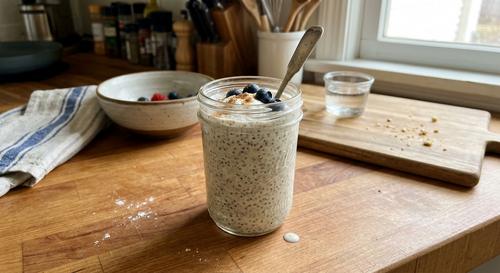
Description: A thick, creamy, high-protein chia seed pudding engineered for sustained energy, gut fullness, and effortless mornings.
Prep Time: 5 minutes | Cook Time: 10 minutes
Servings: 1 serving
Macros per Serving | Calories: 310 | Protein: 34g | Fat: 8g | Carbohydrates: 16g
Ingredients
- 2 tablespoons (24g) chia seeds
- 1 scoop (25–30g) vanilla whey isolate or whey-casein protein powder
- 1/3 cup (80g) plain 0% nonfat Greek yogurt
- 2/3 cup (160ml) unsweetened almond milk
- 1/2 teaspoon pure vanilla extract
- 1 pinch fine sea salt
- 1 pinch ground cinnamon
- Optional: 2–3 drops liquid monk fruit or stevia, to taste
Instructions
- Add almond milk, protein powder, Greek yogurt, vanilla extract, sea salt, cinnamon, and optional sweetener to a jar.
- Whisk vigorously until the protein powder is completely dissolved and the liquid base is smooth.
- Pour in the chia seeds and whisk thoroughly to disperse them evenly throughout the liquid.
- Let rest at room temperature for 8 to 10 minutes, then whisk vigorously once more to break up any clumps.
- Cover tightly and refrigerate for at least 3 hours, or overnight, until fully set.
- Stir thoroughly before serving, adding an extra splash of almond milk if you prefer a thinner consistency.
Notes
Whisking a second time after the 10-minute rest is non-negotiable. It stops the seeds from sinking to the bottom and guarantees a thick, uniform texture throughout.
FAQs About Chia Seed Pudding For Weight Loss
Here are some straightforward answers to the most common questions I receive about this chia seed pudding recipe.
Can eating chia seed pudding actually help you lose belly fat?
There is no single food that magically melts fat from your midsection. Fat loss happens across your entire body when you sustain a mild calorie deficit over time. However, this specific pudding makes maintaining that deficit far easier than standard diet foods.
The combination of thirty-four grams of complete protein and massive dietary fiber keeps your stomach physically full for hours. When your physical hunger is managed, you are significantly less likely to experience the intense cravings that cause diet slip-ups. It helps you lose fat by keeping your appetite fully under control.
Why did my chia seed pudding turn out runny or separate into layers?
If your pudding turns out runny or separated, you almost certainly skipped the second whisk during the initial prep phase. When you drop chia seeds into liquid, they naturally sink to the bottom before their gel coating forms. If you throw the jar directly into the fridge without that second mix, they solidify into a dense mass at the base, leaving watery milk on top.
Always let the mixture rest on your counter for 8 to 10 minutes after the first stir. Once the outer gel starts expanding, whisk it aggressively one more time. This suspends the seeds evenly through the Greek yogurt base so it sets into a thick, uniform pudding.
How many times a week can I safely eat chia seed pudding?
You can safely eat this pudding every single day if it fits your personal calorie and macronutrient targets. It is built entirely from whole-food ingredients, clean protein, and gut-healthy fiber that support long-term metabolic health.
The only caution is for people who currently eat very little fiber. Chia seeds pack a massive amount of soluble fiber. If your digestive system is not used to it, introduce it every other day and drink plenty of water to allow your gut microbiome time to adjust comfortably.
Can I make chia seed pudding without using any protein powder?
You can technically omit the protein powder, but you will significantly diminish the fat-loss benefits of the meal. Removing the scoop drops the protein content down to around ten grams, which is not enough to promote long-lasting satiety or preserve lean muscle mass in a cut.
If you genuinely dislike protein powder, replace the scoop with an additional 1/2 cup of nonfat Greek yogurt and reduce the almond milk slightly. This swap keeps the overall protein high and preserves the rich, thick texture without using supplements.
Does chia seed pudding cause bloating or digestive issues?
Chia seeds expand by absorbing immense amounts of moisture. If you eat dry seeds or improperly hydrated pudding, they can absorb water directly from your digestive tract, leading to temporary bloating, gas, or mild cramping.
This recipe prevents that problem by fully hydrating the seeds in almond milk and Greek yogurt for at least three hours before consumption. As long as you allow the pudding to set completely and drink adequate water throughout your day, it will support smooth digestion rather than hinder it.
Try These High-Protein Recipes Next
If you want to build a bulletproof morning routine that crushes cravings and keeps fat loss on autopilot, try these reliable favorites next:
- ADHD-Friendly High-Protein Chia Pudding: A simplified, grab-and-go variation designed specifically for days when your executive function is running on empty.
- High-Protein Flexible Overnight Oats: A classic, thick overnight oat recipe packed with slow-digesting complex carbs to fuel heavy morning lifting sessions.
- Easy Chia Pudding Recipe from This Gal Cooks: A delicious, minimalist take on traditional chia pudding that shows just how versatile this simple seed can be.
Pick one recipe, prep a couple of servings tonight, and take all the stress out of tomorrow morning.