
When I was dropping 65 to 70 pounds as an unmedicated single dad, dinner was often my danger zone. My executive function was wiped out by 6:00 PM, and my brain screamed for warm, rich, heavy comfort food. If I tried to survive on dry chicken breast and plain steamed broccoli, I would end up face down in a takeout bag an hour later.
That is where polenta saved my sanity. Traditional restaurant polenta is loaded with half a pound of butter and heavy cream, which makes it a calorie bomb that does not fit fat loss goals. But the underlying grain itself is actually naturally low in calorie density because it absorbs an incredible amount of liquid as it cooks.
I realized I did not need to abandon comfort carbs to get lean. I just needed to hack the preparation. By swapping water for rich bone broth and trading butter for smooth blended cottage cheese, I turned polenta into an ultra-creamy, high-protein powerhouse that satisfied my deepest comfort food cravings while keeping my fat loss on track.
Now that I am medicated and maintaining my fitness, this recipe remains a weekly staple in my house. It delivers that rich, slow-simmered Italian comfort food experience in under half an hour with minimal active effort.
Skip to My Flexibe Diet Recipe!
Why Polenta Is Great For Fat Loss
Most diet plans fail because they ask you to eat tiny portions of dry food. Your stomach has physical stretch receptors that signal fullness to your brain, and cornmeal polenta is one of the best tools for triggering those receptors without driving calories through the roof.
When you cook polenta, the coarse grains expand dramatically by soaking up four times their volume in liquid. A single cup of dry cornmeal expands into four generous, satisfying servings. That high water volume fills your stomach physically, which kills evening appetite spirals before they start.
We take that volume advantage even further by simmering the cornmeal directly in savory bone broth. Bone broth provides natural collagen and trace protein while infusing deep flavor straight into the grain. You do not feel like you are eating diet food because the savory depth hits your palate instantly.
The real secret weapon here is the blended cottage cheese finish. Classic recipes rely on heavy cream and butter to achieve a velvety texture, which adds pure fat calories with zero protein. Blended cottage cheese gives you that exact same luxurious, silky mouthfeel while pumping up the leucine and casein protein content.
Casein digests slowly over several hours. When you combine slow-digesting protein with high-volume complex carbohydrates, your blood sugar stays stable, your energy remains steady, and you stay full straight through until breakfast.
Ingredients You’ll Need for Polenta
Here is everything you need to pull together this high-protein, comfort food bowl:
- 3 cups low-sodium chicken or beef bone broth
- 1 cup water
- 1 cup medium or coarse-grind yellow cornmeal (polenta)
- 1 cup 1% or 2% low-fat cottage cheese, blended completely smooth
- 2 tablespoons nutritional yeast
- 2 tablespoons finely grated Parmigiano-Reggiano
- 2 cloves garlic, finely minced
- 1 teaspoon fresh thyme leaves, finely chopped
- 1 teaspoon kosher salt (or to taste)
- ½ teaspoon freshly cracked black pepper
The absolute star and secret twist of this dish is the blended low-fat cottage cheese. When whipped in a small blender, the curds completely vanish, transforming the cottage cheese into a thick, neutral cream that melts seamlessly into hot cornmeal.
For your dry cornmeal, pay close attention to the grind. Look for bags specifically labeled medium or coarse-grind yellow cornmeal or polenta. Avoid super-fine corn flour, which turns into paste, and avoid instant polenta tubes, which lack the rustic texture and rich mouthfeel of slow-simmered grains.
Finally, do not substitute pre-grated shaker cheese for real Parmigiano-Reggiano. Real aged parmesan carries intense umami and natural saltiness, meaning two tablespoons provide a massive burst of flavor across the whole pot without adding unnecessary calories.
How To Make Polenta (Step-By-Step)
Making this dish is straightforward, but technique matters. Using the right cookware makes cleanup simple and prevents burnt spots on the bottom of your pot.
Step 1: Blend the Cottage Cheese Base
Place your low-fat cottage cheese into a small blender or bullet cup. Process on high speed for 30 to 45 seconds until it is completely silky and glossy. Check closely to ensure zero curds remain. Set this aside at room temperature so it does not cool down your hot grains later.
Step 2: Build the Savory Broth
Grab a medium, heavy-bottomed saucepan. A heavy base is essential here because thin pots create hot spots that scorch cornmeal quickly. Add the bone broth, water, minced garlic, fresh thyme leaves, and kosher salt. Bring the liquid to a gentle, bubbling boil over medium-high heat.
Step 3: Whisk in the Cornmeal
Turn the heat down to medium-low. Pick up your whisk in one hand and your measured cornmeal in the other. Pour the cornmeal into the simmering broth in a very slow, steady stream while whisking vigorously without stopping. This continuous movement keeps the dry grains separated so they hydrate evenly rather than clumping into rubbery balls.
Step 4: Gentle Simmer and Stir
Switch out your whisk for a sturdy wooden spoon or heatproof silicone spatula. Drop the burner heat to low so the mixture barely bubbles. Cook for 20 to 25 minutes, stirring thoroughly every two to three minutes. Make sure to scrape along the bottom corners of the pan where grains love to stick. The polenta is ready when the grains feel tender and soft on your tongue rather than gritty.
Step 5: Fold, Season, and Rest
Pull the saucepan completely off the hot burner. Immediately scrape in your blended cottage cheese, nutritional yeast, and finely grated Parmigiano-Reggiano. Stir vigorously until the cheeses melt into the grains, leaving a velvety, pale gold texture. Crack in the black pepper, give it a final taste for salt, and let it rest undisturbed for two to three minutes before spooning into bowls.
How To Serve Polenta (ADHD-Friendly)
When cooking with an ADHD brain, the danger point is usually assembly. If a recipe requires three side pans and complex timing, executive dysfunction kicks in, and the whole meal falls apart. Keep your serving strategy low-friction and modular.
This bowl works as a warm, rich carb base that supports almost any protein you have on hand. Here are my favorite low-effort ways to build a complete macro plate:
- Top a warm bowl of polenta with sliced pre-cooked Italian chicken sausage and a ladle of warm marinara sauce.
- Spoon tender garlic shrimp directly over the top with a squeeze of fresh lemon juice for a lightened-up shrimp and grits style plate.
- Layer hot polenta beneath lean ground beef browned with crushed tomatoes and Italian herbs.
- Add two over-medium fried eggs on top, letting the runny yolks mix directly into the creamy grains for a quick high-protein breakfast.
If you lack the motivation to cook a secondary protein from scratch, do not be afraid to use shortcuts. Rotisserie chicken pulled off the bone or frozen cooked meatballs heated in the microwave fit perfectly on top of this polenta bowl.
How To Store, Reheat, and Reuse Polenta
Polenta behaves differently than pasta or rice once it cools down. Understanding how it sets up allows you to prep it in bulk without worrying about texture issues.
Fresh polenta is loose and creamy, but as the cornmeal starches cool, they solidify into a firm block that holds its shape. This is completely normal and actually gives you a whole second way to eat your leftovers throughout the week.
- Fridge Storage: Pour leftovers into a glass airtight container and seal tightly. Store in the refrigerator for up to 4 to 5 days.
- Creamy Reheating: Scoop chilled polenta into a small pot or microwave-safe bowl. Add a splash of bone broth or water, cover, and heat gently while whisking to restore the original creamy texture.
- Pan-Seared Polenta Cakes: Slice the firm, chilled polenta block into half-inch thick slabs. Sear them in a hot non-stick skillet for 4 to 5 minutes per side until the edges turn golden brown and crispy.
- Freezer Method: Wrap individual chilled slabs tightly in parchment paper and store in a freezer bag for up to 2 months. Thaw in the fridge overnight before pan-searing.
Having pre-sliced polenta cakes chilling in the fridge is an incredible ADHD life hack. You can toss two slices into a skillet or air fryer for five minutes to get a hot, crispy carb source with zero prep dishes to clean.
Easy Swaps & Variations for Polenta
You can easily tweak this recipe based on what is currently in your fridge or pantry without losing the core macro benefits. The cooking ratios remain forgiving as long as you maintain the four-to-one liquid-to-grain balance.
If you need to make quick adjustments for cost, convenience, or flavor preferences, these tested substitutions work seamlessly:
- Broth Choices: Switch between low-sodium beef bone broth and chicken bone broth depending on what protein you plan to serve on top.
- Herb Adjustments: If you do not have fresh thyme on hand, swap in a half-teaspoon of dried Italian seasoning or dried oregano added straight to the boiling broth.
- Cheesy Boost: If you run out of Parmigiano-Reggiano, replace it with an equal amount of sharp pecorino romano or finely grated white cheddar.
- Garlic Shortcuts: If mincing fresh garlic feels like too much executive effort today, use a half-teaspoon of garlic powder whisked directly into the liquid instead.
No matter which small swaps you choose, keep the blended cottage cheese technique intact. That single step is what provides the restaurant-level creaminess while delivering the dense protein punch required for fat loss.
Creamy High-Protein Bone Broth Polenta
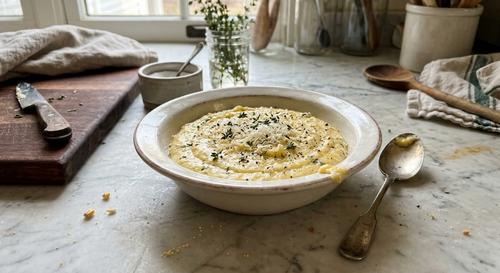
Description: Ultra-creamy, savory polenta simmered in rich bone broth and finished with blended cottage cheese and aged parmesan for massive volume and high satiety on a cut.
Prep Time: 5 minutes | Cook Time: 25 minutes
Servings: 4
Macros per Serving | Calories: 210 | Protein: 16g | Fat: 3.5g | Carbohydrates: 28g
Ingredients
- 3 cups low-sodium chicken or beef bone broth
- 1 cup water
- 1 cup medium or coarse-grind yellow cornmeal (polenta)
- 1 cup 1% or 2% low-fat cottage cheese, blended completely smooth
- 2 tablespoons nutritional yeast
- 2 tablespoons finely grated Parmigiano-Reggiano
- 2 cloves garlic, finely minced
- 1 teaspoon fresh thyme leaves, finely chopped
- 1 teaspoon kosher salt (or to taste)
- ½ teaspoon freshly cracked black pepper
Instructions
- Blend cottage cheese on high until silky smooth and curd-free; set aside.
- In a heavy saucepan, bring broth, water, garlic, thyme, and salt to a gentle boil.
- Lower heat to medium-low and slowly whisk in cornmeal in a steady stream to prevent clumps.
- Cook on low for 20 to 25 minutes, stirring frequently with a spatula until thick and grains are tender.
- Remove from heat; fold in blended cottage cheese, nutritional yeast, and Parmigiano-Reggiano.
- Stir in black pepper, adjust salt to taste, rest 2 minutes, and serve warm.
Notes
Leftovers will firm up in the fridge. Reheat with extra broth for creamy polenta, or slice the firm block into cakes and pan-sear in a skillet until crisp.
FAQs About Polenta For Weight Loss
Here are some straightforward answers to the most common questions I receive about this polenta recipe.
Is polenta good for weight loss?
Yes, polenta is an exceptional carbohydrate source for weight loss. Because cornmeal absorbs four times its volume in liquid as it simmers, you end up with a large, heavy portion of food for very few total calories. That high physical volume stretches your stomach lining, helping to release satiety hormones that shut down hunger signals.
Traditional restaurant preparations often ruin this fat loss advantage by dumping cups of heavy cream, whole milk, and butter into the pot. By using bone broth and blended low-fat cottage cheese instead, this version preserves all the richness and mouthfeel of classic Italian cooking while keeping fat low and protein high.
Can I make polenta ahead of time for meal prep?
You can definitely prep polenta ahead of time, but you need to know how the texture changes as it sits. Once cornmeal cools down, the starches gelatinize and form a solid block that matches the shape of your storage container. It will not stay loose and pourable in the fridge.
If you want to eat it creamy, reheat single portions on the stove or in the microwave with a few tablespoons of broth while whisking vigorously. Alternatively, embrace the firmness by slicing the cold polenta block into thick squares and searing them in a hot skillet for crispy, golden polenta cakes throughout the week.
How does polenta compare to rice or oats for fat loss?
Polenta holds a distinct volume advantage over grains like white rice and dry oats. A typical 50-gram dry serving of cornmeal expands into a much larger cooked bowl than an equivalent serving of rice because of how corn starches trap boiling liquid. That extra physical bulk makes meals feel significantly more substantial.
In addition, cornmeal delivers complex carbohydrates that digest evenly without sudden blood sugar spikes. When paired with high-quality protein from bone broth and cottage cheese, polenta gives you the sustained physical fullness of steel-cut oats with the savory comfort of mashed potatoes.
What type of cornmeal is best for homemade polenta?
The best choice for this recipe is coarse or medium-grind yellow cornmeal, often labeled specifically as polenta in the grain aisle. Coarse grains hold their structural integrity during simmering, providing a tender bite and a rustic, creamy texture that keeps meals satisfying.
Avoid finely ground corn flour, which turns into a gummy paste when boiled. You should also skip the pre-cooked polenta sold in plastic tubes at the grocery store. Tube polenta tends to be watery, bland, and rubbery, lacking the rich flavor absorption that comes from simmering raw grains directly in seasoned bone broth.
Will the cottage cheese make my polenta taste sour?
Not at all. When you blend low-fat cottage cheese until smooth and fold it into hot polenta, the heat and starch mellow out any natural tanginess completely. It simply melts into the background, functioning exactly like heavy cream or mascarpone cheese.
Combined with savory bone broth, garlic, nutritional yeast, and salty Parmigiano-Reggiano, the cottage cheese simply provides richness and velvety texture. Even family members who claim to hate cottage cheese will never detect it in this dish.
Try These High-Protein Recipes Next
If you enjoyed this high-volume comfort meal, here are three more satisfying recipes you should add to your weekly rotation:
- High-Protein Shrimp and Grits Recipe: A Southern-style classic loaded with juicy shrimp, savory spices, and ultra-creamy low-calorie grits.
- Macro-Friendly High-Protein Cornbread: A golden, tender cornbread recipe packed with real corn flavor that pairs perfectly with lean chilis and stews.
- Savory Breakfast Polenta Bowls: A creative morning bowl from This Gal Cooks featuring warm polenta topped with crispy bacon and fresh eggs.
Stock your pantry with good cornmeal and lean proteins so you always have an effortless, high-volume meal ready when life gets busy.