
Early in my weight loss journey, I lived in constant fear of takeout. Like a lot of people with ADHD, when my brain craves intense sensory stimulation, bland chicken and dry broccoli simply do not cut it. That boredom spiral used to drive me straight to the nearest Indian takeout spot to order a massive container of chicken tikka masala with buttery garlic naan.
The problem was the sheer amount of heavy cream, ghee, and cooking oil hiding in those takeout tubs. I would easily blow through 1,200 calories in a single sitting and still feel hungry two hours later. I realized that if I wanted to lose 65 to 70 pounds and keep it off long term, I had to master my favorite comfort foods at home.
That is how this high-protein chicken curry was born. I needed a version that delivered massive aromatic flavor and a rich, velvety texture without drowning my daily macros in excess fats. By swapping heavy cream for strained Greek yogurt and using bone broth to build the gravy, this dish became a staple that carried me through my entire fat loss phase.
It gives your brain the dopamine hit of deep comfort food while keeping your protein sky-high and your hunger completely in check. Best of all, it comes together in one pan without forcing you through complicated culinary gymnastics.
Skip to My Flexibe Diet Recipe!
Why Healthy Chicken Curry Is Great For Fat Loss
Fat loss always comes down to managing two critical levers: hitting a calorie deficit and keeping daily protein high enough to spare muscle. When you have ADHD, there is an invisible third lever that matters just as much. You have to actively prevent sensory boredom.
Traditional restaurant gravies rely heavily on butter and heavy whipping cream for their texture. Those ingredients taste amazing, but they pack nine calories per gram and offer practically zero satiety. You end up burning through your daily calorie allowance without providing the amino acids your body needs to preserve lean mass during hard workouts.
This recipe flips the script entirely. Lean boneless chicken breast supplies pure, bioavailable protein that keeps the thermic effect of your food elevated. Meanwhile, non-fat Greek yogurt provides that coveted velvety mouthfeel while quietly adding another hit of protein to the sauce.
The spices are the real secret weapon for appetite control. Spices like cumin, ginger, and turmeric pack bold aromatic heat that lights up your brain’s reward centers. When a meal tastes this rich and deeply savory, you walk away from the table feeling genuinely satisfied rather than restricted.
Because the sauce is built on a base of crushed tomatoes and nutrient-dense bone broth, you get exceptional volume for minimal calories. That means you can eat a hearty, filling bowl that supports steady fat loss without battling late-night hunger crashes.
Ingredients You’ll Need for Healthy Chicken Curry
Every single ingredient in this dish serves a clear purpose, balancing bold flavor with fat-loss nutrition. You will find standard spices and basic aromatics that work together to create an authentic restaurant-style gravy at home.
- 1.5 lbs (680g) boneless, skinless chicken breast, trimmed and cut into bite-sized pieces
- 1 cup plain non-fat Greek yogurt, divided (room temperature)
- 1 tbsp fresh lemon juice
- 1 tsp olive oil (or cooking spray)
- 1 medium yellow onion, finely diced
- 5 cloves garlic, minced (divided)
- 1.5 tbsp fresh ginger, finely grated (divided)
- 1 serrano or jalapeño pepper, seeded and finely minced (optional, for heat)
- 2 tbsp tomato paste
- 1 can (14.5 oz / 400g) crushed tomatoes or tomato purée
- 1/2 cup low-sodium chicken bone broth
- 1.5 tbsp garam masala (divided)
- 1.5 tsp ground cumin (divided)
- 1.5 tsp ground coriander
- 1.5 tsp smoked paprika or Kashmiri chili powder
- 1/2 tsp ground turmeric
- 1/4 tsp ground cinnamon
- 1 tsp dried fenugreek leaves (kasuri methi), lightly crushed
- 1 tsp kosher salt, plus more to taste
- Freshly ground black pepper, to taste
- 1/4 cup fresh cilantro, finely chopped
- Fresh lime wedges, for serving
The secret twist here is the combination of room-temperature non-fat Greek yogurt and dried fenugreek leaves (kasuri methi). The yogurt tenderizes the lean chicken breast in the marinade and transforms the simmered sauce into silk without a drop of cream. Fenugreek leaves provide that distinct, slightly sweet, earthy aroma that separates average home cooking from authentic Indian restaurant meals.
Pay close attention to your yogurt temperature. If you add cold yogurt directly from the fridge into a hot pan, the dairy proteins will seize and split into a grainy mess. Make sure your yogurt sits out on the counter to reach room temperature before you introduce it to the skillet.
How To Make Healthy Chicken Curry (Step-By-Step)
Making this dish is straightforward when you knock out your steps in order. Grab a wide non-stick skillet or a heavy-bottomed Dutch oven to ensure even heat distribution and avoid scorching your spices.
Step 1: Marinate the Chicken
Grab a medium mixing bowl and add your diced chicken breast, half a cup of the room-temperature Greek yogurt, lemon juice, one clove of minced garlic, and half a tablespoon of grated ginger. Sprinkle in half a teaspoon of garam masala, half a teaspoon of cumin, the turmeric, and half a teaspoon of salt. Toss everything until the meat is thoroughly coated, then let it rest for 15 to 20 minutes while you chop the onion.
Step 2: Sear the Chicken
Set your large skillet or Dutch oven over medium-high heat and add the olive oil. Pull the chicken pieces from the marinade, shaking off excess yogurt into the bowl, and drop them into the pan in an even single layer. Let them sear undisturbed for two to three minutes per side until you get light browning on the edges. Transfer the browned chicken to a clean plate and set it aside; it does not need to be cooked through yet.
Step 3: Build the Aromatics
Lower the skillet heat to medium. Drop your diced yellow onion straight into the leftover pan drippings, splashing in a tablespoon of bone broth to release any stuck browned bits from the bottom. Sauté for four to five minutes until the onions turn soft and translucent. Stir in the remaining minced garlic, ginger, and the minced chili pepper, cooking for about 60 seconds until fragrant.
Step 4: Toast the Spices
Add the tomato paste, the remaining tablespoon of garam masala, the rest of the cumin, ground coriander, smoked paprika, and cinnamon directly into the softened aromatics. Stir continuously for one to two minutes. Letting the spices fry dry in the pan oils unlocks their essential compounds and gives the tomato paste a rich, brick-red color.
Step 5: Simmer the Sauce Base
Pour the crushed tomatoes, low-sodium chicken bone broth, and the remaining half teaspoon of salt into the pan. Stir thoroughly to combine all the toasted spices into the liquid. Bring the gravy up to a gentle bubble, then turn the heat down to medium-low, cover with a lid, and let it simmer for 10 minutes so the raw tomato flavor mellows out completely.
Step 6: Temper and Incorporate the Yogurt
Take your remaining half cup of smooth, room-temperature Greek yogurt in a small bowl. Ladle two to three tablespoons of hot sauce from the pan directly into the yogurt and whisk briskly with a fork. This step gradually raises the dairy temperature so it will not curdle. Turn your stove heat down to low, then slowly pour the warm yogurt mixture into the skillet while whisking until you have a smooth, creamy sauce.
Step 7: Finish the Chicken
Slide the seared chicken breast pieces along with any accumulated plate juices back into the simmering sauce. Keep your burner on low heat and let the chicken cook gently for four to six minutes. Check that the meat hits an internal temperature of 165°F (74°C) using an instant-read thermometer to keep the lean breast meat tender and juicy.
Step 8: Season and Garnish
Take the dried fenugreek leaves and rub them between your palms directly over the pan to crush them into a fine powder. Season with black pepper and an extra pinch of salt if needed, then take the pan completely off the heat. Shower the top with fresh cilantro and a hearty squeeze of fresh lime juice right before dishing it out.
How To Serve Healthy Chicken Curry (ADHD-Friendly)
When you sit down to eat, you want your plate to support your daily macros without demanding another round of intense kitchen labor. Keeping your serving strategy simple helps prevent the overwhelm that often leads to abandoned healthy eating habits.
Pairing this meal with the right sides gives you the flexibility to adjust your carbs depending on your daily workout schedule and energy needs.
- Ready-to-eat microwave rice: Keep shelf-stable pouches of basmati or jasmine rice in your pantry. Nuke one for 90 seconds to eliminate a dirty rice pot and save valuable executive function.
- Riced cauliflower blend: If you are running low on carbs for the day, mix 50% cooked jasmine rice with 50% steamed riced cauliflower to double your portion size without extra calories.
- Low-calorie flatbreads: Warm up a low-carb tortilla or high-protein flatbread in a dry pan for two minutes to scoop up that rich, spiced sauce.
- Pre-washed baby spinach: Toss two large handfuls of raw baby spinach directly into the bottom of your warm bowl before ladling the hot sauce over it; the greens wilt instantly without extra cooking.
Single parents and busy professionals with ADHD should always lean into low-friction plating. Do not worry about fancy garnishes or picture-perfect presentations on busy weeknights. Focus on getting balanced fuel into your body quickly so you can protect your momentum and move on with your evening.
How To Store, Reheat, and Reuse Healthy Chicken Curry
This meal is one of the best high-protein staples you can cook because the complex spices actually taste better after sitting in the fridge overnight. The key is storing it correctly so that executive dysfunction does not turn your hard work into forgotten science experiments.
Managing your leftovers properly ensures you always have a reliable macro-friendly meal ready to go when low motivation strikes.
- Clear glass containers: Store individual portions in clear glass meal prep containers. If your ADHD brain cannot see the food clearly through opaque plastic, it practically ceases to exist.
- Refrigeration guidelines: Keep your curry sealed in the fridge for up to four days. The bone broth and tomato base preserve the chicken breast without drying it out.
- Freezer prep: You can freeze portions for up to two months. Thaw the container in your refrigerator overnight before heating to prevent texture changes in the sauce.
- Gentle reheating: Microwave your container on 50% to 70% power in 60-second bursts, stirring halfway through. Blasting Greek yogurt sauces on high heat can cause the dairy to separate into water and solids.
You can also repurpose leftover meat and sauce into completely new meals throughout the week. Shred the leftover chicken breast and roll it into a high-fiber tortilla with crisp greens for a fast lunch wrap, or pour it over a baked potato for an instant high-protein comfort dinner.
Easy Swaps & Variations for Healthy Chicken Curry
Cooking for sustainable fat loss means adapting your meals to fit what you actually have in your pantry and fridge. You do not need to abandon dinner simply because you are missing a single ingredient from the grocery store.
Feel free to make these quick adjustments based on your personal budget, taste preferences, or available mental energy.
- Shortcut aromatics: If mincing fresh ginger and garlic feels like too many steps on an exhausted weeknight, swap them for equal amounts of store-bought ginger and garlic paste from a tube.
- Protein variations: You can replace chicken breast with boneless, skinless chicken thighs for extra richness. Keep in mind that thighs contain more dietary fat, so adjust your daily macros accordingly.
- Heat adjustments: If you or your kids are sensitive to spicy food, skip the minced serrano pepper completely and use mild sweet paprika instead of Kashmiri chili powder.
- Broth swaps: Standard low-sodium chicken broth works fine if you do not have bone broth on hand, though bone broth yields higher natural collagen and a touch more protein.
- Dairy-free option: If you cannot tolerate dairy, use an unsweetened, plain dairy-free yogurt or light canned coconut milk, adjusting the cook time slightly to keep the consistency thick.
Cooking should fit your life rather than cause extra friction. Use these swaps freely so you can get a hot, macro-friendly meal on the table without stress.
High-Protein Healthy Chicken Curry
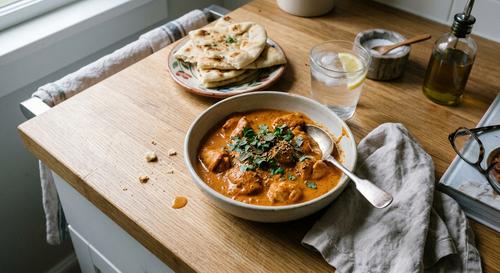
Description: A rich, restaurant-style chicken curry made with non-fat Greek yogurt, lean chicken breast, and bone broth. Packed with protein, bold spices, and minimal fat to support sustainable weight loss.
Prep Time: 15 minutes | Cook Time: 25 minutes
Servings: 4
Macros per Serving | Calories: 275 | Protein: 42g | Fat: 4g | Carbohydrates: 14g
Ingredients
- 1.5 lbs (680g) boneless, skinless chicken breast, trimmed and cut into bite-sized pieces
- 1 cup plain non-fat Greek yogurt, divided (room temperature)
- 1 tbsp fresh lemon juice
- 1 tsp olive oil (or cooking spray)
- 1 medium yellow onion, finely diced
- 5 cloves garlic, minced (divided)
- 1.5 tbsp fresh ginger, finely grated (divided)
- 1 serrano or jalapeño pepper, seeded and finely minced (optional, for heat)
- 2 tbsp tomato paste
- 1 can (14.5 oz / 400g) crushed tomatoes or tomato purée
- 1/2 cup low-sodium chicken bone broth
- 1.5 tbsp garam masala (divided)
- 1.5 tsp ground cumin (divided)
- 1.5 tsp ground coriander
- 1.5 tsp smoked paprika or Kashmiri chili powder
- 1/2 tsp ground turmeric
- 1/4 tsp ground cinnamon
- 1 tsp dried fenugreek leaves (kasuri methi), lightly crushed
- 1 tsp kosher salt, plus more to taste
- Freshly ground black pepper, to taste
- 1/4 cup fresh cilantro, finely chopped
- Fresh lime wedges, for serving
Instructions
- Combine diced chicken with 1/2 cup Greek yogurt, lemon juice, 1 clove garlic, 1/2 tbsp ginger, 1/2 tsp garam masala, 1/2 tsp cumin, turmeric, and 1/2 tsp salt; marinate for 15 minutes.
- Heat olive oil in a skillet over medium-high heat. Sear chicken pieces 2 to 3 minutes per side until lightly browned; transfer to a plate.
- Reduce heat to medium. Sauté diced onion in pan drippings for 4 to 5 minutes until soft, then stir in remaining garlic, ginger, and chili pepper for 1 minute.
- Stir in tomato paste, remaining garam masala, cumin, coriander, paprika, and cinnamon; cook for 1 to 2 minutes until fragrant.
- Add crushed tomatoes, chicken bone broth, and remaining salt. Simmer covered on medium-low for 10 minutes.
- Whisk remaining 1/2 cup room-temperature Greek yogurt in a bowl, stir in 2 to 3 tablespoons of hot sauce to temper, then whisk mixture into the skillet on low heat.
- Return seared chicken to the skillet and simmer gently for 4 to 6 minutes until chicken reaches 165°F (74°C).
- Crush fenugreek leaves into the sauce, adjust salt and pepper, remove from heat, and top with fresh cilantro and lime wedges before serving.
Notes
Make sure the Greek yogurt is completely at room temperature before tempering. If it is cold from the fridge, it may curdle when added to the hot skillet. Store leftovers in an airtight glass container in the fridge for up to 4 days.
FAQs About Healthy Chicken Curry For Weight Loss
Here are some straightforward answers to the most common questions I receive about this curry recipe.
Why did the Greek yogurt curdle in my healthy chicken curry?
Yogurt curdles when cold dairy proteins experience thermal shock or encounter high acid levels too quickly. Non-fat Greek yogurt is especially vulnerable because it lacks the protective milk fat found in heavy cream or whole milk. When chilled yogurt hits a bubbling pan, the proteins tighten instantly and squeeze out liquid, creating tiny white specks.
To prevent this, pull your yogurt out of the fridge at least 30 minutes before cooking so it reaches room temperature. Always use the tempering technique outlined in the recipe. Whisking several spoonfuls of warm tomato sauce into the yogurt bowl gradually equalizes the temperature before it ever touches the main skillet.
Can I make this chicken curry in a slow cooker or Instant Pot?
You can definitely adapt this recipe for a slow cooker or pressure cooker, but you must hold back the final yogurt step until the very end. For an Instant Pot, use the sauté setting to brown your chicken and toast the aromatics and spices. Add your tomatoes and bone broth, then pressure cook on high for eight minutes with a quick pressure release.
Once cooking finishes, switch the appliance off and let the sauce stop bubbling completely. Temper your room-temperature yogurt in a separate bowl as directed, then stir it into the warm sauce right before serving. Never pressure cook or slow cook non-fat yogurt under high heat for hours or it will separate completely.
Is chicken curry good for weight loss if I eat rice with it?
Eating carbohydrates like rice alongside your meal will not derail fat loss as long as the portion fits within your daily energy targets. Carbs provide essential glycogen for hard strength training workouts and help your brain produce serotonin, which is critical for regulating ADHD mood swings. The goal is managing portion sizes rather than eliminating staple foods.
If you have plenty of calorie room, measure out a standard half-cup or one-cup portion of steamed basmati rice. If your calories are tight or you want a massive plate of food, blend your white rice with steamed riced cauliflower. That simple volume trick gives you the comfort of a big rice bowl for a fraction of the carbohydrate load.
How can I make this curry recipe milder for my kids?
You can easily tone down the spice level without sacrificing the rich depth of the sauce. Start by leaving out the minced jalapeño or serrano pepper completely. Most of the fiery heat in curries comes from the capsaicin found in raw hot chilis rather than the dry spice blend.
Next, ensure you are using a mild, sweet paprika instead of hot Kashmiri chili powder or cayenne pepper. Spices like cinnamon, coriander, and cumin provide warmth and aromatic sweetness without any sharp bite. Your kids get an approachable, creamy dish that expands their palate without overwhelming their taste buds.
Can I freeze leftovers of this Greek yogurt chicken curry?
Yes, this dish freezes surprisingly well if you take basic precautions with the dairy base. While heavy dairy sauces tend to separate upon thawing, the thick, strained consistency of Greek yogurt holds up well when blended thoroughly with crushed tomatoes and reduced bone broth. Freeze your individual portions in freezer-safe glass containers or silicone bags for up to two months.
When you are ready to eat, move the container to your refrigerator the night before to thaw slowly. Reheat the defrosted portion over gentle, low heat on the stovetop or at half power in the microwave, stirring frequently. Avoid rapid boiling during the reheating process to maintain that silky, cohesive texture.
Try These High-Protein Recipes Next
If you loved making this easy, high-protein meal, check out these other macro-friendly comfort recipes to keep your fat loss journey exciting and full of flavor.
- High-Protein Butter Chicken: A macro-friendly spin on the takeout classic that delivers rich, creamy decadence with minimal dietary fat.
- Easy Protein Naan: A simple two-ingredient dough recipe that gives you warm, chewy flatbread to scoop up every drop of extra sauce.
- Savory Ground Beef Curry: A fast, hearty skillet meal from This Gal Cooks that brings incredible spice depth using lean ground beef.
Keep your kitchen flexible, keep your protein high, and remember that consistent, simple meals will always beat chasing dietary perfection.