
I didn’t grow up eating black eyed peas for New Year’s. For me, they were just another boring canned vegetable my mom would occasionally open. It wasn’t until I started my own fitness journey, losing 65 pounds as a single dad, that I discovered their true potential. I was on the hunt for foods that were cheap, filling, and packed with nutrients. Black eyed peas checked all the boxes.
The problem was, most recipes I found were loaded with bacon fat, ham hocks, and tons of salt. They were delicious, but they were calorie bombs that left me feeling sluggish. That’s not a recipe for sustainable fat loss. It’s a recipe for a weekend binge that spirals into giving up entirely.
So I went to work. My goal was to create a recipe that delivered all the smoky, savory comfort of the traditional dish but was built for a fit lifestyle. I wanted high protein, high fiber, and incredible flavor. This version uses lean smoked turkey to get that deep, savory taste without the unnecessary fat. It’s the kind of meal you can eat a huge bowl of and feel amazing afterward. It fuels your body, crushes cravings, and makes you feel like you’re eating something special, not “diet food.”
This is the exact recipe I use for meal prep when I know I have a busy week. It’s a cornerstone of my brutally practical approach to nutrition. It’s proof that you don’t have to give up your favorite foods to get lean and strong. You just have to build them better.
Skip to My Flexibe Diet Recipe!
Why Black Eyed Peas Are Great For Fat Loss
When you’re trying to lose fat, especially with an ADHD brain, the rules need to be simple. The food needs to work for you, not against you. This recipe is specifically designed around the core principles that drive real, lasting results: protein first, hunger management second, and convenience third.
Let’s start with protein. We swapped out the traditional high-fat pork for lean, diced smoked turkey breast. This is a game-changer. It gives you that essential smoky flavor while packing a serious protein punch. Protein is your best friend in fat loss. It keeps you feeling full for hours, helps build and maintain muscle during a calorie deficit, and has a higher thermic effect of food, meaning your body burns more calories just digesting it.
Next up is hunger management, which is critical for avoiding the dopamine-seeking snacks that can derail us. The stars here are the black eyed peas themselves. They are loaded with fiber and complex carbohydrates. Fiber slows down digestion, stabilizing your blood sugar and preventing the energy crashes and intense cravings that often follow a meal. When you combine that powerful fiber with the protein from the turkey, you get a meal with incredible staying power.
Finally, there’s convenience. This recipe is perfect for batch cooking. You spend about an hour and a half on a Sunday, and you have delicious, macro-friendly meals ready for the week. For the ADHD brain, reducing decision fatigue is everything. When you have a healthy meal ready to go, you eliminate the “what should I eat?” spiral that so often ends with a delivery app. This is how you build consistency, and consistency, not perfection, is what gets you 75 percent of your results.
This dish isn’t just a random collection of healthy ingredients. It’s a strategic tool designed to make fat loss feel easier, more satisfying, and perfectly suited for a busy life.
Ingredients You’ll Need for Black Eyed Peas
I’m all about simple, accessible ingredients. You don’t need to hunt down anything fancy for this recipe. Everything here can be found at a standard grocery store, which removes a major barrier to getting started. We’re building a restaurant-quality flavor profile using basic pantry staples.
The real star of this recipe, the ingredient that gives it a fitness-friendly twist, is the diced smoked turkey breast. Traditionally, recipes call for a ham hock or bacon, which adds a ton of flavor but also a ton of saturated fat and calories. Smoked turkey breast gives you that deep, savory, smoky essence with a fraction of the fat and a huge boost of lean protein. It’s the perfect swap.
Here’s the full list of what you’ll need:
- 1 tablespoon olive oil
- 1 large onion, chopped
- 1 green bell pepper, chopped
- 2 celery stalks, chopped
- 4 cloves garlic, minced
- 8 ounces smoked turkey breast, diced
- 1 teaspoon smoked paprika
- 1/2 teaspoon ground cumin
- 1/4 teaspoon cayenne pepper (or to taste)
- 1 pound dried black-eyed peas, rinsed and sorted
- 6 cups low-sodium chicken or vegetable broth
- 1 bay leaf
- 4 cups fresh spinach or kale, roughly chopped
- Salt and freshly ground black pepper to taste
- 2 tablespoons fresh parsley, chopped (for garnish)
A quick note on the broth. I always recommend using low-sodium broth. It allows you to control the final seasoning yourself. Many pre-made broths are loaded with salt, which can mask the other flavors and leave you feeling bloated. By starting with a low-sodium base, you get to decide how much salt is right for you. Also, while I use dried black eyed peas for better texture and cost, you can absolutely use canned in a pinch. Just make sure to rinse them thoroughly.
How To Make Black Eyed Peas (Step-By-Step)
Making these black eyed peas is straightforward, but a few key steps make a huge difference in the final flavor. We’re going to build layers of flavor from the ground up. My big ADHD tip here is to prep everything before you start cooking. Chop your veggies, measure your spices, and have it all ready to go. This technique, called “mise en place,” prevents that frantic, overwhelming scramble in the middle of cooking.
Step 1: Build Your Aromatic Base
Heat one tablespoon of olive oil in a large pot or Dutch oven over medium heat. A heavy-bottomed pot like a Dutch oven is great because it distributes heat evenly and prevents scorching. Once the oil is shimmering, add your chopped onion, bell pepper, and celery. This combination is known as the “holy trinity” in Cajun and Creole cooking, and it creates an incredible flavor foundation. Cook, stirring occasionally, for about 5 to 7 minutes until the vegetables are soft and the onion is translucent. Don’t rush this step.
Step 2: Add Garlic and Smoked Turkey
Add the minced garlic and your diced smoked turkey to the pot. Cook for another 2 to 3 minutes. You want to cook it just until the garlic becomes fragrant. Be careful not to let the garlic burn, as it will turn bitter and ruin the dish. Sautéing the turkey at this stage helps render a little of its flavor into the oil, which will infuse the entire dish.
Step 3: Bloom The Spices
Now, stir in the smoked paprika, cumin, and cayenne pepper. Cook for just 30 seconds more, stirring constantly. This is called “blooming” the spices. It lightly toasts them in the hot oil, which wakes them up and dramatically deepens their flavor. You’ll smell the difference immediately. It’s a small step that has a massive impact.
Step 4: Combine and Simmer
Pour in the rinsed black eyed peas and the low-sodium broth, and add the bay leaf. Stir everything together to combine. Bring the whole mixture to a boil, then immediately reduce the heat to low. Cover the pot and let it simmer. This is where patience comes in. It will need to simmer for 1 to 1.5 hours, or until the peas are tender. Set a timer and walk away. Check on it occasionally to give it a stir and make sure nothing is sticking to the bottom.
Step 5: Thicken and Wilt The Greens
Once the peas are tender, remove and discard the bay leaf. For a creamier, heartier texture, take the back of a spoon and mash about a cup of the peas against the side of the pot. This releases their starches and naturally thickens the stew. Then, stir in your fresh spinach or kale. It will look like a lot, but it cooks down quickly. Cook for another 3 to 5 minutes, until the greens are fully wilted.
Step 6: Season and Serve
This is the final and most important step. Taste the black eyed peas and season with salt and freshly ground black pepper. Because we used low-sodium broth, you are in complete control. Add salt gradually, tasting as you go, until the flavors pop. Serve hot, and garnish with some fresh parsley for a bit of brightness.
How To Serve Black Eyed Peas (ADHD-Friendly)
How you serve a meal can be just as important as how you cook it, especially when you’re trying to build a sustainable, healthy lifestyle. The goal is to make it easy, balanced, and something you actually look forward to eating. For those of us with ADHD, reducing friction and decision-making at mealtime is a huge win. These black eyed peas are incredibly versatile, which is perfect for our flexible eating approach.
My go-to method is to treat it as a complete, standalone meal. I’ll scoop a generous portion into a bowl and call it a day. It has protein, complex carbs, fiber, and veggies all in one pot. It’s the ultimate low-effort, high-reward meal, which is exactly what you need on a low-motivation day. There’s zero extra work required.
If you want to build a more substantial plate, especially on workout days, here are a few simple, ADHD-friendly ways to serve it:
- With a Simple Carb: Pair it with a scoop of brown rice or quinoa. My favorite hack is using the microwaveable pouches of pre-cooked grains. They take 90 seconds and create zero extra dishes. This adds some quality complex carbs for sustained energy without adding a complicated cooking step.
- Add More Protein: If your protein goal is high, serve a smaller portion of the peas as a side dish next to a grilled chicken breast, a piece of fish, or some lean steak. This creates a really powerful, high-satiety meal perfect for post-workout recovery.
- Topped with an Egg: For a delicious brunch-style meal, serve a bowl of the black eyed peas with a fried or poached egg on top. The runny yolk creates a rich, creamy sauce that is absolutely incredible.
The most important ADHD tip I can give you is to portion out servings immediately after cooking. While the pot is still on the stove and you’re in “kitchen mode,” scoop single servings into meal prep containers. Label them and put them right in the fridge. This completely removes the barrier to eating healthy later. When hunger strikes, you don’t have to think, you just have to grab a container and heat it up. You’re setting your future self up for success.
How To Store, Reheat, and Reuse Black Eyed Peas
One of the best things about this recipe is that it makes a big batch, and the leftovers are fantastic. In fact, the flavors often get even better the next day as they have more time to meld together. Proper storage is key to making your life easier and ensuring you get the most out of your cooking efforts. This is a core part of working with your ADHD brain, not against it. Cook once, and create easy meal options for days.
Here’s how to handle storage, reheating, and even reusing your black eyed peas to keep things interesting and prevent food waste. This is all about maximizing convenience and minimizing decision fatigue during a busy week.
- Refrigerating: Once the black eyed peas have cooled down a bit (but don’t leave them out for more than two hours), transfer them to airtight containers. They will keep well in the refrigerator for up to 5 days. Storing them in single-serving containers is my preferred method, as it makes grab-and-go lunches incredibly simple.
- Freezing: This recipe freezes beautifully, which is the ultimate meal prep hack. Let the peas cool completely, then portion them into freezer-safe containers or zip-top bags. Be sure to leave a little space at the top for expansion. They can be frozen for up to 3 months. To use, just thaw a portion overnight in the fridge.
- Reheating: For a single serving, the microwave is your fastest option. Just pop it in for a couple of minutes, stirring halfway through, until it’s heated all the way. If you’re reheating a larger amount, the stovetop works best. Place the peas in a pot over medium-low heat, adding a splash of broth or water to prevent them from drying out, and stir until warm.
Don’t be afraid to get creative with your leftovers to avoid flavor fatigue. You can add more broth to turn it into a hearty soup. Mash them up a bit more and use them as a filling for tacos or burritos with some cheese and salsa. You can even serve them over a baked potato or as a base for a grain bowl. Having these options in your back pocket means you’re less likely to get bored and order takeout.
Easy Swaps & Variations for Black Eyed Peas
My philosophy is all about flexible eating. A recipe should be a template, not a rigid set of rules. Life happens. You might not have an ingredient, or you might have a specific dietary need. That’s okay. The best plan is the one you can actually stick to, and that means being able to adapt. This black eyed peas recipe is incredibly forgiving and easy to customize.
Being able to swap ingredients based on what you have on hand is a crucial skill for anyone, but especially for those of us with ADHD. It prevents that “all or nothing” thinking where a missing ingredient makes us abandon the whole plan. Instead, we pivot. Here are some simple, effective swaps and variations you can try to make this recipe your own.
- Make It Vegetarian or Vegan: This is an easy switch. Omit the smoked turkey breast and use vegetable broth instead of chicken broth. To replicate that smoky flavor, add 1/2 teaspoon of liquid smoke along with the broth, or use smoked tofu or tempeh, diced and sautéed with the vegetables. Adding some chopped mushrooms can also provide a nice, meaty texture.
- Change The Protein: If you don’t have smoked turkey, you can use lean smoked sausage (like andouille), but be mindful of the macros as it will be higher in fat. Diced ham or even leftover shredded chicken can also work well.
- Use Canned Peas for Speed: Don’t have an hour and a half to simmer dried peas? No problem. You can substitute with two or three (15-ounce) cans of black eyed peas. Be sure to drain and rinse them very well to remove the excess sodium from the canning liquid. If you use canned peas, you can reduce the broth to about 3-4 cups and your simmer time will be much shorter, around 20-30 minutes.
- Adjust the Spice Level: If you like it hot, feel free to add a chopped jalapeño along with the onion and bell pepper. You can also increase the amount of cayenne pepper or add a few dashes of your favorite hot sauce at the end. If you’re sensitive to spice, you can omit the cayenne pepper entirely.
The key is not to let perfection be the enemy of good. Use what you have, make it work for your preferences, and enjoy a delicious, healthy meal that supports your goals. Brutally practical systems always win.
High-Protein, Low-Calorie Black-Eyed Peas
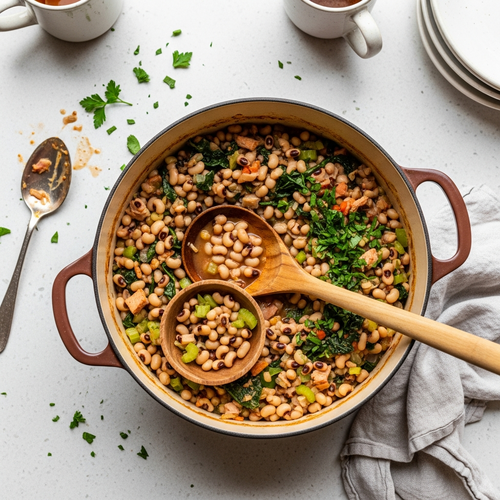
Description: A hearty, smoky, and satisfying dish packed with protein and fiber, designed to keep you full and support your fat loss goals without sacrificing flavor.
Prep Time: 15 minutes | Cook Time: 1 hour 30 minutes
Servings: 8
Macros per Serving | Calories: 270 | Protein: 20g | Fat: 4g | Carbohydrates: 38g
Ingredients
- 1 tablespoon olive oil
- 1 large onion, chopped
- 1 green bell pepper, chopped
- 2 celery stalks, chopped
- 4 cloves garlic, minced
- 8 ounces smoked turkey breast, diced
- 1 teaspoon smoked paprika
- 1/2 teaspoon ground cumin
- 1/4 teaspoon cayenne pepper (or to taste)
- 1 pound dried black-eyed peas, rinsed and sorted
- 6 cups low-sodium chicken or vegetable broth
- 1 bay leaf
- 4 cups fresh spinach or kale, roughly chopped
- Salt and freshly ground black pepper to taste
- 2 tablespoons fresh parsley, chopped (for garnish)
Instructions
- Heat olive oil in a large pot over medium heat. Add onion, bell pepper, and celery; cook until softened, about 5-7 minutes.
- Add garlic and diced smoked turkey; cook for another 2-3 minutes until garlic is fragrant.
- Stir in smoked paprika, cumin, and cayenne pepper, and cook for 30 seconds to toast the spices.
- Add rinsed black-eyed peas, broth, and bay leaf. Bring to a boil, then reduce heat, cover, and simmer for 1 to 1.5 hours, until peas are tender.
- Remove the bay leaf. For a creamier texture, mash about a cup of peas against the side of the pot.
- Stir in the spinach or kale and cook for 3-5 minutes, until wilted.
- Season with salt and pepper to taste. Serve hot, garnished with fresh parsley.
Notes
For a quicker version, use 3 cans (15 oz each) of black-eyed peas, rinsed and drained. Reduce broth to 4 cups and simmer for only 25-30 minutes.
FAQs About Black Eyed Peas For Weight Loss
Here are some straightforward answers to the most common questions I receive about this black eyed peas recipe.
Are black eyed peas good for weight loss?
Absolutely. Black eyed peas are a fantastic tool for weight loss for several key reasons that align perfectly with a sustainable eating strategy. First, they are a powerhouse of fiber. A single cup contains a significant amount of your daily fiber needs. This fiber slows down digestion, which helps stabilize your blood sugar levels. This prevents the sharp spikes and crashes that can lead to intense cravings for sugary, high-calorie foods, a common struggle for anyone, but especially those with ADHD looking for a quick dopamine hit.
Second, they offer a great combination of plant-based protein and complex carbohydrates. This duo works with the fiber to promote satiety, the feeling of fullness and satisfaction after a meal. When you feel genuinely full, you’re far less likely to overeat or graze on snacks between meals. This hunger management is the foundation of sticking to a calorie deficit without feeling deprived. Unlike simple carbs that burn off quickly, the energy from black eyed peas is released slowly and steadily, fueling you for hours.
Finally, they are nutrient-dense but relatively low in calories. You get a lot of nutritional bang for your buck, including folate, iron, and magnesium, without taking up a huge portion of your daily calorie budget. When incorporated into a balanced recipe like this one, which adds even more protein and vegetables, they become a cornerstone of a healthy, effective fat loss plan.
Can I make these black eyed peas in a slow cooker or Instant Pot?
Yes, this recipe is easily adaptable for both a slow cooker and an Instant Pot, which can be fantastic tools for reducing hands-on cooking time. For a slow cooker, I recommend completing the first three steps on the stovetop (sautéing the veggies, turkey, and spices) to build that crucial flavor base. Then, transfer that mixture to your slow cooker. Add the rinsed peas, broth, and bay leaf, stir, and cook on low for 6-8 hours or on high for 3-4 hours, until the peas are tender. Stir in the greens during the last 30 minutes of cooking.
For the Instant Pot, use the “Sauté” function to complete the first three steps directly in the pot. Sauté the veggies, then the garlic and turkey, and finally bloom the spices. Turn off the Sauté function. Add the rinsed peas, broth, and bay leaf, and give it a good stir. Secure the lid, set the vent to “Sealing,” and cook on high pressure for 20-25 minutes. Let the pressure release naturally for at least 15 minutes before performing a quick release. Once open, remove the bay leaf, stir in the greens on the “Sauté” setting until they wilt, and season to taste.
Do I have to soak my dried black eyed peas overnight?
No, you do not have to do a long overnight soak for black eyed peas. Unlike larger, tougher beans, black eyed peas are relatively small and cook fairly quickly without pre-soaking. The recipe as written does not require soaking, and they should become tender within the 1 to 1.5-hour simmer time. This is great news for those of us with ADHD who might forget or not have the executive function to plan a meal a full day in advance.
However, soaking can offer a couple of benefits. It can slightly reduce the cooking time and, for some people, make the peas easier to digest by breaking down some of the complex sugars that can cause gas. If you’d like to soak them, you have two options. You can do a traditional overnight soak by covering them with a few inches of water and leaving them on the counter. Or, for a faster method, you can do a “quick soak.” Place the peas in the pot, cover with water, bring to a boil for 2 minutes, then turn off the heat, cover, and let them sit for one hour before draining, rinsing, and proceeding with the recipe.
Why are my black eyed peas still hard after cooking?
It can be really frustrating when your peas don’t soften after a long simmer. There are usually a few common culprits. The most likely reason is that your dried peas are old. As dried beans and peas age, they lose moisture and become harder, making them very resistant to softening, no matter how long you cook them. Try to buy your dried goods from a store with high turnover to ensure they’re fresh.
Another potential issue is hard water. The minerals in hard water can sometimes interfere with the softening process. If you know you have hard water, cooking with filtered or bottled water might help. Lastly, adding acidic ingredients like tomatoes, vinegar, or lemon juice too early in the cooking process can be the problem. The acid can strengthen the cell walls of the peas, preventing them from becoming tender. In this recipe, we don’t use any major acidic ingredients, but it’s a good general rule to remember: add your acids at the end of cooking, after the beans are already soft.
What makes this black eyed peas recipe healthier than traditional versions?
This recipe was specifically engineered to be healthier and more aligned with fat loss goals compared to many traditional Southern-style black eyed peas. The primary difference is the choice of protein and fat source. Traditional recipes often rely on very high-fat pork products like bacon, salt pork, or a ham hock to create a rich, smoky flavor. While delicious, these ingredients contribute a significant amount of saturated fat and calories to the final dish.
My version achieves that same smoky, savory depth by using lean smoked turkey breast. This swap drastically reduces the overall fat and calorie count while simultaneously increasing the lean protein content, which is far more beneficial for satiety, muscle maintenance, and fat loss. Secondly, this recipe emphasizes whole, unprocessed ingredients. We build flavor from aromatics like onion, celery, bell pepper, and garlic, and spices like smoked paprika, rather than relying on processed flavorings or excessive salt. Using low-sodium broth gives us complete control over the sodium content, avoiding the high levels found in many traditional preparations which can lead to water retention and bloating.
Finally, we boost the nutritional value even further by adding a generous amount of fresh greens like spinach or kale at the end. This adds vitamins, minerals, and extra fiber without adding significant calories. It transforms the dish from a simple side into a well-rounded, nutrient-dense meal that supports your health and fitness, rather than working against it.
Try These High-Protein Recipes Next
If you enjoyed this brutally practical approach to building a healthy, satisfying meal, here are a few other recipes you should try.
- Smoked Turkey Collard Greens: A perfect companion to these black eyed peas, this recipe shows you how to make tender, flavorful collard greens without all the fat.
- Healthy Red Beans and Rice: Another classic comfort food rebuilt for a fit lifestyle, using lean sausage and a focus on deep flavor development.
- Crockpot Beans from Scratch: A great guide for mastering the art of cooking any type of dried bean, perfect for building your meal prep skills.
Building a library of simple, flexible, high-protein meals is the key to long-term success.