
I used to think miso soup was one of those magical things you could only get at a Japanese restaurant. It would arrive in a tiny lacquer bowl, this steaming, savory broth that felt like a warm hug. It seemed complex and out of reach for a home cook like me, especially during the early days of my fitness journey when my meals were mostly boring chicken and broccoli.
Losing 65 pounds was a grind, and a big part of that was figuring out food that didn’t feel like a punishment. I needed flavor. I needed comfort. I needed meals that were fast, because as a single dad with ADHD, spending an hour in the kitchen after a long day just wasn’t going to happen consistently.
That’s when I revisited miso soup. I started experimenting and was shocked to discover how simple it actually is. More importantly, I realized I could transform it from a light appetizer into a high-protein, incredibly satisfying meal that crushes cravings and fits perfectly into a fat loss plan. This isn’t just a basic soup; it’s a complete system for a quick, healthy, and delicious meal. It’s exactly the kind of food we build at ADHD FIT: practical, flexible, and built for our brains.
Skip to My Flexibe Diet Recipe!
Why Miso Soup Is Great For Fat Loss
When we talk about fat loss, we’re really talking about managing three things: calorie intake, hunger, and consistency. This high-protein miso soup is engineered to tackle all three, making it a powerhouse for anyone on a fitness journey, especially those of us with ADHD.
First, we follow our number one rule: protein first. This recipe is loaded with it. We have firm tofu, shelled edamame, and two whole eggs swirled in to create those delicious egg ribbons. If you want to take it even further, you can add white fish or shrimp. This massive protein hit keeps you feeling full for hours, which is your best defense against mindless snacking. It also helps preserve muscle mass while you’re in a calorie deficit, ensuring you’re losing fat, not just weight.
Second, it’s a high-volume food. You get a big, steaming bowl of soup that takes time to eat and physically fills your stomach, but for a surprisingly low number of calories. The warm broth is incredibly comforting and satisfying. For the ADHD brain that seeks dopamine and satisfaction from food, this is huge. It feels like a hearty indulgence, not a diet meal, which helps prevent the feeling of restriction that often leads to binging later.
Finally, it’s brutally practical. The whole thing comes together in about 15 minutes. It’s a one-pot meal, meaning cleanup is minimal, a major win for executive dysfunction. The deep, savory umami flavor from the miso and dashi base satisfies cravings for salty, processed foods. Instead of crushing a bag of chips, you can have a bowl of this soup and feel genuinely nourished and content. This is how you build a sustainable lifestyle, not by white-knuckling through cravings, but by meeting them with a smarter, healthier choice.
Ingredients You’ll Need for Miso Soup
The beauty of this recipe is its simplicity and the way a few key ingredients create an incredibly deep flavor. We’re essentially building this in two parts: the foundational broth and the powerhouse protein and veggie additions. Don’t be intimidated by ingredients like kombu or miso paste; they are easy to find and use.
The secret weapon here is the dashi broth. Instead of just water, we’re using unsalted chicken bone broth as a base for an extra protein boost and richer flavor. Then we add traditional dashi elements like kombu (dried kelp) and dried shiitake mushrooms. This combination creates an umami flavor that is off the charts. It’s what makes the soup taste authentically savory and deeply satisfying.
When it comes to the miso paste, quality matters but you don’t need the most expensive kind. Look for white (shiro) or yellow (shinshu) miso paste for this recipe. They are milder and slightly sweeter than the more pungent red (aka) miso, which allows the other flavors to shine through. You’ll usually find it in a tub in the refrigerated section of your grocery store, often near the tofu.
For the tofu, make sure you get firm or extra-firm. Silken tofu will fall apart. An easy ADHD-friendly tip for pressing it: no need for a fancy press. Just slice the block, wrap the slices in a few paper towels, place them on a plate, and put something heavy on top, like a cast-iron skillet or a few books, for 15-20 minutes while you prep other ingredients.
- For the High-Protein Dashi Broth:
- 4 cups water or unsalted chicken bone broth
- 1 piece (4×4 inch) kombu (dried kelp)
- 1/2 cup dried shiitake mushrooms
- 1/4 cup bonito flakes (katsuobushi) – optional, for a smokier flavor
- For the Soup:
- 1 block (14-16 ounces) firm or extra-firm tofu, pressed and cut into ½-inch cubes
- 1 cup shelled edamame (fresh or frozen)
- 2 large eggs, lightly beaten
- 2 tablespoons white or yellow miso paste
- 2 teaspoons dried wakame seaweed
- 1 cup fresh spinach
- 2 scallions, thinly sliced (greens and whites separated)
- Optional Protein Boost: 6 ounces boneless, skinless white fish (like cod or halibut), cut into 1-inch pieces, or 6 ounces peeled and deveined shrimp
How To Make Miso Soup (Step-By-Step)
This process is fast, so I highly recommend getting all your ingredients prepped and ready before you turn on the stove. This is a concept called “mise en place,” and it’s a game-changer for the ADHD brain. It turns cooking from a frantic, overwhelming scramble into a calm, simple assembly process. Cube your tofu, slice your scallions, and beat your eggs first. Then, you’re ready to go.
Step 1: Make the Dashi Broth
In a medium pot, combine your chicken bone broth (or water), the piece of kombu, and the dried shiitake mushrooms. The key here is to bring it to a gentle simmer over medium heat. Do not let it reach a hard, rolling boil. Boiling kombu can make it slimy and release a bitter flavor into your broth. Once you see little bubbles forming around the edges of the pot, turn off the heat. Remove the kombu with tongs and discard it. If you’re using bonito flakes for that extra smoky layer, stir them in now and let them steep for about five minutes. Then, pour the broth through a fine-mesh strainer into a clean pot to remove the mushrooms and bonito flakes.
Step 2: Cook the Protein
Place the pot with your strained, flavorful dashi back on the stove over medium heat. Bring it back to a gentle simmer. Add your pressed and cubed tofu, the shelled edamame, and the white parts of your sliced scallions. If you’re adding the optional fish or shrimp, this is the time to do it. Let everything cook for just 3-4 minutes. The seafood will cook very quickly, turning opaque when it’s done. You don’t want to overcook it.
Step 3: Temper the Miso
This is the most important technique for smooth, clump-free miso soup. Never add cold miso paste directly to the hot pot. It won’t dissolve properly. Instead, scoop the miso paste into a small bowl. Ladle about half a cup of the hot dashi broth from your pot into the bowl with the miso. Whisk it together until the miso is completely dissolved and you have a smooth, thin paste. This simple step makes all the difference.
Step 4: Combine and Finish
Now, reduce the heat under your soup pot to low. This is critical. You must not boil the soup after adding the miso. Boiling can kill the beneficial live probiotics in the miso and can also alter its delicate flavor. Slowly pour the dissolved miso mixture from your small bowl into the pot, stirring gently to combine everything.
Step 5: Add the Egg and Greens
With the soup on low heat, begin stirring it gently in a circular motion to create a little whirlpool. While stirring, slowly pour the beaten eggs into the pot in a thin stream. This will create beautiful, delicate egg ribbons throughout the soup. Finally, turn off the heat completely and stir in the dried wakame, fresh spinach, and the green parts of the scallions. The residual heat of the broth is more than enough to rehydrate the seaweed and perfectly wilt the spinach in about a minute.
Step 6: Serve
Your high-protein miso soup is ready. Ladle it into bowls immediately and enjoy it while it’s hot. You’ve just made a complete, satisfying, and incredibly healthy meal in minutes.
How To Serve Miso Soup (ADHD-Friendly)
One of the best things about this miso soup is that it’s a complete meal in a bowl. For those of us with ADHD, minimizing the number of steps, dishes, and decisions is a huge win. There’s no need to think about complex side dishes. The protein, veggies, and broth cover all your bases for a satisfying meal that supports your fat loss goals.
That said, our brains love novelty and texture. A great way to keep this meal interesting without adding complexity is to have a few simple toppings on hand. Think of it as a “topping bar” for one. This little bit of customization can provide a nice dopamine hit and make the meal feel new each time you have it.
Here are some of my go-to, low-effort toppings:
- A Drizzle of Toasted Sesame Oil: Adds a nutty, rich aroma and flavor. A little goes a long way.
- A Sprinkle of Shichimi Togarashi: This Japanese seven-spice blend adds a bit of heat and complexity. It’s a fantastic pantry staple.
- Extra Scallions: You can never have too many. The fresh, sharp bite is a great contrast to the savory broth.
- Crispy Fried Onions/Garlic: This is my favorite shortcut. Buy them in a container from the store. They add an amazing crunch and flavor with zero effort.
Incorporating this into your life is easy. It’s the perfect quick lunch when you’re working from home, or a light, comforting dinner when you get home from a long day or a workout and have zero energy to cook. Framing it as “assembling” a meal rather than “cooking from scratch” can also be a powerful mental trick to overcome task initiation struggles. The hard work is already done; you’re just putting the pieces together.
How To Store, Reheat, and Reuse Miso Soup
Leftovers are a cornerstone of any sustainable fitness plan, and this miso soup is no exception. Storing and reheating it properly is key to making sure it tastes just as good the next day. The most important rule is to be gentle with it, especially when reheating.
To store your leftover soup, first let it cool down to room temperature. Sticking a pot of hot soup directly in the fridge can raise the internal temperature and put other foods at risk. Once cool, transfer it to an airtight container. It will keep well in the refrigerator for up to 3 days. Be aware that the texture of the tofu and egg ribbons might change slightly, but it will still be delicious and packed with protein.
When it comes to reheating, avoid the microwave if you can. It tends to create hot spots, overcook the delicate egg and tofu, and can make the tofu rubbery. The best method is to use the stovetop.
- Stovetop Reheating: Pour the desired amount of soup into a small pot. Reheat it gently over low to medium-low heat, stirring occasionally, until it’s warmed through. Remember the golden rule: do not let it boil. Boiling will damage the flavor and the beneficial probiotics from the miso.
A fantastic ADHD-friendly meal prep strategy is to batch-prepare the dashi broth. Make a big pot of the strained dashi and store it in a large jar in the fridge for up to a week. When you’re ready for a meal, just heat up a single serving of the broth, add your fresh tofu, edamame, and greens, and finish with the miso and egg. This gives you a fresh-tasting bowl of soup in under 5 minutes. You can also freeze the dashi broth in single-serving portions for an even faster “just add protein” meal down the road. Just don’t freeze the fully assembled soup, as the tofu does not freeze well.
Easy Swaps & Variations for Miso Soup
One of the core principles at ADHD FIT is flexibility. A recipe is a template, not a rigid set of rules. Life happens. You might not have every ingredient, or you might just want to change things up. This miso soup is incredibly forgiving and easy to adapt to what you have on hand or what you’re in the mood for.
The goal is always to keep it high in protein and flavor while minimizing stress. Store-bought shortcuts are your friend. Don’t feel like pressing tofu? Buy the pre-pressed and baked kind. Want to skip making dashi? Use a high-quality store-bought broth and add a spoonful of miso. Done is better than perfect.
Here are a few simple swaps and variations to get you started:
- Protein Power-Ups: If you’re out of tofu, a handful of shredded rotisserie chicken is a fantastic and fast substitute. Leftover cooked salmon, flaked into the soup at the very end, is also amazing. For a different seafood option, a few clams or mussels tossed in with the broth add a wonderful briny flavor.
- Vegetable Variety: This soup is a great way to use up leftover veggies. Swap the spinach for chopped bok choy, napa cabbage, or even kale (it will just need an extra minute to wilt). Thinly sliced mushrooms (cremini, shiitake, or oyster) are a natural fit. You can also add some finely julienned carrots or daikon radish for a bit of texture and sweetness.
- Spice and Flavor Boosts: If you like a little heat, a swirl of sriracha or chili garlic sauce at the end is perfect. For a different aromatic profile, add a teaspoon of freshly grated ginger to the broth as it simmers. A splash of soy sauce or tamari can deepen the salty, savory flavor if needed.
- Make it More Substantial: If you need more carbs to fuel a heavy workout, you can add a small portion of cooked soba noodles or udon noodles to the bowl before ladling in the soup. A scoop of leftover brown rice at the bottom of the bowl also works great to make it a heartier meal.
High-Protein Miso Soup For Fat Loss
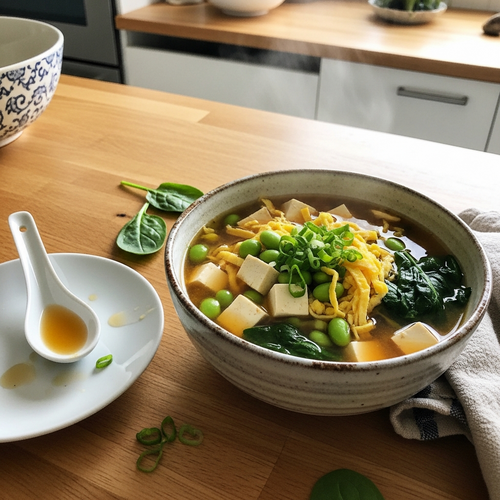
Description: A quick, easy, and deeply satisfying miso soup packed with protein from tofu, edamame, and eggs. This one-pot meal is designed to crush cravings, manage hunger, and support your fat loss goals, all in about 15 minutes. It’s the perfect comforting meal for a busy lifestyle.
Prep Time: 5 minutes | Cook Time: 10 minutes
Servings: 2 large servings
Macros per Serving | Calories: 395 | Protein: 35g | Fat: 20g | Carbohydrates: 18g
Ingredients
- 4 cups unsalted chicken bone broth
- 1 piece (4×4 inch) kombu (dried kelp)
- 1/2 cup dried shiitake mushrooms
- 1 block (14-16 oz) extra-firm tofu, pressed & cubed
- 1 cup shelled edamame (frozen is fine)
- 2 large eggs, lightly beaten
- 2 tbsp white or yellow miso paste
- 2 tsp dried wakame seaweed
- 1 cup fresh spinach
- 2 scallions, thinly sliced
Instructions
- Make Dashi: In a pot, gently simmer bone broth, kombu, and shiitake mushrooms. Do not boil. Once simmering, remove from heat, discard kombu, and strain the broth into a clean pot.
- Cook Proteins: Bring dashi back to a simmer. Add cubed tofu and edamame. Cook for 3-4 minutes.
- Temper Miso: In a small bowl, whisk miso paste with 1/2 cup of hot broth until smooth.
- Combine: Reduce heat to low. Stir the dissolved miso mixture into the soup. Do not let it boil.
- Add Egg & Greens: Gently stir the soup in a circle while slowly pouring in the beaten eggs to create ribbons. Turn off heat and stir in wakame, spinach, and scallions. Serve immediately.
Notes
For an extra protein boost, add 6 oz of cubed white fish or shrimp along with the tofu in step 2. To add some crunch and flavor, top with a sprinkle of sesame seeds, crispy fried onions, or a drizzle of toasted sesame oil before serving.
FAQs About Miso Soup For Weight Loss
Here are some straightforward answers to the most common questions I receive about this miso soup recipe.
Is miso soup actually good for weight loss?
Yes, absolutely. But it’s important to distinguish between the traditional, small appetizer cup of miso soup and a thoughtfully constructed meal like this one. Traditional miso soup is very low in calories, but also low in protein, so it won’t keep you full. This recipe is specifically designed for fat loss by loading it with protein sources like tofu, edamame, and eggs.
The high protein content is key for satiety, which means it helps you feel full and satisfied for a longer period, reducing the likelihood of snacking on high-calorie foods later. The high volume of the warm broth also helps fill your stomach, signaling fullness to your brain. Furthermore, miso itself is a fermented food containing probiotics, which can support good gut health. A healthy gut microbiome is increasingly being linked to better weight management and overall health. So, when made with the right ingredients, miso soup is an excellent tool in your weight loss arsenal.
Can I drink miso soup every day?
You probably could, but as with anything, variety is important for a balanced diet. The main concern with consuming miso soup daily is the sodium content. Miso paste and sometimes broths can be high in salt. In our recipe, we recommend using unsalted or low-sodium bone broth to give you more control over the sodium levels. If you plan to eat it frequently, be mindful of your total sodium intake for the rest of the day.
That said, having a bowl several times a week is perfectly fine for most people. It’s a fantastic, low-calorie way to get in a lot of protein and nutrients. If you have high blood pressure or have been advised by a doctor to follow a low-sodium diet, you may want to enjoy it less frequently or look for specifically labeled low-sodium miso paste. For most of us, it’s a healthy, convenient, and beneficial addition to our weekly meal rotation.
Will the tofu in this miso soup make me gain weight?
This is a common myth that needs to be debunked. Tofu will not make you gain weight. In fact, it is an incredible food for weight loss. Tofu is a plant-based protein made from soybeans that is low in calories and carbohydrates but high in complete protein. A whole block of firm tofu has around 40 grams of protein for only about 350 calories. That’s a fantastic macro profile for building and preserving muscle while in a calorie deficit.
The misconception often comes from misinformation about soy and hormones, most of which has been thoroughly disproven by modern research. For the vast majority of people, soy is a healthy and beneficial food. Tofu is a lean protein source that is filling, versatile, and inexpensive. It’s the perfect foundation for a satisfying fat-loss meal like this miso soup.
What’s the best type of miso for this soup recipe?
There are many types of miso, but they generally fall into three categories: white (shiro), yellow (shinshu), and red (aka). The main difference is the fermentation time. White miso is fermented for the shortest time, giving it a mild, slightly sweet flavor. Red miso is fermented the longest, resulting in a much deeper, saltier, and more pungent flavor. Yellow miso falls somewhere in between.
For this specific recipe, I strongly recommend using white or yellow miso paste. Because we’re adding so many other ingredients like tofu, egg, and edamame, a milder miso allows those flavors to come through. It creates a more balanced and harmonious soup. A strong red miso could easily overpower everything else. If you’re a huge fan of that deep, funky miso flavor, feel free to try red miso, but for most people and for this recipe’s purpose, white or yellow is the perfect choice.
How can I make this miso soup even more filling?
This soup is already designed to be very filling due to its high protein and liquid volume. However, on days when you’re extra hungry, coming off a very intense workout, or just need more carbs, there are a few easy ways to bulk it up without derailing your goals. The key is to add ingredients that provide high satiety for their calorie cost.
The easiest way is to add more non-starchy vegetables. Tossing in a cup of chopped bok choy, broccoli florets, or sliced mushrooms will add more fiber and volume for very few calories. Another great option is to add a source of complex carbohydrates. You could add a small serving (about 1/2 cup cooked) of brown rice or quinoa to the bottom of your bowl before adding the soup. Alternatively, cooking a portion of soba (buckwheat) noodles and adding them to the soup makes it a very substantial and satisfying meal that’s perfect for refueling.
Try These High-Protein Recipes Next
If you loved how this miso soup delivers huge flavor without the complexity, you’ll enjoy these other ADHD-friendly recipes.
- High-Protein Pad Thai: A healthier, protein-packed version of the takeout classic that you can make faster than ordering delivery.
- Easy 5-Minute Teriyaki Sauce: This simple, delicious sauce is perfect for quick chicken, beef, or tofu bowls during a busy week.
- Miso Butter Sautéed Mushrooms: A fantastic way to use the rest of your miso paste. This makes an incredible side dish or topping for steak or chicken.
Give them a try and see how simple, delicious, and effective your fitness journey can be.