
I used to think certain foods were completely off-limits if I wanted to lose weight. Eggplant parmesan was at the top of that list. It was pure comfort food from my childhood, something I associated with huge restaurant portions, lots of oil, and feeling sluggish afterward. For years, I avoided it, thinking it was a “cheat meal” I couldn’t afford.
Then, during my 70-pound weight loss journey, I realized my entire approach was wrong. Avoiding foods I loved just led to cravings and eventual binges. The key wasn’t restriction; it was reinvention. I needed my food to work for my goals and my ADHD brain, not against them.
That’s what motivated me to develop this high-protein, baked eggplant parmesan recipe. I wanted all the satisfying flavor and texture without the post-meal guilt or energy crash. This version is built on our core principles: protein first for hunger management, brutally practical steps for low-motivation days, and incredible flavor that makes you forget you’re even eating “healthy.” It’s a game-changer.
Skip to My Flexibe Diet Recipe!
Why Eggplant Parmesan Is Great For Fat Loss
Let’s be direct. Traditional eggplant parmesan can be a calorie bomb that works against your fat loss goals. It’s typically made by deep-frying breaded eggplant slices, which soaks up a massive amount of oil. Then it’s layered with full-fat cheeses. Delicious, yes, but not something that supports a sustainable lifestyle.
This recipe flips the script entirely. The single biggest change is that we bake the eggplant instead of frying it. This one move slashes hundreds of calories and a significant amount of fat from the dish. You still get a fantastic crispy coating from the whole wheat panko, but without the grease and the messy cleanup of a fryer.
The second critical swap is using non-fat Greek yogurt or low-fat cottage cheese instead of the traditional ricotta filling. This is our secret weapon. It dramatically increases the protein content of the meal, which is rule number one for hunger management. Protein keeps you fuller for longer, reducing the chances you’ll be hunting for snacks an hour after dinner. It also gives the dish a creamy, rich texture you won’t want to miss.
By using part-skim mozzarella and a no-sugar-added marinara, we further control the calories and unnecessary sugar. The result is a serving of eggplant parmesan that is high in protein, packed with fiber from the eggplant, and delivers all the comforting flavor you crave. It feels like an indulgence, but it’s built to fit perfectly within your macros. This is how you eat food you love and still see consistent results.
Ingredients You’ll Need for Eggplant Parmesan
One of our core principles is simplicity. A recipe with a million complicated ingredients is a recipe that an ADHD brain will avoid on a low-energy day. We keep the list for this high-protein eggplant parmesan focused and accessible. Many of these items are pantry staples or easy to find at any grocery store.
The real star of this ingredient list, the one that makes this recipe a nutritional powerhouse, is the plain non-fat Greek yogurt or low-fat cottage cheese. This replaces the typical high-fat ricotta cheese filling. It provides a creamy texture while packing a serious protein punch, turning this dish from a simple vegetable side into a complete, satisfying meal that will keep you full for hours.
- 2 medium eggplants, sliced into ½-inch thick rounds
- 1 teaspoon salt
- 1 cup plain non-fat Greek yogurt or low-fat cottage cheese
- 1/4 cup chopped fresh basil, plus more for garnish
- 1 tablespoon fresh oregano, chopped (or 1 teaspoon dried)
- 2 cloves garlic, minced
- Black pepper to taste
- 1 cup whole wheat panko breadcrumbs
- 1/2 cup grated Parmesan cheese, divided
- 1 large egg, beaten
- 2 cups no-sugar-added marinara sauce
- 1 ½ cups shredded part-skim mozzarella cheese
A quick note on a few key ingredients. For the marinara sauce, make sure you check the label for “no sugar added.” Brands like Rao’s are excellent, but many store brands offer great options too. This small detail saves you from a lot of empty calories. For the Parmesan, grating your own from a block will give you the best flavor and melting quality, but if you’re short on time or energy, pre-grated is a perfectly acceptable shortcut. Remember, consistency beats perfection every time.
How To Make Eggplant Parmesan (Step-By-Step)
We build our recipes with the ADHD brain in mind. That means simple, clear steps that you can follow even when you’re feeling distracted or low on executive function. We’re going to break down this eggplant parmesan into manageable chunks so it never feels overwhelming.
Step 1: Prep The Eggplant
First, preheat your oven to 400°F (200°C) and line two baking sheets with parchment paper. This is a crucial first step for task initiation. Getting the oven on and the pans ready signals to your brain that it’s go-time. Arrange your ½-inch eggplant slices on the sheets and sprinkle them with salt. Let them sit for 20-30 minutes. This process, called “sweating,” draws out excess water and any bitterness. ADHD Tip: Set a timer on your phone for this step! Use that downtime to prep other ingredients or unload the dishwasher. Once the timer goes off, pat the slices completely dry with a paper towel. Don’t skip this, it’s key to avoiding a soggy final product.
Step 2: Create The Filling And Breading Station
While the eggplant sweats, make your high-protein filling. In a small bowl, just mix the Greek yogurt (or cottage cheese), fresh basil, oregano, minced garlic, and black pepper. That’s it. Next, set up your breading station. To make this ADHD-friendly, create an assembly line. Get two shallow dishes. In one, combine the whole wheat panko breadcrumbs and half (1/4 cup) of your Parmesan cheese. In the other, lightly beat the large egg. Having these side-by-side minimizes mess and decision fatigue.
Step 3: Bread And Bake The Eggplant
Now for the fun part. Take an eggplant slice, dip it in the beaten egg, let the excess drip off, then press it firmly into the panko mixture, coating both sides. Place it back on the parchment-lined baking sheet. Repeat for all slices. ADHD Tip: Use one hand for the “wet” egg and the other for the “dry” panko to avoid getting clumpy “monster fingers.” Bake for 20-25 minutes, flipping the slices halfway through. You’re looking for a beautiful golden-brown color and a crispy texture. Baking is our healthy hack to avoid all the oil from frying.
Step 4: Assemble And Bake The Casserole
Once the eggplant is baked, reduce your oven temperature to 375°F (190°C). Grab a 9×13-inch baking dish. Start by spreading a thin layer of marinara on the bottom. Arrange half of your crispy eggplant slices in a single layer. Dollop the Greek yogurt mixture over the top and spread it out. It doesn’t have to be perfect. Then add half the remaining sauce and half the mozzarella. Repeat the layers: the rest of the eggplant, the rest of the sauce, and finally, top with the remaining mozzarella and Parmesan cheese. Bake for 25-30 minutes until it’s bubbly and the cheese is melted. Let it rest for 10 minutes before serving. This is crucial to let it set up properly.
How To Serve Eggplant Parmesan (ADHD-Friendly)
One of the best things about this high-protein eggplant parmesan is that it’s practically a complete meal in one dish. It has your protein, your vegetables, and your complex carbs from the whole wheat breading. On a busy weeknight or a low-motivation day, you can absolutely serve a generous slice on its own and have a perfectly balanced, satisfying meal. No extra work required.
However, if you want to stretch the meal further or add more volume to your plate without a ton of calories, we have some brutally practical options that won’t overwhelm you.
- Go Green (The Easy Way): A bagged salad kit is your best friend. Look for one with a light vinaigrette. You just open the bag, dump it in a bowl, and toss. It takes about 60 seconds and adds freshness and fiber.
- Frozen Veggies for the Win: A bag of frozen steamable green beans or broccoli is another fantastic, no-prep side. Pop it in the microwave for a few minutes while the eggplant parm is resting. Done.
- Smart Carb-Up: If you’ve had a hard workout or just need more energy, you can serve this with a small portion of whole wheat spaghetti or quinoa. But honestly, most of the time, I find the dish is hearty enough by itself.
Here’s a huge ADHD-friendly tip for managing portions and future meals. When you’re done with dinner, immediately portion out the leftovers into single-serving airtight containers. This does two things. First, it prevents the “just one more bite” grazing that can happen when the full dish is staring at you from the fridge. Second, it creates pre-made, grab-and-go meals for the next few days, eliminating decision fatigue when you need a quick lunch.
How To Store, Reheat, and Reuse Eggplant Parmesan
This eggplant parmesan is one of my favorite recipes for meal prep because the flavors actually get even better the next day. Thinking ahead and using leftovers strategically is a cornerstone of a sustainable fitness lifestyle, especially when you have ADHD. Cooking once and eating two or three times saves time, energy, and mental bandwidth.
Here’s how to handle your delicious leftovers to make your future self very happy.
- Storing: Once the eggplant parmesan has cooled down, you can store it in an airtight container in the refrigerator for up to 4 days. As I mentioned before, I highly recommend storing it in pre-portioned, single-serving containers to make future meals effortless.
- Reheating: The best way to bring back that cheesy, crispy goodness is in the oven or a toaster oven. A few minutes at 350°F (175°C) will heat it through and keep the topping from getting soggy. However, we live in the real world. If you’re short on time, the microwave is perfectly fine. A slightly less crispy meal that you actually eat is infinitely better than a perfect meal you don’t have time for. Convenience wins.
- Reusing: Get creative! One of my favorite ways to reuse a leftover slice is to make an amazing eggplant parmesan sandwich. Just pop a piece between two slices of toasted whole-wheat bread or a high-fiber English muffin. You can also chop up a serving and mix it with a little extra marinara sauce and some cooked whole-wheat pasta for a completely new dish.
You can also freeze this dish. For best results, freeze individual portions in freezer-safe containers. It will last for up to 3 months. Thaw it overnight in the fridge before reheating in the oven. The texture of the eggplant might be slightly softer after freezing, but the flavor will still be fantastic.
Easy Swaps & Variations for Eggplant Parmesan
A flexible eating plan is a plan you can stick to. This recipe is a fantastic baseline, but you should always feel empowered to adapt it based on what you have in your kitchen, your dietary needs, or just your mood. Perfection is not the goal; a delicious, healthy meal that you’ll actually make is. Here are a few simple swaps and variations for this eggplant parmesan that work great.
These adjustments are designed to be easy and keep the spirit of the recipe intact while giving you the flexibility you need for a sustainable lifestyle.
- Make it Gluten-Free: This is an easy swap. Just substitute the whole wheat panko breadcrumbs for your favorite gluten-free panko. They toast up beautifully and provide the same satisfying crunch.
- Boost The Protein Even More: If you want to make this an even bigger protein powerhouse, you can mix 1 cup of cooked, lean ground turkey or chicken into your marinara sauce before layering.
- Add More Veggies: This is a great way to increase the fiber and nutrient content. Add a layer of sautéed spinach (make sure to squeeze out all the water first!) or some sliced mushrooms on top of the Greek yogurt filling.
- For a Low-Carb Crunch: If you’re watching your carbs, you can replace the panko breadcrumbs with crushed pork rinds or a mix of almond flour and Parmesan cheese. This creates a fantastic, crispy, keto-friendly coating.
- Herb Shortcuts: Don’t have fresh basil or oregano? No problem. Dried herbs are a great pantry staple. A good rule of thumb is to use one-third the amount of dried herbs as you would fresh. So, for this recipe, you’d use about 1 teaspoon of dried basil and a generous pinch of dried oregano.
Remember, these are just ideas. The best recipe is the one that fits your life. Don’t be afraid to experiment and find the version of this healthy eggplant parmesan that you love the most.
High-Protein Baked Eggplant Parmesan
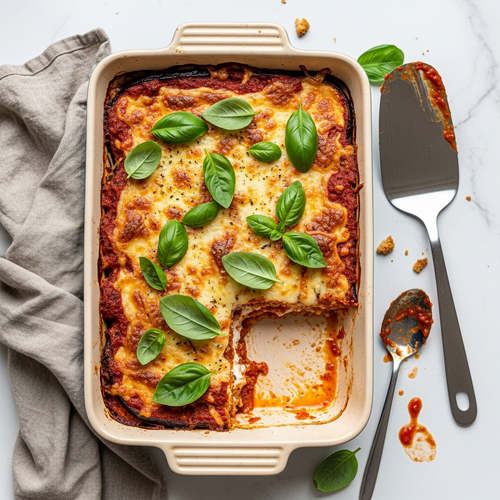
Description: A macro-friendly, baked eggplant parmesan that’s high in protein and flavor but low in calories. This recipe replaces traditional high-fat ingredients with smart swaps like Greek yogurt and baked panko-crusted eggplant for a satisfying meal that supports fat loss goals.
Prep Time: 30 minutes | Cook Time: 55 minutes
Servings: 6
Macros per Serving | Calories: 315 | Protein: 25g | Fat: 13g | Carbohydrates: 26g
Ingredients
- 2 medium eggplants, sliced into ½-inch thick rounds
- 1 teaspoon salt
- 1 cup plain non-fat Greek yogurt or low-fat cottage cheese
- 1/4 cup chopped fresh basil, plus more for garnish
- 1 tablespoon fresh oregano, chopped (or 1 teaspoon dried)
- 2 cloves garlic, minced
- Black pepper to taste
- 1 cup whole wheat panko breadcrumbs
- 1/2 cup grated Parmesan cheese, divided
- 1 large egg, beaten
- 2 cups no-sugar-added marinara sauce
- 1 ½ cups shredded part-skim mozzarella cheese
Instructions
- Preheat oven to 400°F (200°C). Line two baking sheets with parchment paper.
- Salt eggplant slices and let sit for 20-30 minutes, then pat dry.
- In a bowl, combine Greek yogurt, basil, oregano, garlic, and pepper.
- Set up a breading station with beaten egg in one dish and panko/Parmesan mix in another.
- Dip eggplant in egg, then panko mix, and arrange on baking sheets.
- Bake for 20-25 minutes, flipping halfway, until golden and crisp.
- Reduce oven to 375°F (190°C). Spread a thin layer of marinara in a 9×13-inch dish.
- Layer half the eggplant, all the yogurt mixture, half the remaining sauce, and half the mozzarella.
- Add the remaining eggplant, sauce, mozzarella, and Parmesan.
- Bake for 25-30 minutes until bubbly. Let rest 10 minutes before serving.
Notes
For best results, do not skip salting the eggplant; it’s crucial for removing moisture and preventing a watery dish. Letting the final casserole rest for 10 minutes is also key for allowing it to set properly before slicing.
FAQs About Eggplant Parmesan For Weight Loss
Here are some straightforward answers to the most common questions I receive about this eggplant parmesan recipe.
Can you really eat eggplant parmesan and still lose weight?
Yes, absolutely. Weight loss comes down to being in a consistent calorie deficit, which means you burn more calories than you consume. The problem with traditional eggplant parmesan is that its high calorie and fat content makes it very difficult to fit into that deficit without eating tiny, unsatisfying portions.
This recipe is engineered specifically for weight loss. By baking the eggplant, we eliminate hundreds of calories from frying oil. By using Greek yogurt and part-skim cheese, we lower the fat while dramatically increasing the protein. Protein and fiber are your two best friends for fat loss because they keep you feeling full and satisfied. A serving of this dish is balanced, delicious, and helps you hit your protein goals, making it much easier to stick to your calorie target without feeling deprived. It’s a perfect example of eating smarter, not less.
Is this baked eggplant parmesan as good as fried?
This is a question I get all the time, and I believe in being direct and honest. It is not the same as fried, and that’s a good thing. Fried eggplant parmesan has a very specific, heavy, oil-rich flavor and texture. It’s an indulgence. This baked version is different. It’s lighter, cleaner, and you can taste the actual ingredients—the sweet marinara, the fresh herbs, the tender eggplant—without them being masked by grease.
You still get a wonderfully crispy texture from the baked panko coating, but it’s a different kind of crispiness. It’s satisfying and delicious in its own right. Think of it this way: the fried version is a once-in-a-while restaurant treat, while this baked eggplant parmesan is the version you can make at home every few weeks, feel great after eating, and have it actively support your fitness goals. It trades heaviness for sustainability.
Why is my eggplant parmesan watery?
This is the most common pitfall with eggplant parmesan, but it’s thankfully easy to avoid. There are two primary culprits. The first and most important is not properly “sweating” the eggplant. Eggplant is like a sponge full of water. Sprinkling it with salt and letting it sit for at least 20-30 minutes draws a significant amount of that moisture out. You have to be patient and then pat it completely dry with paper towels afterward. If you skip this step, all that water will release into your casserole while it bakes, creating a soupy mess.
The second reason is not letting the finished dish rest. Just like a lasagna, eggplant parmesan needs about 10 minutes to sit after it comes out of the oven. This allows the layers to set and the sauce to thicken up slightly. If you cut into it the second it comes out, everything will slide apart and seem watery. So, be patient with both the prep and the finish, and you’ll have a perfect, sliceable casserole every time.
Can I make this eggplant parmesan recipe ahead of time?
Absolutely, and doing so is a fantastic strategy for managing your time and energy, especially with ADHD. Planning ahead can prevent the “what’s for dinner” panic that leads to ordering takeout. You have two excellent options for making this dish in advance. The first is to assemble the entire casserole without baking it. Follow all the steps right up until it goes in the oven, then cover it tightly and refrigerate for up to 24 hours. When you’re ready to eat, just pop it in the oven. You may need to add 10-15 minutes to the baking time since it’s starting from cold.
Your second option is to bake the entire dish as directed, let it cool completely, and then store it in the fridge. This is my preferred method because then dinner is just a simple reheat away. This approach breaks the cooking process into manageable chunks, which can feel much less overwhelming than doing it all at once on a busy weeknight.
What’s the best way to slice eggplant for eggplant parmesan?
Consistency is the goal when slicing your eggplant. You want all the pieces to be a similar thickness so they cook evenly. I recommend slicing them into rounds about ½-inch thick. If the slices are too thin, they can become flimsy and fall apart during the breading and layering process. If they are too thick, they might not become fully tender in the center by the time the breading is golden and crisp.
A good, sharp chef’s knife is all you really need. Take your time to make even cuts. Some people like to use a mandoline for perfectly uniform slices, which is a great tool if you are comfortable and careful using one. But don’t feel like you need special equipment. Just remember our principle: we prefer brutally practical systems over perfection. As long as your slices are in the same general ballpark of thickness, your eggplant parmesan will turn out great.
Try These High-Protein Recipes Next
If you loved this simple and satisfying recipe, here are a few other high-protein comfort food classics you should try next.
- Healthy Baked Chicken Parmesan: A similar vibe to this recipe, but with juicy chicken breast. It’s another fantastic macro-friendly take on an Italian-American favorite.
- High-Protein Lasagna Recipe: This recipe uses clever swaps to pack over 40 grams of protein into a single serving of cheesy, delicious lasagna.
- Easy Chicken Parmesan: Another great take on the classic chicken parm, this one focuses on being weeknight-friendly and super easy to prepare.
These recipes prove you can enjoy your favorite foods while building a fit, sustainable lifestyle.