
Mornings used to be the exact place where my fitness goals went to die. When I started my weight loss journey, I was unmedicated, raising my kid as a single dad, and completely overwhelmed by executive dysfunction before 9:00 AM. Staring into a bare fridge while trying to make a good choice almost always ended with me grabbing something fast and calorie-dense just to survive the morning rush.
I realized quickly that if I wanted to lose 65 to 70 pounds and keep it off, breakfast had to become entirely frictionless. That was the moment this high-protein breakfast casserole entered my life. I needed a meal that required zero morning decisions, packed enough real protein to shut down mid-afternoon snack cravings, and tasted good enough that my brain actually looked forward to eating it.
Over the years, this recipe evolved from a plain egg bake into my ultimate fat loss staple. It delivers the warm, comforting texture of classic breakfast bakes without the heavy cream or high-fat meats that quietly wreck your calorie budget. It completely changed my mornings, and it will do the exact same for yours.
Skip to My Flexible Diet Recipe!
Why Breakfast Casserole Is Great For Fat Loss
Fat loss comes down to two big priorities: protecting your lean muscle with protein and managing your hunger so you do not crash later in the day. Traditional casseroles are packed with heavy pork sausage, frozen hash browns, and cups of cheddar cheese. Those dishes are delicious, but they eat up most of your daily calories before noon without keeping you full for very long.
This recipe flips the script entirely. By using 99% lean ground turkey seasoned with sage and fennel, we match the savory punch of breakfast sausage without the massive calorie hit. Liquid egg whites and low-fat cottage cheese build a thick, velvety custard base that delivers an incredible protein-to-calorie ratio. You get over 30 grams of protein per slice for fewer than 220 calories, which keeps your blood sugar rock solid throughout the morning.
Consistency beats intensity every single time. Having a pre-portioned, nutrient-dense meal sitting in your fridge removes the daily friction of tracking and cooking from scratch. You start your day with a massive nutritional win, which prevents the afternoon dopamine hunt in the pantry and makes staying in a deficit feel remarkably easy.
Ingredients You’ll Need for Breakfast Casserole
Here is everything you need to build this high-protein, satisfying dish. Every ingredient serves a direct nutritional and culinary purpose without adding unnecessary prep work.
- Olive oil cooking spray
- 1 lb (16 oz) 99% lean ground turkey breast
- 1 tsp dried sage
- 1/2 tsp crushed fennel seeds
- 1/2 tsp smoked paprika
- 1/2 tsp garlic powder
- 1/2 tsp onion powder
- 3/4 tsp kosher salt, divided
- 1/4 tsp crushed red pepper flakes
- 1 medium red bell pepper, finely diced
- 1 small yellow onion, finely diced
- 4 cups fresh baby spinach, roughly chopped
- 1 cup low-fat (2%) or fat-free cottage cheese
- 2 large whole eggs
- 2 cups (16 oz) liquid egg whites
- 1 tbsp Dijon mustard
- 1/2 tsp freshly cracked black pepper
- 3/4 cup (3 oz) finely shredded sharp reduced-fat cheddar cheese, divided
The secret twist in this recipe is blending the cottage cheese directly into the whole eggs and egg whites. Liquid egg whites on their own can turn rubbery and watery when baked in a deep dish. Blending them with cottage cheese creates a creamy, velvety texture that mimics heavy cream while spiking the total protein content significantly.
Ingredient quality matters most with the cheese and the seasonings. Buy a block of sharp reduced-fat cheddar and grate it yourself if you have the time, as pre-shredded cheese is coated in starch that prevents smooth melting. Additionally, make sure your dried sage and fennel seeds are fresh. Those two herbs do the heavy lifting to turn plain turkey into authentic, aromatic breakfast sausage.
How To Make Breakfast Casserole (Step-By-Step)
Follow these detailed steps to ensure your casserole turns out golden, fluffy, and fully set every single time.
Step 1: Prep the Oven and Pan
Preheat your oven to 375°F (190°C) and lightly grease a standard 9×13-inch baking dish with your olive oil cooking spray. Using an oven thermometer is a smart move here, because an oven running too hot can cause the eggs to puff rapidly and then collapse into a watery texture. Set the dish aside where it is ready to receive your cooked filling.
Step 2: Brown and Season the Turkey
Heat a large nonstick skillet over medium-high heat. Add the lean ground turkey along with the dried sage, crushed fennel seeds, smoked paprika, garlic powder, onion powder, 1/2 teaspoon of kosher salt, and red pepper flakes. Cook for 6 to 8 minutes, using a sturdy spatula or meat masher to break the turkey down into fine, even crumbles until no pink remains.
Because 99% lean turkey has virtually no fat, keep it moving so it does not scorch against the pan. The fragrant blend of sage and fennel will quickly fill your kitchen, providing that signature breakfast sausage aroma without grease pooling in the bottom of the pan.
Step 3: Sauté the Aromatics and Greens
Toss the diced red bell pepper and yellow onion directly into the skillet with the cooked turkey. Sauté for 4 to 5 minutes until the vegetables soften and pick up the seasonings from the pan. Add the chopped baby spinach and stir constantly for about 2 minutes until it wilts down completely.
A common mistake is rushing this step. Make sure the moisture released by the spinach and vegetables evaporates completely in the pan before taking it off the heat. Spread the finished mixture evenly across the base of your prepared 9×13 baking dish.
Step 4: Blend the Protein Custard
Place the cottage cheese, whole eggs, liquid egg whites, Dijon mustard, freshly cracked black pepper, and the remaining 1/4 teaspoon of kosher salt into a blender. Blend on high speed for 30 to 45 seconds until the mixture is light, frothy, and completely smooth with zero remaining curds. The Dijon mustard acts as a flavor enhancer here, adding rich depth without making the eggs taste like mustard.
Step 5: Assemble and Top
Stir half of the shredded cheddar cheese directly into the blender pitcher with the egg custard. Pour the liquid evenly over the turkey and vegetable layer in the baking dish. Gently shake the dish side to side, or lightly press the meat down with a spatula so the liquid settles all the way to the bottom. Sprinkle the remaining cheddar cheese evenly across the top surface.
Step 6: Bake and Rest
Slide the baking dish onto the center rack of your oven and bake uncovered for 35 to 40 minutes. You will know it is done when the edges are lightly golden, the center is set without an aggressive jiggle, and a knife inserted into the middle comes out clean. Remove the dish and let it rest on the counter for 10 full minutes before cutting. Slicing too early causes the squares to fall apart instead of holding neat portions.
How To Serve Breakfast Casserole (ADHD-Friendly)
Eating well with ADHD requires eliminating as many barriers between you and your meal as possible. Once this bake is done, portion the entire dish into six distinct squares right away. Do not leave the full casserole intact in the fridge, or you will find yourself avoiding the task of cutting it on busy mornings.
- Pair a warm slice with a handful of fresh berries or a sliced apple for an instant boost of dietary fiber and micronutrients.
- Wrap a reheated slice into a low-carb tortilla with a tablespoon of fresh salsa for an ultra-fast, mess-free breakfast burrito you can eat in the car.
- Top your square with hot sauce, pickled jalapeños, or two tablespoons of guacamole to add rich flavor without adding empty calories.
- Serve a warm slice over a handful of fresh arugula; the residual heat from the eggs wilts the greens slightly and creates an instant savory breakfast bowl.
When medication suppresses your appetite early in the day, sit down with just half a slice and a glass of water. Getting that initial hit of solid protein into your system stabilizes your energy and protects against the severe afternoon rebound hunger that leads to unplanned bingeing.
How To Store, Reheat, and Reuse Breakfast Casserole
Meal prep is only as good as its storage system. If food becomes soggy, weirdly textured, or difficult to reheat, it ends up rotting in the back of the fridge. Proper cooling and airtight storage keep this recipe tasting freshly baked all week long.
Allow the bake to reach room temperature before packaging so trapped steam does not turn the top layer soggy. You can keep your portions fresh and ready using these simple methods:
- Fridge Storage: Store the sliced squares in an airtight container separated by sheets of parchment paper for up to 4 days.
- Freezer Storage: Wrap individual slices tightly in plastic wrap, then place them inside a heavy-duty freezer bag for up to 2 months.
- Microwave Reheating: Microwave an individual slice on high for 60 to 90 seconds on a paper towel to absorb any surface moisture.
- Air Fryer Reheating: Pop a refrigerated slice into the air fryer at 350°F for 4 to 5 minutes to restore the crispy, cheesy edges.
If you get bored of eating the same thing three days in a row, reuse the leftover squares creatively. Chop a cold slice into small cubes and toss it into a hot skillet with leftover roasted potatoes for an incredible breakfast hash that comes together in under two minutes.
Easy Swaps & Variations for Breakfast Casserole
One of the best features of this recipe is its adaptability to whatever ingredients you have sitting in your pantry or fridge. You do not need to make an extra trip to the grocery store if you are missing an item or two.
Use these reliable substitutions to tailor the dish to your tastes, budget, or dietary needs:
- Swap the Meat: Use 96/4 extra-lean ground beef, lean ground chicken, or diced extra-lean Canadian bacon in place of the ground turkey.
- Change the Cheese: Substitute pepper jack for sharp cheddar to bring extra heat, or use part-skim mozzarella for a milder, stretchier top layer.
- Vegetable Upgrades: Add sautéed mushrooms, diced zucchini, or chopped kale directly to the skillet along with the bell peppers.
- Budget Shortcut: Use a bag of frozen diced onions and peppers instead of chopping fresh produce to cut down your active prep time to practically zero.
Keep your base proportions of eggs, egg whites, and cottage cheese identical even when changing fillings. That liquid ratio provides the exact structure required to keep the bake firm, sliceable, and high in lean protein.
High-Protein Turkey Sausage Breakfast Casserole
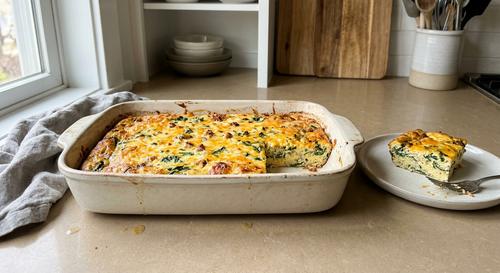
Description: A savory, high-protein meal prep dish packed with homemade seasoned turkey sausage, tender vegetables, and a creamy blended egg and cottage cheese custard.
Prep Time: 15 minutes | Cook Time: 40 minutes
Servings: 6
Macros per Serving | Calories: 215 | Protein: 34g | Fat: 5g | Carbohydrates: 6g
Ingredients
- Olive oil cooking spray
- 1 lb (16 oz) 99% lean ground turkey breast
- 1 tsp dried sage
- 1/2 tsp crushed fennel seeds
- 1/2 tsp smoked paprika
- 1/2 tsp garlic powder
- 1/2 tsp onion powder
- 3/4 tsp kosher salt, divided
- 1/4 tsp crushed red pepper flakes
- 1 medium red bell pepper, finely diced
- 1 small yellow onion, finely diced
- 4 cups fresh baby spinach, roughly chopped
- 1 cup low-fat (2%) or fat-free cottage cheese
- 2 large whole eggs
- 2 cups (16 oz) liquid egg whites
- 1 tbsp Dijon mustard
- 1/2 tsp freshly cracked black pepper
- 3/4 cup (3 oz) finely shredded sharp reduced-fat cheddar cheese, divided
Instructions
- Preheat your oven to 375°F (190°C) and grease a 9×13-inch baking dish with cooking spray.
- Cook the lean ground turkey in a nonstick skillet with sage, fennel, paprika, garlic powder, onion powder, 1/2 tsp salt, and pepper flakes until fully browned.
- Add diced bell pepper and onion; sauté 4 to 5 minutes. Stir in the spinach until fully wilted, then spread everything evenly into the baking dish.
- Blend the cottage cheese, whole eggs, egg whites, Dijon mustard, black pepper, and remaining 1/4 tsp salt until light and frothy.
- Stir half the cheddar into the egg mix, pour over the meat and vegetables, and top with the remaining cheese.
- Bake uncovered for 35 to 40 minutes until set in the center, then rest 10 minutes before slicing into 6 squares.
Notes
Make sure all excess liquid from the spinach cooks off in the skillet to avoid a watery base. Let the casserole rest a full 10 minutes after baking so the slices hold their shape cleanly.
FAQs About Breakfast Casserole For Weight Loss
Here are some straightforward answers to the most common questions I receive about this breakfast casserole recipe.
Can I make this breakfast casserole ahead of time without baking it?
Yes, you can prep the entire dish the evening before, which is a fantastic strategy if you want a warm breakfast with zero morning effort. Cook the turkey and vegetables, place them in the baking dish, blend the egg custard, and pour it over the top. Cover the pan tightly with foil and leave it in your refrigerator overnight.
When you are ready to bake, take the dish out of the fridge while the oven preheats to take the chill off the glass. You will likely need to add an extra 5 to 7 minutes to the total bake time because the ingredients start cold. Watch for the center to become firm and slightly domed before pulling it out.
Why did my breakfast casserole turn out watery?
Watery egg bakes are almost always caused by two sneaky issues: undercooked vegetables or overcooking the eggs. Spinach, onions, and bell peppers carry a massive amount of water. If you do not cook them long enough in the skillet for that moisture to evaporate, it gets released directly into your custard while it bakes in the oven.
The second culprit is heat. If the oven runs too hot, the proteins in the egg whites tighten too quickly and squeeze out their internal water. Make sure to bake at 375°F and pull the dish the moment a knife inserted into the middle comes out clean without letting it bake dry.
Can I use whole eggs instead of liquid egg whites in this breakfast casserole?
You can substitute whole eggs, but it significantly changes your final macronutrients. To replace the 2 cups of liquid egg whites, you will need approximately 8 to 9 large whole eggs. This adjustment creates a richer, denser texture that tastes delicious.
Keep in mind that making this swap adds roughly 40 grams of additional dietary fat to the entire pan. If your current calorie budget allows for higher fats, it works wonderfully. If maximum fat loss and high protein efficiency are your main targets, sticking with the blended egg white and cottage cheese method is the better play.
Will my breakfast casserole taste like cottage cheese?
Not at all. Blending the cottage cheese with the whole eggs and egg whites completely shears the curds, breaking them down into a uniform, silky liquid. Once baked, the curds do not reform. The cottage cheese simply functions as a rich, creamy binder similar to whole milk or cream.
It adds a subtle, pleasant tang that cuts through the savory turkey sausage while bumping up the total protein content. Even people who despise the texture of raw cottage cheese devour this dish without ever realizing it is the secret primary ingredient.
How do I know when my breakfast casserole is completely cooked through?
The simplest way to check for doneness is the classic knife test. Insert a thin paring knife straight into the center of the bake; it should slide out clean without any wet egg liquid coating the blade. The top surface should look matte rather than glossy, and the edges should be slightly puffed and golden brown.
If you have an instant-read meat thermometer, you can take out all the guesswork. Insert the probe into the dead center of the casserole; once it reads 160°F (71°C), the eggs are safely cooked and fully set. Pull it immediately to keep the texture soft and tender.
Try These High-Protein Recipes Next
If you love having high-protein, hands-off meals ready in your fridge, here are three other fantastic recipes you should make next:
- High-Protein Crustless Quiche Recipe: A lighter take on classic bakery quiche that pairs whole eggs with lean ham and tender garden vegetables.
- Easy Stovetop-to-Oven Frittata Recipe: A rapid one-skillet meal that turns leftover roasted vegetables and lean meats into an incredible post-workout dinner.
- Breakfast Egg Bake Casserole from This Gal Cooks: A delicious, comforting family-style breakfast bake featuring classic morning flavors and simple pantry ingredients.
Add these reliable recipes into your weekly rotation to keep your fat loss journey simple, structured, and completely delicious.