
For most of my life, I thought scallops were a fancy, complicated restaurant food. Something you order on a special occasion, not something a busy single dad like me could ever cook on a Tuesday night. They seemed intimidating, easy to mess up, and probably expensive. During my 65-pound weight loss journey, I had to rethink a lot of my old food beliefs. That’s when I discovered the truth about scallops.
They are one of the fastest, easiest, and most satisfying sources of lean protein you can make. Seriously. They cook in about four minutes flat. This changed everything for me. It meant I could have a meal that felt incredibly luxurious and satisfying, but was actually helping me hit my fat loss goals without spending an hour in the kitchen.
This recipe is the result of that discovery. It’s brutally simple, packed with flavor, and designed for those days when your ADHD brain has zero energy for complex steps. It proves that you don’t need to eat boring food to get fit. You just need a system that works for you.
Skip to My Flexibe Diet Recipe!
Why Pan-Seared Scallops Are Great For Fat Loss
When we’re building a sustainable fat loss plan, especially with an ADHD brain, the food has to check a few critical boxes. It needs to be high in protein, easy to make, and taste amazing. This pan-seared scallops recipe hits all three perfectly.
First, let’s talk protein. Scallops are an incredibly lean protein source. A single serving of this recipe packs a serious protein punch, which is the number one rule in our playbook. Protein keeps you feeling full and satisfied for hours, which is your best defense against the random, dopamine-seeking cravings that can derail your progress. When you’re full, you’re less likely to wander into the pantry looking for snacks.
Second, this meal is low in calories but high in volume and nutrients. We’re using a ton of spinach and cherry tomatoes, which add fiber, vitamins, and bulk to the meal without adding a lot of calories. This helps trick your brain and stomach into feeling like you’re eating a huge, hearty meal. You get to eat a full plate of food, which is psychologically way more satisfying than a tiny portion of something dense.
Finally, it feels like a cheat meal without being one. The rich flavor from the garlic, the slight acidity from the wine and lemon, and the perfectly seared scallops feel indulgent. This is key for long-term consistency. When your “diet” food tastes this good, you don’t feel deprived. That prevents the all-or-nothing thinking that often leads to giving up entirely. This isn’t a restrictive meal; it’s a powerful tool for your fitness journey.
Ingredients You’ll Need for Pan-Seared Scallops
One of the best parts of this recipe is its simple, fresh ingredient list. There’s nothing complicated here, and it all comes together to create a flavor that’s way more than the sum of its parts. Here’s exactly what you’ll need.
- 1.5 lbs large sea scallops, patted completely dry
- 1 tbsp extra virgin olive oil
- 2 cloves garlic, minced
- 1/4 tsp red pepper flakes (optional)
- 1 cup cherry tomatoes, halved
- 2 cups fresh spinach
- 1/4 cup dry white wine or low-sodium chicken broth
- 2 tbsp fresh parsley, chopped
- 1 tbsp fresh lemon juice
- Salt and freshly ground black pepper to taste
The star ingredient here is obviously the scallops. The quality of your scallops makes a huge difference. Look for large “sea scallops,” not the smaller bay scallops. Whenever possible, buy “dry-packed” scallops. They haven’t been treated with a phosphate solution, which means they won’t release a ton of water in the pan. This is the secret to getting that perfect, golden-brown restaurant sear. Wet-packed scallops will steam instead of sear, leaving you with pale, rubbery seafood. If you can only find frozen, that’s totally fine, just make sure to thaw them completely and pat them extra dry.
The key ingredient that gives this recipe its restaurant-quality twist is the dry white wine or chicken broth. This is used to “deglaze” the pan. After you sear the scallops, little browned bits of flavor get stuck to the bottom of the skillet. Pouring in the liquid and scraping those bits up creates an instant, incredibly flavorful sauce. It’s a simple technique that makes a massive impact.
How To Make Pan-Seared Scallops (Step-By-Step)
This entire process moves fast, which is perfect for an ADHD brain. The key is to have all your ingredients prepped and ready to go before you even turn on the stove. This is called “mise en place,” and it’s a lifesaver for preventing kitchen chaos. Let’s get to it.
Step 1: Prep and Season the Scallops
This is the most important step for getting a perfect sear. Take your scallops and place them on a layer of paper towels. Use more paper towels to pat the tops until they are as dry as you can possibly get them. Moisture is the enemy of a golden-brown crust. Season both sides generously with salt and pepper.
ADHD Tip: Do this first. Lay the scallops out on the paper towels and let them sit while you chop your garlic, halve your tomatoes, and measure everything else out. The extra few minutes of air-drying time makes a big difference.
Step 2: Sear the Scallops
Get a large non-stick or cast-iron skillet and heat your olive oil over medium-high heat. The pan needs to be hot. You’ll know it’s ready when the oil shimmers slightly. Carefully place the scallops in the skillet, making sure not to overcrowd the pan. They need space. Cook them for 1-2 minutes without moving them. Let that crust form. Then flip and cook for another 1-2 minutes on the other side. They should be golden brown and just opaque. Immediately remove them to a plate.
Step 3: Sauté the Aromatics and Tomatoes
Reduce the heat to medium. In the same skillet, add your minced garlic and red pepper flakes if you’re using them. Stir for about 30 seconds until you can smell the garlic. Be careful not to burn it. Add the halved cherry tomatoes and cook for a couple of minutes until they start to soften and release some of their juices.
Step 4: Deglaze the Pan and Wilt the Spinach
Pour in the white wine or chicken broth. Use a wooden spoon or spatula to scrape up all those delicious browned bits from the bottom of the pan. This is where the flavor is! Let the liquid simmer for about a minute. Now, add the spinach. It will look like a mountain, but it will wilt down in a minute or two. Just keep stirring gently until it’s all wilted.
Step 5: Finish and Serve
Turn off the heat. Return the seared scallops to the skillet along with any juices that have collected on the plate. Add the fresh parsley and a squeeze of fresh lemon juice. Give it all a gentle toss to combine. Taste and add any more salt or pepper if needed, then serve immediately.
How To Serve Pan-Seared Scallops (ADHD-Friendly)
A beautiful pan of scallops is great, but it needs to be part of a complete meal. For those of us with ADHD, the idea of making complicated side dishes can be enough to make us order a pizza instead. So, we keep it brutally simple. The goal is to get a balanced, satisfying plate of food with minimal extra steps or decision-making.
This recipe is already packed with protein and veggies, so you just need to add a smart carbohydrate source to make it a perfectly balanced meal. Don’t overthink it. Convenience is our friend here, and using store-bought shortcuts is a smart strategy, not a failure.
Here are some of my go-to, low-effort ways to serve these scallops:
- Microwavable Rice or Quinoa: These are a game-changer. A 90-second pouch of brown rice, quinoa, or a blend is the perfect base. Spoon the scallops and all that delicious pan sauce right over the top. Zero extra cooking required.
- Zucchini Noodles or Spaghetti Squash: For a lower-carb option, use pre-spiralized zucchini noodles (zoodles) or microwavable spaghetti squash. You can toss the zoodles right into the pan with the spinach for the last minute of cooking to warm them through.
- Crusty Bread: Sometimes, the best side dish is a good piece of crusty bread. It’s perfect for sopping up every last bit of that garlic and white wine pan sauce. It feels indulgent and satisfying.
- Bagged Salad: The simplest side of all. Open a bag of your favorite salad mix, drizzle with a little vinaigrette, and you’re done. You get extra greens and fiber with literally ten seconds of effort.
Remember, consistency beats intensity. A simple, well-rounded meal you can actually make on a busy night is infinitely better than a gourmet plan that never leaves the page. Use these shortcuts to build a sustainable habit.
How To Store, Reheat, and Reuse Pan-Seared Scallops
Let’s be honest, seafood leftovers can be tricky. Scallops, in particular, are best enjoyed fresh right out of the pan. However, if you do have leftovers, you don’t want them to go to waste. With the right approach, you can still enjoy them the next day without them turning into rubbery disappointments.
The key is proper storage and gentle reheating. Rushing the process or using the wrong method is what ruins them. Don’t let the fear of bad leftovers stop you from making a full batch. Cooking once and eating twice is a core principle for a reason.
Here’s how to handle your leftover scallops:
- Storage: Let the scallops and sauce cool down slightly, then transfer them to an airtight container. Don’t leave them sitting out for too long. They should be stored in the refrigerator and are best eaten within one to two days at the most.
- Reheating: Do not, under any circumstances, use the microwave. This is the fastest way to overcook them into oblivion. The best method is to gently reheat them in a non-stick skillet over low heat. Add the scallops, sauce, and veggies to the pan and let them warm up slowly, stirring occasionally, just until they are heated through. This should only take a few minutes.
- Reusing Cold: This is my favorite ADHD-friendly hack for scallop leftovers. Don’t reheat them at all. You can chop up the cold scallops and toss them into a salad for a quick, high-protein lunch the next day. The flavors are still great, and you completely avoid the risk of overcooking them during a reheat.
Think of leftovers as a gift to your future self. By handling them correctly, you’re setting yourself up for another quick and healthy meal, saving you time and energy later in the week.
Easy Swaps & Variations for Pan-Seared Scallops
One of the core principles at ADHD FIT is flexibility. A recipe is a template, not a strict set of rules you have to follow perfectly. Life is messy, and sometimes you don’t have the exact ingredients on hand. That’s okay. This pan-seared scallops recipe is incredibly easy to adapt based on what you have, what you like, or your dietary needs.
Don’t be afraid to experiment. The goal is to create a meal you love that also supports your goals. Making smart swaps helps you use up what’s in your fridge, save money, and avoid an extra trip to the store, which can be a huge barrier on low-motivation days.
Here are a few simple swaps and variations you can try:
- Swap the Protein: If you don’t have scallops or want to change things up, this recipe works perfectly with large shrimp. Just follow the same searing process, cooking them for about 1-2 minutes per side until they are pink and opaque.
- Change the Veggies: Not a fan of spinach or tomatoes? No problem. You can easily substitute other quick-cooking vegetables. Try adding sliced mushrooms, chopped asparagus, or red bell peppers. Sauté them after the garlic until they’re tender-crisp before moving on to the deglazing step.
- Use Different Herbs: If you don’t have fresh parsley, you can use a teaspoon of dried parsley instead. Fresh basil or a little bit of fresh dill would also be delicious and completely change the flavor profile of the dish.
- Make it Creamy: For a more indulgent version, you can stir in a splash of heavy cream or full-fat coconut milk at the very end after you’ve returned the scallops to the pan. Let it bubble for just a moment to create a richer sauce. Just be mindful that this will increase the fat and calorie content.
Use these ideas as a starting point. The best recipe is the one that you’ll actually cook and enjoy consistently. Give yourself permission to make it your own.
Quick Garlic & Herb Pan-Seared Scallops
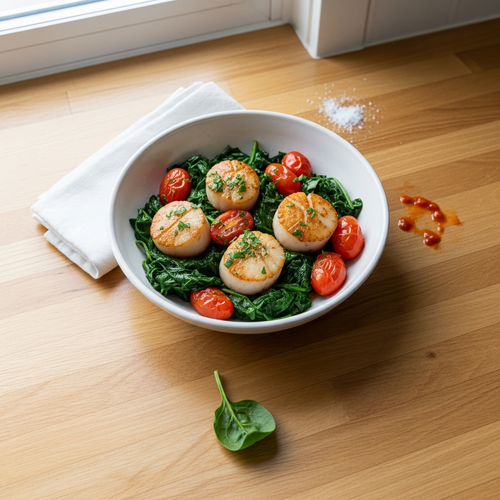
Description: A lightning-fast, restaurant-quality scallop dish that’s perfect for a high-protein, low-calorie meal. Seared scallops are tossed in a simple garlic, tomato, and white wine sauce for a delicious meal that supports fat loss and is ready in 15 minutes.
Prep Time: 5 minutes | Cook Time: 10 minutes
Servings: 4
Macros per Serving | Calories: 295 | Protein: 35g | Fat: 8g | Carbohydrates: 9g
Ingredients
- 1.5 lbs large sea scallops, patted completely dry
- 1 tbsp extra virgin olive oil
- 2 cloves garlic, minced
- 1/4 tsp red pepper flakes (optional)
- 1 cup cherry tomatoes, halved
- 2 cups fresh spinach
- 1/4 cup dry white wine or low-sodium chicken broth
- 2 tbsp fresh parsley, chopped
- 1 tbsp fresh lemon juice
- Salt and freshly ground black pepper to taste
Instructions
- Pat scallops completely dry and season both sides with salt and pepper.
- Heat olive oil in a large skillet over medium-high heat. Sear scallops for 1-2 minutes per side until a golden-brown crust forms. Remove from skillet.
- Reduce heat to medium, add garlic and red pepper flakes, and sauté for 30 seconds.
- Add cherry tomatoes and cook for 2-3 minutes until they soften.
- Pour in white wine or broth to deglaze the pan, scraping up any browned bits.
- Add spinach and cook until wilted, about 1-2 minutes.
- Return scallops to the skillet. Stir in fresh parsley and lemon juice. Serve immediately.
Notes
For the best results, use “dry-packed” scallops if you can find them. Do not overcrowd the pan when searing, cook in batches if necessary.
FAQs About Pan-Seared Scallops For Weight Loss
Here are some straightforward answers to the most common questions I receive about this scallops recipe.
How do I know when my pan-seared scallops are cooked perfectly?
This is the number one question people have because scallops go from perfect to rubbery in the blink of an eye. The key is to use multiple senses. First, look for visual cues. The outside should have a beautiful, deep golden-brown crust from the sear. The sides of the scallop should turn from translucent to opaque, but the very center might still look just a tiny bit translucent. This is a good sign, as they will continue to cook from residual heat after you take them out of the pan.
The second cue is touch. A perfectly cooked scallop will feel firm to the touch, but with a slight springiness. If it feels soft and mushy, it needs more time. If it feels hard and tight like a pencil eraser, it’s unfortunately overcooked. The ideal cooking time is very short, typically 1.5 to 2 minutes per side for large sea scallops in a properly heated pan. Trust the timer, look for the visual cues, and pull them off the heat a moment before you think they’re done.
Can I use frozen scallops for this recipe?
Yes, absolutely. Using frozen protein is a fantastic strategy for anyone, especially those of us with ADHD. It means you always have a healthy option on hand and don’t have to worry about fresh seafood going bad before you get a chance to cook it. The process is almost identical, but the thawing step is critical.
The best way to thaw frozen scallops is to place them in a colander set over a bowl in the refrigerator overnight. This allows them to thaw slowly and lets any excess water drain away. If you’re in a hurry, you can place them in a sealed bag and submerge them in a bowl of cold water for about 30-60 minutes. Never use warm water or the microwave. Once thawed, the most important step is to pat them extremely dry with paper towels, just as you would with fresh scallops. Frozen seafood can retain more water, so be extra thorough with this step to ensure you get a great sear.
What is the difference between sea scallops and bay scallops?
The main differences are size, flavor, and texture. Sea scallops are the large, thick scallops you typically see in restaurants, often about 1.5 inches in diameter. They have a firm, meaty texture and a sweet, slightly briny flavor. This recipe is specifically designed for sea scallops because their size allows you to get a great crust on the outside while keeping the inside tender and juicy.
Bay scallops are much smaller, sometimes no bigger than a dime. They are generally more tender and have a sweeter, more delicate flavor. While you could technically use them in this recipe, you would need to adjust the cooking method significantly. They cook in a fraction of the time, often needing just 30-60 seconds per side. It’s very easy to overcook them, so if you use bay scallops, be prepared to work very quickly.
Why are my scallops sticking to the pan?
This is a common and frustrating problem, but it’s usually caused by one of a few simple issues. The most likely culprit is that your pan wasn’t hot enough when you added the scallops. The skillet needs to be properly preheated over medium-high heat so that the scallops begin to sear the instant they make contact. This immediate crust formation is what prevents sticking.
Another reason could be moisture. If your scallops are not patted completely dry, the water will create steam, which prevents a crust from forming and can cause them to stick. The third reason is impatience. If you try to flip the scallops too early, before they’ve had a chance to develop that golden-brown crust, they won’t release naturally from the pan. Give them the full 1-2 minutes on the first side before you even try to move them. A good quality non-stick or well-seasoned cast-iron skillet will also make a huge difference.
Are scallops a healthy choice for weight loss?
Scallops are an outstanding choice for weight loss and a healthy lifestyle. They are one of the leanest sources of high-quality protein available. Protein is critical for fat loss because it is highly satiating, meaning it helps you feel full and satisfied, which reduces overall calorie intake and crushes cravings. It also helps preserve muscle mass while you are in a calorie deficit, which is essential for maintaining a healthy metabolism.
Beyond being high in protein and low in calories and fat, scallops are also packed with important nutrients. They are an excellent source of vitamin B12, which is vital for energy and brain function, as well as minerals like zinc, selenium, and magnesium. Incorporating foods like scallops into your plan makes weight loss feel sustainable and enjoyable, not restrictive. You get to eat delicious, satisfying food that fuels your body and helps you reach your goals.
Try These High-Protein Recipes Next
If you loved how quick and flavorful this scallop recipe was, here are a few other high-protein meals you should try.
- ADHD-Friendly Shrimp Scampi: A lighter, protein-packed take on the classic dish that’s just as fast and easy to make.
- Healthy Seafood Boil Recipe: All the amazing flavor of a traditional seafood boil, but made simple and healthy for a weeknight meal.
- Scallops with Bacon, Mushrooms, and Chives: An incredibly flavorful recipe that pairs the sweetness of scallops with savory bacon and earthy mushrooms.
Give these a try the next time you need a simple, satisfying meal that keeps you on track.