
Let’s be honest. For a long time, the only asparagus I knew was the sad, mushy stuff that came out of a can. It was a vegetable I actively avoided. When I started my fitness journey and lost over 65 pounds, I knew I had to figure out a way to eat more vegetables. But as a single dad with ADHD, it had to be simple, fast, and taste amazing. Boring, bland food was never going to stick.
That’s where this lemon garlic chicken and asparagus recipe was born. I needed a meal that was packed with protein, didn’t require a dozen pots and pans, and could satisfy my cravings without derailing my progress. It had to be something I could make even on days when my executive function was completely shot.
This isn’t just another chicken recipe. It’s a system. It’s proof that you can eat incredibly well, lose fat, and build a body you’re proud of without complicated rules or boring meals. It works with your ADHD brain, not against it, giving you a delicious win that builds momentum for the next healthy choice.
This is the kind of food that got me results and keeps me lean today.
Skip to My Flexibe Diet Recipe!
Why This Chicken And Asparagus Is Great For Fat Loss
When we talk about fat loss, the conversation has to start with food. It’s 75 percent of the battle. You can’t out-train a bad diet, especially when you’re dealing with the impulse control and dopamine-seeking behavior that comes with ADHD. This chicken and asparagus skillet is designed specifically to support your goals by tackling the biggest challenges head-on.
First, it’s built around protein. With a full pound of chicken breast and a boost from Greek yogurt, this meal is incredibly satiating. Protein is the most thermogenic macronutrient, meaning your body burns more calories just digesting it. More importantly, it keeps you feeling full for hours, which is our number one weapon against mindless snacking and intense cravings.
Second, it manages hunger with fiber and volume. Asparagus is a fantastic low-calorie, high-fiber vegetable. Fiber slows down digestion and helps stabilize blood sugar, preventing the energy crashes that can lead to grabbing the nearest sugary snack. The volume of the chicken and asparagus fills up your stomach, sending signals to your brain that you are satisfied. This is crucial for feeling content in a calorie deficit.
Finally, it’s ridiculously flavorful. A bland diet is a temporary diet. The combination of fresh garlic, zesty lemon, and a creamy sauce makes this meal feel indulgent. When your healthy food tastes this good, you stop feeling deprived. This prevents the “cheat meal” binge cycle. Instead of restricting and then overdoing it, you’re consistently eating delicious, goal-oriented food. That’s how sustainable fat loss is achieved.
Ingredients You’ll Need for Roasted Asparagus
Everything in this recipe is simple and easy to find. We focus on whole foods that deliver big on flavor and nutrition without a complicated shopping list. Remember, convenience is a key principle for making this lifestyle stick, especially on low-motivation days.
The secret weapon that makes this dish special is the plain Greek yogurt. It creates a rich, creamy sauce without the heavy fat and calories of cream or butter. This is a perfect example of a smart swap that enhances flavor while keeping the macros tight and protein high.
Here’s exactly what you’ll need:
- 1 lb boneless, skinless chicken breast, cut into 1-inch cubes
- 1 bunch fresh asparagus, woody ends trimmed
- 1 tbsp olive oil
- 3 cloves garlic, minced
- 1 lemon, zested and juiced
- 1/4 cup low-sodium chicken broth
- 1/4 cup plain Greek yogurt
- 2 tbsp fresh parsley, chopped
- 1/4 tsp red pepper flakes (optional)
- Salt and freshly ground black pepper to taste
A quick note on a few ingredients. Using fresh lemon juice and zest makes a world of difference compared to the bottled stuff. The brightness is what cuts through the richness of the sauce. For the Greek yogurt, I prefer using a full-fat (5%) version. The small increase in fat adds a ton of flavor and creaminess, and it’s less likely to curdle when heated. If you only have non-fat, that’s fine too, just be extra careful when stirring it in. And don’t be afraid to use pre-minced garlic from a jar if that makes your life easier. Brutal practicality always wins.
How To Make Roasted Asparagus (Step-By-Step)
This one-pan meal comes together in under 20 minutes. The key is to have everything prepped before you start cooking, a practice the pros call “mise en place.” For those of us with ADHD, this just means getting all your ducks in a row so you don’t get distracted mid-cook. Chop your chicken, trim your asparagus, and mince your garlic first.
Step 1: Cook The Chicken
Start by seasoning your chicken cubes generously with salt and pepper. Heat the olive oil in a large skillet or pan over medium-high heat. You want the pan to be hot before the chicken goes in to get a nice golden-brown sear. Add the chicken in a single layer and let it cook without moving it for 3-4 minutes. This is how you develop flavor. Then, stir and cook for another 2-3 minutes until it’s cooked through. Use a spatula to remove the chicken and set it aside on a plate.
Step 2: Sauté The Asparagus and Aromatics
Add the trimmed asparagus to the same skillet. There should be enough oil and rendered chicken fat left in the pan. Let the asparagus cook, stirring occasionally, for about 3-5 minutes. You’re looking for it to turn bright green and become “tender-crisp,” which means it’s tender but still has a slight bite. Avoid cooking it until it’s limp. Now, add the minced garlic and optional red pepper flakes. Cook for just another minute until you can smell the garlic. Be careful not to burn it.
Step 3: Create The Sauce
This is where the magic happens. Pour in the chicken broth and fresh lemon juice to deglaze the pan. Use your spatula to scrape up all those delicious browned bits from the bottom of the skillet. That’s pure flavor. Let it simmer for a minute to reduce slightly.
Step 4: Combine and Finish
Turn the heat down to low. Return the cooked chicken to the skillet. Now, add the Greek yogurt, lemon zest, and fresh parsley. It’s important to add the yogurt over low heat to prevent it from curdling. Stir everything together gently until the chicken and asparagus are coated in a beautiful, creamy sauce. Give it a final taste and season with more salt and pepper if needed. Serve it immediately.
How To Serve Roasted Asparagus (ADHD-Friendly)
How you serve this meal can be the difference between a one-time success and a regular part of your rotation. Our goal is to create a flexible system that requires minimal decision-making. We operate on a simple template: Protein + Veggie + Optional Smart Carb. This dish already covers your protein and veggie, so you just need to decide on the carb source, if any.
This flexibility is perfect for an ADHD brain. You don’t have to follow a rigid meal plan. You just follow a simple principle. Some days you might want more carbs for energy, and other days you might want to keep it low-carb. Both work.
Here are some brutally practical ways to serve your Lemon Garlic Chicken and Asparagus:
- With Quick-Cook Grains: Keep packets of 90-second microwave brown rice or quinoa in your pantry. This is a fantastic ADHD hack. It eliminates the time and effort of cooking grains from scratch, a common friction point that can lead to ordering takeout instead.
- Over a Baked Sweet Potato: You can bake a few sweet potatoes in the oven or even the microwave at the beginning of the week. When you’re ready to eat, just split one open and spoon the chicken and asparagus right over the top.
- On Its Own for a Low-Carb Meal: This dish is hearty and satisfying enough to be a complete meal by itself. It’s perfect for days when you’re aiming for a lower carbohydrate intake without feeling deprived.
- With High-Protein Pasta: For a heartier meal post-workout, serve it over chickpea or lentil pasta. This adds even more protein and fiber, keeping you full for a very long time.
The key is to reduce the steps between you and a healthy meal. Having those easy-to-add carb sources on hand prevents decision fatigue and makes sticking to your plan almost effortless. Consistency beats intensity, and simple systems like this are the foundation of long-term success.
How To Store, Reheat, and Reuse Roasted Asparagus
Leftovers are not a failure; they are a strategic asset. For anyone with ADHD, having a healthy, pre-cooked meal in the fridge is like a superpower. It’s your defense against the 4 p.m. energy slump or the “I’m too tired to cook” evening spiral. Storing and reheating this chicken and asparagus properly ensures your future self has a delicious, easy win waiting.
Proper storage is simple. Once the dish has cooled down, portion it out into airtight containers. I recommend storing individual servings so you can just grab one and go. This eliminates the friction of having to portion it out later. It will stay fresh in the refrigerator for up to 3-4 days.
Here are the best ways to bring your leftovers back to life:
- Stovetop (Best Method): The best way to reheat this dish is in a skillet over medium-low heat. Add a splash of water or chicken broth to the pan to create some steam and prevent it from drying out. This method keeps the asparagus from getting mushy and warms everything through gently.
- Microwave (Fastest Method): If you’re in a hurry, the microwave works. Place it on a microwave-safe plate and cover it loosely. Heat it in 60-second intervals, stirring in between, until it’s warmed through. Be aware that the texture of the asparagus might soften a bit with this method.
- Creative Reuse (My Favorite): Don’t just reheat it; repurpose it! Chop up the leftover chicken and asparagus and use it as a filling for a low-carb wrap with a little extra Greek yogurt. Or, serve it cold over a bed of mixed greens for a high-protein, no-cook salad the next day.
Thinking about leftovers as “Meal Prep for Tomorrow’s Lunch” reframes them from a chore into a smart strategy. It’s one of the most effective ways to guarantee you eat well, even when motivation is low. It’s working with your brain’s need for convenience, not against it.
Easy Swaps & Variations for Roasted Asparagus
A recipe is a template, not a strict set of rules. The best recipes for an ADHD lifestyle are flexible. They allow you to work with what you have on hand, what’s on sale at the grocery store, or what fits your current mood. This prevents the all-or-nothing thinking that can derail us. If you’re missing one ingredient, you don’t have to abandon the whole meal. You adapt.
This chicken and asparagus recipe is incredibly versatile. The core components are a lean protein, a green vegetable, and a simple, flavorful sauce. You can swap any of these elements and still end up with a fantastic, healthy meal that aligns with your fat loss goals.
Here are some easy swaps and variations to try:
- Protein Swaps: Don’t have chicken breast? This works great with boneless, skinless chicken thighs (they have more flavor!), shrimp (cook them for just 1-2 minutes per side), or even firm tofu for a vegetarian option. If using tofu, press it well first to remove excess water so it can get a nice sear.
- Vegetable Swaps: Asparagus isn’t in season? No problem. Broccoli florets, green beans, or even sliced zucchini are excellent substitutes. Adjust the cooking time accordingly. Broccoli will take a bit longer, while zucchini will cook much faster.
- Dairy-Free Variation: If you need to avoid dairy, you can substitute the Greek yogurt with a plain, unsweetened dairy-free yogurt made from coconut or cashews. A spoonful of full-fat canned coconut milk can also work to create a creamy sauce.
- Spice It Up: If you like more heat, increase the red pepper flakes or add a pinch of cayenne pepper. For a different flavor profile, try adding a teaspoon of smoked paprika or dried oregano when you season the chicken.
Embracing flexibility is a superpower. It allows you to stay consistent with your eating habits without feeling bored or restricted. It’s about building a resilient system that can handle the unpredictability of life, which is a game-changer for managing nutrition with ADHD.
Lemon Garlic Chicken and Asparagus Skillet
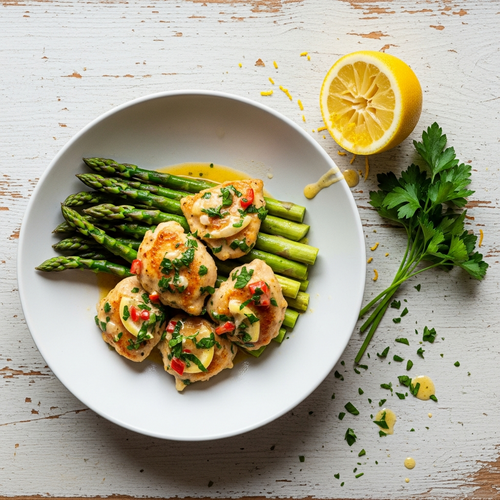
Description: A quick, high-protein, one-pan meal featuring tender chicken and crisp asparagus in a creamy, zesty lemon-garlic sauce. Perfect for a fast weeknight dinner that supports fat loss goals and keeps you full for hours.
Prep Time: 10 minutes | Cook Time: 15 minutes
Servings: 4
Macros per Serving | Calories: 385 | Protein: 45g | Fat: 16g | Carbohydrates: 9g
Ingredients
- 1 lb boneless, skinless chicken breast, cut into 1-inch cubes
- 1 bunch fresh asparagus, woody ends trimmed
- 1 tbsp olive oil
- 3 cloves garlic, minced
- 1 lemon, zested and juiced
- 1/4 cup low-sodium chicken broth
- 1/4 cup plain Greek yogurt
- 2 tbsp fresh parsley, chopped
- 1/4 tsp red pepper flakes (optional)
- Salt and freshly ground black pepper to taste
Instructions
- Season chicken with salt and pepper. Heat olive oil in a large skillet over medium-high heat. Cook chicken until golden brown and cooked through, about 5-7 minutes. Remove from skillet.
- Add asparagus to the skillet and sauté for 3-5 minutes until tender-crisp.
- Add garlic and red pepper flakes; cook for 1 minute until fragrant.
- Pour in chicken broth and lemon juice, scraping the bottom of the pan.
- Return chicken to the skillet. Reduce heat to low and stir in Greek yogurt, lemon zest, and parsley until coated.
- Season to taste and serve immediately.
Notes
For best results, use full-fat (5%) Greek yogurt and add it off the heat or on very low heat to prevent the sauce from curdling. Fresh lemon juice is highly recommended for the brightest flavor.
FAQs About Roasted Asparagus For Weight Loss
Here are some straightforward answers to the most common questions I receive about this chicken and asparagus recipe.
Can I make this chicken and asparagus recipe in the oven?
Absolutely. An oven-roasted version is a great hands-off alternative, which can be a lifesaver on low-energy days. To adapt this recipe for the oven, preheat it to 400°F (200°C). On a large sheet pan, toss the cubed chicken and trimmed asparagus with the olive oil, minced garlic, salt, pepper, and red pepper flakes. Spread everything in a single layer to ensure it roasts evenly.
Roast for about 15-20 minutes, or until the chicken is cooked through and the asparagus is tender-crisp. While it’s roasting, you can whisk together the Greek yogurt, lemon juice, lemon zest, and parsley in a small bowl. Once the chicken and asparagus are done, you can either toss them with the sauce directly on the hot pan or transfer them to a serving bowl before adding the sauce. This sheet-pan method simplifies cleanup even more, which is always a win.
Is this asparagus recipe good for meal prep?
Yes, this recipe is fantastic for meal prep. In fact, it’s one of my go-to’s. The flavors actually meld together and get even better overnight. The key to successful meal prep with this dish is to slightly undercook the asparagus. Cook it until it’s bright green but still has a very firm snap. This way, when you reheat it later, it will cook a little more and reach that perfect tender-crisp texture instead of becoming mushy.
Portion the finished dish into individual airtight containers. You can add your carb source, like a scoop of quinoa or brown rice, directly into the container to create a complete grab-and-go meal. It will last in the fridge for up to four days, giving you healthy, high-protein lunches or dinners that are ready in minutes. This is a powerful strategy for staying on track when life gets busy.
Why did my Greek yogurt sauce curdle?
This is a very common issue, so don’t feel bad if it happens. Greek yogurt, like other dairy products, can curdle or separate when exposed to high heat too quickly. The proteins in the yogurt tighten up and squeeze out the water, leading to a grainy or split texture. The main culprits are high heat and high acidity (from the lemon juice).
There are a few simple ways to prevent this. First, always turn the heat down to low or even turn it off completely before stirring in the yogurt. Second, you can temper the yogurt. This means you slowly introduce a little bit of the hot liquid from the pan into the yogurt in a separate bowl, stirring constantly. This gently raises the temperature of the yogurt so it’s not shocked when you add it to the skillet. Using full-fat Greek yogurt also helps, as the higher fat content makes it more stable and less prone to curdling.
What’s the best way to trim asparagus?
The bottom ends of asparagus stalks are woody, tough, and fibrous. You definitely want to remove them. There are two simple and effective ways to do this. The first is the “snap” method. Hold a single stalk of asparagus with both hands and bend it. It will naturally snap at the point where the tough, woody part ends and the tender part begins. You can snap one stalk and then use it as a guide to line up the rest of the bunch on a cutting board and slice them all at once with a knife.
The second method, which is even faster, is to just look at the bunch. You can usually see where the color changes from a paler, white or purplish color at the bottom to a vibrant green. A good rule of thumb is to just chop off the bottom 1-2 inches of the entire bunch at once. This is a perfect example of a “good enough” approach that saves time and mental energy. Don’t strive for perfection; strive for practicality.
Can I use frozen asparagus for this recipe?
You can, but you’ll need to adjust your technique. Frozen asparagus releases a lot of water when it thaws and cooks, which can make your final dish watery and prevent the asparagus from getting a nice sear. It also tends to have a much softer, limper texture than fresh asparagus. For this specific skillet recipe where we want a tender-crisp bite, fresh is definitely better.
If frozen is your only option, I would recommend not thawing it first. Add the frozen asparagus directly to the hot pan after you’ve removed the chicken. Cook it over high heat, allowing the excess water to evaporate as quickly as possible. It will cook much faster than fresh asparagus, so keep a close eye on it. While it won’t have the same snappy texture, it will still provide the fiber and nutrients, making it a viable backup option when you need a convenient vegetable.
Try These High-Protein Recipes Next
If you loved this simple and effective recipe, here are a few others from my rotation that you should try.
- ADHD-Friendly High Protein Quiche: A super simple, crustless quiche you can make for a week of high-protein breakfasts or lunches.
- Easy One Pan Chicken And Veggies: Another minimal-cleanup meal that’s packed with protein and endlessly customizable with whatever veggies you have on hand.
- Easy Grilled Asparagus Recipe: If you’re looking for another simple way to prepare asparagus, this grilled version is a perfect side dish for any protein.
These recipes all follow the same core principles: high protein, simple steps, and incredible flavor to support your fitness goals.