
I used to think of fruit salad as a filler food. It was the sad, watery bowl of melon chunks you’d see at a hotel breakfast buffet. It was something people ate when they were on a “diet,” and it never looked satisfying. For years, especially at the start of my own fitness journey, I completely ignored it. It just didn’t seem like a serious tool for fat loss.
My opinion started to change when I was 65 pounds down and looking for ways to keep my nutrition interesting without getting bored. I needed something sweet to crush my afternoon cravings, but it had to have substance. It needed protein. It needed to keep me full so I wouldn’t spiral into snacking on junk food before dinner. Standard fruit salad wasn’t going to cut it.
So, I started experimenting. I knew Greek yogurt was a protein powerhouse, so that became my base for a creamy dressing. But I wanted more. I wanted a secret weapon, something to add protein, fiber, and a satisfying texture. That’s when I tried adding edamame. It sounds weird, I know. But it works. This high-protein fruit salad became a staple for me, both before and after I started medication for my ADHD. It’s simple, delicious, and brutally practical.
Skip to My Flexibe Diet Recipe!
Why Fruit Salad Is Great For Fat Loss
Let’s be direct. Fat loss happens when you are in a consistent calorie deficit. But just eating less doesn’t work long-term, especially for the ADHD brain. We need to manage hunger, kill cravings, and feel satisfied. This high-protein fruit salad is specifically designed to do all three.
The core principle here is protein first. Each serving is loaded with protein from two sources: non-fat Greek yogurt and shelled edamame. Protein is the most satiating macronutrient. It makes you feel fuller for longer, which reduces the chances you’ll go hunting for snacks an hour after eating. This is critical for staying in that calorie deficit without feeling miserable.
Next, we tackle hunger management with fiber. The berries, guava, and edamame are all packed with dietary fiber. Fiber slows down digestion, which helps stabilize your blood sugar levels. This prevents the sharp spikes and crashes that lead to intense cravings and energy slumps. When your energy is stable, you have better executive function to make good food choices throughout the day.
This fruit salad is also a perfect example of flexible eating. It’s naturally sweet from the fruit, which satisfies your desire for a treat without relying on processed sugar. It feels like an indulgence, but every single ingredient is working toward your goal. It’s a high-volume food, meaning you get to eat a big, satisfying portion for a relatively low number of calories. This helps you feel full and not deprived, which is the key to consistency. And as we know, consistency beats intensity every time.
Ingredients You’ll Need for Fruit Salad
This recipe is built on simple, powerful ingredients. We’re not just throwing fruit in a bowl. We are strategically combining protein, fiber, and healthy fats to create a meal that supports your fat loss goals. No hard-to-find items, just straightforward goodness.
The secret weapon here is the cooked and shelled edamame. I know it sounds unusual for a fruit salad, but trust me on this. It adds a fantastic, firm texture and a significant boost of plant-based protein and fiber. It transforms the dish from a light snack into something that will genuinely keep you full and satisfied for hours.
Here is everything you will need:
-
1 cup plain, non-fat Greek yogurt
-
1 teaspoon lime zest
-
2 tablespoons fresh lime juice
-
1/2 teaspoon vanilla extract
-
2 cups mixed high-protein berries (such as blackberries and raspberries)
-
1 cup guava, cubed (or 1 cup sliced apricots)
-
1 cup strawberries, quartered
-
1/2 cup blueberries
-
1/4 cup shelled edamame, cooked and cooled
-
2 tablespoons chopped raw almonds
A quick note on a few ingredients. For the Greek yogurt, make sure you choose a plain, non-fat version that is thick. A thinner yogurt will result in a watery dressing. When it comes to the lime juice, fresh is always best. The flavor is brighter and more potent than the bottled stuff. Finally, feel free to buy pre-shelled and cooked edamame from the freezer section to save yourself a step. We are all about convenience here.
How To Make Fruit Salad (Step-By-Step)
One of the best things about this recipe is its simplicity. There is no complicated cooking involved. This is an assembly job, which is perfect for low-energy or low-motivation days. We’re just mixing a few things together. The key is to do it in the right order to get the best texture and flavor.
Step 1: Make The Protein Dressing
First, we’ll make the dressing. In a small bowl, add your cup of plain, non-fat Greek yogurt, one teaspoon of lime zest, two tablespoons of fresh lime juice, and a half teaspoon of vanilla extract. Grab a whisk or a fork and mix it all together until it’s completely smooth and creamy. Make sure there are no lumps of yogurt. Zesting the lime before you juice it is a classic ADHD trap, so try to remember that first! The combination of the tangy lime and warm vanilla creates a dressing that perfectly complements the fruit.
Step 2: Combine The Fruits And Edamame
Now, grab a large mixing bowl. This is where the magic happens. Gently add your two cups of mixed berries, one cup of cubed guava, one cup of quartered strawberries, a half cup of blueberries, and the quarter cup of cooked and cooled edamame. The mix of colors and shapes already looks amazing. An ADHD tip here is to prep all your fruit first. Wash it, chop it, and have it ready to go before you start combining. This prevents the task from feeling overwhelming mid-stream.
Step 3: Gently Toss Everything Together
Pour the creamy Greek yogurt dressing over the fruit and edamame mixture in the large bowl. Use a rubber spatula or a large spoon to gently fold everything together. The goal is to coat all the ingredients evenly without mashing the more delicate berries like raspberries. Take your time with this step. It’s about gently combining, not aggressively stirring.
Step 4: Add The Crunch
Just before you are ready to serve, sprinkle the two tablespoons of chopped raw almonds over the top. Adding them at the last minute ensures they stay crunchy. This textural contrast between the creamy dressing, soft fruit, and crunchy nuts is what makes every bite interesting and satisfying. If you mix them in too early, they can get soft, and you lose that crucial crunch.
Step 5: Chill For The Best Flavor
For the absolute best result, cover the bowl and chill the fruit salad in the refrigerator for at least 30 minutes. This gives the flavors time to meld together beautifully. The lime and vanilla will infuse into the fruit, and the whole dish becomes more cohesive. However, if you’re hungry and impatient (I get it), you can absolutely eat it right away. It will still be delicious.
How To Serve Fruit Salad (ADHD-Friendly)
How you serve this fruit salad can make a huge difference in how consistently you eat it. For us, convenience is everything. The goal is to make healthy eating the easiest possible option, especially on days when our executive function is low.
My number one strategy is to pre-portion. As soon as you make the salad, divide it into individual airtight containers. Put them right at the front of your fridge at eye level. This is a game-changer. When you open the fridge looking for a snack, the healthy, delicious choice is the first thing you see. It eliminates decision fatigue and makes it a simple “grab-and-go” option.
This recipe is versatile, so think beyond just a simple bowl. Here are a few ways to incorporate it into your routine:
-
As a Complete Breakfast: A pre-portioned container is a perfect, high-protein breakfast that requires zero thought in the morning. It will keep you full and focused until lunch.
-
For Post-Workout Recovery: The combination of protein from the yogurt and carbs from the fruit is ideal for refueling your muscles after a workout.
-
A Craving-Crushing Snack: When that 3 PM slump hits and you want something sweet, this is your answer. It satisfies the sweet tooth without the sugar crash.
-
As a Healthy Dessert: This fruit salad is sweet and satisfying enough to serve as a dessert, helping you avoid less healthy, high-sugar options after dinner.
By preparing it ahead of time and having it ready in single-serving portions, you are working with your ADHD brain, not against it. You’re setting your future self up for success by making the right choice the easy choice.
How To Store, Reheat, and Reuse Fruit Salad
Proper storage is key to making this recipe a practical part of your meal prep. You want it to stay fresh and delicious so you actually look forward to eating it throughout the week. Thankfully, it holds up quite well in the fridge.
The best way to store this fruit salad is in an airtight container in the refrigerator. It will stay fresh for up to three to four days. The fruit will naturally release some of its juices over time, which will make the dressing a little thinner. This is perfectly normal and it still tastes amazing. In fact, some people prefer it that way as the flavors get a chance to blend even more.
Here are a few tips for optimal storage and reuse:
-
Hold the Nuts: If you’re meal prepping the salad for several days, store the chopped almonds separately. Add them right before you eat to maintain their crunch. You can keep them in a small baggie or a tiny container.
-
Choose Sturdy Fruits: If you plan to store it for the full four days, using sturdier fruits like apples or firm peaches in place of some of the berries can help it maintain its texture longer.
-
No Reheating Needed: This is a dish best served cold. Please do not try to heat it. It’s meant to be a refreshing, cool meal or snack.
-
Creative Reuse: If you get to day four and you’re a bit bored of it, don’t let it go to waste. You can blend a serving with a scoop of protein powder and a splash of milk or water to create a delicious, high-protein smoothie. This is a great way to prevent food waste and switch things up.
By following these simple storage rules, you can make one big batch and have a healthy, fat-loss-friendly option ready to go for half the week. It’s all about making your life easier.
Easy Swaps & Variations for Fruit Salad
One of my core principles is that recipes should be flexible. Life is busy, and you need to be able to work with what you have on hand or what’s on sale at the grocery store. This fruit salad recipe is incredibly forgiving and easy to adapt to your preferences or dietary needs.
Don’t feel locked into the exact fruits I listed. The goal is a colorful, fiber-rich mix. Think of the recipe as a template, not a strict rulebook. As long as you keep the protein base, you can get creative with the rest.
Here are some simple and effective swaps you can make:
-
Fruit Variations: If guava or apricots are hard to find, try using cubed mango, pineapple, or firm peaches instead. You can also swap the berries based on season or price. Kiwi, cherries, or pomegranate seeds would also be fantastic additions.
-
Nut-Free Option: If you have a nut allergy, simply leave out the almonds. For a similar crunch, try sprinkling some sunflower seeds or pumpkin seeds on top before serving.
-
Dairy-Free and Vegan: To make this recipe dairy-free, substitute the Greek yogurt with a thick, plain, unsweetened coconut or almond-based yogurt. Most plant-based yogurts have less protein, so you might consider adding a bit more edamame or some hemp seeds to compensate.
-
Change the Citrus: If you don’t have limes, fresh lemon juice and zest will work just as well. For a different flavor profile, you could even try orange juice and zest for a sweeter, less tangy dressing.
-
Spice It Up: For a hint of warmth, try adding a pinch of cinnamon or cardamom to the Greek yogurt dressing. It pairs surprisingly well with the fruit and vanilla.
The key is not to get paralyzed by a missing ingredient. Use what you have, make it your own, and focus on the main goal: creating a delicious, high-protein meal that you will actually enjoy eating.
High-Protein Fruit Salad For Fat Loss
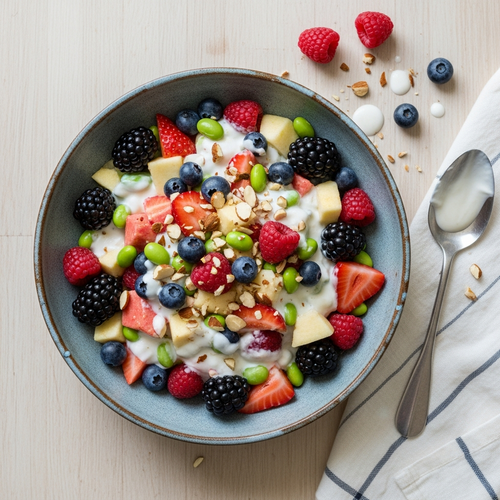
Description: A creamy, satisfying fruit salad packed with protein and fiber to crush cravings and support sustainable fat loss. Perfect for an ADHD-friendly meal prep.
Prep Time: 15 minutes | Cook Time: 0 minutes
Servings: 4
Macros per Serving | Calories: 215 | Protein: 12g | Fat: 5g | Carbohydrates: 33g
Ingredients
- 1 cup plain, non-fat Greek yogurt
- 1 teaspoon lime zest
- 2 tablespoons fresh lime juice
- 1/2 teaspoon vanilla extract
- 2 cups mixed high-protein berries (such as blackberries and raspberries)
- 1 cup guava, cubed (or 1 cup sliced apricots)
- 1 cup strawberries, quartered
- 1/2 cup blueberries
- 1/4 cup shelled edamame, cooked and cooled
- 2 tablespoons chopped raw almonds
Instructions
- In a small bowl, whisk together the Greek yogurt, lime zest, lime juice, and vanilla until smooth.
- In a large bowl, gently combine all the fruit and the cooked edamame.
- Pour the yogurt dressing over the fruit and gently toss to coat everything evenly.
- Sprinkle chopped almonds over the top just before serving.
- For best results, chill for 30 minutes before serving.
Notes
Store leftovers in an airtight container in the fridge for up to 4 days. For meal prep, store the almonds separately and add just before eating to keep them crunchy.
FAQs About Fruit Salad For Weight Loss
Here are some straightforward answers to the most common questions I receive about this fruit salad recipe.
Can you really lose weight by eating this fruit salad?
Yes, you absolutely can, but it’s important to understand why. Weight loss is not about a single “magic” food. It is about creating a sustainable calorie deficit over time. This fruit salad is a powerful tool to help you achieve that. It works by tackling the biggest challenges in any fat loss journey: hunger, cravings, and consistency. It replaces high-calorie, low-nutrient snacks and desserts with a high-volume, nutrient-dense alternative.
Each serving is packed with protein and fiber, which are scientifically proven to increase feelings of fullness and satiety. When you feel full and satisfied, you are far less likely to overeat at your next meal or mindlessly snack on junk food. The natural sweetness from the fruit also helps manage sugar cravings in a healthy way. So, while the fruit salad itself doesn’t magically burn fat, it makes sticking to your overall calorie goal significantly easier and more enjoyable. It is a strategic part of a larger, flexible eating plan.
Why is there edamame in this fruit salad?
I know, it’s the one ingredient that makes people pause. But the edamame is the secret weapon in this recipe. I added it for three very specific reasons that directly support fat loss and an ADHD-friendly lifestyle. First and foremost is protein. Edamame is a fantastic source of plant-based protein. Combined with the Greek yogurt, it turns this from a simple fruit dish into a legitimate high-protein meal that will keep you full for hours.
Second is fiber. Edamame is loaded with fiber, which aids in digestion and helps stabilize blood sugar. This is crucial for preventing the energy crashes that often lead us to seek out quick, sugary fixes. Third is texture. The firm, satisfying chew of the edamame provides a wonderful contrast to the soft fruit and creamy dressing. For many people with ADHD, texture is a huge component of food satisfaction. This textural variety makes the salad more engaging and enjoyable to eat, which helps prevent boredom with your food choices.
How can I make this fruit salad last longer for meal prep?
Making this fruit salad last is all about managing moisture and texture. The recipe as written will last a solid three to four days, but you can extend its life and freshness with a few simple tweaks. The biggest factor is the type of fruit you use. Softer fruits like raspberries and fully ripe peaches will break down faster. For longer storage, consider using a higher ratio of firmer fruits. Think crisp apples, firm pears, pineapple chunks, or grapes. You can still use berries, but maybe add them to the individual portion the day you plan to eat it.
Another great strategy is to store the components separately. You can mix all the chopped fruit and edamame together in one large container. Then, keep the Greek yogurt dressing in a separate jar. When you’re ready for a serving, just scoop out some fruit mix and top it with the dressing and a sprinkle of nuts. This method keeps everything much fresher and prevents the fruit from getting soft in the dressing. It’s one extra step, but it can make a big difference by day four or five.
Is this fruit salad suitable for a diabetic diet?
While I’m not a doctor or a registered dietitian, I can explain how the components of this fruit salad are generally well-suited for blood sugar management, which is a key concern in a diabetic diet. The recipe is intentionally designed to be high in protein and fiber, both of which are excellent for slowing down the absorption of sugar into the bloodstream. The protein from the Greek yogurt and edamame, along with the fiber from the fruit and edamame, helps prevent the sharp blood sugar spikes that can come from eating fruit alone.
However, it is still a fruit-based dish and contains natural sugars. The key is portion control. The recipe is portioned to provide a balanced amount of carbohydrates. To be even more blood sugar friendly, you could opt for lower-glycemic fruits like berries, cherries, and plums, and reduce the amount of higher-glycemic fruits like guava or pineapple. As always, if you have diabetes or any health condition, it is essential to consult with your healthcare provider or a registered dietitian to see how this recipe can fit into your personal nutrition plan.
What makes this fruit salad recipe ADHD-friendly?
I designed this recipe specifically with the ADHD brain in mind, focusing on overcoming common challenges like low motivation, decision fatigue, and impulse control. First, it’s incredibly simple. There is no real cooking involved; it’s just chopping and mixing. This lowers the barrier to entry, making it a task you can actually start and finish, even on a low-energy day. The ingredient list is also flexible, which means you don’t get stuck if you’re missing one specific type of berry. This reduces the “perfectionism paralysis” that can stop us from starting at all.
The meal prep aspect is the biggest ADHD hack here. By making a large batch and pre-portioning it, you front-load the executive function. For the next few days, you have a healthy, delicious meal ready to go. This eliminates decision fatigue at meal times, which is a huge drain on our mental resources. It also acts as a powerful tool against impulse eating. When you have a delicious, satisfying, and pre-made option available, you are far less likely to reach for a bag of chips or order takeout. It’s a practical system that supports your long-term goals by making the healthy choice the easy choice.
Try These High-Protein Recipes Next
If you loved this simple and effective recipe, here are a few more of my favorites that follow the same principles.
-
High-Protein Apple Crisp: A warm and comforting dessert that’s packed with enough protein to be a legitimate breakfast or post-workout meal.
-
Healthy Peach Cobbler: Enjoy the classic taste of summer with this simple recipe that satisfies your sweet tooth while helping you hit your protein goals.
-
Fresh Fruit Salad with a Simple Dressing: For a different take on fruit salad, this recipe offers a lighter, non-creamy dressing that is incredibly refreshing.
Each of these is designed to be delicious, easy to make, and supportive of your fitness journey.