
Chicken fried rice used to be one of my biggest weaknesses. Before I figured out my own system for fat loss, it was my go-to comfort food and my default takeout order on nights when I felt overwhelmed.
As a single dad with ADHD, those nights happened a lot. The craving for something fast, easy, and satisfying was huge. But I knew the typical restaurant version, loaded with oil and sodium, was a major roadblock in my journey to lose 65 pounds.
I refused to believe that I had to give it up completely. That’s just not how sustainable fat loss works. Restriction leads to binging, and that’s a spiral I know all too well.
So, I got to work creating a version that I could eat regularly. A chicken fried rice that was packed with protein, loaded with vegetables, and still hit that savory, satisfying spot. This recipe is the result. It’s a staple in my rotation, and it proves that you can absolutely enjoy your favorite foods while getting fit.
Skip to My Flexibe Diet Recipe!
Why Chicken Fried Rice Is Great For Fat Loss
Let’s be brutally honest. Most takeout chicken fried rice is a calorie bomb that will sabotage your fat loss goals. It’s typically made with tons of oil, very little protein, and heaps of white rice. It tastes amazing for ten minutes and then leaves you feeling hungry again an hour later.
This recipe is engineered differently. We’re flipping the script to work with our goals, not against them.
First, we lead with protein. A full pound of chicken breast plus four large eggs makes this dish incredibly satisfying. Protein is the most important macro for fat loss. It keeps you full for hours, helps maintain muscle while you’re in a calorie deficit, and reduces those nagging cravings that can derail your entire day.
Next, we use a volume-eating hack that is a game-changer. We cut the traditional rice portion in half and substitute it with riced cauliflower. You get a massive bowl of food that feels just as substantial, but for a fraction of the calories and carbs. The fiber from the cauliflower, broccoli, and carrots also helps with satiety, keeping your hunger managed.
Finally, we get all the flavor without the junk. A little toasted sesame oil goes a long way, and using low-sodium soy sauce keeps the salt in check. This isn’t bland “diet food.” It’s a flavorful, hearty meal that you’ll genuinely look forward to eating. That’s the key to consistency, and consistency is what gets you 75 percent of your results.
Ingredients You’ll Need for Chicken Fried Rice
One of the best things about this recipe is its flexibility. We’re using simple, easy-to-find ingredients that deliver big on flavor and nutrition. No need to hunt down specialty items on a day when your executive function is already low.
The real secret weapon here is the combination of brown rice and riced cauliflower. This is my favorite trick for making a lower-calorie fried rice that doesn’t feel like a compromise. The brown rice provides that familiar, slightly chewy texture you expect, while the cauliflower bulks up the meal and sneaks in extra vegetables.
Using day-old, chilled rice is non-negotiable for the best texture. Freshly cooked rice has too much moisture and will steam in the pan, leading to a clumpy, mushy result. Cooking your rice the day before is a perfect ADHD-friendly move. You do a small bit of prep when you have the energy, which makes cooking the actual meal faster and less overwhelming later.
- 1 lb boneless, skinless chicken breast, cut into ½-inch cubes
- 1 tbsp avocado oil, divided
- 4 large eggs, whisked
- 1 medium onion, diced
- 2 cloves garlic, minced
- 1 cup chopped broccoli florets
- 1 cup shredded carrots
- 1 cup shelled edamame, thawed if frozen
- 2 cups cooked and chilled brown rice
- 2 cups riced cauliflower, fresh or frozen
- 3 tbsp low-sodium soy sauce or coconut aminos
- 1 tbsp rice vinegar
- 1 tsp toasted sesame oil
- 2 green onions, thinly sliced
- Optional: Sriracha or red pepper flakes for heat
A quick note on the veggies. Feel free to use a frozen stir-fry vegetable mix to save time on chopping. Convenience is key for staying on track, and store-bought shortcuts are your friends.
How To Make Chicken Fried Rice (Step-By-Step)
The key to a great stir-fry is having everything ready before you start. This cooking process is fast, so you won’t have time to chop an onion while the chicken is cooking. For our ADHD brains, this prep step, known as “mise en place,” is a lifesaver. It turns a potentially chaotic process into a simple, step-by-step assembly line.
I highly recommend using a large wok or a wide, deep skillet. You need plenty of surface area to cook everything quickly over high heat without steaming it. If you overcrowd a small pan, you’ll end up with soggy rice and pale chicken.
Step 1: Cook the Chicken
In your large skillet or wok, heat half a tablespoon of avocado oil over medium-high heat. Once it’s shimmering, add your cubed chicken. Spread it in a single layer and let it cook for a few minutes without moving it to get a nice golden-brown sear. Continue cooking and stirring for about 5 to 7 minutes total, until it’s cooked through. Then, remove it from the skillet and set it aside on a plate.
Step 2: Scramble the Eggs
Lower the heat to medium and add the other half-tablespoon of oil. Pour in your whisked eggs. Use a spatula to gently scramble them. The trick is to cook them until they are just set but still a little soft, as they will cook a bit more later. Slide them onto the plate with your chicken.
Step 3: Sauté the Aromatics
Toss the diced onion into the now-empty skillet. Sauté for a couple of minutes until it starts to soften up and become translucent. Now add the minced garlic and cook for just another 30 seconds. Be careful not to burn the garlic, or it will become bitter.
Step 4: Stir-Fry the Vegetables
Turn the heat back up to medium-high. Add the broccoli, shredded carrots, and shelled edamame to the pan. Keep things moving, stir-frying for 4 to 5 minutes. You want the vegetables to be tender but still have a slight crunch. Nobody likes mushy broccoli.
Step 5: Add the Rice and Cauliflower
Add your chilled brown rice and the riced cauliflower to the skillet with the veggies. Use your spatula to break up any clumps of rice. Spread everything out and let it cook for a few minutes, stirring occasionally, so the rice can heat through and even get a little crispy in spots.
Step 6: Return Chicken and Eggs
Now it’s time to bring it all together. Add the cooked chicken and scrambled eggs back into the skillet with the rice and vegetable mixture. Give it a good toss to distribute everything evenly.
Step 7: Make and Add the Sauce
In a small bowl, quickly whisk together the low-sodium soy sauce, rice vinegar, and toasted sesame oil. Pour this sauce all over the contents of the skillet. Tossing everything to coat it well.
Step 8 & 9: Finish and Serve
Let it all cook together for another minute or two until everything is hot and the sauce has been absorbed. Turn off the heat and stir in your thinly sliced green onions. Serve it up immediately, adding a little Sriracha if you like some heat.
How To Serve Chicken Fried Rice (ADHD-Friendly)
How you serve your food can be just as important as how you cook it, especially when building sustainable habits. The goal is to make the healthy choice the easy choice. For this chicken fried rice, that means thinking about meal prep from the moment you finish cooking.
Don’t just leave the giant skillet on the stove. That’s a recipe for either overeating or letting it sit until it’s no longer good. As soon as it’s done, portion it out into individual meal-prep containers. This simple act of “closing the loop” on the task makes your future self’s life so much easier. When hunger strikes, you have a perfectly portioned, delicious meal ready to grab and reheat.
This dish is a complete meal on its own, packed with protein, carbs, and veggies. You don’t need to add much, but here are a few simple ways to serve it that require minimal effort:
- As a complete meal. Portion it into 4-5 containers for grab-and-go lunches or quick dinners throughout the week.
- With a fried egg on top. If you’re extra hungry or just had a big workout, cracking a fresh egg over your reheated portion adds even more protein and a delicious, runny yolk.
- With a side of quick-pickled cucumbers. A little extra acidity and crunch can brighten up the flavors, especially on day three or four of your meal prep.
- A generous drizzle of Sriracha or chili garlic sauce. A simple way to customize the heat level and keep things interesting each time you eat it.
By having these meals prepped and ready, you create a powerful defense against impulsive food choices. You’re working with your ADHD brain by reducing the number of decisions you have to make when you’re tired and hungry.
How To Store, Reheat, and Reuse Chicken Fried Rice
Proper storage is crucial for making your meal prep last and ensuring your food is just as good on day four as it is on day one. This chicken fried rice is fantastic for meal prep because it holds up incredibly well.
First, always let the fried rice cool down for a bit before you seal it up. Putting hot food directly into airtight containers in the fridge can create excess condensation, which can make the rice a little soggy. Once it’s cooled to room temperature, portion it into your containers and it will stay fresh in the refrigerator for up to 4 days.
When it comes to reheating, you have a couple of great options:
- The Microwave Method: This is the fastest and most convenient way. Place your portion on a plate or in a microwave-safe bowl. For best results, sprinkle a little water over the top or cover it with a damp paper towel. This helps steam the rice and prevents it from drying out. Heat for 90 seconds to 2 minutes, stirring halfway through.
- The Skillet Method: This is the best way to bring back that fresh, slightly crispy texture. Heat a non-stick skillet over medium-high heat with a tiny bit of oil or cooking spray. Add the leftover fried rice and stir-fry for 3-5 minutes, until it’s heated all the way through.
You can also freeze this recipe. It’s an amazing gift to your future self for a day when you have zero energy to cook. Let it cool completely, then store it in freezer-safe bags or containers for up to 3 months. To reheat from frozen, let it thaw in the fridge overnight or microwave it directly from the freezer, adding a few extra minutes to the cooking time.
Easy Swaps & Variations for Chicken Fried Rice
One of my core principles is that flexibility wins. A recipe should be a template, not a rigid set of rules you can never break. This chicken fried rice is the perfect example. You can easily adapt it based on what you have on hand, your dietary needs, or just your mood. This is how you avoid boredom and stay consistent with your eating plan.
Don’t be afraid to experiment. Using what’s already in your fridge or pantry is a great way to reduce food waste and save money. It also helps you build confidence in the kitchen and learn how to create healthy meals on the fly.
Here are some of my favorite easy swaps and variations for this recipe:
- Protein Power-Up: No chicken breast? No problem. This recipe works great with boneless, skinless chicken thighs, lean ground turkey, or even shrimp. For a plant-based option, use a block of extra-firm tofu (press it first!) or simply double the amount of edamame and eggs.
- Vegetable Overload: The veggie combination is totally up to you. This is a perfect “clean out the fridge” meal. Throw in diced bell peppers, mushrooms, snap peas, corn, or bean sprouts. A bag of frozen mixed vegetables is the ultimate shortcut for low-motivation days.
- Carb Customization: If you’re not a fan of cauliflower rice, you can use all brown rice instead. Just be mindful that this will increase the overall calorie and carbohydrate count. You could also try it with quinoa for a different texture and a complete protein boost.
- Flavor Twists: Add a teaspoon of freshly grated ginger along with the garlic for a warming kick. A splash of fish sauce can add a deeper, more complex savory flavor. If you like it sweet and savory, a tiny bit of honey or maple syrup in the sauce works wonders.
Think of these suggestions as a starting point. The best version of this recipe is the one that you’ll actually make and enjoy consistently.
High-Protein Chicken Fried Rice
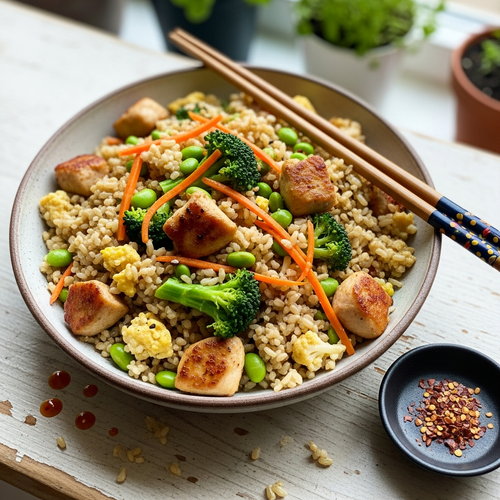
Description: A healthy, high-protein take on the classic takeout favorite, designed to keep you full and support your fat loss goals. This chicken fried rice recipe uses a smart blend of brown rice and riced cauliflower to maximize volume while keeping calories in check.
Prep Time: 10 minutes | Cook Time: 20 minutes
Servings: 4
Macros per Serving | Calories: 520 | Protein: 38g | Fat: 18g | Carbohydrates: 51g
Ingredients
- 1 lb boneless, skinless chicken breast, cut into ½-inch cubes
- 1 tbsp avocado oil, divided
- 4 large eggs, whisked
- 1 medium onion, diced
- 2 cloves garlic, minced
- 1 cup chopped broccoli florets
- 1 cup shredded carrots
- 1 cup shelled edamame, thawed if frozen
- 2 cups cooked and chilled brown rice
- 2 cups riced cauliflower, fresh or frozen
- 3 tbsp low-sodium soy sauce or coconut aminos
- 1 tbsp rice vinegar
- 1 tsp toasted sesame oil
- 2 green onions, thinly sliced
- Optional: Sriracha or red pepper flakes for heat
Instructions
- Heat ½ tbsp oil in a large skillet or wok over medium-high heat. Cook chicken until golden and cooked through; remove from skillet.
- Reduce heat to medium, add remaining oil, and scramble the eggs until just set; remove from skillet.
- Add onion to the skillet and sauté for 2-3 minutes. Add garlic and cook for 30 seconds.
- Increase heat to medium-high. Add broccoli, carrots, and edamame. Stir-fry for 4-5 minutes until tender-crisp.
- Add chilled brown rice and riced cauliflower. Stir-fry for 3-4 minutes, breaking up any clumps.
- Return chicken and eggs to the skillet.
- Whisk together soy sauce, rice vinegar, and sesame oil. Pour over everything and toss to combine.
- Cook for 1-2 minutes until heated through. Stir in green onions and serve.
Notes
Using cold, day-old rice is essential for the best texture. If you must use fresh rice, spread it on a baking sheet and chill it in the freezer for 15-20 minutes to dry it out first. Frozen vegetables are a great time-saving shortcut.
FAQs About Chicken Fried Rice For Weight Loss
Here are some straightforward answers to the most common questions I receive about this chicken fried rice recipe.
Is chicken fried rice actually healthy for weight loss?
This is a great question, and the answer is: it depends entirely on how it’s made. The typical chicken fried rice you get from a takeout restaurant is generally not a great choice for weight loss. It’s often cooked in a large amount of oil, made with refined white rice, loaded with sodium-heavy soy sauce, and contains very little protein and vegetables relative to the massive portion of carbs.
However, this homemade version is specifically designed for a fat loss lifestyle. We control every ingredient. We use a minimal amount of healthy oil, pack it with lean protein from chicken and eggs to keep you full, and load it with fiber-rich vegetables. The master stroke is replacing half the rice with riced cauliflower, which drastically cuts the calories and carbs while increasing the nutritional value and portion size. So yes, this chicken fried rice is an excellent and healthy meal for weight loss.
Can I make this chicken fried rice recipe without cauliflower rice?
Absolutely. If cauliflower rice isn’t your thing, you can definitely make this recipe using 4 cups of cooked and chilled brown rice instead of the 50/50 split. The method remains exactly the same. The result will still be a delicious, high-protein meal that is far healthier than any takeout version.
Just be aware that this change will affect the final macros. By using all brown rice, you’ll be increasing the total calorie and carbohydrate count of each serving. If you’re tracking your macros, make sure to adjust for that. I personally love the 50/50 blend because it allows for a much larger, more filling bowl of food for fewer calories, which is a huge mental win when you’re in a calorie deficit.
How do I get my chicken fried rice to taste like takeout?
That “takeout” flavor, often called ‘wok hei’ in Cantonese cooking, comes from a combination of very high heat and specific ingredients. To get closer to that at home, first, make sure your pan is very hot before you add your ingredients. This helps to sear everything quickly rather than steaming it. Using a wok is ideal if you have one, as its shape distributes heat perfectly.
Second, don’t overcrowd the pan. Cook your chicken, eggs, and veggies in batches if you need to. Third, the sauce is key. The combination of soy sauce for saltiness, rice vinegar for a little tang, and toasted sesame oil for that unmistakable nutty aroma is critical. Don’t skip the toasted sesame oil. A little goes a very long way and it’s a huge part of that classic fried rice flavor profile.
What’s the best rice to use for this chicken fried rice recipe?
The single most important rule for any fried rice is to use cold, day-old, cooked rice. When rice cools in the refrigerator, its starches go through a process called retrogradation. This makes the grains firmer, less sticky, and perfect for stir-frying. If you use warm, freshly cooked rice, it will release moisture and steam in the hot pan, turning your dish into a sticky, gummy mess.
As for the type of rice, medium or long-grain varieties work best. I use brown rice in this recipe for the added fiber and nutrients, but jasmine or basmati rice are also excellent choices. The key takeaway isn’t the specific variety, but the fact that it must be cooked ahead of time and thoroughly chilled.
Can I meal prep this chicken fried rice for the whole week?
Yes, this recipe is an absolute dream for meal prep. It’s one of my personal go-to lunches for the week. It holds up beautifully in the refrigerator for up to 4 days, and some might even argue the flavors get better as they have time to meld together. The vegetables stay relatively crisp, and the rice reheats perfectly using either the microwave or stovetop method I mentioned earlier.
Portioning it out into individual containers as soon as you’re done cooking is a fantastic strategy for anyone, but especially for those of us with ADHD. It removes future decision-making and makes grabbing a healthy, satisfying meal as easy as ordering takeout. It’s a simple system that sets you up for consistent success throughout the week.
Try These High-Protein Recipes Next
If you loved how simple and satisfying this recipe was, here are a few others you should definitely try.
- ADHD-Friendly Fried Rice: This is my other fantastic fried rice recipe that you can easily customize with whatever protein you have on hand.
- Easy Chicken Stir Fry: For those times you want a saucier dish with even more vegetables, this chicken stir fry hits the spot every time.
- Crispy Prosciutto Chicken Fried Rice: A brilliant and delicious twist from This Gal Cooks that adds an incredible salty crunch with crispy prosciutto.
Building a collection of reliable, easy recipes is one of the best ways to stay on track with your fitness goals.